TL;DR: Rear-end accidents often cause whiplash, neck and back strains, herniated discs, concussions, and soft tissue injuries. Medical records can help connect these symptoms to the crash, support treatment costs and lost wages, and protect the claim before California’s 2-year filing deadline expires.
Highlights:
- Get evaluated even after low-speed impacts or delayed pain.
- Track symptoms daily and note when each one started.
- Photograph bruises, seatbelt marks, vehicle positions, and visible damage.
- Ask doctors to record work limits, sleep disruption, and activity restrictions.
- Request copies of imaging results, therapy notes, and itemized bills.
- Report to the California DMV if someone is injured or killed, or if property damage exceeds $1,000.
- If a public entity may be involved, file a government claim within 6 months.
Tip: When describing the crash or symptoms, stick to facts and avoid guessing about speed or fault.
Table of Contents
Rear-end accidents often cause back, neck, and head injuries because of the sudden force from behind. The most common injuries include whiplash, back strains, herniated discs, concussions, shoulder injuries, seatbelt-related chest or rib injuries, and soft tissue damage. Some people may also suffer facial trauma, broken bones, internal injuries, or anxiety after the crash.
Pain does not always appear right away. Headaches, stiffness, dizziness, numbness, or worsening soreness can develop hours or days after the injury. Getting medical care early can protect your health and create records that may support an injury claim.
Why Rear-End Collisions Commonly Cause Neck, Back, and Head Injuries
Rear-end collisions can suddenly push your vehicle forward. The force can throw your body forward and then snap it back, straining the neck, back, shoulders, and head. The seatbelt, headrest, airbag, dashboard, or other parts of the vehicle can also stop or redirect your body during the crash.
That force can stretch soft tissue, compress spinal discs, strike the head, or push the body against the steering wheel, seatbelt, door, or dashboard. That is why rear-end crash injuries can involve more than soreness.
Factors that can affect injury severity include:
- The speed of both vehicles.
- The size and weight of each vehicle.
- The position of your head and body at impact.
- Whether your vehicle was stopped or moving.
- Whether you saw the crash coming.
- Your age, medical history, and prior injuries.
- Seatbelt use, airbag deployment, and headrest position.
Even a minor crash can cause pain. Vehicle damage does not always show how much force your body absorbed.
Common Symptoms After Being Rear-Ended
Rear-end crash symptoms can vary based on the force of the impact, the person’s position in the vehicle, and their medical history. Some symptoms are mild at first and become worse after the adrenaline wears off.
Common symptoms after being rear-ended include:
- Neck pain or stiffness.
- Headaches.
- Shoulder or upper back pain.
- Lower back pain.
- Dizziness or balance problems.
- Numbness, tingling, or weakness.
- Chest or rib pain.
- Muscle spasms.
- Trouble turning the head or bending.
- Brain fog, confusion, or trouble focusing.
- Anxiety, sleep problems, or fear of driving.
Get medical care right away if you have severe or worsening headaches, dizziness, confusion, fainting, vomiting, numbness, weakness, chest pain, abdominal pain, shortness of breath, or pain that gets worse after the crash.
These symptoms can point to several common injuries from rear-end collisions. The sections below explain what those injuries are and how they can affect a personal injury claim.
Whiplash And Neck Injuries

Whiplash is one of the most common injuries after being rear-ended. It happens when the neck moves back and forth quickly during impact.
Whiplash can matter in a claim because it may:
- Limit your ability to drive, work, sleep, or turn your head.
- Require physical therapy, chiropractic treatment, medication, or follow-up care.
- Lead to disputes if the imaging does not clearly show the injury.
- Need consistent medical records to show the injury is real and crash-related.
Insurance companies may question whiplash claims when symptoms are delayed or when vehicle damage looks minor. Medical exams, treatment notes, and therapy records can help support the claim.
Back Injuries, Herniated Discs, And Nerve Symptoms
Rear-end crashes can strain the back or injure the spine. Some people develop muscle strains, joint pain, herniated discs, or nerve symptoms after the crash.
These injuries can matter in a claim because they can:
- Affect sitting, standing, lifting, driving, or working.
- Require imaging, physical therapy, injections, pain management, or surgery.
- Cause pain that travels into the arms or legs.
- Lead to disputes if the injured person had prior back or neck problems.
Medical records, imaging, specialist reports, and work restrictions can help show how the crash affected the injured person’s daily life.
Concussions And Traumatic Brain Injuries
A rear-end crash can cause a concussion or traumatic brain injury even if your head does not hit anything. The sudden jolt can cause the brain to move inside the skull. Symptoms may appear immediately or develop hours or days later. They can include:
- Memory problems.
- Trouble focusing.
- Sleep changes.
- Mood changes.
- Difficulty with work or school.
- Difficulty with daily routines.
Brain injury symptoms can appear right away or develop later. Medical records from emergency care, primary care doctors, neurologists, or therapists can help connect the symptoms to the crash.
Shoulder, Chest, Rib, and Seatbelt Injuries
Rear-end crashes can injure the shoulders, chest, and ribs when the body braces for impact, pulls against the seatbelt, or hits part of the vehicle.
These injuries can matter in a claim because they may:
- Limit lifting, reaching, driving, sleeping, or working.
- Require imaging, therapy, medication, or follow-up care.
- Leave bruising that should be photographed and documented.
- Signal more serious injuries if chest pain, shortness of breath, or deep bruising appear.
Seatbelt soreness should still be documented, especially if it affects breathing, movement, work, or daily activities.
These injuries can affect work, sleep, lifting, driving, and daily routines. Rear-end accident lawyers often rely on medical records, imaging, and specialist evaluations to support a claim.
Sprains, Strains, and Soft Tissue Injuries
Sprains and strains can affect the neck, shoulders, back, wrists, knees, or ankles after a rear-end crash. These injuries involve stretched or damaged muscles, tendons, or ligaments.
Soft tissue injuries can matter in a claim because they may:
- Cause ongoing pain or limited movement.
- Require therapy, chiropractic care, or follow-up visits.
- Affect work and daily activities.
- Get harder to prove if treatment is delayed.
Insurance companies often question soft-tissue injuries because they may not be clearly visible on basic imaging. Consistent treatment records can help support the claim.
Facial Injuries, Broken Bones, And Internal Injuries
Some rear-end crashes cause facial injuries, broken bones, or internal injuries. These injuries are less common than whiplash or back pain, but they can be serious.
They can matter in a claim because they may involve:
- Emergency care.
- Imaging or hospital records.
- Surgery or specialist treatment.
- Scarring or disfigurement.
- Time away from work.
- Long-term pain or restrictions.
Get medical care right away for chest pain, abdominal pain, shortness of breath, fainting, deep bruising, blood in urine, or worsening pain.
Anxiety, Sleep Problems, And Other Psychological Effects

A rear-end crash can also affect mental health. Some people develop anxiety, nightmares, sleep problems, depression, panic while driving, or post-traumatic stress symptoms.
These effects can matter in a claim when they:
- Affect driving, work, sleep, or relationships.
- Require counseling or other mental health care.
- Support non-economic damages, such as emotional distress or reduced quality of life.
- Show the crash affected more than physical health.
Tell your doctor if anxiety, fear, or sleep problems continue after the crash. Mental health records can help document the full impact of the collision.
Can You Be Injured In A Low-Speed Rear-End Collision?
Yes. Even low-speed rear-end crashes can cause injuries. These can include whiplash, neck strain, and soft-tissue damage from the sudden force that pushes the body forward and then snaps it back, even at low speeds.
Minor vehicle damage does not mean low injury risk. The human body is more sensitive than a vehicle, so even a small impact can strain muscles, ligaments, and the spine. Injuries may also take time to show.
Common delayed symptoms include:
- Neck pain or stiffness that appears hours or days later.
- Headaches that develop after the crash.
- Back pain or soreness that worsens over time.
- Dizziness or balance problems.
- Shoulder pain or reduced range of motion.
Since symptoms may not appear right away, it is important to seek medical care early, record symptoms as they develop, and keep detailed medical documentation to help connect the injuries to the crash.
Why Medical Records Matter After Rear-End Collision Injuries In California
After a rear-end accident in California, getting medical care right away protects your health and creates important records for an injury claim. Many people search “what percentage of crashes are rear-end collisions” to understand how common these crashes are and why insurers may still question injury claims after them. Medical records can help show what injuries followed the crash and when treatment began.
Medical records are important because they can:
- Document your diagnosis.
- Show when symptoms started.
- Connect treatment to the crash.
- Support the seriousness of the injury.
- Record medical costs.
- Show whether follow-up care is needed.
- Document work limits and daily restrictions.
Insurance adjusters often look closely at timing. If you wait too long to see a doctor, the insurer may argue that the crash did not cause your injuries or that something else caused your symptoms.
Without medical records, it becomes harder to connect your injuries to the crash.
What Compensation Can Include After A Rear-End Collision?
The value of a rear-end injury claim often depends on the diagnosis, treatment plan, missed work, pain level, long-term limits, available insurance, and whether another party disputes fault.
Compensation may include economic damages and non-economic damages.
Economic damages cover financial losses, such as:
- Emergency care.
- Doctor visits.
- Imaging and diagnostic tests.
- Physical therapy.
- Medication.
- Chiropractic treatment.
- Surgery.
- Future medical care.
- Lost wages.
- Reduced future earning ability.
- Vehicle repair or replacement.
- Other accident-related expenses.
Non-economic damages cover human losses, such as:
- Pain and suffering.
- Emotional distress.
- Sleep disruption.
- Loss of normal activities.
- Scarring or disfigurement.
- Reduced quality of life.
Insurance companies may question rear-end injuries when the crash caused little visible vehicle damage, symptoms appeared later, the injured person had a prior neck or back condition, or treatment records are inconsistent.
If you are unsure which losses your injuries may support, you can seek free advice from a rear-end accident lawyer before speaking further with the insurer.
Who May Be Responsible For Rear-End Crash Injuries?
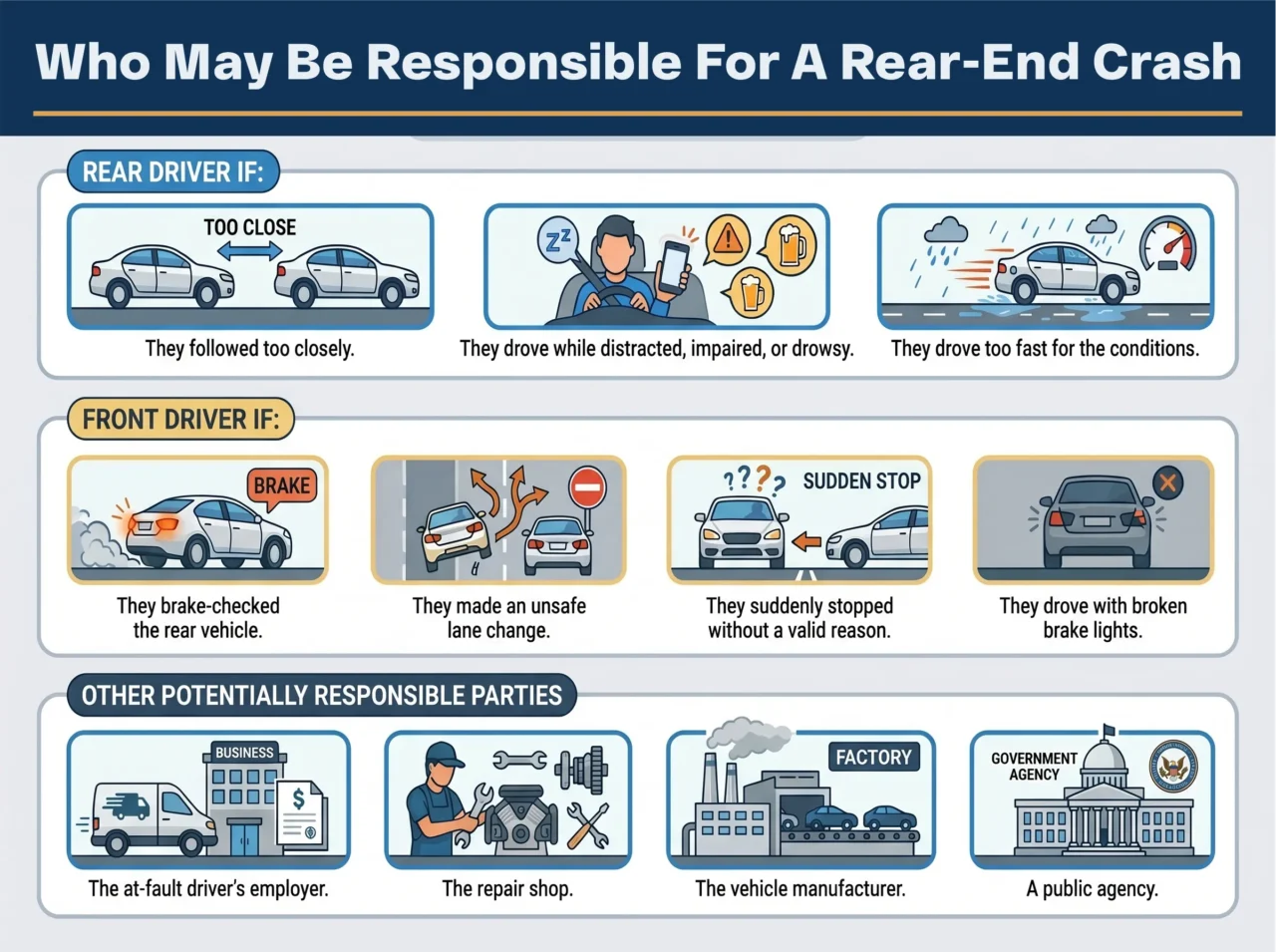
Many people assume the rear driver is always at fault. That assumption is too simple. California law requires drivers not to follow another vehicle more closely than is reasonable and prudent, given the speed, traffic, and road conditions.
The rear driver may be responsible if they:
- Followed too closely.
- Drove too fast for traffic.
- Texted or looked away.
- Drove while impaired or drowsy.
- Failed to brake in time.
- Ignored weather or road conditions.
Other parties can also share responsibility. A front driver may share fault if they:
- Made an unsafe lane change.
- Brake-checked another vehicle.
- Drove with broken brake lights.
- Stopped suddenly without a valid reason.
In less common cases, another party may share responsibility, such as an employer, repair shop, vehicle manufacturer, or public agency.
California uses comparative fault. If the injured person shares responsibility, their damages may be reduced by their percentage of fault. California Civil Jury Instructions explain that when a plaintiff’s negligence contributes to the harm, damages are reduced by the plaintiff’s percentage of responsibility.
For example, if the front driver is 25% at fault, that driver may still pursue the remaining 75% of recoverable damages.
California Deadlines For Rear-End Injury Claims
California deadlines depend on the type of claim and who caused the crash. Under the state’s statute of limitations, victims have two years to file a personal injury claim. Meanwhile, affected parties have three years to file property damage claims.
However, there are exceptions:
- Delayed Discovery of Injuries: Some rear-end accidents cause injuries with delayed symptoms. When this happens, the deadline may shift depending on when the injury was discovered or should reasonably have been discovered.
- Victims Under 18: When the victim, such as a passenger, is underage, the two-year time limit will generally not begin until they turn 18. A parent or court-approved guardian ad litem may bring the claim for the minor before then, but exceptions can apply.
- Government Claims: In some rear-end crashes, public entities can be liable. This can happen when a poor road design contributes to the incident. In such cases, victims have six months to file an administrative claim.
Frequently Asked Questions About Rear-End Accident Cases
It’s common for victims to face legal concerns after rear-end collisions. Below are some answers to the common questions about these types of cases.
Can I Still Have A Claim If I Had Back Or Neck Problems Before The Crash?
If there is a pre-existing condition, such as chronic neck or back pain, a rear-end collision can make it worse. When an accident worsens an existing condition, it may be a compensable aggravation. This follows California’s “eggshell plaintiff” rule, which means a person’s injuries are taken as they are, regardless of a pre-existing vulnerability.
Even if someone is more susceptible to injury, the negligent driver remains responsible for the harm resulting from the crash. Medical records are especially important in these cases. Doctors compare records, new imaging, symptoms, and treatment notes to show what changed after the crash. Without consistent documentation, insurance companies may argue that the symptoms were not caused by the accident.
Should I Report A Minor Rear-End Accident In California?
In some cases, both parties handle the matter through their respective insurers. However, under California Vehicle Code § 16000, you must file an SR-1 report with the California Department of Motor Vehicles (DMV) within 10 days of the crash if it involves:
- An injury or death to any person.
- Property damage over $1,000.
Can I Have A Serious Injury If My Car Does Not Look Badly Damaged?
Yes. Vehicle damage does not always match the force your body absorbs. A low-speed rear-end crash can still injure the neck, back, head, or spine, especially if your body was turned, tense, or unprepared at impact.
Medical records matter more than photos alone. Get evaluated if you have pain, stiffness, dizziness, numbness, headaches, or worsening symptoms.
Can I Sue For Whiplash After A Rear-End Collision In California?
You can bring a claim for whiplash if another party’s negligence caused the crash and your medical records support the injury. Negligence means someone failed to use reasonable care.
The strength of the claim depends on fault, medical documentation, treatment history, symptoms, work impact, and insurance coverage.
How Much Does It Cost To Hire An Accident Lawyer?
It depends on how complex the case is, since more complex cases usually require more time and resources, which can affect legal costs. The lawyer’s or law firm’s billing structure can also affect the total expense, depending on whether they charge by the hour or on a contingency fee basis.
However, if you are asking, “Do lawyers only get paid if they win?” Many personal injury lawyers, such as those from Arash Law, use contingency fee agreements. In that arrangement, the lawyer’s fee comes from the recovery if the case succeeds. Fee terms can vary, so ask the lawyer to explain case costs and what happens if there is no recovery before you sign anything.
When Do I Need A Lawyer After A Rear-End Accident?
If you’re thinking, “I need a personal injury lawyer,” you may need one if you suffered severe injuries and significant losses. A lawyer may also be necessary when there are liability disputes, which are common in rear-end collisions.
Talk to a lawyer after you get medical care, especially if you have ongoing pain, missed work, disputed fault, serious vehicle damage, or pressure from an insurance adjuster. A lawyer can help preserve evidence, review insurance coverage, calculate losses, and track legal deadlines.
Protect Your Rights After A Rear-End Accident
Rear-end collisions can leave you dealing with pain, medical bills, missed work, and insurance questions all at once. Even a crash that looks minor can lead to delayed symptoms, disputed treatment, or pressure from an insurer to settle before you know the full extent of your injuries.
If you were injured in a rear-end accident in California, Arash Law can review what happened and explain your legal options. Also known as AK Law, our firm has a team of rear-end accident lawyers that can help gather medical records, evaluate fault, communicate with the insurance company, and identify compensation for your treatment costs, lost wages, pain, and other losses.
Call (888) 488-1391 for a free case review. No attorney fees unless compensation is recovered for you.