TL;DR: Technology in truck accident cases provides black box, dashcam, and ELD data that can prove speed, braking, and Hours of Service violations to establish fault. Injured drivers and passengers can lose key evidence within 30 days, weakening claims for ER bills, surgery, lost wages, and pain and suffering.
Highlights:
- Get the truck’s company name, DOT number, and plate from the scene.
- Ask a truck accident lawyer to send a spoliation letter immediately.
- Request preservation of ECM/EDR, ELD logs, dashcam, telematics, and AEB data.
- Photograph vehicle damage, skid marks, debris, and roadway conditions before cleanup.
- Seek prompt medical care and keep records, including chiropractic care and follow-ups.
- Write down symptoms and a timeline of events while details are fresh.
- Have counsel compare ELD hours to applicable federal vs California HOS rules.
Tip: When speaking with insurers or investigators, stick to observable facts and direct all data requests through your attorney.
Table of Contents
Technology plays a major role in modern truck accident cases because trucks now record key crash data. This data can show speed, braking, driving hours, and driver behavior before impact. These records often help explain what happened when accounts conflict.
If a truck hits your vehicle, it may already contain digital evidence of the crash. That evidence can support fault analysis and claim development. However, trucking companies may overwrite or delete data during routine operations if it is not preserved.
In many cases, preserving electronic records early can affect how clearly a crash can be reconstructed. The timing of data preservation often matters as much as the data itself.
How Technology Is Transforming Truck Accident Cases In California
Modern trucks record digital data that helps clarify what happened in a crash. Attorneys use this information in California truck accident cases to support fault analysis.
These vehicles use several onboard systems that generate key evidence:
- Electronic Control Modules (ECMs): Record speed, braking, engine performance, and other vehicle data before and during a collision.
- Dashcams: Forward-facing cameras capture road conditions, traffic, and the events leading up to a crash. Driver-facing cameras may record distraction, cellphone use, seat belt use, drowsiness, or other driver behaviors before the collision.
- Telematics Systems: Track location, routes, driving behavior, and vehicle activity throughout a trip.
These systems can create records that do not rely on memory. They help attorneys compare facts against witness statements. They can reveal details that people may miss or forget.
Researchers continue to improve technology that detects unsafe driving behavior. In one study, a compressed Convolutional Neural Network (CNN) model analyzed images of drivers’ left eyes and mouths. Researchers trained the system using 70,000 images captured with a Logitech C920 HD Pro Webcam.
The model classified drivers into three categories: normal, yawning, and drowsy. The model achieved an accuracy rate of 89.5%. These results show how advanced technology may help identify fatigue in drivers.
Truck crashes often involve several vehicles and conflicting stories. That makes fault harder to determine. Digital evidence provides a clearer picture of what happened. The stronger the data, the stronger your claim may become.
What Types Of Electronic Data Are Collected After A Crash?
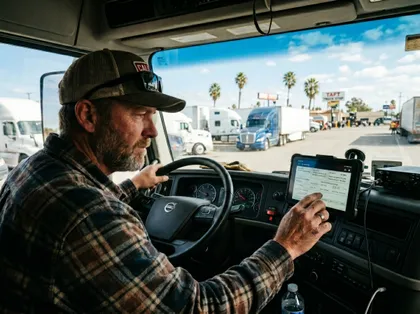
Modern trucks record several types of electronic data before and during a crash. That data helps show how the truck was operating and whether the driver followed safety rules. Two of the most important sources of evidence are often the truck’s ECM and, when the driver is covered by ELD rules, the ELD.
- Engine Control Module (ECM): Records performance data. Depending on the truck, it may capture speed, brake timing and force, acceleration, engine RPM, gear position, and seatbelt status.
- Electronic Logging Device (ELD): Records compliance data. It tracks the driver’s Hours of Service (HOS), including driving time, work hours, and rest periods.
Cell phone records, electronic dispatch messages, and in-cab communication systems can also provide valuable evidence after a truck crash. These records may help determine whether the driver was distracted or communicating with dispatch before the collision.
Truck accident lawyers and investigators pull specific data fields from these systems to rebuild what a truck was doing in the moments before a crash:
- Pre-Crash Speed: The truck’s speed in the seconds leading up to impact.
- Brake Application: Shows when the driver braked, how hard, and how long before impact.
- Sudden Acceleration or Deceleration: Abrupt speed changes that may signal a loss of control.
- Engine RPM & Gear Changes: Engine load and gear position at the time of the crash.
- Seatbelt Status: Whether the driver was buckled during the collision.
- Airbag Deployment: Whether airbags were activated and when they deployed.
- GPS Location & Route History: The truck’s exact position and path before the crash.
- Hours of Service Logs: How long the driver had been on duty before the collision.
Many modern trucks also have Automatic Emergency Braking (AEB) systems and AI-powered dashcams. AEB data may show whether the system detected a collision risk and how the driver responded. Dashcam footage captures road conditions and driver behavior just before impact. Attorneys use this information to help establish fault and build stronger truck accident claims. They also look for surveillance footage from nearby businesses and residential security cameras. An independent video may capture the collision or the moments leading up to it, helping verify how the crash occurred.
How Electronic Truck Data Can Prove Fault And Safety Violations
Technology helps attorneys establish negligence in a truck accident case by allowing them to identify safety violations and connect them to the crash. When a driver or trucking company breaks a safety rule, electronic data can reveal what happened and when.
A Federal Motor Carrier Safety Administration (FMCSA) safety violation may establish negligence per se under California law. Negligence per se means the law presumes negligence from the violation of a rule. You still must show that the violation contributed to your injuries.
Electronic data helps prove that connection. Attorneys can use ELD and ECM records to determine:
- Whether the driver exceeded legal driving limits.
- Whether the driver took the required rest breaks.
- Whether the truck was speeding before the crash.
- Whether the driver followed federal or state safety regulations.
The applicable Hours of Service (HOS) rules depend on where the truck is operated:
- Interstate Drivers: Federal Hours of Service rules generally limit driving to up to 11 hours after 10 consecutive hours off duty.
- Intrastate Drivers: California rules generally allow up to 12 hours of driving within a 16-hour work period, subject to additional conditions and exceptions.
That one-hour difference can determine whether a violation occurred. A driver who logs 12 hours on a California-only route may comply with state rules. The same driving time on an interstate route may violate the federal 11-hour driving limit.
Electronic records help identify which rules applied. They also show whether the driver stayed within those limits. The same data can expose false statements. If a driver claims they rested or obeyed speed limits, the records can confirm or contradict that claim.
Why You Must Act Quickly To Preserve Digital Evidence
The data a truck records does not last forever. Trucking companies overwrite older files as new data comes in. If you suffered injuries in a truck crash, critical evidence may disappear within weeks or months. It’s important to act quickly to preserve this evidence.
Electronic evidence that may be lost includes:
- ECM crash data that records how the truck operated before impact.
- Dashcam footage that captures road conditions and driver behavior.
- Telematics records that track location, routes, and vehicle activity.
Many systems use loop recording. When storage fills up, the system deletes the oldest files.
The exact retention period varies by carrier and technology provider. A 30-day retention period is a common industry practice, not a legal requirement. Some companies keep data for a shorter period. Others preserve it longer, especially during an investigation, claim, or lawsuit.
Attorneys protect evidence by sending a spoliation letter. This letter demands that the trucking company preserve all records related to the crash. Without it, proving that the company had a duty to save the evidence becomes more difficult.
Recoverable Damages Supported By Digital Evidence
Truck accident claims are substantially larger than typical car accident cases. A commercial truck can weigh 20 to 30 times more than a passenger car, so injuries may be more severe. These cases often involve large corporations with their own legal teams. When evidence shows clear wrongdoing, courts can also award punitive damages.
California law allows three types of financial compensation in truck accident cases. These are economic, non-economic, and punitive damages. When a crash is fatal, surviving family members may also bring a wrongful death claim.
Here’s what each type covers:
- Economic Damages: These cover your out-of-pocket medical costs, such as emergency care, surgery, physical therapy, and chiropractic treatment. Lost wages and reduced earning capacity are also included if your injuries affect your ability to work.
- Non-Economic Damages: These cover pain, suffering, and emotional distress. They also include loss of enjoyment of life. California does not cap these damages in most personal injury cases, so the more serious your injuries, the more valuable this part of your claim becomes.
- Punitive Damages: A court can award punitive damages in rare cases where a defendant acted with malice, fraud, or oppression. If ELD records show that a carrier knowingly ignored repeated Hours of Service violations, that evidence may help support a punitive damages claim if the facts meet California’s standard for malice, oppression, or fraud.
- Wrongful Death: If the crash caused a death, certain family members can file a wrongful death claim. They can seek compensation for the loss of financial support, companionship, and funeral costs.

Frequently Asked Questions About Truck Accident Cases
Truck accident claims raise questions that car accident claims do not. You may be confused and look for free advice from truck accident lawyers, since you may have to deal with federal rules, multiple liable parties, and electronic data that can disappear in a matter of days. The answers below address the questions clients ask most often. Since every crash involves different facts, use these answers as a starting point and speak with an attorney about the specifics of your case.
Do I Need A Lawyer For A Truck Accident?
Yes. Truck accident cases often involve federal regulations, multiple liable parties, and electronic evidence that can disappear quickly. If you are thinking, “I need a personal injury lawyer after this crash,” it is important to act quickly. A lawyer can preserve black box data, handle insurance companies, and gather the evidence needed to support your claim.
What Makes Truck Accidents Different From Car Accidents?
Truck accidents differ from car accidents because they involve federal regulations, larger insurance policies, and more potentially liable parties. They also tend to cause more severe injuries due to the size and weight of commercial trucks.
What Is A Truck’s Black Box (EDR)?
Many commercial trucks contain an Engine Control Module (ECM), and some also include Event Data Recorder (EDR) functions that capture crash-related information. These systems are often collectively referred to as the truck’s “black box.” It records engine status, speed, braking, and steering in the moments before, during, and after a crash. An EDR records performance data only. It does not capture audio or video.
Who Owns The Black Box Data After A Crash?
The vehicle owner or lessee usually owns the black box data after a crash. In most cases, that means the trucking company controls the data. Because the company controls access to the records, an attorney should act quickly to request and preserve the evidence before it disappears.
Can A Trucking Company Refuse To Provide Its Electronic Data?
A trucking company may object to producing electronic data. However, California discovery rules allow parties to seek electronically stored information, and a court can order production when the request is proper.
What If I Was Partially At Fault For The Truck Accident?
You can still recover compensation under California’s pure comparative negligence system. However, the court reduces your compensation by your percentage of fault. For example, if they assign you 20% of the fault, they reduce your compensation by 20%.
Do Lawyers Only Get Paid If They Win My Truck Accident Case?
Yes, if the truck accident attorney works on a contingency fee basis. The lawyer receives a percentage of your settlement or verdict only if the case succeeds. You generally don’t pay anything up front, and you don’t owe legal fees if the case does not succeed.
Get Legal Help Before Critical Evidence Disappears
Critical evidence from truck accidents does not last forever. Black box data, dashcam footage, and electronic logs can disappear if no one acts to preserve them.
If we take your case, Arash Law (also known as AK Law) can act quickly to protect key evidence and guide you through every step of the claims process.
Call us at (888) 488-1391 today for a free case review.