TL;DR: When a scaffold collapses on a construction site, liability can fall on contractors, property owners, or manufacturers whose safety failures caused workers’ falls and fractures. Workers’ compensation covers medical bills but bars suits against employers, leaving injured workers without coverage for full wage loss or pain and suffering.
Highlights:
- Report the injury immediately and request a copy of the incident report.
- Photograph the scaffold, base plates, bracing, guardrails, and surrounding ground.
- Ask who inspected scaffold planks before the shift and document names.
- Get medical care right away and keep records of symptoms and work restrictions.
- Preserve broken scaffold parts and rental tags, and request maintenance and delivery logs.
- Obtain copies of Cal/OSHA citations and investigation files through a public records request.
- Explore third-party claims against owners, contractors, suppliers, or manufacturers.
Tip: When speaking with insurers or investigators, stick to facts and clearly separate what you know from what you assume.
Table of Contents
Who is liable when a scaffold collapses on a construction site? The answer is rarely just one party. Property owners, general contractors, subcontractors, and scaffold suppliers can all share blame for the collapse. Determining liability in scaffold accident cases like these can be complex.
If you were hurt on a job site, you may think workers’ compensation, a state-mandated insurance system that covers on-the-job injuries, is your only option. In many cases, it is not. You may also be eligible to file a separate personal injury claim against a party other than your direct employer. It can cover losses that workers’ compensation does not.
Liable Parties In Scaffold Accidents On Construction Sites
Workers’ compensation benefits cover accidents, no matter who is at fault. However, you might also pursue additional compensation through a third-party claim. This is possible if someone else’s negligence caused the accident. Determining who may be liable after a scaffold accident is essential to understanding your legal options and the compensation available to you.
Identifying all potentially responsible parties can significantly affect the scope of damages you may be able to recover and help ensure that every available source of compensation is pursued.
Contractors And Property Owners
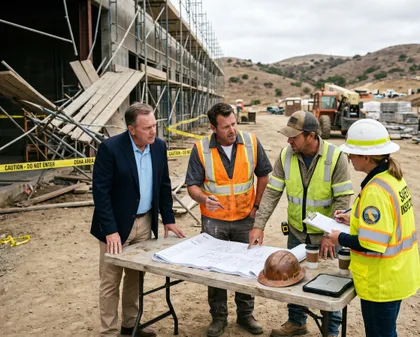
Owning the land and running the worksite are two different jobs. Who bears legal responsibility in a scaffolding accident follows that split. The key question is who controlled safety. If someone had that control and failed to use it, they could be responsible for your injuries:
- General Contractors and Managing Subcontractors: They have a legal duty to provide work conditions free from fall risks. Under California law, that duty can extend to all workers on the site, even those hired by other contractors, when the general contractor exercises control over safety in a way that affirmatively contributes to a worker’s injury.
- Property Owners: In California, property owners can be liable for scaffold collapses if their actions or negligence create unsafe conditions. For instance, they may be liable if they fail to disclose structural defects that compromise the scaffold’s stability.
California’s Privette doctrine gives property owners a legal shield. Under this rule, an owner is not liable for a contractor’s mistakes. The idea is that the contractor assumes responsibility for safety upon being hired. However, certain exceptions can break through that shield:
- Retained and Exercised Control (Hooker v. Department of Transportation (2002)): The owner directed how safety was handled, and that control played a role in causing the injury. If the owner required workers to use a scaffold that the contractor objected to, the owner may be liable.
- Known Concealed Hazard (Kinsman v. Unocal Corporation (2005)): The owner knew about a hidden danger on the property, such as unstable ground or live power lines, but did not warn the contractor. The hazard must be one that the contractor could not have found through a routine check.
California’s scaffold safety rules require that scaffold planks be inspected before every work shift. Federal OSHA rules further establish that a competent person should do so. If no one conducted those checks, the gap could indicate a failure in the safety duties the contractor was supposed to perform.
Scaffold accident lawyers can determine which parties held those roles. When site decisions were sound but a scaffold part still failed, the question of who is liable shifts to the equipment and those who made or supplied it.
Scaffold Manufacturer
Strict liability means a company can be held responsible for a flawed product, even if no one acted carelessly. If the scaffold itself was defective, the companies that made or rented it out may be liable for your injuries. You do not need to prove they were careless. A strict liability claim under California law generally requires victims to prove the following:
- The product was defective when it left the maker’s or supplier’s hands.
- It was used the way it was meant to be used.
- The defect caused your injury.
California law applies this rule to the full supply chain. Other possible liable parties can include:
- Makers of defective planks, couplers, or frames.
- Scaffold supplier companies.
- Rental companies that send out defective scaffolds.
Strict liability applies even if the company never checked the equipment before sending it out. That matters because it changes what you have to prove.
Workers’ Compensation Vs. Third-Party Claims In California Scaffolding Accidents
In California, injured scaffolding workers generally have two legal paths. One is a workers’ compensation claim against their direct employer. The other is a civil lawsuit against other negligent parties. Both can run at the same time, and pursuing both can help you seek the full compensation California law allows:
- Workers’ Compensation: This is generally the exclusive remedy against your direct employer under Section 3602 of the California Labor Code. That means that, in exchange for workers’ comp benefits, you typically cannot sue your employer in civil court for a scaffolding injury. Exceptions may apply, such as when the employer does not carry this coverage.
- Third-Party Claim: You bring it against a negligent party who is not your direct employer. These can include contractors, subcontractors, property owners, manufacturers, and other possible parties.
Here are some key differences:
| Question | Workers’ Compensation | Third-Party Claim |
|---|---|---|
| Do you need to prove negligence? | No. Benefits are available even if no one was at fault. | Yes, if negligence contributed to the scaffolding accident. |
| No, if it’s a product liability case, which focuses on whether a defective product caused the injury rather than someone’s negligence. | ||
| Are medical bills covered? | Yes. | Yes. |
| Are lost wages covered? | Yes, but only a portion of your lost income. | Yes, including the full value of lost income and future earning losses. |
| Can you recover non-economic damages (pain and suffering, emotional distress, etc.)? | No. | Yes. |
| What is the maximum compensation available? | Limited to workers’ compensation benefits under California law. | It may be substantially higher because more types of damages are available. |
Ultimately, workers’ compensation may cap what you can recover. Identifying whether a third party is liable can help you pursue compensation for other losses.
Cal/OSHA Safety Violations And Common Scaffold Collapses
In 2024, California records show 81 workers died in the construction industry. Falls, slips, and trips, including falls from heights, caused 43 of those deaths, a toll tied to the same safety failures that Cal/OSHA rules exist to prevent. When contractors or property owners break one of those rules, causing your injury, proof of that violation can support a third-party claim.
The California Code of Regulations sets scaffolding standards in the state. These detail the requirements for building, loading, and maintaining scaffolds. A collapse can occur due to the following violations:
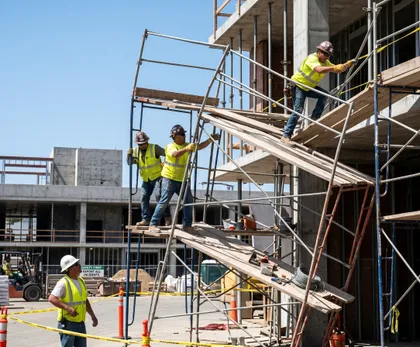
- Missing Guardrails: Any open side of a scaffold 7½ feet high or more must have guardrails, a stricter threshold than the federal 10-foot standard.
- Uneven Base Plates: Improperly installed or missing base plates destabilize the structure.
- Incomplete Cross-Bracing: Skipping or removing bracing strips away critical support.
- Overloading: Materials cannot exceed the scaffold’s rated load limit.
Construction accident attorneys can obtain Cal/OSHA investigation reports and citations by filing a public records request. These records name the specific safety failure on the worksite. That evidence supports the financial compensation, known as damages, you can pursue in your civil claim.
Compensation You May Pursue From Liable Parties
What can you actually recover once liability is established? Workers’ compensation is handled through your employer’s insurer. It pays for medical treatment related to your injury and a portion of the wages you lose while unable to work. Depending on the severity of your injuries, it may also provide temporary and permanent disability benefits, as well as supplemental job displacement benefits.
A third-party claim against the responsible third party goes much further. It can reach damages that workers’ compensation cannot cover at all, and for a seriously injured worker, that difference is substantial.
A third-party claim lets you seek the following:
- Economic Damages: These cover the financial impact of the scaffold accident, such as:
- Medical Bills: Costs of emergency care, hospital stays, and doctor visits. If treatments, such as physical therapy or chiropractic care, are necessary, their costs can also be included.
- Lost Wages: The wages you lost from time away from work. If a spinal cord injury or amputation ends your ability to work at the same level, you may also pursue reduced earning capacity.
- Out-of-Pocket Expenses: Injury-related costs such as home care, transportation to medical appointments, mobility equipment, and other necessary expenses resulting from a scaffold accident.
- Non-Economic Damages: These cover intangible losses due to your injuries, which can include the following:
- Pain and suffering.
- Emotional distress.
- Loss of enjoyment of life.
You may seek free advice from a scaffolding accident lawyer to help you determine what non-economic damages you may recover. Acting quickly after a fall gives you the best chance of preserving the evidence behind each of these damage claims.
Frequently Asked Questions About Scaffold Accident Cases In California
After a scaffold accident, you may have concerns that go beyond the basics. The answers below address those concerns and explain your legal options under state law.
What If I Were Partially At Fault For The Scaffold Accident?
You may still recover compensation depending on the facts of your case. California uses a rule called pure comparative negligence. Under this rule, your payout is reduced by your share of fault, but you are not barred from recovering. For example, if you are found 25% at fault, your compensation is reduced by 25%. You still have the right to pursue a claim.
Can I Sue A Co-Worker Who Assembled The Scaffold Incorrectly?
In most cases, no. California’s workers’ compensation system is your only legal option against a co-worker doing their job. You generally cannot file a personal injury lawsuit directly against them. However, a third party may also share responsibility. If a manufacturer, subcontractor, or rental company caused the faulty assembly, you can still sue that outside party.
What If There Were No Witnesses To My Scaffold Fall?
A lack of witnesses does not end your case. Physical evidence can be powerful on its own. Scene photos, broken equipment, and Cal/OSHA inspection reports can show what went wrong. Medical records from right after the fall also help. They document your injuries and show a clear timeline.
Do I Need An Attorney If Workers’ Compensation Is Already Paying My Medical Bills?
Workers’ compensation covers medical bills and part of your lost wages, but it has limits. A third party, such as a scaffold manufacturer or general contractor, may have contributed to your accident. If so, a separate civil claim may let you pursue losses that workers’ compensation does not cover. An attorney can assess whether that option applies to your situation.
How Do I Know If The Scaffolding Was Defective?
You don’t need to figure this out on your own. Attorneys use Cal/OSHA reports, maintenance records, and structural engineers to identify defects. They inspect the equipment and look for safety violations or design flaws. If Cal/OSHA cited the worksite after your fall, that report is strong evidence of a safety problem.
How Much Does It Cost To Hire An Attorney For A Construction Injury?
Construction injury attorneys work on a contingency fee basis. That means you pay no upfront money and no hourly fees. Many injured workers ask: Do lawyers only get paid if they win? Yes. Your attorney’s fees come out of any settlement or verdict they obtain for you.
If the case does not result in a recovery, you owe no attorney’s fee. You can speak with an attorney at no upfront cost to find out whether your case is worth pursuing.
Call Arash Law After A Scaffold Accident In California
If you’re thinking, “I need a personal injury lawyer,” Arash Law, which also goes by the name AK Law, is ready to help. A scaffold fall can lead to a complex injury claim. Construction sites change fast. Our scaffolding accident lawyers can help gather evidence and identify every liable party other than your employer. We know how to seek accountability from subcontractors, equipment manufacturers, and property owners in construction cases. Call (888) 488-1391 today to schedule your free initial consultation.