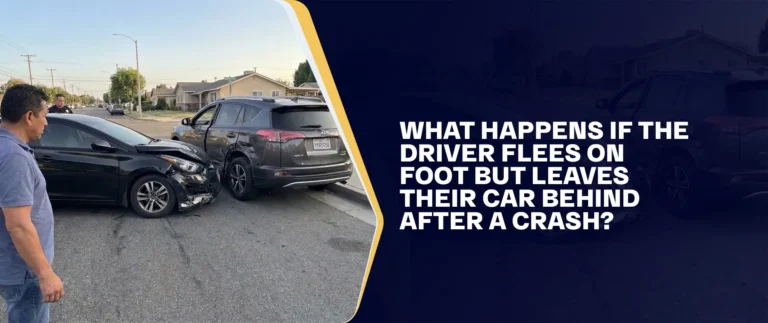
TL;DR: Fault in a multi-car collision in California is divided among all drivers who contributed to the crash based on their percentage of blame under pure comparative negligence. You can still recover compensation even if you are partially at fault, but your fault share reduces your payout. The 2-year personal injury deadline can bar late lawsuits, but some cases have different deadlines or limited exceptions.
Highlights:
- Document each vehicle’s position, damage, license plate, and insurance information.
- Avoid guessing who hit first when speaking with insurers.
- Ask for the police report number before leaving the scene.
- Preserve dashcam, EDR, traffic-camera, and business footage quickly.
- File an SR-1 within 10 days when California law requires it.
- Track the 2-year injury, 3-year property, and 6-month government deadlines.
- Get medical care, including chiropractic care, if symptoms develop.
Tip: Keep your statements factual. Do not guess about speed, fault, or the impact order until the evidence is reviewed.
Table of Contents
The fault in a multi-car collision depends on what each driver did before, during, and after the impact. In California, investigators, insurers, or courts look at the crash sequence and assign each responsible party a percentage of fault.
Chain-reaction crashes are difficult because a single impact can trigger another. Evidence helps show which driver started the crash and whether others contributed.
California uses a system called comparative negligence. Insurance companies or courts assign each driver a percentage of fault and reduce compensation accordingly.
Who Is At Fault In Common Multi-Car Crash Scenarios?
Fault in a multi-car crash depends on the first harmful event, the order of impacts, and whether each driver acted safely. The first driver to cause a collision is often a key at-fault party, but other drivers may share fault if they were speeding, distracted, tailgating, or making unsafe lane changes.
| Crash Scenario | Who May Be At Fault? |
|---|---|
| Chain-reaction rear-end crash | The driver who started the rear-end sequence may be primarily at fault. Other drivers may share fault if they followed too closely or failed to brake. |
| Intersection crash | A driver who ran a red light, failed to yield, or made an unsafe turn may be at fault. Other drivers may share fault if they were speeding or distracted. |
| Lane-change crash | A driver who merged without signaling, checked too late, or entered a blind spot may be at fault. |
| Weather-related pileup | Drivers who failed to slow down for rain, fog, smoke, or slick roads may share fault. |
| Freeway pileup | More than one driver may be at fault if speed, tailgating, sudden braking, or unsafe merging contributed to the crash. |
A multi-car crash fault is rarely based on one driver’s story alone. Insurers often review vehicle damage, driver statements, video footage, police reports, and crash data before assigning blame. When the sequence of events is unclear, traffic accident lawyers can review the evidence, identify all responsible parties, and challenge unfair fault determinations.
How Does California Assign Liability In A Pile-up?
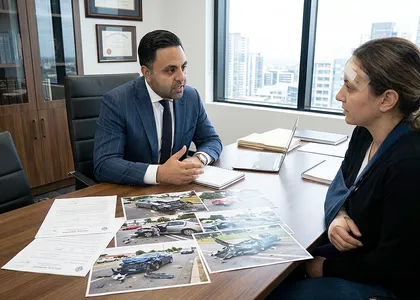
California law divides fault in a pile-up by examining whether each driver used reasonable care under the circumstances. Every driver has a duty to operate their vehicle safely and avoid causing harm to others. If more than one driver breached that duty, California’s pure comparative negligence system assigns each a percentage of fault.
You can still recover damages even if you were partly at fault, but your share of fault reduces your compensation. For example, if you were 20% at fault and your damages total $100,000, you can still recover $80,000.
To prove negligence, you must show these four elements:
- Duty of Care: Each driver must drive safely and follow traffic laws.
- Breach of Duty: A driver breaches that duty by speeding, texting, or driving carelessly.
- Causation: The breach directly causes the crash.
- Damages: You suffer real losses, such as medical bills or lost income.
California treats damages in two ways. For economic losses such as medical bills and lost wages, more than one at-fault driver may be legally responsible for paying the full amount of those damages. For non-economic damages like pain and suffering, each driver pays only the portion that matches their percentage of fault under Proposition 51.
What Evidence Proves Fault After A Multi-vehicle Accident?
Determining who is at fault in a car accident can be difficult, especially in a multi-vehicle crash. Evidence proves fault in a multi-vehicle accident by showing the order of impacts, vehicle speeds, driver reactions, traffic-law violations, and injury patterns. Physical and digital evidence often matters more than driver memory because pileups happen quickly, and witnesses may see only part of the crash.
Here are the key types of evidence you can use to determine fault:
| Evidence | Why It Matters |
|---|---|
| The event data recorder records | EDR data may show speed, braking, throttle use, steering input, and impact force. |
| Dashcam footage | A video can show the initial impact, lane positions, and whether a driver stopped or swerved. |
| Vehicle damage patterns | The location and severity of damage can indicate the direction of impact and the crash sequence. |
| Police or CHP report | The report may include diagrams, statements, citations, and officer observations. |
| Witness statements | Witnesses may confirm light color, speed, lane changes, braking, or distraction. |
| Medical and chiropractic records | Treatment records connect your injuries to the crash and help explain multi-impact trauma. |
| Photos and scene evidence | Debris, skid marks, resting positions, road conditions, and weather can help reconstruct the crash. |
| Insurance and repair records | Repair estimates and total-loss reports can help illustrate the severity of the impact and vehicle damage. |
Some evidence can be overwritten, deleted, repaired, or lost. Preserve photos, videos, vehicle data, repair records, and witness information as soon as possible.
How Long Do You Have To File A Multi-car Crash Claim?
The deadline to file a claim in California depends on the type of case and who was involved.
- For personal injury, the California Code of Civil Procedure § 335.1 generally gives you 2 years from the date of the crash to file a lawsuit. If you miss this deadline, you may lose your right to go to court.
- For property damage only, the CCP § 338 generally gives you 3 years from the date of the crash to file a case.
- If a public agency, government vehicle, or public employee may be responsible, the California Government Claims Act (Gov. Code § 911.2) generally requires you to file a written government claim within 6 months before filing a lawsuit.
- You must also file an SR-1 form with the DMV within 10 days if anyone is injured, killed, or if property damage is over $1,000.
Because deadlines vary by case, it helps to speak with a lawyer who handles car accident cases as soon as possible. They can determine which filing deadlines apply and help protect your right to recover compensation.
Frequently Asked Questions About Multi-car Collisions
Below are answers to commonly asked questions explaining how California handles fault, insurance coverage, and compensation after a multi-car crash.
Am I At Fault If I Was Pushed Into The Car In Front Of Me?
You are often not at fault for hitting the car in front of you if another driver pushed your vehicle from behind. In California, the driver who rear-ends you is usually responsible, but fault can still be shared depending on how each driver acted before the crash.
Damage patterns can help show how the crash happened and which car hit first. Vehicle event data recorders may also show speed and braking before impact, as well as what occurred in the collision.
What Happens If An At-Fault Driver Does Not Have Enough Insurance?
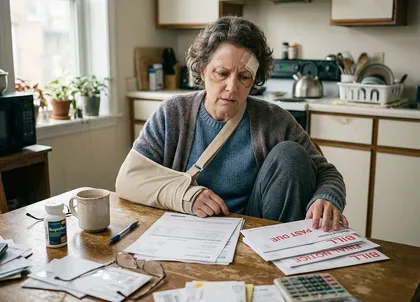
When such an event happens, you may pursue claims against other at-fault drivers if they share responsibility. You may also use your uninsured or underinsured motorist coverage, if your policy includes it, to help cover the remaining damages.
Liability limits define the maximum amount an at-fault driver’s insurance will pay for injuries and losses. California minimum auto liability limits are $30,000 for injury or death to one person, $60,000 for injury or death to more than one person, and $15,000 for property damage. These limits may be too low for serious injuries in multi-car crashes.
How Does A Fault Assessment Affect My Car Insurance?
If you are found at fault, your liability coverage pays damages up to your policy limits. Your insurance rates may increase, and your insurer may choose not to renew your policy. If you were not principally at fault, you may seek compensation from the responsible driver’s insurer. Your own insurer should not treat you as principally at fault unless it has a proper basis to do so.
What Should I Do If I Disagree With The Insurance Adjuster’s Fault Decision?
You can challenge a fault decision in writing. Supporting evidence like photos, witness statements, or EDR data can strengthen your dispute. If the insurer does not change its decision, ask about its fault-dispute or review process and submit any additional evidence supporting your position. If the insurer still disagrees, a multi-car collision lawyer can help.
Can I Still Get Compensation If I Was Partially To Blame For The Pile-Up?
Yes. California’s comparative negligence rule allows you to recover compensation even if you were partly at fault. Your percentage of fault reduces your recovery. Seeking free advice from a multi-car collision lawyer gives you a better understanding of your legal options.
Why Are Police Reports Not Always The Final Word On Fault?
Police reports do not have the final say on who was at fault. Officers usually arrive after the crash, when the scene has already changed. Their report relies on statements from drivers and witnesses rather than a full technical analysis. Physical evidence, such as EDR data, tire marks, and vehicle damage, can provide a clearer picture of what happened.
Can A Passenger Be At Fault In A Multi-Car Collision?
A passenger is usually not at fault for a multi-car collision. However, a passenger could be included in the fault analysis in rare cases, such as grabbing the steering wheel, blocking the driver’s view, or knowingly distracting the driver in a way that contributes to the crash.
Speak With An Experienced Attorney For Your Multi-Car Accident Case
Handling several insurance companies after a pileup can be stressful. Each insurer may blame a different driver, reduce your payout, or argue that your injuries came from another impact. If you are thinking, “I need a personal injury lawyer,” legal guidance can help you understand fault, preserve evidence, and avoid statements that weaken your claim.
Arash Law, also known as AK Law, can review crash reports, medical records, chiropractic records, insurance coverage, and physical evidence. We also communicate with insurers, respond to unfair fault assignments, and look for all available sources of compensation.
You may wonder, “Do lawyers only get paid if they win?” In many multi-car crash cases, attorneys work on a contingency fee basis. This means attorney fees are paid only if compensation is recovered. There are no upfront attorney fees.
If you were injured in a multi-car crash and are unsure where you stand, we can help. Call (888) 488-1391 for a free initial consultation.