TL;DR: Legal e-bikes in California have operable pedals, a 750W or less motor, and meet Class 1, 2, or 3 speed caps (20 or 28 mph). Bikes modified to exceed 750 watts, to achieve motor-only speeds above 20 mph, or to remove operable pedals fall outside the e-bike definition.
In California, a legal electric bicycle must have fully operable pedals. This electric motor does not exceed 750 watts and meets the requirements for a Class 1, Class 2, or Class 3 e-bike. Class 1 and Class 2 motor assistance is capped at 20 mph, while Class 3 pedal assistance is capped at 28 mph. Vehicles modified to exceed 750 watts, exceed 20 mph on motor power alone, or remove their operable pedals fall outside California’s definition of an electric bicycle.
California also regulates e-bike equipment, batteries, modifications, rider age, and helmet use. Those rules matter both when deciding whether a bike is legal to operate and when a crash raises questions about fault, insurance, or the bicycle’s condition.
Key Facts
- Pedals and motor power matter. California Vehicle Code (CVC) §312.5 requires fully operable pedals and an electric motor that does not exceed 750 watts. A motor rated at exactly 750 watts falls within that limit.
- California recognizes three e-bike classes. Class 1 provides pedal assistance up to 20 mph, Class 2 may use motor-only propulsion up to 20 mph, and Class 3 provides pedal assistance up to 28 mph and must have a speedometer.
- The motor needs a shutoff mechanism. CVC §24016 requires qualifying e-bikes to satisfy applicable federal bicycle equipment and manufacturing requirements and to use a braking or control mechanism that causes the motor to disengage or stop functioning.
- Battery rules changed in 2026. Senate Bill (SB) 1271 made specified testing, labeling, and compliance requirements for the distribution, sale, and lease of covered e-bikes, batteries, and charging systems operative January 1, 2026. Separate rental provisions become operative January 1, 2028.
- E-bikes need rear-visibility equipment at all times. Assembly Bill (AB) 544 amended CVC §21201 so that electric bicycles must have the qualifying rear reflector or rear light described in the statute during both daytime and darkness.
- Class 3 bikes have stricter age and helmet rules. A rider must be at least 16 to operate a Class 3 e-bike, and operators and passengers must wear a qualifying helmet. Effective January 1, 2026, CVC §21212.5 also prohibits selling a Class 3 e-bike to someone under 16.
Table of Contents

What Makes an E-Bike Legal in California?
CVC §312.5 defines an electric bicycle as a bicycle equipped with fully operable pedals and an electric motor that does not exceed 750 watts of power. To qualify under CVC §312.5, a bike must meet two hardware requirements:
- Operable Pedals: The bike must have working pedals that the rider can use.
- Motor Output: The electric motor must not exceed 750 watts. A motor rated at exactly 750 watts meets this standard.
If a bike meets CVC §312.5, it is treated as an electric bicycle under California law; if it does not, different vehicle rules may apply. Qualifying bikes are then divided into three classes, each with its own speed cap and propulsion rules.
California imposes additional equipment requirements under CVC §24016. Electric bicycles must comply with applicable U.S. Consumer Product Safety Commission bicycle equipment and manufacturing requirements. Electric bicycles must also meet applicable U.S. Consumer Product Safety Commission requirements for bicycle equipment and manufacturing. Under CVC §24016, the motor must stop when the brakes are applied. Alternatively, the bike may use a motor-control switch or mechanism that stops the motor when that control is released or activated.
The Three Legal Classes of E-Bikes
California separates e-bikes by how the motor provides assistance and when that assistance stops.
| Class | How the Motor Works | Assistance Limit |
|---|---|---|
| Class 1 | Assists while the rider pedals | 20 mph |
| Class 2 | May propel the bike without pedaling | 20 mph |
| Class 3 | Assists while the rider pedals | 28 mph |
Class 3 e-bikes must also have a speedometer. Class 1 and Class 3 bikes may use limited start-assist or walk mode, as permitted by state law.
A throttle does not automatically make an e-bike illegal. Class 2 bikes may use motor-only propulsion within the applicable speed limit.
California E-Bike Requirements With Specific Effective Dates
Some California e-bike requirements took effect on specific dates. The dates below help identify when each rule became applicable without tying the discussion to a particular publication year.
-
Battery Testing and Labeling: Certain battery testing and labeling requirements became effective on January 1, 2026. They apply to covered e-bikes, batteries, and charging systems offered for distribution, sale, or lease.
Separate requirements for specified rental activity are scheduled to become operative on January 1, 2028.
-
Rear Visibility During All Hours: California law requires electric bicycles to have qualifying rear-visibility equipment at all times, including during daytime operation.
A compliant e-bike may use the red rear reflector or a qualifying rear light specified by law.
- Modification Software and Devices: California law restricts the sale of products, devices, and applications designed to alter an e-bike’s speed capability so that it no longer meets the state’s electric-bicycle definition.
- Class 3 Sales to Minors: Effective January 1, 2026, California law prohibits the sale of a Class 3 e-bike to a person under 16.
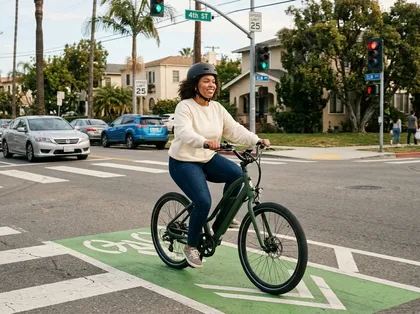
What Age and Helmet Rules Apply?
Riders under 18 are generally required to wear a properly fitted bicycle helmet under California Vehicle Code §21212.
Class 3 e-bikes are subject to additional requirements under CVC §21213:
- Minimum Age: A rider must be at least 16 to operate a Class 3 e-bike.
- Helmet Use: Class 3 operators and passengers must wear a qualifying helmet, regardless of age.
- Trail and Facility Access: Under CVC §21207.5, local authorities and public agencies may restrict e-bike use on certain trails and recreational facilities, so riders should check the rules for their specific route.
- Licensing and Registration: A qualifying e-bike generally does not require a driver’s license, vehicle registration, or license plate under CVC §24016.
Were you injured while riding an e-bike in California? Arash Law offers free case evaluations. Call (888) 488-1391 to discuss how the bike, road conditions, insurance, and other crash evidence may affect a claim.
Why E-Bike Legal Status Matters After a Crash
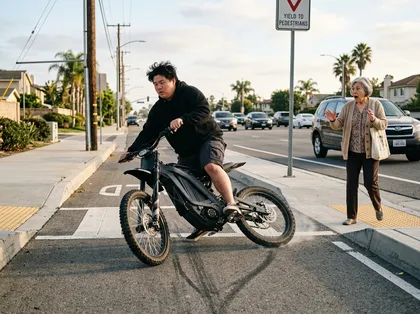
An e-bike’s classification or condition may matter if it relates to how a collision occurred or to the injuries being claimed.
For example, an insurer may inspect the bike’s motor, controller, class label, or modifications. The presence of an illegal modification does not automatically establish fault.
California uses comparative fault when more than one person’s negligence contributed to an injury. Any reduction in compensation depends on the evidence connecting a person’s conduct to the harm.
Helmet use can raise a separate issue when a claim involves head injuries. Failure to wear a required helmet does not, by itself, establish who caused the collision.
A 2026 study using data from the California Statewide Integrated Traffic Records System identified 1,566 e-bike injury incidents in 2024. The figure reflects incidents captured and identified in that dataset, rather than all e-bike injuries that occurred statewide.
E-bike classification, modifications, road conditions, and insurance issues can all affect how a claim is evaluated after a crash. Riders may also have questions about what type of lawyer handles an e-bike accident or whether bicycle accident lawyers can help with the liability and evidence issues involved.
What to Do Immediately After an E-Bike Crash
Preserving evidence early can help clarify how the crash happened and whether the bicycle’s condition played a role.
- Keep the e-bike in its post-crash condition. Avoid repairing, altering, or disposing of it before its condition can be documented.
- Photograph the scene and damage. Capture the bike, other vehicles, road conditions, traffic controls, and visible injuries.
- Identify video sources. Nearby businesses, homes, transit systems, or agencies may have footage that is not kept indefinitely.
- Seek appropriate medical care. Medical records can document injuries, symptoms, and treatment.
- Identify public property issues. A dangerous roadway or other government-controlled condition can trigger additional claim requirements.
What Deadlines Can Apply?
Different deadlines apply to different parts of a California injury claim.
| Issue | General Deadline |
|---|---|
| Personal injury lawsuit | Two years in many cases |
| Property damage lawsuit | Three years in many cases |
| Public entity injury claim | Six months for claim presentation in many cases |
| Evidence preservation | No fixed universal period; evidence may disappear much sooner |
Legal basis: Code of Civil Procedure §§335.1 and 338 and Government Code §911.2.
Missing a statute of limitations or a required government-claim deadline can bar that claim. Waiting to preserve video, records, or physical evidence may instead weaken the available proof.
Limited exceptions can change these timelines, so the facts of a particular claim matter.
What If a Road Condition Involves Caltrans?
A crash involving a state-controlled roadway may require a claim involving the California Department of Transportation (Caltrans).
The filing route can depend on the type and value of the claim. Caltrans handles certain claims directly, while others are routed through the Department of General Services, Office of Risk and Insurance Management.
Because public-entity procedures can begin well before the ordinary civil filing deadline, identifying the responsible agency early can be important.
Frequently Asked Questions About E-Bike Laws in California
Is a 750W E-Bike Legal in California?
Yes. A motor rated at exactly 750 watts falls within California’s power limit, provided the bike also has operable pedals and meets the requirements of a recognized e-bike class.
Can I Ride My E-Bike on the Sidewalk in California?
It depends on where you are riding. State law does not set a single statewide rule for e-bike sidewalk riding. Whether you can ride on a sidewalk depends on where you are, so confirm the applicable rules for your specific location before riding on any sidewalk.
Do I Need a Driver’s License for an E-Bike?
Generally, no. A bike that qualifies as an electric bicycle under California law does not require the driver’s license, registration, or license plate required for motor vehicles.
A vehicle that falls outside the e-bike definition may be subject to different rules.
Is a Helmet Required to Ride an E-Bike in California?
Yes, in two situations: riders under 18 must wear a helmet where CVC §21212 applies, and Class 3 operators and passengers must meet the helmet requirements in CVC §21213. Failure to wear a required helmet may be relevant to an injury claim if evidence links the nonuse to the injuries claimed.
Get Legal Help After a California E-Bike Accident
If you were hurt in a California e-bike accident, call Arash Law at (888) 488-1391 for a free case evaluation. Arash Law handles e-bike and bicycle injury cases on a contingency fee basis, so attorney’s fees are generally owed only if the firm recovers compensation for you.
Our attorneys can evaluate whether the bike’s classification, modifications, helmet use, road conditions, or other facts may affect liability and damages.
Make Them Pay, Call AK.
Sources
- California Vehicle Code §312.5: Electric Bicycle Definition and Classification. California Legislative Information. leginfo.legislature.ca.gov
- Code of Civil Procedure §335.1: Two-Year Statute of Limitations for Personal Injury and Wrongful Death. California Legislative Information. leginfo.legislature.ca.gov
- Government Code §911.2: Six-Month Deadline for Government Tort Claims. California Legislative Information. leginfo.legislature.ca.gov
- California Vehicle Code §21201: Bicycle Equipment Requirements. California Legislative Information. leginfo.legislature.ca.gov
- California Vehicle Code §21212: Helmet Requirement for Minors on Bicycles and Electric Bicycles. California Legislative Information. leginfo.legislature.ca.gov
- California Vehicle Code §21213: Class 3 Electric Bicycle Requirements. California Legislative Information. leginfo.legislature.ca.gov
- California Vehicle Code §21212.5: Class 3 Electric Bicycle Sales to Minors. California Legislative Information. leginfo.legislature.ca.gov
- Austin, J., et al. “An Exponential Increase in E-Bike Injuries in California.” Trauma Surgery & Acute Care Open, 2026. PubMed Central / National Library of Medicine. ncbi.nlm.nih.gov
- SB 1271 (Chapter 791, Statutes of 2024): Electric Bicycles, Powered Mobility Devices, and Storage Batteries. California Legislative Information. leginfo.legislature.ca.gov
- SB 1271 (Chapter 791, Statutes of 2024): CalMatters Digital Democracy. calmatters.digitaldemocracy.org
- AB 544 (Chapter 36, Statutes of 2025): Electric Bicycles: Required Equipment. California Legislative Information. leginfo.legislature.ca.gov
- AB 545 (Chapter 37, Statutes of 2025): Vehicles: Electric Bicycles. California Legislative Information. leginfo.legislature.ca.gov
- California Department of Insurance. SB 1107 New Minimum Auto Insurance Limits, effective January 1, 2025. insurance.ca.gov
Disclaimer
Past results do not guarantee future outcomes. Every case is different. The information on this page is for general educational purposes and does not constitute legal advice. No attorney-client relationship is formed by reading or relying on this content. If you were injured, consult a licensed California personal injury attorney about your specific situation. Arash Law: (888) 488-1391.