TL;DR: Yes, passengers can file a claim when a friend causes the crash. Applicable auto liability insurance may cover the claim, though other coverage may also apply if the available liability coverage is insufficient. Act quickly to preserve the medical evidence your claim depends on and to meet applicable deadlines.
You can file a personal injury claim against a friend who caused a California crash. In most cases, that claim is handled through your friend’s auto insurance up to the policy limits, though coverage may be denied, excluded, or insufficient in some situations. This is not a loophole or a betrayal. Liability insurance is designed to cover certain losses caused by an insured driver.
Additionally, being a passenger does not automatically guarantee compensation. You generally still need evidence showing that your friend or another party was legally responsible for the collision and that the crash caused your injuries and losses. Even if your friend admits causing the accident, an insurer may independently investigate liability, causation, and damages.
Key Facts
- Passengers injured by a friend’s driving generally make a claim through the friend’s applicable auto liability coverage. If the claim is covered and resolved within the policy limits, the insurer generally pays the covered amount.
- Under SB 1107, effective January 1, 2025, California’s minimum auto liability limits are $30,000 per person, $60,000 per accident, and $15,000 for property damage (California DMV).
- Under California’s pure comparative fault rule (Li v. Yellow Cab Co., 1975), a passenger’s recovery can be reduced by their own percentage of fault, if any.
- Medical Payments (Med-Pay) coverage, if available, can pay medical bills regardless of who caused the crash.
- Some policies exclude liability coverage for bodily injury to an insured, which can affect certain household members depending on how the policy defines who is insured.
- California generally allows two years from the date of the accident to file a personal injury lawsuit (CCP § 335.1).
- If a public entity may share fault, such as for a road defect, a government claim generally must be presented within six months (Gov. Code § 911.2).
Table of Contents

Knowing the driver or voluntarily riding in their car does not, by itself, prevent you from pursuing a personal injury claim. You still generally need to establish liability, causation, and compensable damages, and the amount you may recover depends on the facts and available coverage.
What Covers an Injured Passenger Claim?
Coverage for an injured passenger depends on who caused the crash, who owned the vehicle, and what insurance was in effect at the time. In some cases, one policy may be enough. In others, several sources must be reviewed to determine how much compensation may be available.
Possible sources include:
- Your Friend’s Liability Insurance: If your friend caused the crash, liability coverage may be available under the policy covering the vehicle, your friend’s own auto policy, or both. California’s minimum auto liability limits are generally $30,000 for injury or death to one person, $60,000 for injury or death to more than one person in one accident, and $15,000 for property damage.
- Other Driver’s Liability Insurance: If another driver shares fault, their policy may cover your damages as well. How responsibility is divided depends in part on the type of damages: California generally apportions non-economic damages according to each defendant’s percentage of fault, while different rules apply to economic damages.
- Vehicle Owner’s Policy: If the car your friend was driving belongs to someone else who is permitted to use it, that owner’s liability policy may also apply. Coverage order and priority depend on the policy terms.
- Uninsured/Underinsured Motorist (UM/UIM) Coverage: If the at-fault driver has no insurance or has liability limits lower than your applicable UIM limits, your own UM/UIM coverage may provide additional compensation, subject to the policy terms and California Insurance Code § 11580.2. California insurers must offer UM/UIM coverage.
- Rideshare or Commercial Coverage: If your friend was driving for Uber, Lyft, or another paid service, different insurance may apply. Coverage depends on the driver’s app status, and personal auto policies may limit or exclude rideshare use. In California, transportation network companies (TNCs) must provide $1 million in primary commercial liability coverage from the time a driver accepts a ride request through the completion of the ride.
- Your Own Auto Policy: Some first-party auto coverages can protect an insured while occupying a vehicle they do not own. For example, applicable UM/UIM coverage may follow the insured person in qualifying circumstances rather than being limited to crashes involving that person’s own vehicle. Whether your policy applies depends on its terms, the vehicles involved, and statutory exclusions.
- Medical Payments (Med-Pay) Coverage: Med-Pay can pay covered medical expenses regardless of who caused the crash. Depending on the policy, coverage may extend to the insured, family members, or passengers in the covered vehicle. Because liability claims often are not paid immediately, available Med-Pay or health coverage can also be important while the injury claim remains pending.
- Government Entity Liability: If a road defect, poor signage, or a maintenance failure contributed to the crash, a government entity, such as a city, county, or Caltrans, may share fault. Claims against a public entity follow different procedures and shorter deadlines than claims against a private driver’s insurer.
Passenger accident lawyers can handle cases in which multiple coverage layers apply, including overlapping coverage disputes that require careful analysis of each policy at play.
How to Protect Your Friendship While Filing a Claim
Filing an insurance claim does not necessarily mean suing your friend. In most cases, the process starts with a claim with the applicable auto insurer. If the insurer accepts coverage and the parties reach a settlement, a lawsuit may never be needed.
It can help to explain to your friend that the claim is being handled through insurance rather than as an immediate attempt to collect money from them personally. If the claim is covered and resolved within the available policy limits, the insurer generally pays the covered amount.
However, your friend could face personal financial exposure if:
- The damages exceed the available policy limits.
- The insurer denies coverage, or an exclusion applies.
If liability, coverage, or the value of the claim remains in dispute, filing a lawsuit may be necessary. In that situation, your friend may be named as a defendant. For a covered claim, the liability insurer generally provides a legal defense and may pay covered damages up to the applicable limits.
If your friend offers to pay you directly to avoid involving insurance, consider the risks before accepting money or signing anything. Injuries may require more treatment than expected, and medical expenses or lost income can increase over time.
A release is a legal document in which you give up specified claims in exchange for payment. Signing one before you understand the full extent of your injuries and losses may prevent you from seeking additional compensation later.
Insurance companies also use adjusters and attorneys to investigate claims and decide what they are willing to pay. The adjuster represents the insurer’s interests, not the injured passenger’s. Be especially careful before:
- Giving a recorded statement.
- Signing broad medical authorizations.
- Accepting an early settlement.
Using the insurance process can help separate the personal relationship from the legal claim. You can focus on your recovery and your friendship while the insurer addresses coverage, liability, and compensation.
How California’s Comparative Fault Rules Affect Passenger Claims
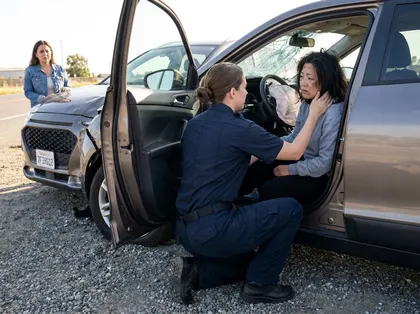
California follows pure comparative fault. If an injured passenger shares responsibility for the harm, their compensation can be reduced by their percentage of fault. The California Supreme Court adopted this rule in Li v. Yellow Cab Co. (1975). Civil Code § 1714 also reflects California’s general rule that people are responsible for injuries caused by a lack of ordinary care.
A passenger who simply rides in a vehicle is not at fault merely because their friend caused the crash. However, a passenger’s own conduct may become relevant if it contributed to the collision or injuries. Examples may include grabbing the steering wheel or otherwise interfering with the driver’s ability to operate the vehicle safely.
When several parties share responsibility, the type of damages affects how liability is divided:
- Non-Economic Damages: Under Civil Code § 1431.2, each defendant is responsible only for the share of non-economic damages, such as pain and suffering, that corresponds to that defendant’s percentage of fault.
- Economic Damages: These losses, such as medical expenses and lost wages, are generally subject to joint and several liability in California. That means one jointly liable defendant may be responsible for the full amount of those damages in applicable cases.
Evidence about how the crash happened is important when fault is disputed. Witness statements, photos, video, police reports, and other evidence may help determine whether the passenger, the friend, another driver, or another party shares responsibility.
Protecting Your Passenger Injury Claim
What you do after the crash can affect both the strength and value of your claim. Important evidence may become harder to obtain over time, and insurance or filing deadlines may apply before you expect them.
The following steps can help protect your rights while your claim is being evaluated:
- Seek prompt medical care. Get evaluated if you are injured or develop symptoms after the crash. Tell your medical provider when the accident happened and describe your symptoms accurately. Medical records can help document the connection between the crash and your injuries.
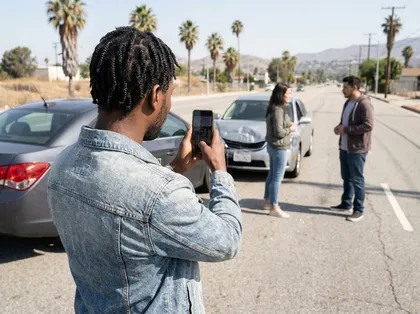
- Document the scene and gather information. Photograph vehicle damage, road conditions, visible injuries, and other relevant details. Collect contact, license plate, and insurance information from the drivers involved, as well as from witnesses.
- Avoid posting about the claim on social media. Insurers or defense attorneys may review public posts when evaluating claims of injury or limitations.
- Contact a California personal injury attorney. A lawyer can help preserve relevant evidence, identify potentially applicable insurance coverage, communicate with insurers, and track filing deadlines.
- Know your deadlines. More than one deadline may apply:
- Insurance Claim: Policies may require prompt notice, and some coverages have additional statutory or policy deadlines. UM claims, for example, have specific requirements under California Insurance Code § 11580.2.
- Injury Lawsuit: You generally have two years to file a personal injury lawsuit under CCP § 335.1.
- Property Damage Lawsuit: You generally have three years to file a lawsuit for damage to personal property under CCP § 338(c)(1).
- Incidents Involving Minors: For many private personal injury claims, the statute of limitations may be paused while the injured person is under 18. In those cases, the two-year filing period generally begins when the minor turns 18, subject to exceptions.
- Government Entity Involved: If a public entity may be liable, a personal injury claim generally must be presented within six months after the cause of action accrues under Government Code § 911.2.
Because protecting a passenger injury claim involves preserving evidence, documenting medical care, identifying available insurance, and meeting the right deadlines, it can help to get legal guidance early. Call Arash Law at (888) 488-1391 for a free case evaluation and to discuss the steps that may apply to your claim.
Frequently Asked Questions About Passenger Accident Claims in California
Can I Make a Claim If I Was Not Wearing a Seat Belt in California?
Yes. Not wearing a seat belt does not automatically bar your claim. However, the at-fault party or their insurer may argue that the absence of a seat belt worsened your injuries under California’s pure comparative fault doctrine.
They generally must prove that, under the circumstances, reasonable care called for using an available seat belt and that the failure to use it contributed to the injuries or made them worse. If they succeed, your compensation may be reduced by the percentage of fault attributed to that decision. You may still be able to recover the remainder.
What If My Friend Was Driving a Car They Did Not Own?
Coverage may still be available when a friend is driving someone else’s vehicle with permission. The owner’s policy may provide coverage, and the driver’s own insurance may also need to be reviewed. Rather than assuming insurance always “follows the car,” the policies should be examined to determine which coverage is primary, excess, excluded, or otherwise applicable to the particular loss.
Car accident lawyers can review the available policies, identify which insurer may be responsible, and help address disputes over coverage priority.
What Happens If the At-Fault Driver Has No Insurance?
Your own UM/UIM coverage may help if the at-fault driver has no insurance or not enough coverage, depending on your policy. You should notify your insurer promptly, but notice by itself may not be enough to preserve an uninsured-motorist claim.
Under California Insurance Code § 11580.2(i), you generally have two years from the accident to do one of the following: file a bodily injury lawsuit against the uninsured driver, reach an agreement with your insurer on the amount owed, or formally start arbitration by sending the required written notice by certified mail, return receipt requested.
Passenger accident lawyers can assess which coverage may apply, review any UM/UIM deadlines, and help determine the next steps for pursuing the claim.
Can I Still Claim If I Live in the Same Household as the Driver?
Yes, but some auto policies exclude liability coverage for bodily injury to an insured. Depending on the policy’s definitions, that exclusion may affect certain relatives or household members who qualify as insureds, so the specific policy must be reviewed.
If such an exclusion applies, other coverage sources should be examined individually. Med-Pay coverage may still help with medical expenses. However, your own UM/UIM coverage may not apply when the at-fault vehicle is owned or operated by someone who lives in your household. California Insurance Code § 11580.2 specifically excludes certain vehicles owned or operated by household residents from the definition of an uninsured motor vehicle. Any umbrella or additional liability coverage must also be reviewed for applicable exclusions.
Do I Still Have a Case If I Did Not Go to the Hospital Right Away?
Yes. A delay in seeking medical care does not automatically invalidate your claim. Accident injuries sometimes develop or worsen over hours and days. However, the longer the gap between the crash and your first medical visit, the more room the insurer may have to dispute whether the collision caused or contributed to your injuries. See a doctor as soon as symptoms appear, document clearly that your symptoms began after the crash, and do not let the insurer’s theory go unchallenged.
What About Minor Passengers? Does the Deadline Change?
Yes. For many private personal injury lawsuits, California may toll, or pause, the statute of limitations while the injured person is under 18. In those cases, the two-year period for filing the lawsuit generally begins when the minor turns 18, subject to exceptions.
This tolling rule applies to the lawsuit filing deadline, not necessarily to insurance notice requirements, policy deadlines, government claims, or other specialized procedures. A parent or guardian should still act promptly to protect the minor’s claim.
What Compensation Can an Injured Passenger Recover?
You may be able to recover economic damages, including emergency room visits, surgery, physical therapy, and lost wages, as well as non-economic damages, such as pain and suffering. California generally preserves joint and several liability for economic damages, meaning that in applicable cases, you may be able to recover all economic damages from one jointly liable defendant. Cal. Civ. Code § 1431.2 limits each defendant to their proportionate share of non-economic damages only, and does not govern the treatment of economic damages. What you can recover depends on the specific facts of your case, the coverage available, and the quality of the evidence.
What Arash Law Has Recovered for Injured Passengers
Arash Law has handled cases involving injured passengers, disputed liability, rideshare accidents, and serious injuries. Here are some of our case results:
$1,000,000 — Car Accident Involving Injured Children: Our client was making a left turn when another vehicle struck the car, causing severe injuries to her son and daughter. Our investigation located key eyewitnesses, and we secured a substantial settlement for the family.
$3,120,000 — Truck Driver Injured While Sleeping in Cab: Our client was sleeping in the cab while his co-driver operated the truck when a crash ejected him from the vehicle. He suffered serious injuries. After Arash Law took over the case, it resulted in a $3.12 million judgment.
Past results do not guarantee future outcomes. Every case is different, and results depend on the specific facts and evidence involved.
Talk to Arash Law About Your California Passenger Injury Claim
Insurance rules, comparative fault arguments, and layered coverage disputes can all reduce what you recover as an injured passenger. When the at-fault driver is your friend, you’re not just navigating an insurance claim — you’re also managing a personal relationship while a professional claims process moves forward. An experienced attorney gives you a buffer: you can stay friends, while we become the point of contact with the insurance company.
Arash Law handles every personal injury case on a contingency fee basis. The agreement is in writing, and you owe no attorney’s fees unless we recover compensation on your behalf.
Call Arash Law at (888) 488-1391 for a free case evaluation. Tell us what happened, and an attorney can evaluate which policies may apply, discuss potential damages, and outline next steps.
Arash Law. Make Them Pay, Call AK.
Sources
- California Department of Motor Vehicles — Insurance Requirements. California’s minimum automobile liability limits are $30,000 for injury or death to one person, $60,000 for injury or death to more than one person, and $15,000 for property damage.
https://www.dmv.ca.gov/portal/vehicle-registration/insurance-requirements/- California Code of Civil Procedure § 335.1 — General two-year statute of limitations for personal injury actions.
https://leginfo.legislature.ca.gov/faces/codes_displaySection.xhtml?lawCode=CCP§ionNum=335.1- California Code of Civil Procedure § 338(c)(1) — General three-year statute of limitations for injury to personal property.
https://leginfo.legislature.ca.gov/faces/codes_displaySection.xhtml?lawCode=CCP§ionNum=338- California Code of Civil Procedure § 352 — Tolling of certain statutes of limitations while an injured person is under the age of majority, subject to statutory exceptions.
https://leginfo.legislature.ca.gov/faces/codes_displaySection.xhtml?lawCode=CCP§ionNum=352- California Government Code § 911.2 — General six-month deadline for presenting claims relating to personal injury or death against a public entity.
https://leginfo.legislature.ca.gov/faces/codes_displaySection.xhtml?lawCode=GOV§ionNum=911.2- California Insurance Code § 11580.2 — Uninsured and underinsured motorist coverage requirements, exclusions, claim-preservation requirements, and restrictions on stacking policy limits.
https://leginfo.legislature.ca.gov/faces/codes_displaySection.xhtml?lawCode=INS§ionNum=11580.2- California Insurance Code § 11580.9 — Rules governing priority among automobile liability policies when more than one policy applies.
https://leginfo.legislature.ca.gov/faces/codes_displaySection.xhtml?lawCode=INS§ionNum=11580.9- California Civil Code § 1714 — California’s general duty of ordinary care.
https://leginfo.legislature.ca.gov/faces/codes_displaySection.xhtml?lawCode=CIV§ionNum=1714- California Civil Code § 1431.2 — Proportionate liability for non-economic damages under Proposition 51.
https://leginfo.legislature.ca.gov/faces/codes_displaySection.xhtml?lawCode=CIV§ionNum=1431.2- Li v. Yellow Cab Co., 13 Cal. 3d 804 (1975) — California Supreme Court decision adopting pure comparative negligence.
https://scholarlycommons.pacific.edu/cgi/viewcontent.cgi?article=2458&context=mlr- Judicial Council of California, CACI No. 712 — Affirmative Defense — Failure to Wear a Seat Belt. Describes the elements a defendant must prove when arguing that failure to use an available seat belt contributed to the plaintiff’s injuries.
https://courts.ca.gov/system/files/file/judicial_council_of_california_civil_jury_instructions_2026.pdf- California Public Utilities Commission — Insurance Requirements for Transportation Network Companies. TNCs must provide $1 million in primary commercial liability insurance during Periods 2 and 3, beginning when a driver accepts a ride request.
https://www.cpuc.ca.gov/regulatory-services/licensing/transportation-licensing-and-analysis-branch/transportation-network-companies/tnc-insurance-requirements- California Business and Professions Code § 6147 — Requirements for written contingency-fee agreements.
https://leginfo.legislature.ca.gov/faces/codes_displaySection.xhtml?lawCode=BPC§ionNum=6147- Arash Law — Case Results. Source for the passenger, rideshare, automobile, and workers’ compensation case results discussed in this article.
https://arashlaw.com/case-results/Disclaimer
The information on this page is for general educational purposes and does not constitute legal advice. No attorney-client relationship is formed by reading or relying on this content. If you were injured, consult a licensed California personal injury attorney about your specific situation.