TL;DR: If the at-fault driver wasn’t named on the policy, the owner’s insurance may still cover your injuries under California Insurance Code §11580.1, provided the driver had the owner’s express or implied permission and was using the vehicle within the scope of that permission. Coverage can still be disputed, particularly when the policy specifically excludes the driver or the insurer claims the driver lacked permission.
Yes. In California, the owner’s auto policy may still cover your injuries even if the at-fault driver was never listed on it, as long as that driver had the owner’s express or implied permission to use the vehicle. California Insurance Code §11580.1 generally requires an auto liability policy to cover a person using the insured vehicle with the named insured’s express or implied permission and within the scope of that permission. Whether the driver was listed on the policy is not necessarily the deciding factor. Permission, the scope of that permission, and any valid policy exclusions or limitations determine whether coverage applies.
Coverage isn’t automatic, though. Two questions usually decide whether the owner’s insurer pays your medical bills, lost wages, and other losses: Did the driver have permission, and does the policy exclude that driver by name? This article explains how California defines permission, when an insurer can deny coverage, and where else you can turn if it does.
Key Facts About Unlisted Driver Coverage in California
- Permission matters more than the driver list. An owner’s auto policy generally covers a driver using the car with the owner’s express or implied permission.
- A named exclusion can block coverage. A policyholder may sign an agreement excluding a specific person from coverage.
- Coverage may be capped at state minimums. In certain circumstances, a policy may limit a permissive driver’s coverage to $30,000 per person, $60,000 per accident, and $15,000 for property damage.
- The owner’s policy usually pays first. When more than one policy applies, the policy covering the vehicle is generally the primary policy.
- Your own UM coverage may be a backup. Every California auto liability policy includes uninsured motorist coverage unless the policyholder rejects it in writing.
Table of Contents

How California’s Permissive Use Law Protects Crash Victims
California Insurance Code §11580.1 generally requires an auto liability policy to cover the named insured and other people who use the insured vehicle with the named insured’s express or implied permission and within the scope of that permission. Whether the driver was listed on the policy is not necessarily the deciding factor. Permission and any applicable exclusions or limitations determine whether coverage applies.
| Express Permission | Implied Permission | |
|---|---|---|
| Definition | The owner clearly said yes before the driver took the wheel. | Consent established by a pattern of use, without a specific go-ahead. |
| How it’s shown | Handing over the keys, a text authorizing the trip, or another direct statement of approval. | Repeated use of the car without objection from the owner. |
| Examples | The owner hands over the keys or texts, “Go ahead and take the car.” | A family member who regularly used the car and was never told not to, or a friend who borrowed it multiple times without objection. |
Legal basis: California Insurance Code §11580.1(b)(4).
Because of this rule, the owner’s insurer is generally an important first source of potential coverage. When more than one policy applies to a vehicle, California Insurance Code § 11580.9 can determine the order in which those policies apply. In an ordinary situation involving a non-owned vehicle, the policy covering the vehicle is generally primary, and another applicable policy carried by the driver may be excess.
The owner’s full policy limits may not always apply to a permissive driver. California law permits a policy, in certain circumstances, to limit coverage for a permissive user to the state’s minimum financial-responsibility limits rather than the higher limits provided to the named insured. Whether a limitation is enforceable can depend on the policy language and California insurance law.
An Unlisted Driver Is Not the Same as an Excluded Driver
These terms describe different insurance situations.
| Driver Status | What It Generally Means | Possible Effect on Coverage |
|---|---|---|
| Listed Driver | The person is identified on the policy, often as a named or rated driver. | Coverage depends on the policy and circumstances of the crash. |
| Unlisted Driver | The person is not identified as a driver on the policy. | The person may still be covered as a permissive user. Being unlisted alone does not necessarily defeat coverage. |
| Excluded Driver | The policy contains an agreement or endorsement specifically excluding that person. | An enforceable exclusion may allow the owner’s insurer to deny liability coverage for that driver’s operation of the vehicle. |
California Insurance Code § 11580.1 generally requires permissive-user coverage but also permits certain driver-specific exclusions.
For an injured person, this distinction matters because an insurer’s statement that “the driver wasn’t listed” does not necessarily answer whether the driver was insured. The actual policy, endorsements, evidence of permission, and stated basis for the insurer’s coverage position should be examined.
What Evidence Can Show That the Driver Had Permission?
When an insurer disputes permissive use, evidence of the relationship between the owner and driver can become central to the injury claim.
Relevant evidence may include:
- Texts, emails, or messages about borrowing the vehicle.
- Statements made by the owner or driver.
- Prior occasions when the same person used the car.
- Testimony from family members, friends, neighbors, or co-workers.
- Where and how the vehicle’s keys were normally kept.
- Whether the owner knew the person who regularly drove the vehicle.
- Statements made at the accident scene.
- The collision report.
- Evidence concerning any restrictions the owner placed on the use of the vehicle.
Conflicting accounts are possible. An owner might deny permission after learning of a serious crash, while the driver’s statements, messages, witnesses, or a history of prior use may point the other way. Car accident claims lawyers can gather and compare this evidence rather than relying solely on one person’s post-crash account.
What If the Unlisted Driver Lives With the Vehicle Owner?
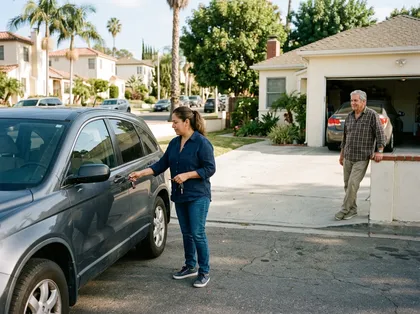
An unlisted household member can make a coverage investigation more complicated than it would be for someone who borrowed the car only once.
For example, the driver may be:
- An adult child.
- A spouse or partner.
- Another relative.
- A roommate who regularly uses the vehicle.
After a crash, an insurer may investigate whether the person lived in the household, how frequently they drove the vehicle, what the policyholder disclosed when obtaining or renewing the policy, and whether the policy contains a valid exclusion applicable to that person.
At the same time, regular prior use with the owner’s knowledge may be relevant evidence of implied permission. The coverage analysis, therefore, should not stop at the fact that the person’s name is missing from the declarations page.
When an Insurance Company May Deny Coverage for an Unlisted Driver
An insurer can lawfully deny coverage for an unlisted driver in a few situations. The clearest are when the policy specifically excludes that driver and when the driver had no permission to use the car. Other defenses are more limited under California law, so a denial deserves a close look before you accept it.
- The driver is named as excluded. California Insurance Code §11580.1(d) allows a policyholder to sign an agreement excluding a specific person, often a household member with a poor driving record. If that person causes a crash, the owner’s insurer can generally refuse to pay.
- The driver had no permission. California Insurance Code §11580.1 generally requires permissive-user coverage only when the driver had the named insured’s express or implied permission and was acting within the scope of that permission.
- The insurer claims the application was inaccurate. An insurer may argue that the owner failed to disclose or list a regular household driver when applying for or renewing the policy. California courts have limited an insurer’s ability to rescind a policy against an injured third party based on an application misrepresentation when the insurer failed to reasonably investigate the insured’s insurability within a reasonable time.
A driver’s lack of a valid license does not, by itself, eliminate permissive-user coverage. California Insurance Code § 11580.1 generally requires coverage for a person using the insured vehicle with the named insured’s express or implied permission and within the scope of that permission, unless a legally authorized exclusion applies. An owner’s decision to entrust a vehicle to an unlicensed or otherwise unfit driver may also be relevant to a negligent entrustment claim.
What Happens When a Driver Takes a Vehicle Without Permission?
Taking a car without the owner’s consent, known as non-permissive use, generally means the driver does not qualify for permissive-user liability coverage under the owner’s policy. Under California Insurance Code §11580.1, ordinary auto liability policies generally must cover a person using the insured vehicle with the named insured’s express or implied permission and within the scope of that permission.
This comes up in two ways. When a car is stolen, the owner’s policy generally does not cover the thief’s driving. Harder cases involve a friend, relative, or acquaintance who took the car without asking. In those situations, the insurer will assess whether the owner’s past conduct constituted implied permission. Prior conduct can help show whether permission existed. Useful evidence includes proof that the owner had lent the car to that person before or had left the keys available without objection.
Who Pays if the Owner’s Policy Won’t Cover the Crash?
A coverage denial or low permissive-user limit does not necessarily end the injury claim. Liability and insurance coverage are separate issues. A driver may remain legally responsible for causing a crash even when a particular insurer does not have to provide coverage.
Depending on the circumstances, potential recovery sources may include:
The At-Fault Driver’s Own Auto Insurance
If the driver carries a separate auto policy, coverage may be available depending on its terms. When both the vehicle owner’s policy and the driver’s policy apply, California’s priority-of-coverage rules generally determine which pays first.
For policies issued or renewed on or after January 1, 2025, the minimum limits are $30,000 for injury or death to one person, $60,000 per accident for injury or death to multiple people, and $15,000 for property damage.
Your Uninsured/Underinsured Motorist (UM/UIM) Coverage
California Insurance Code § 11580.2 generally requires insurers to offer UM/UIM coverage with an auto liability policy unless the policyholder rejects it in writing.
If no applicable liability insurance covers the at-fault driver, UM coverage may apply. UIM coverage works differently. It generally becomes relevant when the at-fault driver’s available bodily injury liability coverage is less than the injured person’s UIM limits and the applicable liability limits have been exhausted as required by law.
A Claim Against the Vehicle Owner
Under Vehicle Code § 17150, an owner can be liable for injuries caused by someone using the vehicle with the owner’s express or implied permission. Vehicle Code § 17151 generally limits liability imposed solely under this statutory permissive-use theory to:
- $15,000 for injury or death to one person.
- $30,000 for injury or death to more than one person in one accident.
- $5,000 for property damage.
These Vehicle Code limits are separate from California’s current $30,000/$60,000/$15,000 minimum auto-insurance limits.
Negligence Claim Against the Vehicle Owner
The § 17151 cap generally applies to an owner’s statutory liability for the driver’s negligence. It does not necessarily limit liability arising from the owner’s independent negligence.
A negligent entrustment claim may arise when an owner knew or should have known that the person entrusted with the vehicle was incompetent or unfit to drive and that entrustment contributed to the injury.
Evidence may include facts concerning:
- An invalid or suspended license.
- Known driving incompetence or recklessness.
- Known intoxication or impairment at the time the vehicle was entrusted.
- Prior incidents known to the owner.
- Other facts indicating the owner had reason to believe the driver was unfit to drive.
California courts recognize negligent entrustment as an independent theory of liability rather than as liability based solely on Vehicle Code § 17150. For serious injuries that exceed a permissive-user limit or the statutory owner-liability cap, investigating independent negligence can therefore be important. Whether insurance, excess, or umbrella coverage, or personal assets are available for such a claim depends on the particular policies and facts.
If an unlisted driver caused your crash, an Arash Law car accident lawyer can review which coverage may apply to your claim. Call (888) 488-1391 for a free case evaluation, available 24 hours a day.
Essential Steps to Protect Your Injury Claim After a Crash
The steps you take immediately after a crash involving an unlisted driver have a direct effect on which compensation sources remain open to you. Some evidence, such as surveillance video and witnesses’ memories of how often the driver used the car, can be lost if no one preserves it early.
- Seek medical care right away. See a doctor or go to the emergency room as soon as possible, even if your injuries seem minor. Records created soon after the crash help connect your injuries to it. Request copies as your treatment continues.
- Get the collision report. If the California Highway Patrol (CHP) or local police investigated the crash and prepared a report, request a copy from that agency. For CHP reports, eligible parties can use form CHP 190 or the CHP crash portal. Separately, California generally requires the driver to report the crash to the Department of Motor Vehicles (DMV) within 10 days if anyone was injured or killed, or if property damage to any one person exceeded $1,000.
- Confirm the driver and vehicle owner. When they are different people, document both identities. The collision report, registration information, and insurance information can help establish who owned and operated the vehicle.
- Gather evidence of permissive use. Save messages, photographs, witness statements, and other evidence that show the driver’s relationship with the owner and any history of the vehicle’s use.
- Preserve video and witness information. Business surveillance systems may record over footage within days or weeks. A written request to preserve it, known as a spoliation letter, should go out as soon as possible. Also, collect contact details from anyone who saw the crash or knows how often the driver used the car.
- Keep the insurer’s coverage correspondence. Save reservation-of-rights letters, denial letters, emails, and any explanation of why the insurer claims the driver was not covered.
- Be careful with adjusters. Another person’s insurer may ask for a recorded statement. What you say can later be used in evaluating liability, injuries, or coverage. Your own insurer may have different cooperation requirements if you pursue UM/UIM benefits.
- Know your deadlines. In most cases, you have two years from the crash to file a personal injury lawsuit under California Code of Civil Procedure (CCP) §335.1. For an uninsured motorist (UM) claim, Insurance Code §11580.2(i) generally requires that, within two years, you file a bodily injury lawsuit against the uninsured motorist, reach an agreement with your insurer, or formally institute arbitration. That specific two-year rule does not govern underinsured motorist (UIM) claims. UIM coverage generally does not apply until the applicable bodily injury liability limits have been exhausted through payment of judgments or settlements. Different rules can apply to minors. Claims against a public entity generally require a government claim within six months.
Frequently Asked Questions About Accidents with Unlisted Drivers in California
Does Being Left Off the Insurance Policy Automatically Mean the Driver Was Uninsured?
No. A person can be unlisted and still potentially qualify for liability coverage as a permissive user. The important issues include whether the vehicle was insured, whether the named insured permitted the use, whether the use remained within the scope of that permission, and whether an enforceable exclusion or limitation applies.
How Does California’s Shared Fault Rule Affect My Accident Claim?
California follows a pure comparative negligence rule, which means you can recover damages even if you were partly responsible for the crash. Your percentage of fault reduces your total award: if you were 20% at fault and your damages total $100,000, you can still recover $80,000. This rule applies even when the at-fault driver was unlisted, and the coverage dispute is complex. Your share of fault is a separate question from whether the owner’s policy covers the crash.
Can I Recover Damages If I Was Driving Without Insurance?
Yes, but your recovery may be limited. Under Proposition 213 (California Civil Code §3333.4), an injured driver who didn’t carry the required insurance generally can’t recover non-economic damages, such as pain and suffering. You can still pursue economic damages, like medical bills and lost wages. The limit also applies to the owner of an uninsured vehicle, even if the owner is a passenger, but not to other passengers.
An exception applies to an injured owner of an uninsured vehicle when the at-fault motorist was driving in violation of Vehicle Code § 23152 or § 23153 and was convicted of that offense. That exception does not apply to an uninsured operator who does not own the vehicle.
What Should I Do If the Insurance Company Issues a Formal Denial Letter?
Do not treat a denial letter as the final word without reviewing its stated basis. California claim-handling regulations require insurers to provide written notice when rejecting or denying certain claims. A denial may identify a named-driver exclusion, lack of permission, a policy limitation, or another coverage provision.
Compare the insurer’s explanation with the available facts and policy language. For example, evidence may contradict an assertion that the driver lacked permission, or the exclusion cited may not apply to the circumstances of the crash.
You may also file a complaint with the California Department of Insurance (CDI). A claim for insurance bad faith generally concerns an insurer’s duties to its own insured rather than a third-party claimant. However, different legal remedies may arise depending on the circumstances.
Does the At-Fault Driver’s Personal Insurance Act as Secondary Coverage?
It can. When the driver is operating a vehicle they do not own, and more than one policy applies, California Insurance Code § 11580.9 generally governs the priority of coverage. In many ordinary situations, insurance covering the vehicle is primary, and applicable insurance carried by the driver is excess.
If the vehicle owner’s insurer denies coverage, the driver’s own policy should still be investigated rather than assuming that no insurance is available.
Will the Insurance Pay for My Vehicle’s Property Damage If the Driver Wasn’t Listed?
Potentially. If the at-fault driver qualifies as a permissive insured user, the owner’s property damage liability coverage may apply up to the applicable limit.
If that policy does not apply or is insufficient, another applicable liability policy may need to be investigated. You may also use your own collision coverage if you have it, subject to the terms of your policy. The California limitations period for an action for injury to personal property is generally three years under CCP § 338(c)(1).
What if the Driver Was Using a Government-Owned Vehicle?
You may still have options. The key question is usually whether the driver was acting within the scope of employment, not whether they were listed on a policy. Under Vehicle Code §17001, a public entity is generally liable for injuries caused by an employee’s negligent operation of a vehicle while acting within the scope of that employment. Many public entities are self-insured. Before suing, an injury claim must generally be presented within six months of accrual. Claims against local public entities are presented according to Government Code § 915, while claims against the State of California generally must be presented to the California Department of General Services.
Does It Cost Anything to Hire an Attorney for This Type of Case?
Generally, no upfront attorney fee is required. Arash Law handles personal injury cases on a contingency fee basis: clients pay no attorney’s fees unless compensation is recovered. Under California Business & Professions Code § 6147, contingency fee agreements must be in writing and must specify the agreed fee percentage and how case-related costs and disbursements will affect the fee and the client’s recovery. Your first consultation with Arash Law is a free case evaluation, with no obligation to retain the firm.
Get Help With Your California Car Accident Claim
When the at-fault driver isn’t listed on the insurance policy, the path to compensation is rarely straightforward. In a permission dispute, our attorneys typically start by reviewing the collision report, the policy documents, and vehicle ownership records. From there, we work to identify every available source of coverage and challenge wrongful denials.
Arash Law handles these cases on a contingency fee basis, so you pay no attorney fees unless we recover compensation for you. The fee percentage and any case costs are set out in the written fee agreement. Your first consultation is a free case evaluation, with no obligation.
Call Arash Law at (888) 488-1391, available 24 hours a day, 7 days a week.
Sources
- California Insurance Code § 11580.1 — Automobile Liability Policies; Permissive-User Coverage and Named-Driver Exclusions https://leginfo.legislature.ca.gov/faces/codes_displaySection.xhtml?lawCode=INS§ionNum=11580.1.
- California Insurance Code § 11580.2 — Uninsured and Underinsured Motorist Coverage https://leginfo.legislature.ca.gov/faces/codes_displaySection.xhtml?lawCode=INS§ionNum=11580.2.
- California Insurance Code § 11580.9 — Priority of Coverage When Multiple Automobile Policies Apply https://leginfo.legislature.ca.gov/faces/codes_displaySection.xhtml?lawCode=INS§ionNum=11580.9.
- California Vehicle Code § 16000 — DMV Accident Reporting Requirement https://leginfo.legislature.ca.gov/faces/codes_displaySection.xhtml?lawCode=VEH§ionNum=16000.
- California Vehicle Code § 16056 — Minimum Financial-Responsibility Limits https://leginfo.legislature.ca.gov/faces/codes_displaySection.xhtml?lawCode=VEH§ionNum=16056.
- California Vehicle Code § 17150 — Owner Liability for Permissive Use https://leginfo.legislature.ca.gov/faces/codes_displaySection.xhtml?lawCode=VEH§ionNum=17150.
- California Vehicle Code § 17151 — Limits on Statutory Owner Liability https://leginfo.legislature.ca.gov/faces/codes_displaySection.xhtml?lawCode=VEH§ionNum=17151.
- California Vehicle Code § 17001 — Public-Entity Liability for Employee Vehicle Operation https://leginfo.legislature.ca.gov/faces/codes_displaySection.xhtml?lawCode=VEH§ionNum=17001.
- California Code of Civil Procedure § 335.1 — Two-Year Personal-Injury Limitations Period https://leginfo.legislature.ca.gov/faces/codes_displaySection.xhtml?lawCode=CCP§ionNum=335.1.
- California Code of Civil Procedure § 338(c)(1) — Three-Year Limitations Period for Injury to Personal Property https://leginfo.legislature.ca.gov/faces/codes_displaySection.xhtml?lawCode=CCP§ionNum=338.
- California Government Code § 911.2 — Deadline for Presenting Certain Claims Against Public Entities https://leginfo.legislature.ca.gov/faces/codes_displaySection.xhtml?lawCode=GOV§ionNum=911.2.
- California Government Code § 915 — Presentation of Claims to Public Entities https://leginfo.legislature.ca.gov/faces/codes_displaySection.xhtml?lawCode=GOV§ionNum=915.
- California Civil Code § 3333.4 — Proposition 213 Restrictions on Noneconomic Damages https://leginfo.legislature.ca.gov/faces/codes_displaySection.xhtml?lawCode=CIV§ionNum=3333.4.
- California Business & Professions Code § 6147 — Contingency-Fee Agreements https://leginfo.legislature.ca.gov/faces/codes_displaySection.xhtml?lawCode=BPC§ionNum=6147.
- California Highway Patrol — Request a Crash Report / CHP 190 https://www.chp.ca.gov/traffic/request-a-crash-report/
- California DMV — Report of Traffic Accident Occurring in California (SR-1) https://www.dmv.ca.gov/portal/dmv-virtual-office/accident-reporting/
- California Department of Insurance — Fair Claims Settlement Practices Regulations https://www.insurance.ca.gov/01-consumers/130-laws-regs-hearings/05-CCR/
Disclaimer
The information on this page is for general educational purposes and does not constitute legal advice. No attorney-client relationship is formed by reading or relying on this content. If you were injured, consult a licensed California personal injury attorney about your specific situation.