TL;DR: Give the full or partial plate to law enforcement promptly. Save photos, video, witness information, and details about the vehicle. If the driver remains unknown, California uninsured motorist rules may impose separate 24-hour and 30-day requirements. Drivers may also need to submit an SR-1 to the California Department of Motor Vehicles (DMV) within 10 days.
If you got the hit-and-run driver’s license plate, report it to law enforcement and any applicable insurer as soon as possible. The plate can help police identify the registered vehicle owner. Investigators can then use other evidence to determine who was driving.
A license plate does not prove the registered owner caused the crash. The owner and driver may be different people. California also has separate reporting rules for injury crashes, DMV reports, and certain uninsured motorist claims. Different rules apply depending on your role.
Key Facts About Hit-and-Run License Plate Claims in California
- Injury crashes can trigger a 24-hour driver reporting duty. Vehicle Code § 20008 applies to drivers involved in crashes causing injury or death.
- Unknown-driver UM claims have separate rules. Insurance Code § 11580.2 generally requires that there be physical contact and that a report be made to the proper local law enforcement agency within 24 hours.
- A sworn insurer statement may also be required. For qualifying unknown-driver UM claims, the statute generally requires the insured to send that statement within 30 days after the police report.
- Drivers may have a 10-day deadline with the DMV. An SR-1 is required after injury, death, or more than $1,000 in property damage.
- A license plate can also matter for property-damage coverage. California Insurance Code § 11580.26 allows qualifying uninsured-motorist property-damage coverage when the uninsured vehicle is identified by its license number, subject to the statute’s other requirements.
- Most California injury lawsuits have a two-year deadline. Code of Civil Procedure § 335.1 covers injury caused by another person’s wrongful act or neglect.
- Claims against public entities can have a six-month deadline. Government Code § 911.2 generally applies to claims for personal injury and property damage.
Table of Contents

What to Do If the Hit-and-Run Driver Left But You Got Their License Plate
Report the plate first, then preserve information that can connect the vehicle and driver to the collision.
- Contact law enforcement. Provide the full or partial plate, location, time, vehicle description, and direction of travel.
- Save your original photos and videos. Keep dashcam footage, phone recordings, and images showing the vehicle or plate.
- Document other identifying details. Record the vehicle’s color, make, model, damage, decals, cargo, and other visible features.
- Get witness information. Ask witnesses for their names and contact information before they leave.
- Identify nearby cameras. Note businesses, homes, parking areas, and other locations that may have recorded the vehicle.
- Seek medical care for injuries. Medical records can document your symptoms, diagnosis, treatment, and treatment dates.
- Notify any applicable insurer. Provide accurate information and avoid guessing about facts you do not remember.
- Keep the police report or incident number. It can help you follow the investigation, request the report later, give your insurer the correct case reference, and provide additional evidence if more information becomes available.
If you were driving a motor vehicle, California law generally requires an SR-1 with the DMV within 10 days if someone was injured or killed, or if damage to any one person’s property exceeded $1,000.
Experienced California hit-and-run accident attorneys can help assess your case and determine your next steps.
What Mistakes Should I Avoid After Getting the Plate?
Understanding what to do after a hit-and-run accident is important, but so are the common mistakes to avoid to protect your claim.
A few mistakes can weaken evidence or create insurance problems.
- Waiting to report the crash. Delays can affect unknown-driver UM requirements and make evidence harder to locate.
- Chasing the fleeing vehicle or confronting the suspected owner. This can create safety risks. Give the plate and other identifying details to law enforcement instead.
- Guessing at the plate. Tell police which characters you know and which ones remain uncertain.
- Assuming the owner was driving. A registered owner and driver can be different people.
- Throwing away damaged items. Preserve clothing, helmets, bicycle parts, vehicle parts, and other relevant property.
- Waiting for the police before checking insurance. Your policy may have deadlines that apply while the investigation remains open.
- Assuming no driver means no claim. UM coverage or another responsible party can still provide a recovery path.
Can Police Find the Driver From a License Plate?
Yes. A license plate can help police identify the registered owner and trace the vehicle involved in the hit-and-run. Police may then use video, witness statements, vehicle damage, and interviews to determine who was driving.
The plate alone does not prove the registered owner was behind the wheel. Another person may have:
- Borrowed the vehicle.
- Rented it.
- Used it for work.
- Taken it without permission.
- Purchased it before DMV records were updated.
Identifying the driver also does not automatically establish civil fault. Police and insurers still review how the crash happened. A full plate gives investigators more information, but a partial plate can still help when paired with an accurate vehicle description.
The investigation may take longer if the owner denies driving or if the vehicle was reported stolen. Keep your report number and follow up with the investigating agency for updates.
What If I Only Got Part of the License Plate?
Report a partial plate because several correct characters can still narrow the investigation. Tell the police which characters you clearly remember. Also, explain which letters or numbers you are uncertain about.
Add every vehicle detail you remember, including:
- State of registration
- Make and model
- Approximate year
- Color
- Body type
- Visible damage
- Stickers or markings
- Direction of travel
Do not change uncertain characters to create a plate that looks more likely. Accurate uncertainty gives investigators better information than a guess.
Can I Look Up the License Plate Owner Myself in California?
You cannot use a California plate to obtain unrestricted personal DMV information through an ordinary public search. However, California does allow requests for another person’s vehicle record in qualifying situations.
The DMV directs most people requesting another person’s vehicle record to use Form INF 70, Request for Record Information. Federal privacy law requires a legally permitted purpose before protected motor vehicle information can be released.
California’s INF 70 lists permitted uses involving:
- Civil or criminal proceedings.
- Investigations in preparation for litigation.
- Insurance claims.
- Vehicle safety or theft.
- Other uses specifically authorized by law.
The DMV also treats residential addresses as confidential information subject to additional restrictions. Commercial plate-search websites should not replace official records. Their information may not establish the registered owner or the person driving during the crash.
What Happens After Police Investigate the Hit-and-Run?
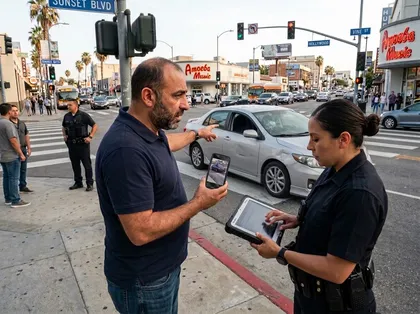
What happens next depends on whether police identify the vehicle, the driver, or both.
- Police Find the Vehicle but Not the Driver: They can inspect damage, review video, question the registered owner, and check available insurance information.
- Police Identify the Driver: Liability insurance and other claims may become available.
- The Driver Remains Unknown: UM coverage may apply, subject to California’s physical-contact and reporting requirements.
Vehicle Code § 20001 applies to hit-and-run crashes involving injury or death. Section 20002 applies to property-damage-only crashes.
The criminal hit-and-run investigation and an injured person’s civil claim are separate matters. Police investigate whether a driver violated California’s hit-and-run laws. A civil claim focuses on responsibility for the collision, insurance coverage, injuries, and damages. An injured person does not need to wait for a criminal prosecution or conviction before pursuing applicable insurance or civil remedies.
Who Can Be Liable After Police Identify the Vehicle?
Identifying the vehicle can reveal other parties who may be responsible for the crash.
- The driver may be liable for injuries and property damage caused by negligent driving.
- The vehicle owner may face liability if the driver used the vehicle with express or implied permission. Vehicle Code § 17150 governs this rule.
- An owner or other person who allowed someone to use the vehicle may face negligent entrustment liability if they knew or should have known the driver was incompetent, inexperienced, reckless, or otherwise unfit to drive.
- An employer may be liable when an employee causes the crash while acting within the scope of employment.
- A government entity may be liable for negligent vehicle operation by its employee under Vehicle Code § 17001.
Vehicle Code § 17151 generally limits an owner’s liability when the claim rests only on permissive use. Different limits can apply to independent negligence or employer liability.
What Happens If Police Identify the Hit-and-Run Driver?
An injured person can usually pursue a liability claim once investigators identify the at-fault driver and applicable insurance. The driver’s insurer may investigate fault, injuries, damages, and whether its policy covered the driver.
California’s standard minimum automobile liability limits are currently:
- $30,000 for injury or death to one person.
- $60,000 for injury or death to multiple people.
- $15,000 for property damage.
The California DMV currently lists the same minimum requirements. A driver may carry higher limits.
Once the vehicle or driver is identified, a personal injury investigation may involve confirming who was driving, determining what liability insurance applies, gathering evidence of fault, documenting the injured person’s medical treatment and other losses, and presenting a liability claim.
If the identified driver has no insurance or insufficient liability coverage, the injured person’s own UM or UIM coverage may become important. Other insurance may also apply when the available liability limits do not cover the injured person’s losses.
Does Insurance Cover a Hit-and-Run in California?
California insurance law provides multiple potential coverage paths, but which one applies depends on the coverage you carry and the circumstances of the crash. You do not always need to wait for the police to identify the fleeing driver before checking your own insurance.
Available coverage can include:
- Uninsured motorist bodily injury (UMBI) can cover qualifying injuries caused by an uninsured or unknown driver.
- Underinsured motorist coverage (UIM) may apply when the at-fault vehicle’s bodily injury liability limits are lower than the injured person’s UIM limits. The applicable liability limits generally must be exhausted before UIM benefits apply.
- Collision coverage can pay for damage to the insured vehicle, subject to the deductible and policy terms.
- Medical payments coverage (MedPay) can cover qualifying medical expenses without determining who caused the collision.
- Uninsured motorist property damage (UMPD) can cover limited vehicle damage when the applicable statutory requirements are met, including when the uninsured owner or driver is identified, or the uninsured vehicle is identified by its license number.
The California Department of Insurance currently lists a $3,500 UMPD limit in its consumer auto insurance guidance. Collision coverage is especially important when the fleeing driver remains unidentified. A later identification can also allow an insurer to seek repayment from the responsible party through subrogation.
Will Using My Insurance Increase My Rate?
In California, if an accident is not your fault, your insurer does not charge you more for that accident. If you are at least 51 percent at fault, your premium can increase at renewal.
A hit-and-run claim where you were not at fault should not, by itself, result in a rate increase. If you believe your insurer improperly increased your premium, you can file a complaint with the California Department of Insurance (CDI).
Other factors can still affect the overall cost of an insurance policy. If your insurer denies your UM claim, a hit-and-run accident lawyer can review your policy and assess whether the policy terms and California law support the denial.
Which California Reporting and Filing Deadlines Apply?
Different deadlines can apply to insurance claims, crash reports, and civil cases. They are separate requirements and should not be treated as interchangeable.
Crash-Reporting Deadlines
| Requirement | General California Rule | Who It Applies To |
|---|---|---|
| Injury or fatal crash report | Within 24 hours under Vehicle Code § 20008. | A driver covered by that statute. |
| DMV SR-1 | Within 10 days after a qualifying collision. | A driver or representative filing on the driver’s behalf. |
Vehicle Code § 20008 applies specifically to drivers involved in crashes causing injury or death. These reporting deadlines are separate from insurance claim deadlines, lawsuit filing deadlines, and government-claim requirements.
Insurance Deadlines
| Requirement | General California Rule | Who It Applies To |
|---|---|---|
| Unknown-driver UM police report | Generally, within 24 hours. | An insured pursuing qualifying UM benefits against an unknown owner or driver. |
| Unknown-driver UM sworn statement | Generally, within 30 days after the law-enforcement report. | The insured who is pursuing the UM claim. |
| Qualifying uninsured-vehicle property-damage notice | Generally, within 10 business days to the insurer or its agent under Insurance Code § 11580.26. | An insured seeking qualifying property-damage coverage under that section. |
| UM action requirement | Generally, within two years of the accident. | An insured pursuing UM benefits under Insurance Code § 11580.2. |
For the two-year UM requirement, the insured generally must do at least one of the following:
- File a bodily injury lawsuit against the uninsured motorist.
- Reach an agreement with the insurer on the amount due.
- Formally start arbitration by sending a written notice by certified mail, return receipt requested.
Civil Claim and Lawsuit Deadlines
| Requirement | General California Rule | Who It Applies To |
|---|---|---|
| Private personal injury lawsuit | Typically, within two years of the date of injury. | An injured person pursuing a private defendant. |
| Personal property lawsuit | Usually within three years. | A person seeking recovery for damaged personal property. |
| Government entity claim | Generally, within six months. | A claimant pursuing a covered California public entity. |
If the hit-and-run driver’s identity is still unknown, California law may allow you to file the lawsuit against a Doe defendant if you genuinely do not know the defendant’s name when you file the complaint. You can later amend the complaint once you know who the driver is. You still need to file the lawsuit within the applicable deadline. In general, a Doe defendant must be identified and served within three years of the case being filed, subject to exceptions.
What Arash Law Does in the Critical Window After a Hit-and-Run
Early action can help preserve evidence, meet insurance requirements, and identify available coverage.
Here’s how we can help with your claim:
- Secure the police report and verify compliance with UM reporting. We identify any gaps that could give the insurer grounds to dispute coverage before you’ve even filed a claim.
- Review potentially applicable household policies. A policy held by a spouse or resident relative may provide UM coverage depending on who qualifies as an insured and the policy terms. We review potentially applicable policies and confirm what coverage and limits may be available.
- Send preservation demands for surveillance footage. We can send written preservation demands to relevant property owners, businesses, and agencies when footage may be useful.
- Trace available vehicle and insurance information through lawful channels. When permitted, we can use official records, approved requester systems, civil discovery, and other lawful investigative resources to help connect a plate to a vehicle owner, a possible driver, or available insurance, rather than relying solely on consumer plate-search websites.
- Preserve evidence from the identified vehicle. When the vehicle is located, we can seek preservation of relevant physical evidence, including collision damage, paint transfer, vehicle parts, photographs, and potentially relevant electronic data before repairs or other changes affect that evidence.
- File and press your UM claim. We can help file your uninsured motorist claim immediately and push for a timely determination of coverage.
- Advise on sequencing. If the at-fault driver is identified and carries insurance, the settlement process can affect access to UIM coverage. California generally requires the applicable bodily injury liability limits to be exhausted by payment of judgments or settlements before UIM benefits apply. We help clients evaluate that sequence before resolving the liability claim.
Arash Law has recovered over $1 billion for injured victims throughout California. If you were hit by a driver who fled the scene, our attorneys can handle the legal aspects of your case so that you can focus on recovery.
Call Arash Law at (888) 488-1391 for a free case evaluation. You can reach us 24/7.
What Arash Law Has Recovered for Accident Victims
Arash Law has obtained recoveries in cases specifically identified as hit-and-run claims. These results show how different insurance and liability issues can affect a case.
$1,000,000 — Hit-and-Run: We represented a rideshare driver injured by a driver who struck the client and fled. The case involved underinsured motorist coverage and spanned years of arbitration and litigation. One week before the scheduled arbitration, the case was resolved for the maximum policy limits.
These results come from Arash Law’s case results and involve different facts, injuries, insurance policies, and legal issues.
The case results on this page are not a guarantee, warranty, or prediction regarding the outcome of your legal matter. Every case is different, and results depend on the unique facts and circumstances involved.
Frequently Asked Questions About Hit-and-Run License Plate Claims in California
What If the Plate Was Fake, Stolen, or Registered to a Different Vehicle?
Police can still investigate when the plate does not match the vehicle. Photos, video, and witness descriptions can help identify the actual vehicle. Useful details include its make, model, color, damage, decals, and body style. Investigators can also determine whether the plate was stolen, altered, switched, or otherwise used improperly.
Can I Have a Claim If I Was Walking or Riding a Bicycle?
Yes. A pedestrian or bicyclist can still have a claim after a hit-and-run. If the driver is identified, the injured person may pursue the responsible driver or another liable party. If the driver remains unknown, uninsured motorist coverage may also apply, depending on the policy and circumstances.
A license plate can help identify a vehicle that struck a pedestrian and left the scene. The injured person should preserve:
- Clothing and damaged personal property.
- Photographs of injuries and the location.
- Bicycle or motorcycle damage.
- Nearby camera locations.
- Witness information.
- Any plate number or vehicle description.
California’s hit-and-run duties are not limited to car-to-car crashes. Vehicle Code § 20001 applies when a driver leaves a collision involving injury or death without performing the duties required by law. Applicable insurance depends on the person’s circumstances. For example, some household auto policies may cover qualifying family members even when they are walking or cycling.
What If Police Find the Driver After I Open a UM Claim?
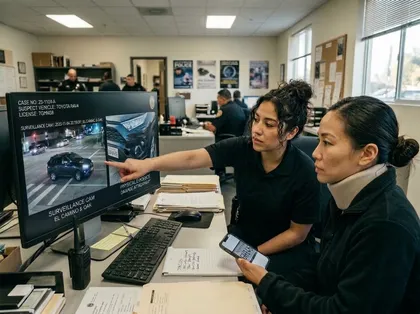
If police later identify the driver, liability insurance may become available, and the UM claim may need to be reevaluated. Review both coverage paths before settling either claim.
Should I Report the Hit-and-Run If More Than 24 Hours Have Passed?
Yes. Report the crash rather than assuming every possible claim has ended. A late report can create problems for certain statutory or policy requirements. However, the effect depends on the type of claim and the rule involved.
How Much Does it Cost to Hire a Hit-and-Run Attorney?
California personal injury attorneys often handle hit-and-run cases on a contingency fee basis, meaning the attorney’s fee generally depends on obtaining a recovery. Responsibility for case-related costs depends on the fee agreement.
Contact Arash Law About Your California Hit-and-Run Claim
Obtaining the license plate can provide investigators with an important lead after a driver leaves the scene. The next steps depend on whether investigators identify the driver, locate insurance, and connect that person to the collision.
Arash Law represents injured people in hit-and-run claims throughout California. Our attorneys can review the plate evidence, police report, available insurance, and applicable deadlines.
Call (888) 488-1391 for a free case evaluation. The line is available 24 hours a day, seven days a week.
Arash Law. Make ‘Em Pay, Call AK.
Sources
- California Legislative Information, Insurance Code § 11580.26 https://leginfo.legislature.ca.gov/faces/codes_displaySection.xhtml?lawCode=INS§ionNum=11580.26
- California Legislative Information, Vehicle Code § 20001 https://leginfo.legislature.ca.gov/faces/codes_displaySection.xhtml?lawCode=VEH§ionNum=20001.
- California Legislative Information, Vehicle Code § 20002 https://leginfo.legislature.ca.gov/faces/codes_displaySection.xhtml?lawCode=VEH§ionNum=20002.
- California Legislative Information, Vehicle Code § 17001 https://leginfo.legislature.ca.gov/faces/codes_displaySection.xhtml?lawCode=VEH§ionNum=17001.
- California Legislative Information, Vehicle Code § 17150 https://leginfo.legislature.ca.gov/faces/codes_displaySection.xhtml?lawCode=VEH§ionNum=17150.
- California Legislative Information, Vehicle Code § 17151 https://leginfo.legislature.ca.gov/faces/codes_displaySection.xhtml?lawCode=VEH§ionNum=17151.
- California Legislative Information, Code of Civil Procedure § 335.1 https://leginfo.legislature.ca.gov/faces/codes_displaySection.xhtml?lawCode=CCP§ionNum=335.1
- California Legislative Information, Code of Civil Procedure § 338 https://leginfo.legislature.ca.gov/faces/codes_displaySection.xhtml?lawCode=CCP§ionNum=338.
- California Legislative Information, Code of Civil Procedure § 474 https://leginfo.legislature.ca.gov/faces/codes_displaySection.xhtml?lawCode=CCP§ionNum=474.
- California Legislative Information, Code of Civil Procedure § 583.210 https://leginfo.legislature.ca.gov/faces/codes_displaySection.xhtml?lawCode=CCP§ionNum=583.210
- California Legislative Information, Government Code § 911.2 https://leginfo.legislature.ca.gov/faces/codes_displaySection.xhtml?lawCode=GOV§ionNum=911.2
- California DMV, Auto Insurance Requirements https://www.dmv.ca.gov/portal/vehicle-registration/insurance-requirements/
- California Department of Insurance, Automobile Insurance Guide https://www.insurance.ca.gov/01-consumers/105-type/95-guides/01-auto/auto101.cfm
- Arash Law — Case Results https://arashlaw.com/case-results/
Disclaimer
The information on this page is for general educational purposes and does not constitute legal advice. No attorney-client relationship is formed by reading or relying on this content. If you were injured, consult a licensed California personal injury attorney about your specific situation.