TL;DR: A lawyer can investigate the driver’s duties, business instructions, trip purpose, vehicle use, and potentially applicable insurance. Records and witnesses can help test the possible work connection. A company vehicle or uniform provides a lead but does not establish employer responsibility, commercial coverage, or policy limits.
An injury lawyer can examine whether the other driver’s activities at the time of the crash may connect a business to your claim. Dispatch logs, schedules, client appointments, witness accounts, and available location records may help test that connection against the collision’s time and location.
A company vehicle, uniform, or statement about a client visit provides a starting point for investigation. Those clues alone do not establish employer responsibility, commercial coverage, policy limits, or fault under California law.
Table of Contents

The Driver Who Injured Me Had a Company Vehicle or Work Uniform. How Can a Lawyer Check Whether a Business May Be Involved in My Claim?
To check whether a business is involved in your claim, a lawyer may investigate what the driver was doing, who directed the work, and the purpose of the trip. Counsel can then examine whether the evidence supports a claim against that business.
A lawyer’s investigation may address:
- Work Duties and Control: The driver’s job responsibilities, assigned tasks, and who had the right to direct how the work was performed.
- Trip Purpose: Whether the driver was visiting a client, making a delivery, completing an assignment, commuting, or traveling for personal reasons.
- Business Instructions: Whether an employer, contractor, dispatcher, or client requested the trip or provided directions.
- Vehicle Arrangements: Who owned, rented, supplied, or authorized the vehicle and what rules governed its use.
- Timing and Route: Whether the crash’s time and location matched work assignments, appointments, dispatch entries, or available travel records.
- Insurance Coverage: Which personal or business insurance policies may apply to the driver, vehicle, or activity involved.
These details can help counsel distinguish the driver’s actions from the possible responsibilities of a vehicle owner, employer, or contractor. A company name or work uniform alone does not establish that the driver was acting within the scope of employment or that a business shares liability for the crash.
Key Facts About Investigating Potentially Work-Related Crashes
- An employer may share responsibility for an employee’s negligent driving. Under California Civil Jury Instructions (CACI) Nos. 3701 and 3720, the key question is whether the driver’s actions were reasonably related to their job duties or foreseeable in light of the employer’s business.
- An independent-contractor label does not settle the employment question. CACI No. 3704 considers who had the right to control how the driver performed their work, among other factors.
- Ordinary commuting generally falls outside the scope of employment. However, CACI Nos. 3725 and 3726 address exceptions that apply when an employee must use a vehicle for work or to complete business errands.
- Vehicle ownership can create a separate basis for liability. California Vehicle Code § 17150 may hold an owner liable for a driver’s negligent operation of the vehicle with the owner’s express or implied permission, subject to applicable statutory limits.
- Commercial insurance depends on the policy’s terms. The California Department of Insurance explains that business auto coverage varies for owned, hired, and non-owned vehicles based on the coverage purchased.
- Formal discovery can help identify applicable insurance. Under state law, interrogatories can be used during a lawsuit to obtain insurance information from another party.
An Injury Lawyer Can Investigate Work Duties and Business Instructions
An injury lawyer can review the driver’s job responsibilities, work arrangements, and business instructions to determine who directed their work. Contracts, schedules, payment records, and communications may help identify the driver’s duties and relationship with a company.
For example, work schedules may show assigned responsibilities, while messages from a supervisor or dispatcher may reveal specific instructions.
Under CACI No. 3704, the right to control how work is performed is an important factor in determining employee status. The actual working relationship matters more than a job title or contract label alone.
How Can the Work Relationship Affect Business Responsibility?
An employer may be responsible for an employee’s negligent driving if the driver was acting within the scope of employment when the crash occurred. This principle, known as respondeat superior, does not require proof that the employer separately acted negligently.
A business is not automatically responsible for an independent contractor’s negligence. However, exceptions or separate grounds for liability may apply.
Car accident lawyers can assess the driver’s working relationship and activities at the time of the crash to determine whether the evidence supports a claim against the business.
An Injury Lawyer Can Investigate the Purpose of the Driver’s Trip
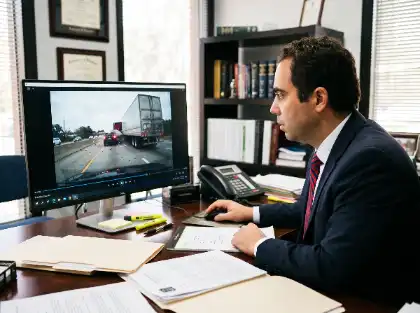 A lawyer can examine why and where the driver was traveling to determine whether the trip was work-related. Client calendars, delivery assignments, dispatch instructions, and work messages may help identify the trip’s intended destination and purpose.
These details can be compared with the crash’s time and location. For example, an appointment entry may support a reported client visit, while a conflicting route or time-stamped record may raise questions about the trip’s purpose.
Was the Driver Performing a Work Assignment?
A delivery, service call, or client visit may indicate that the driver was performing an assigned task. Work orders, dispatch records, and assignment timestamps may help establish whether the task was still active when the crash occurred.
Under CACI No. 3720, conduct may fall within the scope of employment if it was reasonably related to the employee’s duties or reasonably foreseeable in light of the employer’s business.
An active assignment may support a work connection, but it does not automatically establish employer liability. The circumstances of the driver’s conduct must also be considered.
Was the Driver Commuting or Making a Personal Stop?
Ordinary travel between home and work generally falls outside the scope of employment. However, exceptions may apply, such as when the driver was required to use a vehicle for work, was completing a business errand, or was being paid for travel time.
A personal stop during a work trip may affect whether the driver remained within the scope of employment. A minor personal stop does not necessarily end that connection.
Injury lawyers can examine vehicle-use requirements, business instructions, the purpose and duration of a personal stop, and whether the driver had resumed work-related travel. CACI Nos. 3725 and 3726 address circumstances involving the required use of a vehicle and business errands.
An Injury Lawyer Can Examine Vehicle Ownership and Use Arrangements
An injury lawyer can review vehicle registration, rental agreements, fleet records, and vehicle-use policies to determine who owned, supplied, or authorized the vehicle involved in the crash. These records may also show whether the driver had permission to use it and whether any restrictions applied.
The owner may differ from the driver’s employer. A business might also rent vehicles or allow employees to use their own cars for work. These arrangements can affect who may be responsible for the crash.
Under California Vehicle Code § 17150, a vehicle owner may be responsible for injuries caused by a negligent driver who had express or implied permission to operate the vehicle. This responsibility can apply even when the trip was not a work assignment.
The liability limits under Vehicle Code § 17151 apply to certain ownership-based claims but may not limit liability arising from the owner’s own negligence or other independent grounds.
An Injury Lawyer Can Review Records and Witness Accounts
Work records and witness accounts can help a lawyer assess whether the driver’s explanation aligns with other available evidence. Comparing information from different sources may reveal supporting details, missing information, or conflicting accounts.
Potential evidence includes:
- Assignment Records: Work orders, schedules, client calendars, and dispatch logs may identify assigned tasks and destinations.
- Travel Records: Mileage reports and available fleet location data may help compare the reported route with the crash location.
- Delivery Records: Acceptance, pickup, cancellation, and completion timestamps may show whether a delivery remained active.
- Relevant Communications: Work messages and dispatch instructions may explain a destination, assignment, or change in plans.
- Footage and Witnesses: Dashcam recordings, nearby video, and witness accounts may provide details about the vehicle, driver, or activity.
Statements about work also need context. For example, if a note reports that the driver told police they were visiting a client, a lawyer can examine who heard the statement, its wording, and when it was made. Supporting records or witness accounts may help confirm or challenge that explanation.
How Can Counsel Preserve and Obtain Relevant Records?
A lawyer can send preservation requests to businesses or other record holders to help prevent potentially relevant evidence from being lost or overwritten. However, these requests do not automatically compel disclosure or establish that the records exist.
If a lawsuit is filed, the attorney may use document requests to obtain relevant records from parties or subpoenas to seek records from third parties, subject to applicable legal requirements and objections.
You can help by preserving your own photographs, messages, receipts, and other lawfully obtained information. Records from another person’s private accounts, phone, or workplace must be sought through appropriate legal means.
What Clues Can Help Your Lawyer Check If the Other Driver Was Working?
The table below shows common clues that may suggest the other driver was working, where those clues may come from, and what your lawyer can check to determine whether a business may be involved in your claim.
You can use this table to organize the details you observed at the scene and decide how to discuss them with a lawyer during a case review:
| What You Noticed | Where the Information Came From | Possible Business Connection | What Your Lawyer Can Check | What to Ask Your Lawyer |
|---|---|---|---|---|
| The vehicle had a company name or logo. | A photo you took or something you remember seeing. | The company may own or use the vehicle. | Vehicle registration, rental records, or company vehicle records. | Who owned the vehicle, and did the driver have permission to use it? |
| The driver wore a work uniform. | What you saw or what a witness reported. | The driver may work for the company shown on the uniform. | Work schedules and job assignments. | Was the driver working for that company when the crash happened? |
| The driver reportedly told police they were visiting a client. | A note or statement describing what the driver told police. | The driver may have been on a work-related trip. | Appointment records, work messages, or police reports. | Can other evidence confirm why the driver was traveling? |
| The crash happened near a workplace. | The crash location and information about the nearby business. | The location may relate to the driver’s work. | Work schedules, assignments, or available travel records. | Was the driver supposed to be at or near that location? |
| A receipt or notification suggested a delivery. | Your receipt, notification, or screenshot. | The driver may have been making a delivery for a business. | Delivery records, pickup details, and completion times. | Was the delivery still active when the crash happened? |
An Injury Lawyer Can Investigate Potentially Applicable Insurance Coverage
An injury lawyer can review the driver’s personal auto policy and any business insurance that may cover the crash. They consider who was insured, how the vehicle was being used, and whether the policy terms apply to the collision.
Their investigation may cover:
- Personal Auto Insurance: Whether the driver’s policy covers the vehicle and its use at the time of the crash.
- Business Auto Insurance: Whether a company’s policy covers the driver or vehicle involved.
- Hired or Non-Owned Auto Coverage: Whether a business policy covers a rented vehicle or a vehicle the business does not own.
- Umbrella or Excess Insurance: Whether additional coverage is available under another applicable policy.
California Department of Insurance guidance explains that commercial auto policies may cover different vehicle categories depending on the coverage purchased.
An insurance card may help identify an insurer and policy number. Your lawyer can use that information to seek relevant policy documents and review coverage limits, exclusions, and any position taken by the insurer.
For app-based drivers, a lawyer may also check whether the driver was logged into the platform or completing an accepted trip when the crash occurred.
A possible work connection does not guarantee commercial coverage or higher policy limits.
Find Out Whether the Other Driver’s Work Activity May Affect Your Claim
If the driver who injured you was using a company vehicle, wearing a work uniform, or possibly completing a work assignment, Arash Law can review your observations and available records.
Our attorneys can assess whether further investigation is needed to determine whether a business could share responsibility for the crash.
Call (888) 488-1391 to request an initial consultation and discuss your possible claim.
What Information Can You Bring to Help the Investigation?
Bring any available photos, vehicle details, company names, witness contacts, police reports, or notes about what the other driver said. These details can help your lawyer identify possible business connections worth investigating.
Explain which details you personally observed and which came from someone else. You do not need employment records or a complete company file. If you know who may have relevant information, share their name or contact details with your lawyer.
Frequently Asked Questions About Investigating a Driver’s Work Activity in California
Can a Lawyer Investigate a Business Connection If I Only Saw a Uniform?
A work uniform can give your lawyer a starting point for checking a possible business connection. The company name, crash details, witness statements, and available work records may help determine whether the driver was working at the time.
Does a Police Report Establish That the Driver Was Working?
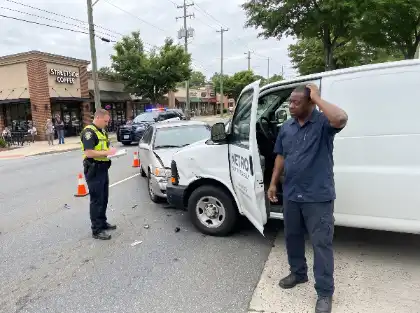
No, a police report alone does not prove that the driver was acting within the scope of employment. Your lawyer can compare the reported statements with work schedules, dispatch records, and witness accounts.
What If the Driver and Business Give Different Explanations?
Your lawyer can review independent evidence to check which explanation the facts support. Appointment records, dispatch entries, timestamps, footage, and witness accounts may help resolve the conflicting statements.
Does a Work Connection Prove the Driver Caused the Collision?
A work connection does not prove that the driver was negligent or caused the crash. Your lawyer must still evaluate the evidence of fault, causation, and resulting injuries.
What If the Other Driver Worked for a Government Agency?
If the other driver worked for a government agency, your lawyer can investigate whether the agency may be responsible for the crash. California generally requires injured people to present a claim to the appropriate public entity within six months under Government Code § 911.2.
This deadline differs from the usual two-year deadline for personal injury lawsuits. Separate deadlines apply to filing a lawsuit after the government claim process. Your lawyer can check which rules apply and whether any late-claim procedures are available.
Will Finding a Business Connection Automatically Increase My Compensation?
No, a business connection does not guarantee higher insurance limits or a larger recovery. The amount you may recover depends on liability, documented losses, applicable insurance coverage, and other case-specific facts.
Speak With Arash Law About Your Car Accident Claim
Determining whether a business may be responsible for a crash requires more than identifying where the other driver worked. Arash Law can examine the driver’s relationship with the business, the purpose of the trip, vehicle ownership, and potentially applicable insurance to assess your legal options.
Call (888) 488-1391 to speak with our car accident lawyers about your case. We can help you understand the next steps and whether the available evidence supports pursuing a claim against the driver, a business, or another responsible party.
Sources
- Judicial Council of California — Civil Jury Instructions (CACI), 2026 Edition. CACI Nos. 3700, 3701, 3704, 3720, 3723, 3725, and 3726. Employer responsibility, employee status, scope of employment, personal deviations, and work-related travel.
https://courts.ca.gov/system/files/file/judicial_council_of_california_civil_jury_instructions_2026.pdf- Judicial Council of California — Civil Jury Instructions Advisory Committee. Official 2026 CACI edition and July 2026 supplement.
https://courts.ca.gov/system/files/file/judicial_council_of_california_july_2026_supp.pdf- Judicial Council of California — CACI No. 720, Motor Vehicle Owner Liability: Permissive Use of Vehicle. Requirements for establishing vehicle-owner responsibility when another person operates the vehicle with permission.
https://courts.ca.gov/system/files/file/judicial_council_of_california_civil_jury_instructions_2026.pdf- California Vehicle Code § 17150. Liability of a vehicle owner for negligent operation by a person using the vehicle with express or implied permission.
https://leginfo.legislature.ca.gov/faces/codes_displaySection.xhtml?lawCode=VEH§ionNum=17150.- California Vehicle Code § 17151. Statutory limits on certain forms of vehicle-owner liability.
https://leginfo.legislature.ca.gov/faces/codes_displaySection.xhtml?lawCode=VEH§ionNum=17151.- California Department of Insurance — Commercial Insurance Guide. Commercial automobile coverage, including owned, hired, and non-owned vehicles, policy classifications, and coverage limits.
https://www.insurance.ca.gov/01-consumers/105-type/95-guides/09-comm/commercialguide.cfm- California Courts — Request Discovery From a Party in Your Case. Interrogatories, document requests, and procedures for obtaining insurance and other relevant information.
https://selfhelp.courts.ca.gov/discovery-civil/request- California Courts — Civil Discovery and Subpoenas. Procedures for requesting records from parties and third parties during civil litigation.
https://selfhelp.courts.ca.gov/civil-discovery-and-subpoenas-index- California Government Code § 911.2. Six-month deadline for presenting personal injury claims against public entities.
https://leginfo.legislature.ca.gov/faces/codes_displaySection.xhtml?lawCode=GOV§ionNum=911.2.- California Government Code § 911.4. Procedures and deadlines for applying to present a late government claim.
https://leginfo.legislature.ca.gov/faces/codes_displaySection.xhtml?lawCode=GOV§ionNum=911.4.- California Government Code § 945.6. Deadlines for filing lawsuits against public entities after the government claim process.
https://leginfo.legislature.ca.gov/faces/codes_displaySection.xhtml?lawCode=GOV§ionNum=945.6.Disclaimer
This article provides general educational information about investigating whether the other driver’s work activity may affect a California injury claim. It does not create an attorney-client relationship. Consult a licensed California attorney about your circumstances and legal options. Arash Law: (888) 488-1391.