TL;DR: A lawyer reviews each accident’s records separately to distinguish existing vehicle damage, new repairs, and each person’s injuries. Photographs, repair invoices, medical histories, and insurance files help identify overlapping losses. Expert opinions may be needed when the cause of an injury or damage remains unclear.
A lawyer separates claims involving the same car by creating two accident timelines and determining which injuries and vehicle damage came from each accident. Crash reports, photographs, repair records, medical files, and insurance documents help establish which losses belong to each accident.
Different drivers can have separate injury claims even when both crashes involve the same vehicle. The car’s earlier damage is part of its repair history, but it does not establish the later driver’s medical history.
Counsel also investigates disputed causes, reviews which insurance policies may cover each accident, and determines whether potential conflicts allow the same attorney to represent both people.
Key Facts
- Each injured person needs evidence to support their claim. Medical records, collision evidence, and applicable negligence rules help establish whether the accident caused the harm being claimed.
- Repair Estimates and Final Invoices. These records show the proposed work, completed repairs, and any damage that may have remained prior to the second collision.
- A shared vehicle does not create a shared injury history. Each person’s injuries must be reviewed in light of their involvement in the accident, symptoms, and medical records.
- Insurance coverage must be reviewed for each accident. Policy terms, coverage limits, exclusions, and effective dates determine which coverage may apply.
- Shared legal representation requires a conflict review. California Rule of Professional Conduct 1.7 may require informed written consent, and certain conflicts prevent joint representation.
Table of Contents

My Partner and I Were Involved in Separate Accidents with the Same Car. What Documents Can a Lawyer Review to Ensure That the Damages and Injuries Aren’t Mixed Up?
A lawyer can review each accident’s crash report, photographs, repair records, individual medical records, and insurance claim file. They match dates, names, damage locations, and claim numbers to determine which records belong to each person’s claim.
- Crash Reports and Incident Records: These identify the accident date, location, drivers, and occupants. The lawyer checks who was involved in each crash before linking anyone’s injuries to it.
- Dated Photographs and Inspection Records: Images from before and after each collision help show existing damage and later changes. Counsel compares damage locations and checks when each photograph was taken.
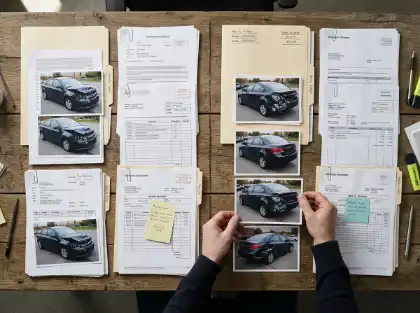
- Repair Estimates and Final Invoices: These records help identify proposed work, completed repairs, and damage that remained before the second collision.
- Separate Medical Records and Bills: Patient names, treatment dates, symptoms, imaging, and provider notes help distinguish each person’s injuries.
- Insurance Files, Payment Records, and Releases: Claim numbers, correspondence, payment explanations, and settlement documents identify the incident and losses each insurer addressed. The lawyer checks for incorrect dates, misplaced records, and payments involving the same repair expense.
These comparisons help separate documented losses and identify questions that need further investigation. Understanding what information helps evaluate a car accident claim can also help identify missing records. If the available evidence cannot explain overlapping damage or an injury’s cause, counsel may seek a repair professional’s or medical provider’s opinion.
Start With Two Timelines and a Clear List of People
A lawyer creates a separate timeline for each accident, identifying when it occurred, who was involved, and what losses followed. This approach helps prevent one person’s injuries or another incident’s vehicle damage from being assigned to the wrong claim.
The review begins with the accident dates, locations, drivers, occupants, and vehicle ownership. Counsel compares those details against reports, photographs, witness information, and insurance records.
One person may also have different roles across the incidents. For example, someone might own the vehicle during both crashes but occupy it during only one.
Identify Each Person’s Presence and Claimed Losses
A lawyer determines which accident each injured person was involved in before assessing their claimed losses. If you were not involved in the earlier collision, your partner’s injuries from that event do not become part of your medical history.
Your own relevant medical history still matters. If either person was involved in both accidents, even as a passenger, counsel compares that person’s symptoms, treatment, and medical records across both dates. This review helps identify existing conditions and changes that may require further medical evaluation.
Resolve Conflicting Dates Across Accident Records
Counsel compares inconsistent dates with original records rather than accepting an unsupported version. An incorrect accident date on a repair invoice or medical note can create confusion about which claim the document supports.
Keep the original document and any written correction together. If the records do not confirm a detail, make it clear that the information is unknown.
Use a Table to Compare the Claims
A comparative table can help a lawyer compare who was involved, what injuries occurred, what damage the car had, and which insurance records relate to each accident. Comparing both accidents side by side helps identify old and new damage, as well as records that need a closer look.
| What the Lawyer Checks | Earlier Accident | Later Accident | Records to Review |
|---|---|---|---|
| Accident details and people involved | When and where the collision occurred, who drove, and who was present. | When and where the second collision occurred, who drove, and who was present. | Collision reports, incident numbers, driver and passenger statements, and vehicle registration. |
| Vehicle condition and repair history | Damage before and after the first collision, including completed or unfinished repairs. | The car’s condition before and after the second collision, including damage left from the first accident. | Timestamped photographs, inspection reports, repair estimates, final invoices, and shop records. |
| Reported injuries | Who reported injuries and what symptoms or treatment followed. | Who reported injuries and whether they had relevant earlier symptoms or conditions. | Individual medical records, imaging, treatment notes, and medical bills. |
| Payments and releases | Identifies prior payments, settlements, and claims that may have been resolved. | Determines which losses remain disputed and whether earlier agreements affect them. | Claim files, adjuster correspondence, payment records, and settlement releases. |
| Insurance coverage and claims | Payments made, settlements, and claims resolved. | Payments made and any earlier agreements affecting the later claim. | Payment records, settlement agreements, and signed releases. |
The table helps organize the records, but it does not prove who caused either accident or which collision caused the injuries or damage.
How Does a Lawyer Distinguish Overlapping Vehicle Damage?
A lawyer compares photographs, inspections, and repair records from before, between, and after both collisions. These records help show whether the second crash caused additional damage to an area already affected by the first.
Repair estimates show proposed work, while final invoices document completed repairs. California’s Bureau of Automotive Repair explains the documentation repair shops must maintain. However, an insurance payment does not necessarily prove that repairs were completed. Counsel should compare payment records with shop invoices and repair history.
If earlier repairs were incomplete, the remaining damage should be documented rather than automatically attributed to the second collision. When both accidents affected the same area, a repair professional may need to assess the additional damage.
Preserve original photographs, repair records, and payment documents. Tell your lawyer about unrepaired damage before further repairs or disposal of the vehicle affects the evidence.
Confirm Whom the Lawyer Represents and What They Will Handle
 A lawyer must identify each client and define the claims covered by the representation agreement. Representing you for one accident does not automatically include your partner’s claim or every vehicle repair dispute.
Ask whether your car accident lawyer will handle injury claims, property damage, insurer communications, or coordination with another attorney.
If either person already has legal representation, provide the existing representation agreement. Counsel can review which claims and services the agreement covers. Shared representation also requires a conflict review. The lawyer must determine whether duties owed to one person could limit the representation of the other.
Arash Law can review the accident timelines, vehicle damage, medical records, and insurance documents to identify missing information and potential issues involving the two claims. Call (888) 488-1391 for a free initial consultation. You can discuss both accidents even if you do not have every earlier report, repair invoice, or medical record.
Review Each Person’s Medical History Separately
A lawyer evaluates each person’s injury claim based on their medical history, treatment records, and involvement in the accident. Vehicle damage alone cannot establish the cause or extent of a particular person’s injuries.
Counsel compares treatment notes, imaging, bills, work restrictions, and wage records with each person’s symptoms before and after the relevant collision.
Separate New Injuries From Pre-existing Conditions That Got Worse
California law allows an injured person to seek compensation when another party’s wrongful conduct worsens a pre-existing condition. The claim must distinguish the additional harm from the condition that already existed.
Medical records can help establish this distinction. A treating provider or another qualified professional may explain whether the collision caused a new injury or aggravated an earlier condition. If you had a pre-existing condition prior to a car accident, your lawyer can review how the collision affected your health.
Avoid Making Claims That the Evidence Does Not Support
A lawyer identifies uncertainty when available records do not explain a symptom, treatment gap, or change in condition. Additional records or medical opinions may be necessary before assigning an injury to a particular collision.
Give healthcare providers an accurate account of your symptoms, relevant medical conditions, and any involvement in an accident. Keep your partner’s medical information separate unless counsel identifies a relevant reason and lawful basis to review it.
Match Insurance Records and Payments to Each Incident
A lawyer reviews the insurance coverage and claim documents applicable to each accident date. Using the same vehicle, insurer, or policy does not automatically result in identical coverage or combine the two collisions into a single claim.
The California Department of Insurance explains that automobile policies contain different coverage types, limits, and conditions. Counsel must therefore examine the actual documents rather than assume which benefits apply.
The review should distinguish:
- Policy Records: Effective dates, declarations pages, endorsements, covered vehicles, listed drivers, and relevant exclusions.
- Claim Records: Claim numbers, named claimants, adjuster communications, coverage decisions, and requests for additional evidence.
- Payment Records: Repair payments, medical payments, deductibles, payment recipients, and reimbursement demands.
- Settlement Records: Offers, signed releases, and agreements identifying the incident, person, and claims involved.
These records help counsel determine whether an insurer assigned a payment or disputed expense to the correct accident. Any medical payments coverage depends on the applicable policy terms.
Check the Scope of Previous Payments and Releases
A lawyer examines earlier payments and releases to determine which claims were resolved. A repair payment alone does not establish whether someone also signed a broader agreement affecting other losses.
Counsel should identify the person who signed each release, the accident it addresses, and the claims it resolves. An agreement involving one person’s earlier claim does not automatically establish that another person’s separate claim was settled.
Provide counsel with relevant settlement documents from either collision. Before signing another release, ask which people, dates, injuries, and claims the agreement covers.
Keep Accident Reports Separate From Insurance Claims
A lawyer checks reporting documents against each accident’s date, driver, and vehicle information. For qualifying California collisions, drivers must submit an SR-1 report to the Department of Motor Vehicles within 10 days.
This requirement is separate from reporting a collision to police or an insurer. An SR-1 does not replace an insurance claim, and administrative reporting deadlines differ from lawsuit deadlines.
Each accident may have a separate lawsuit deadline. In California, the general deadline is two years for personal injury claims under Code of Civil Procedure § 335.1 and three years for property damage claims under § 338(c)(1). Different deadlines or exceptions may apply, including claims involving government entities. Filing an SR-1 or maintaining an insurance claim does not extend the lawsuit deadline.
Frequently Asked Questions About Two Accidents in the Same Car
Does an Earlier Open Claim Prevent Me From Bringing My Own Claim?
An earlier open claim does not automatically prevent you from pursuing a separate claim for injuries arising from another accident. Your claim still depends on its supporting evidence, applicable insurance, deadlines, and relevant agreements.
Tell counsel about the earlier collision even if you were not involved. Its repair records may help establish the car’s condition before your accident.
Can My Partner and I Use the Same Lawyer?
You and your partner may use the same lawyer if California’s conflict-of-interest rules permit shared representation. The lawyer must assess whether they can represent both people competently and diligently.
Some conflicts require informed written consent from affected clients. Others may prevent shared representation even when both people agree.
What If One Repair Invoice Covers Damage From Both Accidents?
A lawyer can compare a combined repair invoice with photographs, estimates, and shop records to investigate which work relates to each accident. A single bill does not establish that both collisions caused the same damage.
Provide the complete invoice and related communications. A repair professional may need to explain charges that the available documents cannot distinguish.
What If an Insurer Mixes Up Our Names or Accident Dates?
Notify your lawyer if an insurer assigns the wrong name, accident date, or record to your claim. Preserve the original correspondence and provide documents supporting the correction.
If you do not have counsel, you can send the adjuster a factual written correction and keep a copy. Avoid guessing about medical causes or repair costs when correcting basic information.
Can a Lawyer Start Without All the Earlier Accident Records?
Yes. A lawyer can begin evaluating your claim with the information currently available. Identify missing documents and provide known contact information for insurers, repair shops, medical providers, or previous attorneys.
Counsel can determine which additional records are needed and discuss appropriate methods for obtaining them. You do not need to present uncertain facts as established.
Discuss Your Accident Claims With Arash Law
If the same car was involved in two separate accidents, Arash Law can discuss your circumstances and whether the firm can assist with your injury or property damage claims.
Call (888) 488-1391 for a free initial consultation. Our attorneys can discuss potential representation and the next steps for reviewing your claims.
Sources
- Judicial Council of California. CACI Nos. 430 and 3927 — Causation and Preexisting Conditions. https://courts.ca.gov/system/files/file/judicial_council_of_california_civil_jury_instructions_2026.pdf
- California Bureau of Automotive Repair. Write It Right: Documentation and Authorization Requirements for Automotive Repair Dealers. https://www.bar.ca.gov/wir
- California Department of Insurance. Automobile Insurance Coverage Guide. https://www.insurance.ca.gov/01-consumers/105-type/95-guides/01-auto/auto101.cfm
- California Department of Motor Vehicles. SR-1 Accident Reporting Requirements. https://www.dmv.ca.gov/portal/dmv-virtual-office/accident-reporting/
- State Bar of California. Rule 1.7 — Conflict of Interest: Current Clients. https://www.calbar.ca.gov/legal-professionals/rules/rules-professional-conduct/current-rules-professional-conduct/chapter-1-lawyer-client-relationship
- California Courts. Personal Injury Procedures. https://selfhelp.courts.ca.gov/civil-lawsuit/personal-injury
- California Code of Civil Procedure § 335.1 — Personal Injury Actions.
https://leginfo.legislature.ca.gov/faces/codes_displaySection.xhtml?sectionNum=335.1.&lawCode=CCP- California Code of Civil Procedure § 338 — Three-Year Limitations, Including Property Damage.
https://leginfo.legislature.ca.gov/faces/codes_displaySection.xhtml?sectionNum=338.&lawCode=CCPDisclaimer
Past results do not guarantee future outcomes. Every case is different. This content provides general educational information and does not constitute legal advice. Reading or relying on this content does not create an attorney-client relationship. Consult a licensed California attorney about your circumstances.