TL;DR: Prepare the records you have, identify what the first firm reviewed, and note anything missing or newly available. Include the first firm’s response and any representation agreements. The next attorney can independently assess the available facts, but a second review guarantees neither acceptance nor a different answer and does not pause deadlines.
Bring the first firm’s response, accident evidence, medical records, insurance documents, and a written timeline of the case, including when the incident happened, when symptoms started, when you received treatment, and when you sought legal help.
Bring any email, letter, or notes explaining why the first firm declined, as well as any new information or records that the first firm did not review. These materials help another attorney assess your claim, identify missing evidence, and examine potential legal obstacles.
A law firm’s decision not to accept your case does not always mean your case doesn’t have merit. The firm may have concerns about liability, insurance coverage, case costs, or its ability to handle the matter. When you get a second opinion, be upfront about weaknesses, like delayed treatment or partial fault. A personal injury attorney needs the full picture to build a strong case.
Table of Contents

A Firm Did Not Take My Injury Case. What Should I Bring to Another Consultation, and How Do I Find Out Whether the Issue Was the Case, the Firm’s Scope, or Missing Information?
Bring the first firm’s rejection letter or email and all records or evidence you previously shared. Include a timeline of important events, newly obtained records, and details of any previous attorney-client relationship. You can request another consultation even if some documents are missing.
To understand the first firm’s decision, ask for its stated reason and a list of records it reviewed. Request a copy of any non-engagement letter or email confirming that the firm declined representation. This information can help the next attorney determine if the decision involved:
- Concerns About the Case: The first firm may have identified problems involving liability, injury evidence, available insurance, or potential compensation. Ask which concerns influenced its decision and share that explanation with the next attorney.
- The Firm’s Scope or Resources: The firm may not handle your claim type or have the resources to pursue it. Another attorney can determine if the case falls within their practice and available capacity.
- Missing or Incomplete Information: The first firm may not have received medical findings, witness statements, accident reports, or other relevant records. Identify these gaps and provide any new evidence during the second consultation.
If the firm did not explain its decision, record the reason as unknown. Do not assume that missing evidence or a weak claim caused the rejection.
A firm’s decision not to accept your case does not necessarily mean it found your claim legally invalid. The firm may have evaluated only part of the available information. Its decision also differs from a court ruling, a referral to another attorney, or the termination of an existing attorney-client relationship.
Also, confirm your representation status. A non-engagement letter generally confirms that a firm has declined to represent a client. A referral does not guarantee that another attorney will accept the case.
If representation had already begun, bring any signed agreements or termination notices. You can also request former client materials under California Rule of Professional Conduct 1.16(e)(1), subject to applicable restrictions.
Key Facts About Second Opinions After an Injury Case Rejection
- A consultation does not guarantee that an attorney accepts representation. California Rule of Professional Conduct 1.18 recognizes prospective clients even when no attorney-client relationship begins.
- The first firm’s actual reason can stay unknown without an explanation. Rule 1.18 establishes prospective-client duties but does not require attorneys to explain their decisions to decline representation.
- Former clients can request their papers after legal representation ends. Rule 1.16(e)(1) generally requires attorneys to release client materials upon request, subject to applicable restrictions.
- Seeking a second opinion does not pause legal filing deadlines. California generally allows two years for injury lawsuits (California Code of Civil Procedure §335.1), but government injury claims usually require presentation within six months (Gov. Code §911.2).
What Documents Should You Bring for a Second Opinion?
Bring documents that show how the injury happened, the losses it caused, and what the first law firm reviewed.
You do not need a complete file before scheduling another consultation. Organize the available records and identify missing documents so the new attorney understands the limits of the earlier review.
Your Second-Consultation Checklist
| Information | What to Prepare |
|---|---|
| First Firm’s Response | Declination emails, non-engagement letters, consultation notes, and any stated reason for the decision. |
| Records Confirmed Reviewed | Documents that the first firm specifically confirmed it had examined during its assessment. |
| Records With Unconfirmed Review | Documents you provided to the first firm but may not have been reviewed. |
| Missing or New Evidence | Records unavailable during the first consultation, including updated medical findings or witness information. |
| Relevant Dates | Accident date, medical visits, earlier consultations, insurance notices, and known filing deadlines. |
| Previous Representation | Signed agreements, termination notices, previous attorney details, and pending legal work. |
| Injury and Financial Records | Medical reports, bills, wage records, receipts, and documents showing injury-related losses. |
| Insurance and Accident Evidence | The other party’s name, insurance details if known, accident reports, photographs, videos, and your own insurance policy. For car accidents, include your declarations page and any uninsured or underinsured motorist coverage documents. |
| Workplace Injury Records | If injured at work, bring your DWC-1 form, available employer injury reports, workers’ comp correspondence, benefit records, and information identifying other businesses involved. |
| Questions for the Next Firm | Concerns about liability, missing evidence, insurance coverage, filing deadlines, and representation decisions. |
Keep documents organized by date or category. Clearly identify information you have not confirmed rather than filling gaps with assumptions.
For example, a car accident lawyer may examine vehicle damage, collision reports, witness statements, and available traffic camera footage.
Medical records can help establish your injuries and treatment history. Pay stubs and employer records may document lost income or reduced earning capacity.
Additionally, bring insurance correspondence about disputed fault, coverage limits, or settlement offers. Include any recorded statements, signed releases, or agreements that could affect the claim.
How Can You Confirm What the First Firm Actually Reviewed?
Start by checking your intake forms, emails, document uploads, and consultation notes. These records can help establish what information you submitted and when.
However, sending a document does not prove that an attorney reviewed it. You can clarify the earlier assessment by taking these steps:
- Request the firm’s stated reason. Ask for confirmation that it declined representation and any explanation it is willing to provide.
- Review your document submissions. Compare sent emails, attachments, and upload confirmations with the records the firm requested.
- Ask about the scope of the review. Request confirmation of the materials the firm considered, if available.
- Identify newly available evidence. Note medical findings, witness details, accident reports, or insurance information obtained after the first consultation.
- Confirm your representation status. Review any signed agreements, non-engagement letters, termination notices, and pending legal matters.
If the firm cannot confirm which records it reviewed, explain that uncertainty to the next attorney.
A consultation does not always establish an attorney-client relationship. The relationship may depend on the agreement, communications, and conduct involved.
If representation began and later ended, request your client materials. California Rule of Professional Conduct 1.16(e)(1) generally requires their release upon request, subject to applicable restrictions.
If the firm never represented you, request copies of the records you previously submitted. The termination rule does not automatically apply to prospective clients.
What Should You Ask During Your Second Consultation?
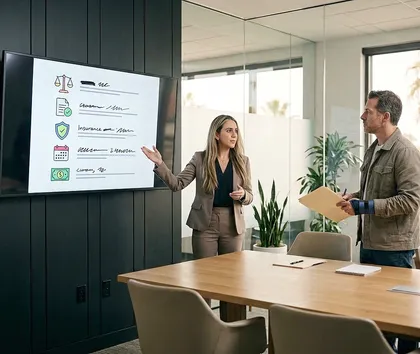
Ask the next attorney to explain the claim’s main obstacles and identify information needed for a more complete assessment.
Focus your discussion on these issues:
- Liability and Evidence: Request an assessment of the available proof, disputed fault, and records needed to establish another party’s responsibility.
- Medical Evidence and Losses: Ask the attorney to examine your treatment records, documented expenses, missed work, and possible future care needs.
- Insurance Coverage: Discuss applicable insurance policies, coverage limits, prior settlement offers, and other potential sources of compensation.
- The First Firm’s Concerns: Share any stated reason for the earlier rejection and request an independent assessment of that issue.
- The New Firm’s Practice: Confirm that the firm handles your claim type and identify the information it needs before deciding to hire the firm.
- Deadlines and Next Steps: Identify applicable filing deadlines, urgent evidence needs, and actions that may require immediate attention.
You can also ask, “What evidence could change your assessment?” and “What would your firm need before deciding to accept my case?”
Keep notes about the answers and any additional records the attorney requests. A second consultation can identify unresolved issues even if the new firm declines to represent.
Need a Second Opinion on Your Case? Call Arash Law
If another firm declined your injury case, Arash Law can review the available facts during a free initial consultation.
Bring the documents you have, including the earlier firm’s response and any new evidence. Our team can consider potential liability, insurance issues, and applicable deadlines.
Call (888) 488-1391 to discuss your situation with our personal injury lawyers.
What Should You Do While Preparing for a Second Opinion?
Continue gathering records and preserving evidence, but do not delay another consultation while waiting for every document.
Take these steps before the appointment:
- Request outstanding documents. Contact medical providers, insurers, or investigating agencies for records that have not arrived.
- Preserve available evidence. Save original photographs, videos, messages, and other files without altering them.
- Identify evidence at risk. Note surveillance cameras, dashcam recordings, or other evidence that may disappear.
- Organize previous communications. Keep responses from the first firm, insurance adjusters, witnesses, and other involved parties.
- Prepare a timeline. Record the accident, treatment dates, consultations, insurance notices, and significant developments.
Surveillance footage can disappear before the legal filing deadline expires. Businesses may overwrite recordings, and witnesses may become harder to locate.
Ask the next attorney about evidence that may require immediate preservation. You should also confirm that the next firm handles your type of injury claim.
How Long Do You Have to Seek a Second Opinion in California?
You can request another opinion, but doing so does not extend the time available to pursue an injury claim. Under California Code of Civil Procedure §335.1, most personal injury lawsuits must be filed within two years. The period generally starts on the injury date, although exceptions may apply.
Claims involving government entities often have earlier requirements. Under Government Code §911.2, you generally must present a government injury claim within six months after the claim arises.
If a public entity rejects a government claim in writing, you generally have six months from the date that notice was mailed or delivered to file a lawsuit (Gov. Code §945.6). If the entity never responded, a longer period may apply. Bring any rejection letter and its date to the attorney you’re seeking a second opinion from.
If the six-month claim deadline has already passed, the claim may not be over. California allows a written application for leave to present a late claim, generally within one year after the claim arose (Gov. Code §911.4). Approval is not guaranteed, and the window is short, so tell the next attorney right away if you think a public entity (a city, county, school district, or public agency) was involved.
Certain circumstances, including the injured person’s age and the type of claim, can affect these deadlines.
Before scheduling a second consultation, address these time-sensitive issues:
- Approaching Filing Deadlines: Tell the new firm your injury date and any known deadlines when requesting the appointment.
- Government Claim Notices: Disclose any claim presentations, rejection letters, or pending deadlines involving public entities.
- Existing Lawsuits: Provide court documents, case numbers, filing dates, and information about any attorney currently representing you.
- Insurance Requirements: Bring policy notices or correspondence showing separate reporting or response deadlines.
- Previous Legal Filings: Request confirmation of any paperwork the first firm submitted if it previously represented you.
Do not assume the first firm submitted paperwork merely because you consulted its attorneys.
Also, contacting a new firm does not mean it has agreed to handle an urgent filing. Missing an applicable deadline can prevent further action on a claim.
Frequently Asked Questions About Second Opinions on Declined Injury Cases in California
Can I Get a Second Opinion Without a Rejection Letter?
Yes. A rejection letter can help establish the first firm’s decision, but you can request another consultation without one.
Bring available emails, text messages, and notes about the earlier discussion. Explain that the firm did not provide a written reason for its decision.
Can I Get Another Opinion if the Insurance Company Already Denied My Claim?
Yes. An insurer’s denial does not automatically prevent an attorney from reviewing your potential injury claim.
Bring the denial letter and related insurance documents. The attorney can examine the stated reasons, policy terms, available evidence, and legal deadlines.
Can I Still Get a Second Opinion if Several Law Firms Declined My Case?
Yes. Multiple firms declining to represent you does not automatically eliminate your legal options.
Tell the next attorney about the previous consultations and any reasons the firms provided. The attorney can assess the evidence and explain the obstacles identified during the review.
Will the Second Attorney Keep My Information Confidential?

California Rule of Professional Conduct 1.18 protects certain information shared during qualifying prospective-client consultations.
The rule applies even when the attorney does not accept representation. However, specific exceptions and circumstances can affect those protections.
Ask the firm about confidentiality before sharing sensitive information.
Can I Seek Another Opinion if I Already Signed a Fee Agreement?
Yes, but disclose the agreement and confirm your representation status before taking further action.
A fee agreement may indicate that representation began, and California generally requires contingency fee agreements to be in writing and signed by both the attorney and the client (Bus. & Prof. Code §6147). The next attorney should also review any termination notice and unresolved obligations.
Do I Have to Pay for a Second Consultation?
Not necessarily. Many personal injury firms offer free initial consultations, but California law does not require every firm to provide them.
Confirm the consultation terms before scheduling. A free consultation does not require you to hire the firm.
You can use the meeting to discuss representation, contingency fees, and potential case costs.
Can I Get a Second Opinion After Signing an Insurance Settlement Release?
You can request a legal review, but a signed settlement release may limit further claims.
Bring the release, settlement agreement, and payment records. An attorney can examine their terms and determine if any legal options remain.
Do not assume that a new consultation can reverse a completed settlement.
A Past Arash Law Case That Other Firms Declined
Arash Law has handled a construction accident case that several other law firms previously declined. The reported result illustrates how further investigation can identify additional legal issues.
$9,000,000 — Personal Injury
Arash Law secured $9 million in a construction accident case that other firms had rejected. The matter initially appeared to involve only workers’ compensation. Further discovery and depositions revealed a third-party personal injury claim.
This is just one of the firm’s case results that show how our lawyers help injured clients pursue compensation.
Past results do not guarantee future outcomes. Every case depends on its specific facts, evidence, and applicable law. Moreover, getting a second opinion doesn’t always guarantee a different answer or result.
Get a Free Case Evaluation With Arash Law After a Law Firm Declines Your Injury Claim
A second opinion may clarify your legal options, but it does not guarantee that another firm will accept the case. You can request a consultation even if some records are still missing.
Arash Law offers free initial consultations to injured people seeking an independent assessment of their potential claims.
Our team can review available medical records, accident evidence, insurance documents, and the first firm’s stated concerns. We can also identify information that requires further investigation.
Call (888) 488-1391 to discuss your situation.
Sources
- California Code of Civil Procedure §335.1. General two-year deadline for personal injury lawsuits. California Legislative Information.
https://leginfo.legislature.ca.gov/faces/codes_displaySection.xhtml?lawCode=CCP§ionNum=335.1.- California Government Code §911.2. Claim presentation deadlines involving public entities. California Legislative Information.
https://leginfo.legislature.ca.gov/faces/codes_displaySection.xhtml?lawCode=GOV§ionNum=911.2.- California Government Code §945.6. Deadlines for lawsuits after government claim rejection. California Legislative Information.
https://leginfo.legislature.ca.gov/faces/codes_displaySection.xhtml?lawCode=GOV§ionNum=945.6.- California Government Code §911.4. Applications for permission to present certain late government claims. California Legislative Information.
https://leginfo.legislature.ca.gov/faces/codes_displaySection.xhtml?lawCode=GOV§ionNum=911.4.- California Rules of Professional Conduct 1.16 and 1.18. Termination of representation, client materials, and duties to prospective clients. State Bar of California.
https://www.calbar.ca.gov/legal-professionals/rules/rules-professional-conduct/current-rules-professional-conduct/chapter-1-lawyer-client-relationship- California Business and Professions Code §6147. Written contingency fee agreement requirements. California Legislative Information.
https://leginfo.legislature.ca.gov/faces/codes_displaySection.xhtml?lawCode=BPC§ionNum=6147.- Arash Law. Case results.
https://arashlaw.com/case-results/Disclaimer
The information on this page is for general educational purposes and does not constitute legal advice. No attorney-client relationship is formed by reading or relying on this content. If you were injured, consult a licensed California personal injury attorney about your specific situation. Contact Arash Law at (888) 488-1391.