TL;DR: Most personal injury lawyers in California do not require upfront payment and work on a contingency basis. You may still need to cover expenses like medical records or filing fees. Review the agreement to understand how these affect your recovery.
Highlights:
- Most California personal injury lawyers work on a contingency fee basis.
- Fees are tied to recovery; clients don’t pay attorney’s fees upfront.
- Case costs, such as filing fees and medical records, may still be owed.
- Contingency fee agreements must be in writing and signed by both parties.
- The agreement should clearly state the fee percentage and how costs affect recovery.
- Lawyers cannot charge illegal or unreasonable fees under California law.
Tip: Review your fee agreement to understand how costs and attorney fees will be handled.
Table of Contents
You don’t have to pay most injury lawyers upfront. In California, these attorneys usually offer contingency fees. That means they get paid from a settlement or verdict. They won’t charge hourly, flat, or retainer fees at the start of the case. You may still be responsible for some case costs, so review the fee agreement carefully before signing.
Many people start here because they are thinking, “I need a personal injury lawyer,” but they are worried about the cost. In most standard California injury cases, the bigger issue is not whether a fee is due at the start. It is whether the fee agreement clearly explains how the firm gets paid and how costs affect the final recovery.
How Personal Injury Lawyers Usually Get Paid In California
Most California personal injury lawyers handle cases on a contingency fee basis. In plain English, that means the fee depends on the outcome of the case. If the case results in a recovery, the lawyer takes the agreed percentage under the written contract. If there is no compensation, the lawyer generally does not charge clients for their services.
California law also requires a contingency fee agreement to be in writing and signed by both the attorney and the client. The contract must state the fee rate and explain how costs and disbursements affect the client’s recovery.
How A Contingency Fee Works
A contingency fee is a percentage-based fee tied to the outcome of a case. Unlike with hourly billing, clients don’t pay for the lawyer’s time regardless of the outcome. Contingency fees differ from flat fees, which are fixed prices for defined services. Many injured victims ask about the basics of contingency fee agreements because they eliminate the need for large advance payments.
This structure matters after a serious injury because people may already be dealing with lost income, medical bills, imaging, surgery, follow-up care, physical therapy, or even chiropractic treatment.
Attorney’s Fees And Case Costs Are Not The Same Thing
When people ask whether they have to pay injury attorneys upfront, they often mix up two things: attorneys’ fees and case costs. Attorney’s fees are the amount paid for the lawyer’s work. In a personal injury case, that fee is usually a contingency percentage tied to the recovery.
Case costs are separate expenses incurred in bringing and pursuing the claim, such as filing fees, medical records, deposition transcripts, and expert witness fees. California contingency fee agreements must explain how those costs affect both the fee and the client’s recovery.
That distinction matters because a person may not owe any upfront attorney’s fees and still need to understand how the firm handles costs. Two firms may both say they do not charge upfront, but they may treat case expenses very differently. That is one reason the written agreement matters so much.
What The Written Fee Agreement Should Cover
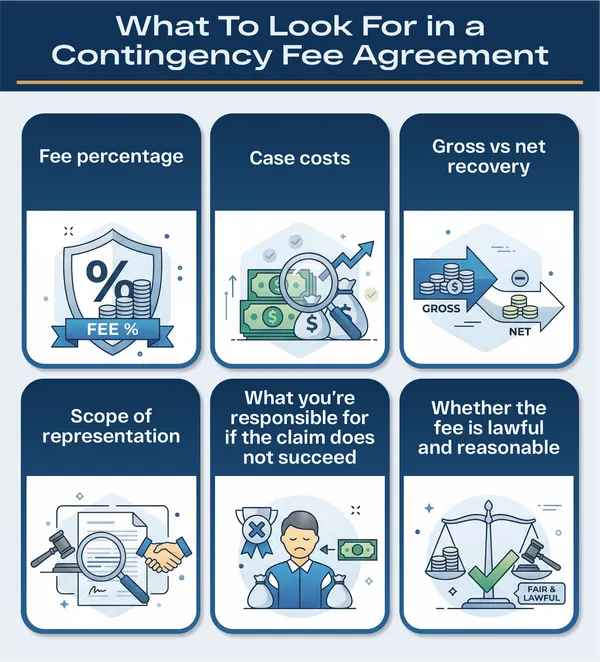
In California, a contingency fee agreement is a legal contract, not just a form. It must be in writing and signed by both the lawyer and the client. It must also explain how the fee and case costs will affect your recovery. If the agreement does not meet California’s legal requirements, the client may void it.
Before you sign, check whether the agreement clearly outlines:
- The Fee Percentage: The agreement should state the portion of a final settlement or award the lawyer will receive and whether that percentage changes if the case settles early, goes into litigation, or reaches trial or appeal.
- How Costs Affect Your Recovery: The agreement should explain how filing fees, expert costs, medical records, and other case expenses affect both the lawyer’s fee and your final recovery.
- Whether the Fee Is Based on the Gross or Net Recovery: The agreement should clearly state whether the lawyer takes the percentage before or after costs are deducted, because that difference can affect how much you receive.
- What Work Is Covered: The agreement should explain which services it covers and whether related matters, such as appeals or lien disputes, may require separate charges.
- Whether You May Still Owe Costs If There Is No Recovery: The agreement should state whether the lawyer advances costs, whether the lawyer expects reimbursement later, and whether you remain responsible for unpaid case expenses if the claim does not succeed.
- Whether the Fee Is Lawful and Reasonable: California lawyers cannot charge illegal or unconscionable fees, even if the client signed the agreement.
You May Still Owe Case Costs Even If There Is No Upfront Fee
At Arash Law, we do not require clients to pay upfront attorney’s fees or case costs to start a personal injury case. However, not every firm handles expenses the same way. Some firms may still hold clients responsible for certain case costs, depending on the fee agreement.
These costs can include court filing fees, medical record charges, service-of-process fees, deposition transcripts, expert witness fees, travel expenses, and similar litigation expenses. That is why the key question is not just whether the lawyer charges upfront. It is also whether the firm advances these costs and whether the client must repay them later.
How A Settlement Is Usually Divided
Even when there is no upfront fee, it is important to understand what happens if the case settles. The settlement does not go directly from the insurance company to the client in a single payment. Instead, the firm usually divides the total recovery into several parts. A settlement often follows this order:
- Start with the Total Recovery: The full settlement or verdict amount.
- Deduct the Attorney’s Fee: The lawyer charges a contingency fee under the written agreement.
- Deduct Case Costs: The firm may recover expenses such as filing fees, records, depositions, and expert charges from the total compensation.
- Resolve Liens or Reimbursements: Medical liens, health insurance reimbursement claims, or government program repayment claims may need repayment.
- Calculate the Client’s Net Recovery: What remains is the client’s final share.
This is why the most important question is not only whether you pay upfront. It is also the amount actually taken home after fees, costs, and any required reimbursements are deducted.
Can The Percentage Change During The Case?
Yes, it can, but only if the fee agreement allows for it. In many personal injury cases, the contingency percentage stays the same. In some situations, however, the agreement may set one percentage for claims that settle without the need for further legal action. Meanwhile, lawyers may take higher percentages for cases that proceed to litigation, trial, or appeal.
This structure reflects the additional work required by a more complex case. Once a case enters litigation, the lawyer may need to draft court filings, conduct discovery, take depositions, work with expert witnesses, respond to motions, and prepare for trial. All of that takes more time, labor, and expense than negotiating a pre-lawsuit settlement.
That does not mean a lawyer can raise the fee in the middle of the case without warning. The written agreement should explain from the start whether the percentage can increase, when that increase applies, and how it affects the client’s recovery. If the contract is unclear, the client should ask for an explanation before signing.
The key point is simple: a higher percentage may apply at a more advanced stage of the case, but the basis for that increase should be clearly disclosed in the fee agreement from the beginning.
Are Upfront Retainers Common In Injury Cases?

Not in most standard personal injury claims. California ethics rules recognize true retainers, flat fees, and other payment structures, but a true retainer has a narrow meaning. It is a fee paid to ensure the lawyer’s availability, not payment for future legal work itself.
That distinction matters because some people hear the word “retainer” and assume every lawyer requires a large deposit. In many injury cases, that is not how the representation is structured.
This also matters because some fee arrangements outside the personal injury context work very differently. In other types of legal matters, a lawyer may require an advance deposit and bill against it over time. Personal injury clients should not assume that the model applies automatically to an accident case. The better approach is to ask how the firm opens the file, what financial obligations begin at intake, and whether any separate charges apply to work outside the main claim.
Can The Other Side Be Forced To Pay Your Attorney’s Fees?
Not in most ordinary personal injury cases. California generally follows the American Rule, which means each side pays its own attorney’s fees unless a contract, statute, or another recognized exception shifts fees. In many injury claims, that means your attorney’s fee comes out of your recovery rather than being added on top and paid by the defendant.
What To Ask During The First Consultation
A first meeting should help you understand both the claim and the fee arrangement. As such, bring accident or incident reports, medical records and bills, insurance letters or claim numbers, witness information, photos, and videos. Additionally, prepare questions to clarify how a firm’s fees work, which expenses may arise, and what your next steps are.
Here are some payment-related questions you can ask during your first consultation with a lawyer:
- What services does their fee arrangement cover?
- How does the firm bill costs?
- Are their fees negotiable?
- Will the firm advance case costs?
- Will you owe any costs if you don’t recover compensation?
- Do you need to approve major expenses first?
- How will liens or reimbursements affect your final recovery?
AK Law can walk you through the fee agreement in plain language so you know what is covered, what costs may arise, and what questions to ask before you sign. That kind of free advice from injury lawyers can help you compare firms more confidently.
Do You Have To Pay For The First Consultation?
In many personal injury cases, no. Many firms offer an initial consultation at no charge so they can review the facts, explain the fee structure, and discuss whether the case appears viable. That first meeting should also give you a chance to ask how the firm handles contingency fees, case costs, and deductions from any recovery.
Even so, you should not assume every firm handles consultations the same way. Before scheduling, ask whether the consultation is free, what documents you should bring, and whether the meeting will focus only on case value or also explain the fee agreement.
Why The Fee Is Only Part Of The Cost Question
When it comes to legal costs, issues extend beyond fee percentages. Whether the claim is being valued correctly matters, too. A lawyer can gather evidence, calculate damages, address comparative fault arguments, deal with liens, and negotiate with insurers seeking a low settlement. Comparative fault can reduce your compensation, so even a small dispute over blame can affect what you recover.
The better question is not only what the lawyer charges, but also what the lawyer does. It is whether you fully understand the agreement, the risks, the costs, and the value of the claim before moving forward.
FAQs About Paying An Injury Lawyer
Are you worried about legal costs after an accident? These questions can help you understand how contingency fees, case costs, and written fee agreements work in California. The answers below focus on whether you pay anything up front, what you may still owe later, and what to review before signing.
Do Lawyers Only Get Paid If They Win?
In many California personal injury cases, the answer is yes. The lawyer’s fee is often contingent on a recovery through settlement or verdict. However, you still need to read the written agreement carefully. Case costs and expenses may be treated separately from attorney fees.
Will I Owe Anything If I Lose My Injury Case?

You may not owe an attorney fee under a contingency agreement if there is no recovery. However, you may still be responsible for some costs depending on the contract. That is why the costs section of the agreement matters as much as the fee percentage section.
Is The Contingency Fee Negotiable In California?
In most cases, yes. A contingency fee agreement generally must state that the attorney’s fee is negotiable between the attorney and the client.
Does California Cap Every Personal Injury Lawyer’s Fee?
No. California has special statutory limits for medical malpractice claims against health care providers. Other injury cases do not automatically follow that same cap.
What Should I Look For Before Signing A Fee Agreement?
Look for the fee percentage, how costs affect your recovery, whether related matters are included, whether the fee can change if the case enters litigation, and whether you may owe costs without a recovery.
Can I Change Lawyers During My Case?
You can change lawyers, but doing so can affect timing and how fees are divided between firms. Before making a change, ask the new lawyer to explain how prior work, costs, and any fee-sharing issues may be handled under California rules and your existing agreement.
Get Clear Answers About Attorney’s Fees Before You Sign Anything
After an accident, concerns about legal fees can stop people from getting help when they need it most. In many California personal injury cases, you do not have to pay upfront, but the details of the fee agreement still matter. You should know how contingency fees work, how case costs are handled, and what deductions may affect your final recovery.
AK Law can review your situation, explain the fee structure in plain language, and help you understand what to expect before you move forward. Call (888) 488-1391 for a free consultation.