TL;DR: Under California law, an injury is “bad enough to sue” when it interferes with your life and was caused by someone who failed to act safely. The harm can be minor or severe, as long as it creates medical expenses, lost income, or pain that you can document.
Highlights:
- You can sue if negligence caused measurable losses.
- Document medical treatment, even for injuries that heal.
- Track missed work and reduced job duties.
- Preserve photos, reports, and witness information.
- Seek care for emotional distress and keep records.
- File within two years in most California cases.
- File a government claim within six months if applicable.
Tip: Keep detailed medical and expense records early, and when speaking with insurers, stick to clear facts and avoid guessing about fault.
Table of Contents
In California, an injury is severe enough to sue when someone else’s negligence causes you measurable losses. The law does not require a catastrophic injury, surgery, or permanent disability. What matters is that another person failed to act safely, and your injury led to damages such as medical bills, lost income, or documented pain.
Even injuries that eventually heal can support a claim if they disrupted your life and created real losses. On the other hand, a serious injury without proof of fault may not result in a recovery. Personal injury law focuses more on fault, evidence, and damages than on how dramatic an injury sounds.
What Actually Determines Whether You Can Sue?
In California, the main question is not “How bad is the injury?” Rather, it’s:
“Did someone else legally cause harm that led to damages?”
In other words, the law focuses more on who caused the injury and what losses it created than on how dramatic the injury sounds. A broken bone and a serious sprain can both support a claim if they disrupt your life and someone else is at fault.
Most personal injury cases are based on a concept called negligence. This means that someone failed to use reasonable care, and another person was hurt as a result.
To bring a successful claim, four basic elements are usually required.
Duty Of Care
A duty of care is a legal responsibility to act in a reasonably safe manner to avoid harming others, and negligence occurs when someone breaches that duty and causes injury or damage.
This duty shows up in everyday life. For example:
- Drivers must follow traffic laws and watch the road.
- Store owners must fix or warn about hazards.
- Property owners must keep walkways reasonably safe.
If someone is in a situation where their actions could affect others, the law often expects them to act carefully to reduce the risk of injury accidents.
Here’s a simple way to think about it:
If a reasonable person would act carefully in that situation, the law likely expects it too.
Breach Of Duty
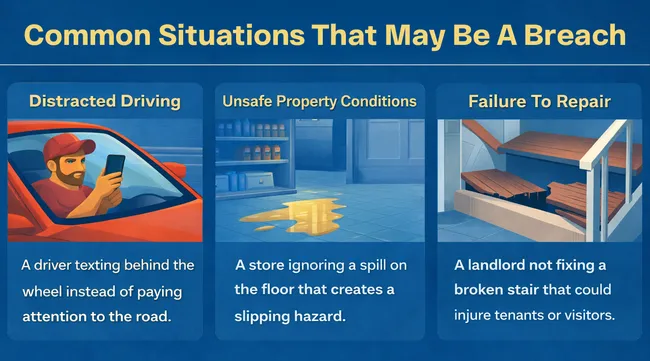
A breach happens when someone fails to meet that responsibility. This does not always mean the person intended to hurt anyone. Many cases involve careless behavior, not bad intentions.
Examples include:
- A driver texting behind the wheel.
- A store ignoring a spill on the floor.
- A landlord failing to repair a broken stair.
If a person acts in a way most reasonable people would consider unsafe, that may constitute a breach of duty.
Causation
Causation connects the careless action to the injury. You must show that the injury would not have happened if the other person had acted safely.
For example:
- A driver runs a red light and hits your car.
- A loose handrail gives way, and you fall.
- A dog escapes through a broken gate and bites someone.
In each case, the unsafe condition or action leads directly to harm. If the injury is unrelated to what the person did, causation becomes harder to prove.
Damages
Damages are the real-world losses you suffered because of the injury. This is where many people misunderstand the law. A person can act carelessly, but if no one suffers losses, there may be no case.
Damages can include:
- Medical bills
- Lost income from missed work
- Pain and physical discomfort
- Emotional distress
- Reduced ability to enjoy daily life
If these four elements exist, you may have grounds to sue even if your injury is not life-altering or permanent.
To move forward, you need enough evidence to show each element is more likely true than not. This standard is called preponderance of the evidence, and it applies in civil cases. Medical records, bills, photos, witness statements, and your testimony often provide that proof.
That is why two people with similar injuries can have very different cases. One may have strong evidence of fault and losses. The other may not.
The takeaway for injured people is this:
“Your case depends on fault, evidence, and impact on your life, not just how serious the injury sounds to others.”
Do Minor Injuries Qualify For A Lawsuit?
Yes, sometimes. A “minor” injury in everyday language can still matter legally if it affects your health, your work, or your daily life.
Many people assume that if they were not hospitalized or did not need surgery, they cannot bring a claim. That is not how California personal injury law works. The law looks at how the injury impacted you, not just the label attached to it.
A so-called minor injury can still support a claim if it leads to:
- Medical expenses
- Time off work
- Ongoing symptoms
- Pain or functional limits in daily activities
For example, you might think a sprain or strain is no big deal. However, it may have sent you to urgent care, required physical therapy, or kept you from doing your job normally. Those effects are real. The same is true for whiplash or soft tissue injuries that cause lingering neck or back pain.
Common examples of injuries that are often called “minor” include:
- Sprains and strains
- Mild burns
- Cuts that require stitches or treatment
- Soft tissue injuries
- Whiplash
California law does not block a claim just because an injury eventually heals. If someone else caused the injury and you experienced losses along the way, you may have the right to pursue compensation.
That said, very small claims with little or no treatment and no financial impact can be harder to pursue in practice. If you did not need medical care and your life was not really disrupted, there may be limited damages to claim.
In practice, the hardest injuries to prove are often those without clear, objective findings. Soft tissue injuries, chronic pain, and some psychological conditions may not appear on standard imaging tests. When symptoms rely heavily on your personal reports rather than visible damage, insurers may question their severity or cause. Strong medical documentation becomes especially important in these cases.
What matters is not whether the injury sounds minor, but whether it costs you time, money, comfort, or normal function. If it did, it may be worth learning about your options.
What Counts As A Moderate Injury?
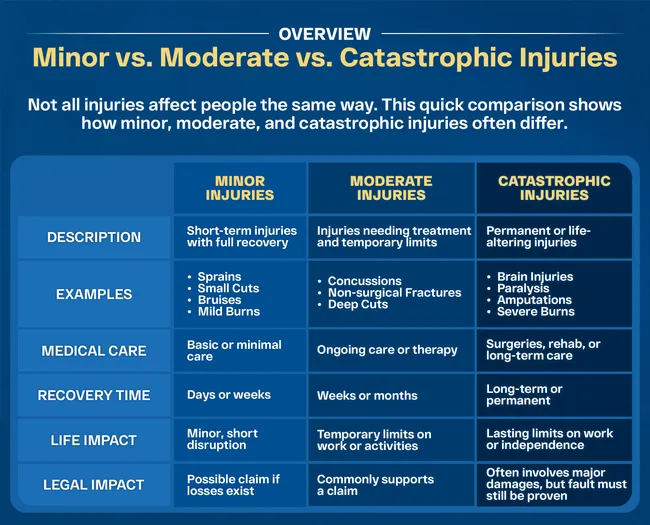
A moderate injury is usually more serious than a simple bump or bruise, but it is not life-altering or permanently disabling. These injuries often require real medical care and can disrupt your routine for weeks or months. Even though they are not considered catastrophic, they can still support a personal injury claim if someone else caused them and you suffered losses.
In everyday life, many people with moderate injuries still try to “push through” the pain. They might keep working, delay treatment, or assume the injury will just go away. But moderate injuries can affect your ability to work, drive, sleep, or handle everyday responsibilities. Those impacts matter legally.
Examples of moderate injuries include:
- Concussions.
- Non-surgical fractures.
- Deep lacerations that may leave scars.
- Significant sprains or strains.
- Short-term mobility limits, such as needing a brace or crutches.
These injuries often lead to:
- Emergency room or urgent care visits.
- Follow-up doctor appointments.
- Physical therapy or rehabilitation.
- Temporary work restrictions or missed work.
- Ongoing, documented pain.
Some people fully recover from moderate injuries, which is good news for their health. However, a full recovery does not erase what you went through. Medical bills, time away from work, and the pain during recovery are real effects of the injury. California law allows injured people to seek compensation for those losses when another party is at fault.
In short, a moderate injury can be “serious enough” to sue if it required treatment, affected your daily life, and was caused by someone else’s negligence. The focus is less on the label and more on how the injury actually impacted you.
What Is Considered A Catastrophic Injury?
A catastrophic injury has a long-term or permanent impact on a person’s life. These injuries often change how someone lives, works, or takes care of themselves. They can also affect family members who need to provide care and daily support.
Unlike minor or moderate injuries, catastrophic injuries usually involve major medical treatment and long recovery periods. Some people may need ongoing care, therapy, or assistive devices. Others may not be able to return to the same job or participate in the same activities they did before.
Common examples include:
- Spinal cord injuries
- Traumatic brain injuries
- Paralysis
- Amputations
- Severe burns
- Multiple serious fractures
Because these injuries can have lasting effects, claims often consider future medical needs, reduced earning ability, and changes in quality of life.
Still, severity alone does not decide a case. Even with a catastrophic injury, you must show that someone else was at fault and that person’s actions caused your harm. Fault, causation, and documented damages remain the foundation of any personal injury claim.
Can You Sue For Emotional Distress In California?
Yes, under certain conditions. Emotional distress can be part of a personal injury claim when it results from a physical injury or stems from extreme or negligent conduct.
Severe emotional distress may involve:
- Anxiety or panic
- Symptoms of post-traumatic stress disorder
- Depression
- Sleep disruption
- Trauma-related physical symptoms
It’s essential to support your claims with solid evidence. Medical or mental health records can be particularly helpful in demonstrating the seriousness of the situation and establishing a clear connection to the incident.
When Might It Not Make Sense To Sue?
Not every injury leads to a practical lawsuit. A claim may be harder to pursue if:
- You did not need medical treatment.
- There are no documented financial losses.
- Fault is unclear or mostly yours.
- Evidence is limited.
This does not mean you have no rights, but it may affect whether it will be realistic for you to pursue a claim. Because these factors are not always obvious, speaking with a personal injury attorney can help you understand how the law applies to your situation. A lawyer can review the facts, explain your options, and clarify deadlines so you can make an informed decision.
What Types Of Incidents Commonly Lead To Injury Lawsuits?
Personal injury claims often arise when someone gets hurt because another person or business failed to act safely. If your injury happened because a business ignored safety rules or exposed you to a known hazard, you may be wondering, “Can you sue a company for putting you in danger?” and what legal standards apply in that situation.
If negligence or wrongful conduct contributed to your injury, California law may allow you to pursue a claim.
Many situations can support a claim if negligence exists, including:
- Car accidents
- Truck accidents
- Motorcycle crashes
- Slip and fall incidents
- Dog bites
- Defective products
- Assaults or intentional acts
- Unsafe property conditions
Not every accident leads to a case. A valid claim usually depends on fault, evidence, and whether you suffered real damages. Understanding these basics can help you decide your next steps.
How Does Workers’ Compensation Fit In?

If you get hurt at work in California, workers’ compensation usually applies first. This is a type of insurance most employers must carry to help employees who are injured on the job. It is designed to provide support without requiring you to prove your employer did anything wrong.
Workers’ compensation typically covers:
- Medical care
- Partial wage replacement while you recover
In exchange for these benefits, you generally cannot sue your employer for ordinary negligence, even if a mistake led to the injury.
However, your case may not end there. You may still have the right to sue third parties who contributed to your injury. A third party is someone other than your employer.
Examples include:
- A negligent driver who hits you while you are working.
- An equipment manufacturer that made a defective tool.
- A property owner who failed to fix a hazard.
In some situations, an injured worker can have both a workers’ compensation claim and a third-party personal injury case at the same time. One provides set benefits, while the other may allow recovery for additional losses.
What Damages Can You Recover?
After an injury, many people wonder what types of losses the law actually recognizes. In California, personal injury claims focus on how the injury affected you financially and personally. The goal is to account for both the money you spent or lost and the ways your life was impacted.
California allows recovery for economic and non-economic damages.
Economic damages cover measurable financial losses, such as:
- Medical bills
- Future medical care
- Lost income
- Reduced earning capacity
- Property damage
Meanwhile, non-economic damages address the personal and human impact of an injury, including:
- Pain and suffering
- Emotional distress
- Loss of enjoyment of life
Insurers and juries look at several factors when assigning a value to pain and suffering. They consider the type of injury, how long your symptoms lasted, and how treatment affected your routine. Additionally, they review medical records, your credibility, and how clearly you can show daily limits. Strong, consistent evidence often leads to a more accurate valuation.
How Soon Do You Need To Act In California?
After an injury, you do not have unlimited time to take legal action. California law sets strict deadlines called statutes of limitations. If you miss a deadline, a court can dismiss your case even if you were clearly injured.
In most California personal injury cases, you have two years from the injury date to file a lawsuit.
Some exceptions apply:
- Claims Against Government Entities — If a city, county, or state agency is responsible, you usually must file a government claim within six months of the incident. This often applies to crashes involving public vehicles or injuries on public property.
- Delayed Discovery of Injuries — Sometimes injuries are not apparent right away. For example, a person might only discover internal injuries, nerve damage, or concussion symptoms weeks or months later. In limited situations, the clock may start when you knew or reasonably should have known the injury was related to the incident.
- Cases Involving Minors — When the injured person is a minor, the two-year clock often does not start until they turn 18. However, claims involving government entities may still require early action by a parent or guardian.
Because these rules can be technical, waiting can be risky. Acting sooner helps protect evidence, clarify deadlines, and preserve your rights. Even a brief legal consultation can help you understand how much time you truly have.
What Steps Should You Take After An Injury?
If you think your injury may justify a claim, the steps you take early on can affect your health and your legal options. Many people focus only on recovery, which is essential, but documentation and reporting also matter if you later pursue a claim.
Here are practical steps to consider:
- Get Medical Care — Your health comes first. Even if you feel “mostly okay,” some injuries take time to show symptoms. A medical visit creates a record linking your injury to the incident. This record can be vital in case questions later arise about how or when you were hurt.
- Document Everything — Good documentation helps show what happened and how the injury affected you. Try to keep:
- Photos of the scene and your injuries.
- Receipts for medical or related expenses.
- Medical records and treatment notes.
- Work absence or wage loss records.
Small details can become important later, especially if an insurer questions your claim.
- Report the Incident — Reporting creates an official record that the event happened. Without a report, it can become your word against someone else’s.
Examples include:
- A police report after a traffic collision.
- An incident report at a store or business.
- A workplace injury report to your employer.
- Avoid Guessing About Fault — When speaking to insurers or others, stick to the facts. It is okay to say you are still figuring out what happened. Guessing, speculating, or accepting blame too quickly can create confusion later.
- Consider a Legal Consultation — Injury attorneys can review what happened and explain whether negligence and damages may be present. Even if you decide not to pursue a claim, understanding your rights and deadlines can help you make informed choices.
How Can A Personal Injury Attorney Help When You Are Not Sure Your Injury Is “Bad Enough”?

Many people hesitate to talk to a lawyer because they think their injury is not severe enough. In reality, one of the most common questions attorneys hear is, “Do I even have a case?” A personal injury attorney’s role is to look at the facts, not just the injury label, and explain whether the law may support a claim.
An attorney can help in several practical ways:
- Identify Liable Parties — It is not always obvious who is legally responsible. In some cases, more than one party may share fault. For example, a crash might involve another driver, an employer, or a vehicle owner. A lawyer reviews the situation to see who may be legally accountable.
- Gather Evidence — The strength of a case often depends on evidence, not how bad the injury sounds. An attorney can help collect:
- Medical records
- Accident or incident reports
- Photos and video
- Witness statements
This evidence helps show how the injury happened and how it affected you.
- Handle Insurance Companies — Insurance adjusters evaluate claims every day. A lawyer can handle communications and negotiations so you do not feel pressured to minimize your injury or accept less than your documented losses.
- Evaluate Damages — Some losses are obvious, like medical bills. Others are less visible, such as ongoing pain, future treatment needs, or reduced ability to work. An attorney looks at both current and potential future impacts when evaluating a claim.
- File a Lawsuit If Needed — Not every injury leads directly to a lawsuit. Many personal injury matters begin as insurance claims. A lawsuit may become relevant when there is a genuine dispute about who was at fault, how the injury affected you, or what losses resulted. In those situations, a lawyer can review the facts and explain whether your injury and damages meet the legal standards for filing a lawsuit.
Most personal injury attorneys work on a contingency fee basis. This means their fee is tied to recovering compensation for you. They should clearly explain how their fees work before representation begins so that you can make an informed decision. Arash Law, like many personal injury firms, explains its fee structure in advance so clients understand how this arrangement works.
In short, a lawyer can help you understand whether your injury meets the legal requirements for a claim. The goal is not to encourage lawsuits, but to give you clear information about your rights and options.
FAQs Relating To How Serious An Injury Must Be To Sue
People often feel unsure about whether their injury “counts” for a legal claim. These FAQs explain how the law looks at injury seriousness, what actually matters for a case, and how fault and losses affect your right to seek compensation. The goal is to clear up common questions so you can better understand where your situation may fit.
How Do I Know If My Injury Is “Serious Enough”?
An injury is often “serious enough” if someone else caused it and it led to real losses, such as medical bills, missed work, or documented pain. The law focuses less on labels like minor or major and more on fault and damages. Many people in this situation wonder, “Do I need a personal injury lawyer?” A legal review can help you understand how your specific situation fits these rules and what options may be available to you.
Can I Sue If I Fully Recover?
Yes. You can still pursue a claim even if you heal completely. What matters is whether you had losses along the way, such as treatment costs, lost income, or pain during recovery. A full recovery does not erase the impact the injury had at the time.
Do I Need A Permanent Injury To Sue?
No. Permanent injuries may increase the value of damages, but they are not required to file a claim. Many valid personal injury cases involve temporary injuries that still need care and disrupted daily life.
Will My Case Go To Trial?
Most personal injury cases resolve through insurance claims or settlements. A trial may happen if there is a strong disagreement about fault or damages. If that occurs, a court decides the outcome based on the evidence. During this process, some people also ask, “Do lawyers only get paid if they win?” Many personal injury attorneys work on a contingency fee basis, meaning they discuss fees in advance and base their fee on the compensation they recover for you.
What If I Was Partly At Fault?
California follows a comparative negligence system. That means you may still recover compensation even if you were partly responsible for your injuries. However, your recovery is reduced by your share of fault. For example, being 20% liable could reduce recovery by 20%.
Not Sure If Your Injury From An Accident Is Serious Enough To Sue?
If you were hurt in an accident in California and are unsure whether your injury is serious enough for a claim, learning about your legal options can help you understand where you stand. Many people assume only severe injuries qualify, but the law looks at who caused the accident and how the injury affected your life.
Some people look for free accident lawyer advice when they first have questions about their rights. A qualified personal injury attorney can explain how deadlines, evidence, and damages may apply to your situation so you can make an informed decision. Call AK Law at (888) 488-1391 to discuss your situation.