TL;DR: Injuries from chiropractors are uncommon. Serious complications occur around 0.21 in every 100,000 sessions, with strokes, fractures, or nerve injuries mostly sustained by higher-risk patients. Post-adjustment neurological symptoms may signal rare injury and influence liability.
Highlights:
- Expect mild soreness after adjustments, usually resolving within 24 hours.
- Watch for dizziness, vision changes, or severe headache after treatment.
- Serious complications remain rare but occur more often in high-risk patients.
- Take note of whether you are at higher risk, such as an older adult or someone with bone or vascular conditions.
- Track symptoms and changes closely during the first 24 hours post-adjustment.
- Get a medical evaluation if you experience worsening or persistent pain.
Tip: Record symptom timing and progression to support accurate medical assessment later.
Table of Contents
Chiropractic care is generally safe. However, injuries can occur. Minor side effects, such as soreness, stiffness, or headaches, affect roughly 50–60% of patients and usually resolve with strategies such as stretching, soft-tissue therapy, and heat. Severe injuries, like nerve damage, disc herniation, fractures, or stroke, are rare.
Understanding how often injuries occur, who is at risk, and your legal options can help you make informed decisions about chiropractic care.
How Often Do Chiropractic Injuries Happen?
Most chiropractic patients experience temporary, mild side effects:
- Headaches, pain, stiffness, and soreness.
- Symptoms typically resolve when the chiropractor uses mitigation strategies.
Meanwhile, one study finds that grade 3 adverse events (AEs) only happen at a frequency of 0.21 per 100,000 spinal manipulative therapy sessions. A grade 3 AE is defined as a spinal fracture that:
- Causes severe back pain.
- Requires hospitalization or pain control intervention.
- Limits one’s ability to care for themselves and perform daily tasks.
- Disability.
Though serious injuries are extremely rare, 1 in 2 million to 7 per 100,000, they can be life-threatening. These may include:
- Cervical artery dissection and stroke. A tear in a neck artery may reduce blood flow or lead to clot formation, which can cause a stroke.
- Disc herniation and nerve injury. A spinal disc injury may press on nearby nerves, causing severe pain, numbness, weakness, or loss of function.
- Cauda equina syndrome. Compression of the nerve roots at the base of the spine can cause leg weakness, numbness, and loss of bladder or bowel control.
- Fractures. Broken bones in the spine, ribs, or other areas can cause severe pain, instability, and long-term mobility problems.
Higher-risk groups include:
- Adults over 65. Studies of Medicare patients show an overall injury rate of just 40 per 100,000 chiropractic visits, though risks increase heavily with underlying bone conditions.
- Patients with pre-existing conditions like osteoporosis, vascular disease, and Ehlers-Danlos syndrome.
- Individuals who have recently undergone spine surgery.
- Those receiving high-velocity cervical adjustments.
Other risk factors, such as the number of treatments, the technique used, and patient positioning, may affect the likelihood of injury.
Types Of Severe Chiropractic Injuries
Some chiropractic adjustments involve high-velocity, often rotational forces. When a provider miscalculates the appropriate amount of force, the sudden impact can severely damage bone, tissue, or blood vessels. Understanding the scope of these potential traumas helps patients recognize when routine soreness escalates into a medical issue requiring action.
Reported injuries include:
| Injury Type | Description | Estimated Frequency |
|---|---|---|
| Cervical Artery Dissection & Stroke | A tear in the neck arteries, causing a clot or stroke. | Very rare. |
| Disc Herniation & Nerve Damage | Spinal discs pressing on nerves can cause pain, numbness, or weakness. | Very rare. |
| Fractures | Vertebrae, ribs, or other bones break, especially in osteoporosis. | Rare. |
| Soft Tissue Injuries | Ligament sprains, muscle tears, chronic pain. | Common mild effects; serious injuries are rare. |
| Spinal Cord Injury | Partial or complete paralysis. | Extremely rare. |
| Radiculopathy / Nerve Root Injury | Nerve irritation or compression causing radiating pain. | Rare. |
| Cauda Equina Syndrome | Severe nerve compression in the lower spine. | Very rare. |
| Minor Artery Injury Without Stroke | Small vessel injury not progressing to stroke. | Very rare. |
Understanding the range and rarity of these injuries highlights why prompt action matters. Even if an injury seems minor at first, consulting a California injury attorney can advocate for your rights, preserve supporting evidence, and guide you through the claims process.
When Does A Chiropractic Injury Become A Personal Injury Claim?
Not every injury leads to a claim. A personal injury case arises when a chiropractor’s care falls below the standard expected of a competent provider and causes harm. That means there are certain facts you must establish to be eligible to pursue compensation for your losses.
Key elements of a personal injury claim:
- Duty of Care: The chiropractor had a legal obligation to provide competent care.
- Breach of Duty: The chiropractor failed to meet professional standards.
- Causation: The breach directly caused your injury.
- Damages: You suffered real harm, such as medical bills, lost income, or lasting pain.
Examples of potential negligence:
- Using excessive force or improper technique.
- Failing to screen for high-risk conditions.
- Not informing the patient of serious risks before treatment.
California law allows patients to pursue economic and non-economic damages for personal injuries, including medical costs, lost wages, pain, and suffering.
Available Compensation For California Chiropractic Injury Cases
In California, the damages you can claim in personal injury cases can generally be economic or non-economic. Economic damages are not capped, so you may seek the full cost of your care and lost wages. Non-economic damages are not capped by state law unless you are filing a malpractice claim, such as for a chiropractic injury.
Economic damages cover your medical bills, rehabilitation costs, and lost earning capacity. These financial losses can include treatment for injuries like chiropractic neck injuries similar to whiplash from collisions.
Non-economic damages cover personal losses that are harder to measure in dollars, such as pain, suffering, physical limitations, emotional distress, and reduced quality of life. In most California personal injury cases, state law does not impose a general cap on non-economic damages, such as pain and suffering.
However, a different rule may apply when a claim qualifies as professional negligence against a licensed health care provider. For informational purposes only, California’s Medical Injury Compensation Reform Act, or MICRA, limits non-economic damages in covered medical malpractice claims.
California Civil Code § 3333.2 applies to injury claims against health care providers based on professional negligence, and its definition of “health care provider” includes providers licensed under the Chiropractic Initiative Act. In 2026, the MICRA cap is $470,000 for non-wrongful-death injury claims and $650,000 for wrongful death claims. These caps apply only to covered professional negligence claims, not to every injury involving chiropractic care.
California also uses a pure comparative negligence rule. If the evidence shows you share some fault, your recovery is reduced by your share of the blame. Even so, you can still seek your remaining damages under California law.
Strong records of your medical costs and lost wages support the full value of your claim. California has strict time windows for filing, and the process starts well before you reach a courthouse.
California Personal Injury Deadlines

For chiropractic-related personal injury claims, filing deadlines matter. In California, most personal injury and wrongful death lawsuits must be filed within 2 years. However, some exceptions can shorten or extend the deadline. Understanding which filing window applies to your situation is crucial because a court can dismiss your case if you miss it:
- Adults: You generally have 2 years from the date of the injury to file a personal injury lawsuit.
- Minors: If the injured person was under 18 at the time of the accident, the deadline usually does not begin to run until they turn 18. In many cases, this means they have until their 20th birthday to file. However, exceptions may apply, so parents or guardians should not wait to speak with a lawyer.
- Wrongful Death Claims: If the injury later results in death, surviving family members generally have 2 years from the date of death to file a wrongful death lawsuit. This deadline is separate from the original injury date.
Missing the filing deadline can prevent you from pursuing compensation, even if you received chiropractic care and have strong evidence of injury. Because some cases involve different deadlines, it’s best to contact a personal injury lawyer promptly.
What To Do If You Suspect A Chiropractic Injury
If you sustain an injury after a chiropractic visit, taking prompt, careful action can protect your health and your ability to pursue a personal injury claim. Looking for free advice from an injury lawyer is a common reaction after sustaining an injury.
- Get Emergency Care Immediately
- Seek urgent medical attention if you have severe headaches, dizziness, numbness, weakness, or stroke-like symptoms.
- Make sure the healthcare provider knows you recently had a chiropractic adjustment, as this information can guide proper evaluation and treatment.
- Early medical documentation is critical for both your health and supporting any future personal injury claim.
- Document Everything
- Keep all medical records, chiropractic notes, bills, and imaging reports related to your treatment.
- Take clear photos of visible injuries or swelling and keep a journal of symptoms, pain levels, and any changes over time.
- This documentation helps your attorney establish causation, damages, and timelines for your personal injury claim.
- Avoid Signing Releases or Settlements
- Do not sign any release, waiver, or insurance paperwork from the chiropractor or their insurer without legal review.
- Early signatures or agreements can limit your ability to claim damages or contest the care provided.
- Let a personal injury lawyer review any forms to protect your rights before agreeing to anything.
- Consult a Personal Injury Lawyer
- A qualified California personal injury attorney can evaluate your situation, explain your options, and guide you through the claim process.
- Lawyers can handle communications with insurers, preserve evidence, and help you meet filing deadlines.
- Even if you’re unsure whether your injury qualifies, a consultation can clarify whether you have a valid claim.
- Report to Authorities if Appropriate
- You may report serious injuries to the California Board of Chiropractic Examiners (BCE).
- Reporting helps track patterns of unsafe practice and may support your case if negligence is involved.
- While reporting does not replace a personal injury claim, it provides additional documentation for your attorney.
Frequently Asked Questions About Injuries From Chiropractors
After a chiropractic injury, it is normal to have questions that go beyond the basics. You may be unsure whether your symptoms are serious, worried that you signed away your rights, or unclear about who is responsible. The answers below address the most common concerns that come up after a neck adjustment injury.
What Are The Warning Signs Of A Stroke After A Neck Adjustment?
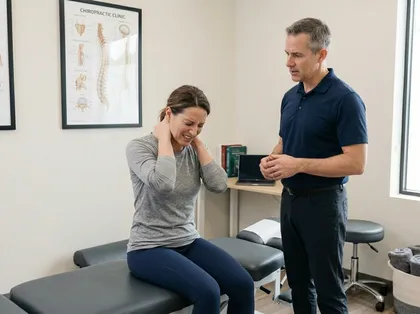
The most common early sign is sudden, severe neck pain that does not let up, or what some call the worst headache of their life. Other warning signs include dizziness, trouble speaking, double vision, or numbness on one side of the body. Treat any of these symptoms as a medical emergency.
Can I Sue If The Chiropractor Had Me Sign A Waiver?
Signing a waiver does not stop you from filing a malpractice claim. Courts can set aside a waiver when the chiropractor’s conduct amounted to gross negligence. A waiver can also be thrown out if you were not given a real chance to understand what you were signing.
Are Chiropractors Required To Carry Malpractice Insurance?
Most chiropractors carry malpractice insurance. California does not require all of them to have it. California law sets minimum coverage amounts for chiropractic corporations. That ensures patients have a source of compensation if negligence is proven. Most licensed chiropractors maintain practice coverage.
Why Do Doctors Discourage High-Velocity Neck Adjustments?
Many doctors warn against high-speed neck adjustments. The sudden force can tear the vertebral artery, a blood vessel in the neck. When that artery tears, blood flow to the brain can be cut off, which may cause a stroke. Because safer options exist for neck pain, many physicians take a cautious approach.
Contact A California Lawyer About Your Injury From A Chiropractor
If you think “I need a personal injury lawyer” after a chiropractic injury, Arash Law is ready to help. Our attorneys focus on serious and catastrophic personal injury cases. They will pursue every dollar you may be entitled to under California law.
You may wonder: do lawyers only get paid if they win? At Arash Law, the answer is yes. You pay no attorney’s fees unless we win or settle your case. There are no upfront costs or hourly charges, so you can focus on your recovery while our team evaluates how we can help.
Call AK Law today at (888) 488-1391 to schedule your free, no-obligation initial consultation. The sooner you reach out, the sooner we can review your situation and explain your options. A missed filing deadline can end your claim entirely, so having your medical records reviewed early protects your right to act.