TL;DR: Insurance companies evaluate fault in an accident by reviewing evidence such as photos, witness accounts, and reports to reconstruct how the incident occurred. They form a claims position under negligence principles and California comparative fault rules, which may divide liability among multiple parties.
Highlights:
- Collect photos and videos immediately after the incident occurs.
- Request copies of police or incident reports for review.
- Document witness names and contact details at the scene.
- Preserve damaged property or equipment before repairs or disposal.
- Track statements provided to insurers to ensure consistency during review.
- Keep all medical records, including those from doctor and chiropractor visits.
- Save communications with insurers and involved parties.
Tip: Stick to factual details when speaking with insurers to avoid confusion in the review process.
Table of Contents
Insurance companies use similar fault-investigation methods across many types of accidents, but the rules they apply depend on the circumstances. In car accidents, fault is based on traffic laws and driving conduct. In slip-and-fall claims, insurers may look at property safety standards. Meanwhile, adjusters may review safety regulations when assessing workplace accidents.
That fault assessment affects settlement talks, repair payments, and injury claims. However, it is not the same as a court ruling. A judge or jury can reach a different result if the case goes to litigation.
California follows a pure comparative fault system. That means your share of fault may reduce your damages. However, it does not automatically end your claim.
What Happens During The Insurance Fault Review
When a new injury claim opens, the assigned adjuster launches an immediate investigation to begin reviewing coverage, liability, and damages. This evaluation process involves far more than just reading the initial accident report. The insurance representative systematically reconstructs the circumstances of the crash to protect the company’s financial interests before reaching any formal conclusion on liability.
After a claim opens, the adjuster first checks the basic facts of the case. This review may include:
- The insurance policy and available coverage.
- The parties involved, such as drivers, property owners, employees, or other responsible parties.
- The date, time, and location of the incident.
- Reported injuries and property damage.
- Any police report, incident report, or claim number.
Next, the adjuster builds a timeline of what happened. In traffic accidents, this may focus on vehicle movement. In non-traffic accidents, it may focus on conditions and actions leading up to the injury. Key details may include:
- Where each person, vehicle, or object was before the incident.
- Movement patterns, such as driving paths, walking paths, or activity on a property.
- Whether anyone turned, changed direction, or entered a hazardous area.
- Speed, timing, or sequence of actions where relevant.
- Safety rules such as traffic controls, warning signs, or property safety requirements.
- Environmental conditions such as lighting, visibility, flooring, weather, or obstructions.
The adjuster then compares each party’s version of events with the available evidence. A driver may say they had the right of way, or a property owner may say a hazard was not present. However, video footage, witness statements, photos, maintenance records, or physical evidence may show a different sequence of events. Accident lawyers can review the same evidence and challenge the insurer’s findings if the facts do not support it.
What Evidence Do Adjusters Use To Determine Liability?
Adjusters review statements from the people involved in the incident, but they do not rely solely on those accounts. Instead, they compare those accounts with physical, documentary, and digital evidence of the accident. Insurers use this information to piece together what happened and determine each party’s share of responsibility.
The evidence that adjusters review depends on the type of accident that occurred:
| Evidence Type | Traffic Accidents (Car, Truck, Motorcycle, etc.) | Non-Traffic Accidents (Slip and Fall, Workplace, etc.) |
|---|---|---|
| Photos of the Accident Scene | Road layout, traffic signals, skid marks, debris, and vehicle positions. | Property conditions showing hazards such as spills, broken flooring, or unsafe equipment. |
| Video Footage | Dashcam and surveillance footage showing lane position, speed, or violations. | Surveillance showing fall events, unsafe conditions, or workplace activity. |
| Electronic or Digital Data | Event Data Recorders (speed, braking, seatbelt use, acceleration). | Access logs, safety systems, time records, equipment logs, or sensor data where available. |
| Witness Statements | Other drivers, passengers, and pedestrians, describing right-of-way or driver behavior. | Customers, employees, and bystanders describe hazards or unsafe conditions. |
| Official Reports | Police or California Highway Patrol (CHP) collision reports with officer observations and listed parties. | Incident reports, Cal/OSHA or OSHA reports, workplace injury reports, or property management logs. |
| Maintenance or Safety Records | Vehicle maintenance history in some liability disputes. | Cleaning logs, inspection records, safety compliance documents, and prior complaint records. |
| Medical Records | Injury documentation linked to crash mechanics and timing. | Injury documentation linked to fall mechanics, exposure, or workplace incident timing. |
Police or the California Highway Patrol (CHP) reports may be requested through the appropriate reporting channels by individuals considered to be a proper Party of Interest, such as an involved driver, bicyclist, pedestrian, passenger, vehicle or property owner, legal representative, or insurer with a valid claim or policy number. Local law enforcement may also generate collision reports depending on the incident.
These reports are often reviewed during the claims process. However, they do not determine fault on their own. Insurers evaluate them alongside physical evidence, witness accounts, and digital data. An officer’s opinion may be considered, but it is not controlling if other evidence shows a different sequence of events.
In non-traffic claims, insurers rely more on property records, proof of compliance with safety regulations, and workplace or facility reports than on traffic-based evidence such as signals or lane positions.
How California’s Pure Comparative Fault Rule Affects Your Claim
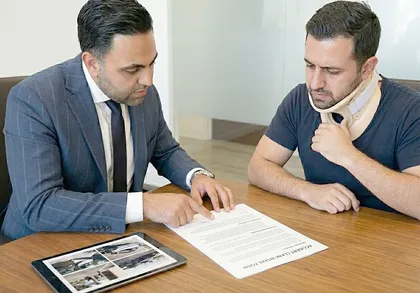
California follows pure comparative fault. More than one party can share blame for the same accident. This system can affect how much a personal injury case settles for, as your percentage of fault reduces the amount you can recover. For example, suppose your damages are $50,000, and you are 30 percent at fault. The other party may be responsible for 70 percent, or $35,000.
Li v. Yellow Cab Co. (1975) is the California Supreme Court case that adopted the doctrine of pure comparative negligence. The California Civil Code section 1714 establishes the general duty to exercise ordinary care, but it does not create the pure comparative fault rule.
Your words and records can affect the fault review. Stick to facts when you talk to insurers. Avoid guessing about speed, distance, injuries, or blame. Get medical care and keep all documents related to your injuries and treatment. Adjusters will likely request them for comparison with the records of the accident.
How Medical Records Can Affect Injury Causation And Damages
Claims adjusters may review medical records from doctors, physical therapists, chiropractors, and other specialists involved in your care. They may then compare those notes with the accident details to assess whether your injuries align with the incident’s mechanics. If the injury pattern does not match the reported sequence of events, adjusters may question these inconsistencies when assessing fault.
Common accident injuries include:
- Whiplash
- Back injuries
- Neck pain
- Broken bones
- Concussions
- Shoulder injuries
- Knee injuries
- Soft tissue damage
Injury attorneys can help connect the medical records to evidence of the accident to show how your injury likely happened and how responsibility may be shared.
Legal Violations That Often Affect Fault Decisions
Under California’s negligence per se rule (Evidence Code § 669), breaking a safety law can create a presumption that someone failed to use reasonable care. It may apply when the violation caused or helped cause the injury or property damage. The harm must be something that the law was specifically designed to prevent. Finally, the injured person must be someone protected under that law.
Negligence per se does not automatically decide the entire claim. The party accused of breaking the law can still challenge the presumption.
Common examples of accidents where negligence per se may apply include:
- Rear-End Collisions: California’s law on following too closely (Vehicle Code § 21703) requires drivers to leave a safe distance based on speed, traffic, and road conditions. A rear driver often faces a tougher fault argument, but the facts still matter. Sudden lane changes, broken brake lights, unsafe stops, or chain-reaction crashes may change how insurers split fault between them and the driver in front.
- Left-Turn & U-Turn Accidents: California’s left-turn and U-turn right-of-way law (Vehicle Code § 21801) requires a driver turning left or making a U-turn to yield to oncoming traffic that is close enough to be a hazard. The turning driver often faces close review. However, speeding, running a red light, or distracted driving by the oncoming driver may affect fault.
- Intersection & T-Bone Accidents: These crashes often turn on who had the right of way. Adjusters may review signal timing, red-light camera footage, nearby surveillance footage, witness statements, and damage angles to determine liability.
- Slip, Trip, & Fall Incidents: Negligence per se may apply when a specific statute or ordinance is violated, such as safety or maintenance rules affecting walkways under the defendant’s control. However, liability is not automatic. Fault may still depend on whether the hazard was foreseeable, whether reasonable care was taken, and whether the injured person acted reasonably under the circumstances.
- Workplace Injury Cases: Safety violations under state or federal regulations may support a finding of negligence in certain third-party claims. However, workers’ compensation laws govern many workplace injury claims, and negligence per se does not override those rules. Fault may also be evaluated differently when claims involve third parties or situations outside the employer-employee compensation system.
Even when one party broke a traffic law, the state’s comparative fault rule may still divide blame if both drivers acted carelessly.
Steps To Take If An Insurance Company Unfairly Blames You
The insurance company does not get the final word on fault. If an adjuster unfairly blames you for an accident, you can push back with evidence, written objections, and legal support. Taking immediate, yet careful, action can help support your position. Consider these steps:
- Step 1: Delay Giving a Recorded Statement
If the other party’s insurance company asks for a recorded statement, do not give one right away. You usually do not have to give a recorded statement to the other party’s insurer. Your insurance policy may require you to cooperate with your own insurer, so review it or speak with a lawyer before agreeing to be recorded. - Step 2: Send a Written Dispute
Write to the insurance company and explain why you disagree with its fault decision. Include evidence the adjuster may have missed, such as photos, videos, medical records, repair estimates, witness names, or other details that support your side of the story. - Step 3: Gather and Save Evidence
Save anything that may help prove what happened. Examples include accident-scene photos, surveillance footage, medical records, witness statements, emails, text messages, and letters from insurance companies. - Step 4: Ask A Lawyer to Preserve Evidence You Cannot Get on Your Own
Some evidence may disappear quickly or stay in someone else’s control. Accident lawyers can send preservation letters for video footage, vehicle data, phone records, and other important records. If a lawsuit is filed, a lawyer can also use subpoenas and other legal tools to compel third parties to produce records. - Step 5: Track Your Legal Deadlines
California generally gives you two years to file a personal injury lawsuit after the date of your injury, as well as two years after the date of death for a wrongful death case under Code of Civil Procedure § 335.1. You also typically have three years to file a lawsuit for vehicle damage or other personal property damage under Code of Civil Procedure § 338. Exceptions may change this filing window, making a legal review vital. - Step 6: Check Whether a Shorter Government Deadline Applies
Find out if the accident involved a public agency, public employee, dangerous public road condition, city bus, county vehicle, or other government vehicle. Claims against a public entity generally must be presented within 6 months under Government Code § 911.2. Missing this deadline can limit or end your ability to sue. - Step 7: Contact a Lawyer if the Insurer Will Not Change Its Decision
If you are thinking, “I need a personal injury lawyer to help me challenge this denial,” that instinct is worth acting on. Arash Law’s attorneys know how insurance companies build fault arguments and where those arguments may have gaps.
Frequently Asked Questions About Fault Assessments After Accidents
After an accident, questions about fault can affect repairs, medical bills, injury claims, and settlement talks. You may be searching for free advice from accident lawyers after sustaining an injury. These answers explain common California insurance and fault issues in plain language.
Does A Traffic Ticket Decide Fault?
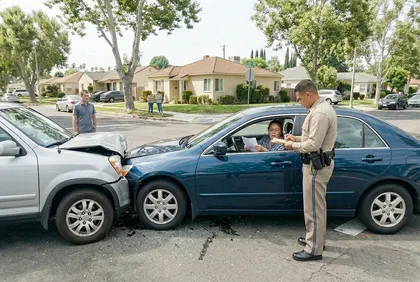
No. A traffic citation does not, by itself, determine civil fault. Vehicle Code section 40834 provides that even a resulting traffic conviction does not conclusively establish an issue in a later civil action. The insurer or court still evaluates the underlying conduct, causation, and any comparative fault.
What Happens If Both Drivers Claim The Other Ran A Red Light?
When both drivers dispute the light, investigators turn to physical proof. Offset vehicle damage, camera footage, signal timing data, and witness statements can show who had the right of way.
What Evidence Do Insurance Adjusters Look At In A Workplace Injury Claim?
In workplace injury cases involving third-party claims, claims adjusters may review safety records, Cal/OSHA or OSHA compliance documents, training logs, equipment maintenance records, and coworker witness statements. They also examine whether safety procedures were followed and whether any equipment or environmental hazard contributed to the injury. Fault may be shared if both unsafe conditions and worker actions contributed.
Can A Business Be Held Responsible If A Customer Slips, Even If There Was A Warning Sign?
Yes, but it depends on the circumstances. Insurance companies assess whether the warning sign was visible, placed properly, and sufficient for the hazard. They also consider whether the danger was temporary, such as a recent spill, or ongoing due to poor maintenance. Even with a warning sign, fault may still be assigned if the hazard was not reasonably addressed or if additional safety steps were needed.
How Long Does An Insurance Company Have To Accept Or Deny A Claim In California?
Under Title 10, § 2695.7 of the California Code of Regulations, an insurer generally has up to 40 calendar days after receiving proof of claim to accept or deny the claim, in whole or in part, if the matter is not in litigation or arbitration. If the insurer needs more time, they must provide both a written notice and follow-up notices every 30 calendar days until a decision is made or legal action is served.
Can An Insurance Company Change Its Mind About Who Is At Fault?
Yes. If new evidence comes to light, such as a witness account or a newly found video, an insurer can revise its assessment of fault.
Do I Have To Give A Recorded Statement To The Other Party’s Insurance?
You are generally not required to give a recorded statement to the other driver’s insurer. Claims adjusters may consider your recorded statements when evaluating your claim.
Contact Our Lawyers For A Free Initial Consultation About Your Accident
Insurance fault decisions are not always final. Photos, witness statements, property damage, medical records, video, and crash data can change how fault is viewed. If an insurer blames you for an accident, legal guidance can help you understand the evidence and the deadlines that may apply.
The California accident lawyers at Arash Law can review the claim file, compare the insurer’s decision with the available evidence, and discuss possible next steps. If you are wondering, “Do lawyers only get paid if they win?”, the answer is yes at our firm, which is also known as AK Law. We work on a contingency fee basis, which means you only pay the attorney’s fees if we win or settle your case.
Call (888) 488-1391 or complete the “Do I Have A Case?” form to schedule a free initial consultation.