TL;DR: If a semi-truck rear-ended you, move to safety, call 911, get medical care as soon as possible, and preserve evidence from the crash. Rear-end crashes often place fault on the truck driver because California law requires drivers to leave enough space to stop safely. If the crash caused injuries or enough property damage, file an SR-1 with the California DMV within 10 days when required. Also, preserve the truck’s electronic data quickly and file your lawsuit before the legal deadline. Waiting too long can hurt or even prevent your claim.
Highlights:
- Move to safety, call 911, and obtain the police report documenting the scene and officer findings.
- See a doctor as soon as possible to create a medical record linking your injuries to the crash.
- Photograph the truck’s license plate, DOT number, and company name for carrier identification.
- If the crash meets specific criteria, file an SR-1 report with the California DMV within 10 days to avoid license suspension.
- Request a spoliation letter to preserve the truck’s electronic data before it overwrites within days.
- Avoid admitting fault or giving recorded statements to the trucking company’s insurer without an attorney.
- File a personal injury lawsuit within two years of the crash date, or an administrative claim within six months if a government agency is involved.
Tip: Stick to the facts when discussing the crash, and let your medical records and the truck’s electronic data speak for themselves. The strongest cases rely on evidence, not explanations.
Table of Contents
If a semi-truck rear-ended you, move to safety, call 911, get medical care, and gather evidence from the crash. The impact can be much more serious than a typical car accident because a fully loaded semi-truck can weigh up to 80,000 pounds, far more than most passenger vehicles. This large weight difference can increase the risk of serious injuries, including injuries to the neck, back, brain, and internal organs.
California law gives commercial truck crash victims the right to seek compensation for their losses. An attorney can review the facts of your situation and explain your legal options. These cases involve complex federal safety rules.
Trucking companies and their insurers usually investigate crashes quickly to protect their legal interests. Some electronic records may also get overwritten or deleted during normal operations unless someone requests preservation. Acting quickly helps protect important evidence.
What You Must Do Immediately After A Semi-Truck Rear-Ends You
Your immediate priorities after a semi-truck rear-ends you are safety, medical care, and evidence. Every step you take in the first 24 hours can strengthen or weaken your claim. These steps can help you:
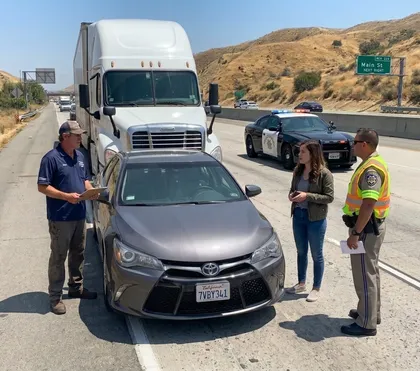
- Move to Safety and Call 911: If your vehicle can move, pull to the shoulder or a nearby parking lot. Check for injuries to other passengers and call 911 to report the crash. The dispatcher can send police, paramedics, or both if needed. Police officers who respond to the crash usually prepare a report describing the scene, witness statements, and their observations. This report can become important evidence in your claim.
- See a Doctor Immediately: Adrenaline masks pain, which means injuries such as brain trauma or internal bleeding may not be obvious right after the crash. A same-day or next-day visit also creates a medical record that links your injuries to the crash. If you wait, the insurance company may question whether the crash caused your injuries.
- Photograph the Scene: Take pictures and video of the accident scene if it’s safe to do so. Photograph the vehicles, traffic signs, or skid marks. Photographic evidence can help back your case.
- Get the Truck’s Identifying Information: Get the driver’s license information and capture clear photos of the truck’s license plate, U.S. Department of Transportation (DOT) number, and the company name displayed on the cab. These details help identify the trucking company and can later help you find its insurance information.
- Exchange Insurance Information With the Driver: Under California Vehicle Code Section 16025, you are required to take this step before leaving the scene.
- Talk to Witnesses and Get Their Contact Information: Politely approach witnesses and ask them to provide their account of the accident. Get their contact information in case you need any more details later.
- Call Your Own Insurance Company: Call your insurance company to report the accident. This step can help you seek benefits from your own policy during the claims process.
- File an SR-1 Report With the DMV Within 10 Days: California law requires this if the crash caused any injury or property damage worth $1,000 or more. Failing to file can result in a license suspension.
- Do Not Admit Fault or Give a Recorded Statement: Be careful when speaking with the trucking company’s insurance adjuster. Before giving a recorded statement or discussing fault, consider talking with a lawyer. What you say may affect how the insurance company reviews your claim.
- Consult an Attorney: A semi-truck accident lawyer can review your accident, tell you if you have a valid claim, and outline the steps you can take in the days and weeks following your crash.
What To Do In The Days After Your Semi-Truck Rear-End Crash
In the days following your rear-end crash, you must act quickly to build a strong claim. First, request that the trucking company preserve its electronic data and logbooks. Next, work to establish clear liability for the collision. Finally, carefully document your physical injuries, track your financial losses, and confirm your exact filing deadlines.
Preserve Federal Truck Evidence As Soon As Possible
This evidence can help show what caused the crash. However, trucking companies often control these important records, and you may not be able to get copies on your own. A trucking company may also delete or overwrite some records unless someone asks it to preserve them. That makes fast action crucial.
The Federal Motor Carrier Safety Administration (FMCSA) sets hours-of-service (HOS) rules for truck drivers. Federal rules generally allow drivers to drive for up to 11 hours after 10 consecutive hours off duty. Investigators may use electronic logs, dispatch records, GPS data, and other evidence to determine whether a driver followed these rules.
Free advice from a semi truck lawyer can give you an idea of what a spoliation letter must say and when to send it. A spoliation letter is a written request that tells the trucking company to preserve important evidence.
The semi-truck accident lawyers at our firm can send one quickly if you choose to work with us. These records can be important evidence when investigators, insurers, or a court decide who caused the crash and is legally responsible.
Establish Liability Under California Law
To pursue compensation for your injury losses after a semi-truck rear-end collision, you need to establish liability. You can do that by demonstrating that the trucker owed you a duty of care to drive safely and prevent harm. However, because they failed to stop in time, they breached that duty, directly causing your injuries and losses.
In many rear-end crashes, investigators find the rear driver at fault because California law requires drivers to leave enough space to stop safely. However, each crash depends on its own facts. California Vehicle Code Section 21703 requires drivers to keep a safe following distance. Because trucks need much more room to stop than cars do, this rule is particularly important in truck crash cases.
If the trucking company employed the driver, it may also be liable for the crash under the doctrine of vicarious liability. It means an employer may be responsible if an employee causes harm while acting within the scope of their job duties.
California also follows a rule called pure comparative negligence. This rule means you may still be able to seek compensation even if you were partly at fault. For example, if you are 20% at fault, the court or insurance company may reduce your compensation by 20%.
Finally, other parties may also share liability. For example, a truck parts manufacturer may be liable if faulty brakes prevented the trucker from coming to a stop without rear-ending you. Once investigators, the insurance company, or a court decide who caused the crash, California law determines what compensation you may recover.
At this point, you may be thinking, “I need a personal injury lawyer.” If so, consider consulting one. An attorney can explain how these laws apply to semi-truck accidents and assess who may be liable for the crash that injured you.
Document Your Losses
After a rear-end crash with a semi-truck, you can seek two types of monetary damages. Economic damages refer to your current and future financial losses. Non-economic damages cover the personal impact of the accident on your life. What you seek depends on how well you can prove your losses. Your injuries and your records both affect the value of a semi-truck accident settlement.
You may be able to get the following compensation after a truck accident:
- Past and future medical expenses.
- Lost wages.
- Loss of future income.
- Property damage.
- Pain and suffering.
- Emotional distress.
- Loss of enjoyment of life.
You can document these losses using evidence such as:
- Medical bills, diagnostic imaging, and proof of prescribed medications or treatments.
- Pay stubs showing lost wages.
- Preserved damaged property. For example, a motorcyclist rear-ended by a semi-truck can save their riding gear instead of throwing it away.
- Notes from general practitioners, therapists, chiropractors, and other healthcare professionals describing the pain caused by your injuries.
- A recovery journal you keep about your experiences as you heal.
Learn Which Filing Deadline Applies To Your Case
Section 335.1 of the state’s Code of Civil Procedure gives you two years from the crash date to file a personal injury lawsuit. If a government agency is involved, the deadline is much shorter. Government Code Section 911.2 requires you to file an administrative claim within six months of the incident. An administrative claim is a formal written notice you send to the government agency before you can file a lawsuit.
Learning about these deadlines early, even if filing a lawsuit isn’t an option yet, matters because:
- The clock starts ticking on the day you were injured. If you hesitate in starting the claims process, you may give yourself less time to sue if further legal action becomes necessary.
- Some exceptions may change the filing window, such as minor tolling in certain cases, but special rules apply to claims against government entities and public employees.
- Courts generally block cases after these deadlines expire. That can block you from pursuing compensation altogether.
Frequently Asked Questions About Rear-End Semi-Truck Accident Cases
After a semi-truck crash, you may have questions about insurance, fault, and your legal rights. The answers below explain common issues and help you understand what to expect.
Whose Insurance Pays If You Get Rear-Ended By A Commercial Truck?
In many cases, the trucking company’s liability insurance pays valid claims when the truck driver causes a crash. Other insurance policies may also apply, depending on the facts. Federal law requires many commercial trucks that weigh more than 10,000 pounds to carry at least $750,000 in liability coverage. Some carriers must carry up to $5 million in coverage for trucks that transport hazardous cargo, such as radioactive materials.
Many truck crashes involve multiple parties. The trucking company, the truck driver, and even a cargo loader may each share fault. Each of them may have a separate insurer.
How Are Settlements Calculated After A Semi-Truck Crash?
Insurance companies and courts calculate settlements by reviewing your medical costs, lost income, pain and suffering, future care needs, and the strength of your evidence. Insurance companies and courts also consider who caused the crash and how your injuries affect your daily life. There is no fixed settlement amount because every case is different. Strong medical records and clear evidence can help support your claim.
Do Lawyers Only Get Paid If They Win?
In most personal injury cases, yes. Most lawyers work on a contingency fee basis. That means they take a percentage of your recovery only after you win. That way, you can hire legal help without paying any money up front. Ask your lawyer to explain how they handle case costs and expenses before you sign an agreement.
Get Legal Help For Your Truck Accident Case
Take action as soon as possible after getting rear-ended by a semi-truck. The trucking company and its insurer may begin investigating the crash soon after it happens. Seeking medical care, gathering evidence, and getting legal advice early can help protect your rights and preserve important evidence. An experienced lawyer can explain your options and handle the legal process while you focus on your recovery.
At Arash Law, or AK Law, we advocate for people injured in truck and motor vehicle crashes across California. Here are a few similar cases we’ve helped clients with:
- Truck Vs. Auto Collision: Our client suffered life-changing injuries after a crash involving a commercial truck. Working with co-counsel, we identified multiple legal and medical issues, including a rare medical condition that strengthened the case. Our team helped secure a $6,385,000 recovery for the client.
- Work Truck Collision: A husband and wife were driving together when a work truck ran a red light and struck their vehicle. The case involved disputes about fault and the extent of their injuries. After two years of litigation, we obtained a $5,000,000 settlement on their behalf.
- Rear-End Collision: Our client was stopped at a red light when a distracted driver rear-ended the vehicle. The crash caused serious spinal injuries that required surgery. We reached a $3,500,000 settlement just three days before trial.
Every case is different, and past results do not guarantee future outcomes. However, these cases illustrate the strategies we typically use to help our clients pursue the compensation they deserve under state law.
Call (888) 488-1391 to schedule your free initial consultation. A conversation with us can give you a clearer picture of where your case stands.