TL;DR: Yes, a driver can still be at fault if your child ran into the street from between parked cars on Halloween. California law requires drivers to exercise greater caution around children, especially when their presence is reasonably foreseeable. However, liability is not automatic. A driver who exercised reasonable care but could not prevent the collision may not be negligent.
Yes. Even if your child ran into the street from between parked cars on Halloween, the driver who hit them can still be at fault. Under California law, drivers must exercise reasonable care to prevent collisions and take greater precautions when children are present or reasonably expected. Judicial Council of California Civil Jury Instructions (CACI) No. 412 recognizes that adults must anticipate children’s ordinary behavior and exercise greater care around them.
On Halloween, drivers may need to slow down and watch for children emerging from between parked vehicles, particularly in residential neighborhoods where trick-or-treating takes place. A driver who was speeding, distracted, or failed to respond reasonably to these conditions may be held liable.
However, the driver is not automatically at fault under state law. If they were driving at a safe speed, paying attention, and could not reasonably avoid the collision, they may not be negligent. Fault depends on the driver’s actions, visibility, stopping distance, and your child’s age and conduct. If you can prove that the driver’s negligence caused your child’s injuries, your family may have grounds for a personal injury claim.
Key Facts About Driver Liability in Halloween Child Pedestrian Cases
- Greater Care Around Children: CACI No. 412 requires adults to anticipate children’s ordinary behavior and exercise greater care when dealing with them than with adults.
- California’s Basic Speed Law: Vehicle Code § 22350 requires drivers to maintain a safe speed based on road, traffic, weather, and visibility conditions.
- Sudden Emergency Defense: CACI No. 452 may apply when a driver faces a sudden emergency they did not cause and responds reasonably. The jury instruction generally requires evidence that at least two courses of action were available to the driver after the driver perceived the danger.
- Child’s Comparative Negligence: CACI No. 402 evaluates children’s conduct based on the care reasonably expected of a child of similar age, intelligence, knowledge, and experience.
- Parental Supervision: A parent’s negligence is generally not attributed to the child or treated as the child’s own fault. However, if a parent is found legally negligent and their conduct contributed to the accident, a jury may assign them a share of fault. Under Civil Code § 1431.2 (Proposition 51), this allocation may reduce the non-economic damages recoverable from the driver.
- Filing Deadlines: California generally allows two years to file a personal injury lawsuit under the Code of Civil Procedure (CCP) § 335.1. However, the deadline is often tolled for minors in private injury cases (CCP § 352). Claims involving government entities may require action much sooner.
Table of Contents

Why Drivers May Still Be Liable When a Child Darts Out on Halloween
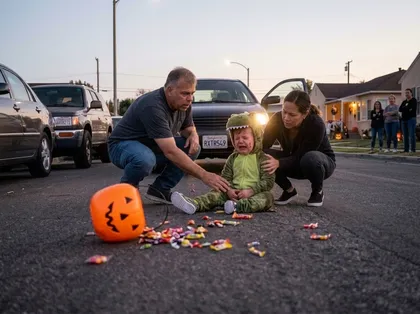
A driver may still be liable if, on Halloween, a child runs into the street between parked cars and the driver fails to exercise reasonable care to prevent a collision. California law requires drivers to take greater care around children because their movements can be unpredictable (CACI No. 412).
Several factors may help determine whether the driver was negligent:
- Unsafe Speed: Under California law, drivers must adjust their speed to actual road and traffic conditions. Even driving at the posted speed limit may be unsafe when children are trick-or-treating nearby.
- Distracted Driving: A driver who is looking at a phone or not paying attention to the road may fail to notice children approaching the street.
- Failure to Take Precautions: The presence of trick-or-treaters or other children nearby may make it more foreseeable that a child could suddenly enter the roadway. A driver who sees children near parked vehicles but fails to slow down or watch for sudden movements may be found negligent.
However, a driver is not automatically at fault when a child suddenly enters the street. A driver who was paying attention, traveling at a safe speed, and could not reasonably avoid the collision may not be negligent.
Whether a driver was negligent depends on the circumstances surrounding the collision. Dashcam footage, witness statements, vehicle data, and accident reconstruction may help establish whether the driver could have reasonably prevented the collision.
How Do Parked Cars and Limited Visibility Affect Driver Liability?
Parked cars and poor lighting can make children harder to see. However, they do not automatically excuse a driver from liability. Halloween brings additional pedestrian safety concerns, including increased foot traffic, nighttime visibility challenges, and unexpected street crossings. Drivers must account for these conditions and take reasonable precautions when children are nearby.
Parked vehicles may obstruct a driver’s view of children entering the street. Because trick-or-treating activity is expected on Halloween, drivers may need to slow down and watch for sudden movements near parked cars. Investigators may consider when the child became visible and whether the driver had enough time and distance to react.
Poor lighting can also affect whether a driver could reasonably have seen the child. Headlights, streetlights, and darkness may influence visibility. Under Vehicle Code § 24400, drivers must use the required headlights when road visibility is poor. Drivers may be negligent if they hit a child because they failed to use headlights or adjust their speed in these conditions.
However, a driver may not be liable if a child appeared so suddenly that the collision could not reasonably have been avoided, even with proper precautions.
How California Law Views a Child’s Actions: Pure Comparative Negligence
A child who runs into the street from between parked cars on Halloween may still recover compensation, even if they are partly at fault. California follows a pure comparative negligence rule under Li v. Yellow Cab Co., 13 Cal.3d 804 (1975). This means a child’s share of fault may reduce their compensation but does not automatically prevent recovery.
However, state law holds children to a different standard of care than adults. Under CACI No. 402, a child’s actions are evaluated based on what a reasonably careful child with similar characteristics would do in the same situation.
The following factors may affect how fault is determined:
- Age: Under California law, children under five are legally incapable of contributory negligence.
- Intelligence and Experience: Younger children may not recognize traffic dangers as well as older children. A child’s knowledge, understanding, and experience with traffic safety may affect what precautions they could reasonably be expected to take.
- Actions Before the Collision: Running into the street without looking does not automatically make a child negligent. Their behavior must be evaluated under the child-specific standard of care.
For example, if a jury awards $100,000 but finds an older child 25% responsible for the accident, the compensation would be reduced to $75,000.
Even if a child shares some fault, the driver may still be liable for failing to exercise reasonable care. The outcome depends on the child’s conduct, the driver’s actions, and the circumstances of the collision.
In disputed cases, pedestrian accident lawyers can review the facts, obtain available records, and assess whether the evidence supports a personal injury claim. If necessary, they can also consult accident reconstruction experts to analyze the evidence and determine whether the driver had sufficient time and distance to avoid the collision.
How Can Parents Preserve Evidence and Prove Driver Fault After a Halloween Pedestrian Accident?
Parents can help establish driver fault by preserving evidence showing how the collision happened and whether the driver failed to see the child and avoid the accident. However, much of this evidence can be time-sensitive, making early preservation crucial.
Once your child’s immediate medical needs have been addressed, consider gathering the following evidence:
- Dashcam and Security Camera Footage: Recordings may show the child’s movements, the driver’s actions, and nearby trick-or-treating activity. Contact property owners promptly because footage may be overwritten.
- Halloween Costume: Preserve the clothing, shoes, mask, and reflective accessories your child wore. These items may help establish visibility conditions.
- Scene Photographs: Document parked vehicles, blocked sightlines, streetlights, road markings, and where your child entered the street.
- Witness Information: Gather names and contact details from anyone who witnessed the collision or observed the driver’s actions beforehand.
- Police Report: Request the collision report from the investigating agency. It may contain witness information, diagrams, and the officer’s observations.
- Vehicle Data: Some vehicles record speed, braking, and other crash-related information. An attorney may help preserve available electronic evidence before it is lost.
- Medical Records and Expenses: Keep treatment records, medical bills, and documentation of your child’s ongoing needs to help establish injury-related losses.
Injured in a Pedestrian Accident? Get Answers Now
Arash Law has recovered over $1 billion for injured clients across California. Our child injury attorneys can review the circumstances of your child’s pedestrian accident and explain your family’s legal options. Call (888) 488-1391 for a free case evaluation. We are available 24 hours a day, 7 days a week.
Frequently Asked Questions About Driver Liability in Halloween Child Pedestrian Accidents in California
Does a Dark Halloween Costume Shift All the Blame to My Child?
No. A dark Halloween costume does not automatically make your child responsible for a pedestrian accident. Costume visibility may affect whether the driver could reasonably have seen and avoided the child, but it does not eliminate the driver’s duty to exercise reasonable care.
The child’s age and the driver’s conduct must also be considered. Under CACI No. 412, drivers must exercise greater care when dealing with children than with adults. A dark costume may be relevant to the issue of fault, but it is only one factor in determining whether the driver acted negligently.
Can the Driver Blame a Parent for Not Supervising the Child?
Yes. A driver may argue that a parent’s failure to supervise the child contributed to the accident. However, parental negligence is not automatically attributed to the child or treated as the child’s comparative fault.
A parent’s conduct may affect the allocation of responsibility or claims belonging to the parent, such as certain expenses they personally incurred. The driver still has an independent duty to exercise reasonable care.
What Damages Can Our Family Recover for an Injured Child?
The available damages depend on the nature of the injuries, supporting evidence, and applicable law. Common categories include economic (financial) damages, such as past and future medical expenses, and non-economic (personal) losses, such as the pain and suffering the child experiences due to their injuries.
Parents may have separate claims for certain expenses or economic losses, depending on their legal rights and the circumstances. Lost wages incurred while caring for a child are not automatically recoverable in every case.
Medical expenses should be evaluated carefully to determine whether they belong in the child’s claim, a parent’s separate claim, or another legally permitted arrangement. The same expense cannot be recovered twice, and any settlement reached on behalf of a minor generally requires court approval.
How Long Does Our Family Have to File a Claim for an Injured Minor?
For personal injury lawsuits against a private driver, California generally allows two years to file under CCP § 335.1. However, CCP §352(a) generally pauses this deadline until the injured child turns 18.
If the accident involved a dangerous road condition, malfunctioning traffic signal, or inadequate street lighting under a public entity’s control, a written claim must be presented to that entity within six months (Government Code § 911.2). If they miss this deadline, minors may be allowed to apply for a late claim within a different filing window (Government Code §§ 911.4 and 911.6).
Parents should confirm the applicable deadlines promptly rather than assume they can wait until their child turns 18 to take legal action.
Should Our Family Talk to the Driver’s Insurance Company?
You can speak with the driver’s insurance company. However, be cautious when discussing fault or your child’s injuries. You generally do not have to provide a recorded statement to the other driver’s liability insurer.
Questions about where the child came from, whether the child looked before crossing, the visibility of clothing, and parental supervision may become relevant to the fault investigation.
You can ask the insurer to put its requests in writing and consider consulting an attorney before providing a recorded statement or signing a settlement agreement. Different obligations may apply when dealing with your own insurance company under the terms of your policy.
Who Can Pursue the Legal Claim on Behalf of the Child?
Under CCP § 372, a minor who participates in a lawsuit generally acts through a guardian ad litem appointed by the court. A parent or legal guardian may request appointment, subject to the court’s approval.
A parent may also have authority to pursue or compromise certain claims for a minor outside a pending lawsuit, subject to applicable California procedures.
What Happens If a Child Is Killed in a Halloween Pedestrian Accident?
The child’s surviving parent or parents and certain other qualifying individuals may be eligible to file a wrongful death claim (CCP § 377.60). They may pursue compensation for related losses, such as funeral and burial costs (CCP § 377.61). The filing deadline for a wrongful death action is generally two years (CCP § 335.1).
A wrongful death claim is distinct from a survival action, which is meant to pursue compensation for the losses the child incurred between the injury and their passing. The two can proceed together in California.
Whether either claim is available depends on the circumstances, including whether another party’s legally actionable conduct caused the child’s death. Deadlines and procedures may also differ when a government entity is involved.
Can a Driver Be Liable If the Accident Happened Outside a Marked Crosswalk?
Yes. A driver’s duty to exercise care toward pedestrians is not limited to marked crosswalk zones. A pedestrian outside a marked crosswalk may be required to yield to vehicles under Vehicle Code § 21954.
Still, that statute does not eliminate a driver’s duty to use reasonable care toward pedestrians. Being outside a crosswalk does not shield a driver from liability. The core question is whether the driver acted reasonably given actual conditions, the time of night, and the presence of children in the area.
What Arash Law Has Recovered for Injured Minors in Pedestrian Accidents
Personal injury claims involving children can be more challenging to pursue because special legal rules often apply. What counts as reasonable care differs when an injured pedestrian is a minor, and that issue can lead to disputes over fault during the claims process. One Arash Law case result illustrates how legal representation and accident reconstruction evidence can help families address disputes over fault and pursue compensation.
In this case, our client was a five-year-old who was injured in a pedestrian accident after darting out into the street. The other party’s insurer claimed that the child’s actions made the incident unavoidable.
We consulted an accident reconstructionist, used their insights to push back, and obtained the full policy limits for our client despite that argument, resulting in a $1.25 million recovery.
Past results do not guarantee future outcomes. Every case is different, and results depend on the specific facts and evidence involved.
Injured on Halloween? Arash Law Is Here 24/7
If your child was struck by a vehicle after running between parked cars on Halloween, you may still have grounds for a personal injury claim. The driver’s responsibility depends on whether they exercised reasonable care under the circumstances, including the visibility and pedestrian activity present before the collision.
Arash Law can investigate the accident, review potential sources of insurance coverage, and help your family evaluate a claim when another party’s negligence caused your child’s injuries.
We handle personal injury cases on a contingency fee basis. Under this arrangement, you do not owe attorney’s fees unless we recover compensation for you. Any responsibility for case-related costs or other expenses is explained in the written fee agreement.
Call (888) 488-1391 for a free case evaluation. We are available 24 hours a day, 7 days a week.
Arash Law. Make Them Pay, Call AK.
Sources
- Judicial Council of California. California Civil Jury Instructions (CACI), 2026 Edition. CACI Nos. 402 (Standard of Care for Minors), 412 (Duty of Care Owed Children), and 452 (Sudden Emergency). https://courts.ca.gov/system/files/file/judicial_council_of_california_civil_jury_instructions_2026.pdf
- California Supreme Court. Li v. Yellow Cab Co. (1975) 13 Cal.3d 804. Pure Comparative Negligence. https://scholarlycommons.pacific.edu/cgi/viewcontent.cgi?article=2458&context=mlr
- California Legislature. Vehicle Code §22350: Basic Speed Law. https://leginfo.legislature.ca.gov/faces/codes_displaySection.xhtml?lawCode=VEH§ionNum=22350
- California Legislature. Vehicle Code §24400: Vehicle Headlamp Requirements. https://leginfo.legislature.ca.gov/faces/codes_displaySection.xhtml?lawCode=VEH§ionNum=24400
- California Legislature. Vehicle Code §21954: Pedestrian Crossing Outside Crosswalks. https://leginfo.legislature.ca.gov/faces/codes_displaySection.xhtml?lawCode=VEH§ionNum=21954
- California Legislature. Civil Code § 1431.2 (Proposition 51): Several Liability for Noneconomic Damages. https://leginfo.legislature.ca.gov/faces/codes_displaySection.xhtml?lawCode=CIV§ionNum=1431.2
- California Legislature. Code of Civil Procedure §335.1: Personal Injury and Wrongful Death Filing Deadlines. https://leginfo.legislature.ca.gov/faces/codes_displaySection.xhtml?lawCode=CCP§ionNum=335.1
- California Legislature. Code of Civil Procedure §352: Tolling of Filing Deadlines for Minors. https://leginfo.legislature.ca.gov/faces/codes_displaySection.xhtml?lawCode=CCP§ionNum=352
- California Legislature. Government Code §911.2: Government Claim Presentation Deadline. https://leginfo.legislature.ca.gov/faces/codes_displaySection.xhtml?lawCode=GOV§ionNum=911.2
- California Legislature. Government Code §911.4: Applications to Present Late Claims. https://leginfo.legislature.ca.gov/faces/codes_displaySection.xhtml?lawCode=GOV§ionNum=911.4
- California Legislature. Government Code §911.6: Grounds for Granting Late-Claim Applications. https://leginfo.legislature.ca.gov/faces/codes_displaySection.xhtml?lawCode=GOV§ionNum=911.6
- California Legislature. Code of Civil Procedure §372: Representation of Minors in Civil Proceedings. https://leginfo.legislature.ca.gov/faces/codes_displaySection.xhtml?lawCode=CCP§ionNum=372
- Judicial Council of California. California Rules of Court, Rule 7.950: Approval of Minor’s Compromise. https://courts.ca.gov/cms/rules/index/seven/rule7_950
- California Legislature. Code of Civil Procedure §§377.60–377.61: Wrongful Death Claims and Damages. https://leginfo.legislature.ca.gov/faces/codes_displaySection.xhtml?lawCode=CCP§ionNum=377.60
https://leginfo.legislature.ca.gov/faces/codes_displaySection.xhtml?lawCode=CCP§ionNum=377.61Disclaimer
Past results do not guarantee future outcomes. Every case is different. The information on this page is for general educational purposes and does not constitute legal advice. No attorney-client relationship is formed by reading or relying on this content. If you were injured, consult a licensed California personal injury attorney about your specific situation. Arash Law — (888) 488-1391.