TL;DR: Your lawyer should check medical recommendations, pending test results, likely follow-up care, evidence for future losses, deadlines, and settlement terms. You do not have to finish treatment before discussing a settlement. However, your decision should account for supported future needs and the risk of releasing claims before your prognosis becomes clearer.
If surgery or an MRI is still pending, your injury lawyer should review what your treating professionals have already recommended, what remains medically unresolved, what follow-up care is likely, and what evidence supports future losses. Counsel should coordinate with your doctor to estimate likely follow-up care, costs, and work restrictions.
Treatment decisions belong to you and your medical providers and shouldn’t be driven by the claim. Your lawyer, on the other hand, separately evaluates your claim, negotiates with insurers, and protects filing deadlines while medical questions remain unresolved. Settlement does not universally require maximum medical improvement (MMI), and evaluating a claim does not justify unnecessary treatment or indefinite waiting.
Before you decide whether to settle, your lawyer should explain how medical uncertainty affects the offer and review the release’s scope. That review should clarify which claims you would give up, including whether the agreement covers unknown injuries or later treatment needs.
Key Facts About Settlement With Pending Treatment
- Pending treatment calls for documented needs, not assumed future procedures. Under CACI No. 3903A, medical recommendations can help establish reasonably certain future care needs.
- Future medical costs require proof. CACI No. 3903A requires evidence of reasonably necessary care that the injured person is reasonably certain to need, along with its reasonable cost.
- An MRI does not automatically increase compensation. Under CACI Nos. 3903A and 430, its significance depends on medical findings and their connection to the injury.
- Settlement decisions belong to the client. California Rule of Professional Conduct 1.2(a) authorizes clients to accept or reject settlement offers.
- A release can affect future claims. Civil Code § 1542 addresses unknown claims, while a valid waiver can remove certain protections within the release’s scope.
- Pending treatment does not automatically extend filing deadlines. Code of Civil Procedure § 335.1 generally allows two years to file a personal injury lawsuit, subject to exceptions.
Table of Contents

Surgery or Imaging Is Still Pending. What Should My Lawyer Review Before Discussing Settlement?
Your lawyer should review your doctor’s recommendations, unanswered medical questions, likely follow-up care, and records supporting future losses. Counsel should also check insurance coverage, filing deadlines, and any proposed settlement terms.
The review can begin before you receive an offer. As treatment continues, your lawyer can request updated records and explain how new information affects settlement discussions.
What Should Your Lawyer Ask Your Treating Professionals?
Your lawyer can ask your treating professionals to explain your current needs and what they cannot yet predict. Their answers help counsel evaluate future losses without assuming you will need a particular procedure.
| Topic | Questions Your Lawyer Can Ask Your Treating Professional |
|---|---|
| Recommended Treatment | Do you recommend surgery now, or is it an option you are still considering? |
| Pending Tests | What could the MRI or other test clarify about the injury or treatment needs? |
| Follow-Up Care | What follow-up appointments, rehabilitation, medication, or help with daily activities will the patient likely need? |
| Work Restrictions | Which work activities should the patient limit or avoid, and for how long? |
| Expected Recovery | What improvement do you expect, and which limitations may last? |
| Unanswered Questions | What is still uncertain, and when might another appointment or test help clarify it? |
You and your medical professionals make treatment decisions based on your health needs. Your lawyer uses the medical evidence to evaluate your claim and negotiate while protecting legal deadlines.
What Should Your Lawyer Review When an MRI Is Pending?
Your lawyer should review the imaging order and, when available, the radiology report and your treating professional’s explanation of the results. An MRI may help clarify an injury, but it does not automatically determine its cause or increase compensation.
A radiologist reports the findings, and your treating professional considers them alongside your symptoms, examination, and medical history. Earlier scans and follow-up notes may help explain whether findings reflect a prior condition, a new injury, or worsening symptoms.
What Can You Do While Treatment Is Pending?
Keep your appointment notices, treatment instructions, bills, and insurance letters together. Tell your doctor and lawyer if cost, scheduling, or insurance approval delays recommended care.
Ask your medical provider about new or worsening symptoms rather than waiting for settlement discussions. Use the worksheet below to organize your records and questions for your lawyer.
What You Know and What You Still Need to Find Out
Use the worksheet below to organize your treatment information, expenses, and questions for your lawyer.
| Treatment or Expense | What You Know | What You Are Waiting For | Questions to Ask | Helpful Records |
|---|---|---|---|---|
| Surgery | What your doctor has recommended. | A specialist visit, treatment decision, or surgery date. | Do I need surgery? What recovery time should I expect? |
Doctor’s notes, referrals, and cost estimates. |
| MRI or Other Tests | Which test your doctor ordered and why. | The appointment, results, or a doctor’s explanation. | What could the results change about my treatment? | Test orders, reports, and follow-up notes. |
| Therapy and Follow-Up Care | Your current treatment and appointment schedule. | An updated treatment plan or another assessment. | How long might I need care? What might it cost? |
Treatment plans, therapy notes, and estimates. |
| Work and Income | Workdays and pay you have missed. | Updated work restrictions or employer records. | When might I return? Will I need different duties or hours? |
Pay stubs, job records, and written work restrictions. |
| Help at Home | Tasks you need help completing. | Your doctor’s advice about ongoing help. | What help might I need, and for how long? | Medical notes, receipts, and a record of help received. |
| Medical Bills | Bills you have received and payments already made. | Updated bills or insurance statements. | What do I still owe? Must I repay any treatment payments from my settlement? |
Bills, payment records, and insurance letters. |
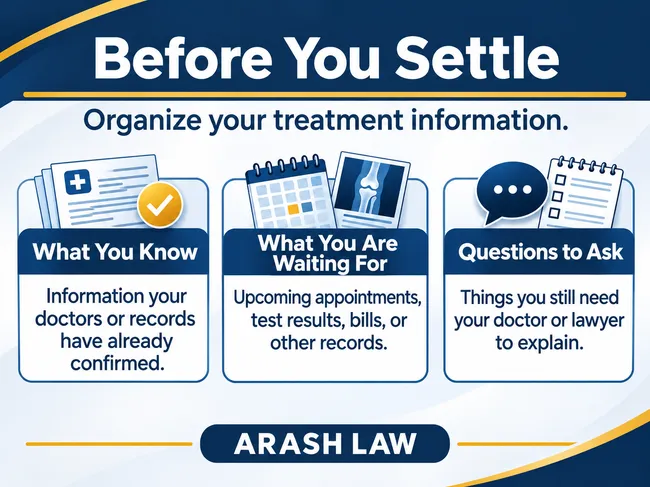
Ask your lawyer which missing information could affect settlement discussions and when to review it again. The worksheet organizes information; it does not determine your treatment or claim value.
Discuss your pending treatment and settlement questions with Arash Law. Call (888) 488-1391 for a free initial consultation. Bring the records you already have, even if tests, appointments, or a settlement offer remain pending.
How Can Your Lawyer Document Future Treatment and Losses?
Your lawyer can use medical records, cost estimates, and financial documents to evaluate future losses. Under CACI No. 3903A, future medical expenses must reflect reasonably necessary care you are reasonably certain to need. The cost must also be reasonable.
Medical Costs and Follow-Up Care
Your lawyer can gather estimates for care your medical professionals expect you to need. For recommended surgery, these may include surgeon fees, facility charges, anesthesia, rehabilitation, and follow-up appointments.
Medical evidence may also support costs for mobility equipment, home modifications, or ongoing assistance. Counsel should distinguish likely needs from procedures your doctor has mentioned only as possibilities.
For serious injuries, future medical care and life-care planning can help estimate long-term costs. Not every case requires a life care plan, and medical evidence must support its assumptions.
Lost Income and Reduced Earning Ability
Your lawyer can compare medical work restrictions with your job duties, pay records, and expected recovery time. These records help document missed earnings and assess whether lasting limitations could affect your future income.
Relevant evidence may include pay stubs, work schedules, employer statements, and your doctor’s assessment of when you can return. Lasting work limitations may require additional vocational or financial analysis.
Daily Assistance, Pain, and Other Personal Losses
Medical notes, receipts, and records of help received can document assistance with household tasks or personal care. Future assistance costs require evidence of the likely need, duration, and reasonableness of the cost.
Your account of daily limitations can also help explain pain, emotional distress, and reduced enjoyment of life. Counsel can review this information alongside medical records to show how the injury affects your activities and independence.
Paying for Treatment Before Settlement
Health insurance, applicable auto medical payments coverage, or workers’ compensation may help cover treatment before settlement. Available benefits depend on the policy, injury, and circumstances.
Your lawyer can review coverage questions, authorization delays, unpaid bills, and possible repayment obligations. A pending injury claim does not guarantee immediate payment from a liability insurer.
Call (888) 488-1391 to discuss your available records, medical recommendations, and any actual settlement terms. An offer is not required to request a consultation.
How Insurance Coverage Affects Settlement With Pending Treatment
Insurance coverage affects how much compensation may be available for your current and future losses while treatment remains pending. Policy limits, exclusions, and coverage conditions can restrict payment even when your documented losses exceed the available insurance.
Before settlement, personal injury attorneys can check for additional policies or responsible parties that may provide other sources of recovery.
Counsel may need to investigate:
- Liability Coverage: Which policy may cover the incident, and what limits apply?
- Additional Coverage: Could another responsible party or insurance policy provide a source of recovery?
- Uninsured or Underinsured Motorist Coverage: In eligible auto accident claims, could your own policy provide benefits under its terms?
- Coverage Conditions: Could exclusions, notice requirements, or other policy terms affect payment?
- Other Claims: Could settling one claim affect another claim or available insurance benefits?
For example, a proposed payment may cover the available limits under one policy but still be lower than the supported medical and income losses.
If a vehicle struck you while you were walking, a pedestrian accident lawyer can review whether your own auto policy’s medical payments or uninsured motorist coverage may apply, depending on its terms, even though you weren’t driving.
Settlement Discussions Can Begin Before Treatment Ends
You can discuss settlement while treatment continues. Maximum Medical Improvement (MMI) generally means your condition has stabilized, although you may still need treatment.
California does not require you to reach MMI before negotiating an ordinary personal injury claim.
When Might Waiting for Medical Results Help?
An upcoming MRI, surgery consultation, or medical assessment may clarify future treatment costs, recovery time, or lasting limitations. Your lawyer can consider whether those findings could change the settlement review.
Pending test results may affect whether a good settlement offer for a back injury is realistic yet. Your lawyer can identify which medical questions remain unanswered, when results may become available, and the risks of settling before future losses become clearer.
What Should Your Lawyer Check in a Settlement Release?
Your lawyer should check which claims, injuries, and parties the release covers. The agreement may prevent you from seeking additional payment for subsequent treatment, even if your medical condition worsens.
A settlement release is an agreement that ends specified legal claims in exchange for the agreed terms, often a payment.
Before you sign, ask your lawyer to explain:
- Which claims and parties the agreement releases.
- Whether it covers injuries or later-discovered medical expenses.
- Whether it includes a waiver of unknown claims.
- When you will receive payment.
- Whether you must dismiss a pending lawsuit.
- Whether you assume responsibility for unpaid bills or repayment claims.
- Whether the agreement affects any separate claims you intend to preserve.
Under California Civil Code § 1542, a general release does not automatically cover certain unknown claims. A valid waiver may extend the release to those claims. Any rights you intend to preserve should appear in the written agreement.
California’s rules on settlement decisions and written offers give clients authority over settlement decisions.
Compare the Settlement Amount With the Estimated Net Payment
Your settlement amount may differ from what you receive after attorney fees, case costs, unpaid medical bills, and repayment claims. Whether you have to pay medical bills from a personal injury settlement depends on unpaid charges and applicable repayment rights.
Your lawyer can estimate settlement deductions and identify bills or repayment claims that are confirmed, disputed, or awaiting updates. If surgery or other care is pending, counsel can also assess whether your remaining funds may need to cover future treatment.
If you receive Medicare or Medi-Cal, your lawyer should also address the program’s repayment rights before settlement. Federal and state law allow these programs to recover certain injury-related payments from a settlement, and Medicare may consider how the settlement accounts for future injury-related care. Ask your lawyer how the settlement could affect coverage for pending surgery or other treatment.
Filing Deadlines and Settlement Rules Still Apply During Treatment
Pending surgery, imaging, or settlement talks do not automatically extend legal deadlines. California generally allows two years from the date of injury to file a personal injury lawsuit under Code of Civil Procedure § 335.1. Different rules may apply depending on the claim.
- Government Claims: Government Code § 911.2 generally requires you to present an injury claim to the appropriate public entity within six months. Under Government Code § 945.6, you generally have six months to sue after the agency mails or personally delivers a qualifying rejection notice. Without the required notice, the lawsuit deadline is generally two years from the date the claim arose, subject to exceptions.
- Claims Involving Minors: Different filing deadlines may apply to injured children. The filing deadline may be paused or “tolled” while they’re still under 18. California also generally requires court approval of a minor’s personal injury settlement, including arrangements for the settlement funds.
- Workplace Injury Claims: Workers’ compensation settlements follow separate rules. A compromise and release generally provides a lump-sum payment and makes the worker responsible for future medical care covered by the agreement. A workers’ compensation judge must approve it. Other settlements may preserve future medical benefits. A separate personal injury claim may also be available when someone outside the employment relationship contributed to the injury.
- Lawsuits During Treatment: Your lawyer can file a lawsuit before treatment ends to preserve your claim. Filing does not require you to accept a settlement, and court deadlines still apply.
Your lawyer can review the relevant dates and filing requirements while treatment continues.
Frequently Asked Questions About Pending Treatment and California Injury Settlements
Can My Lawyer Request Updated Medical Records During Negotiations?
Yes. Your lawyer can request updated medical records, test results, and treatment recommendations while negotiations continue. New information may help clarify future medical expenses, recovery time, or work restrictions. Your lawyer can review whether these findings affect the settlement offer before you decide to accept it.
Can I Ask for More Time to Review a Settlement Offer?
Yes. You can ask for more time if medical tests or consultations are still pending. However, the insurer does not have to extend its offer. Your lawyer can discuss the available options while checking any applicable legal deadlines.
Ask your lawyer to confirm any offer expiration date and track it separately from the deadline to file a lawsuit.
What If Cost or Scheduling Delays My Recommended Test?
Tell your treating provider and lawyer about the delay and its reason. An insurer may question whether a treatment gap reflects improvement or undermines the claimed need for future care. Your lawyer can document cost barriers, authorization problems, or appointment availability to help explain the timeline.
A delay alone does not establish that treatment is unnecessary or unrelated to the incident. Your medical professionals should guide treatment decisions and timing.
Can I Assume I Can Reopen the Case If I Need Surgery Later?
No. Later surgery does not automatically reopen settled injury claims. A valid release generally ends the claims it covers, even if your medical needs change. Ask your lawyer to check the agreement before signing.
Ask Arash Law to Review Your Medical Recommendations and Settlement Terms
If surgery or an MRI is still pending, Arash Law can review your treating professionals’ recommendations and any proposed settlement terms. Our attorneys can discuss unanswered questions, evidence of future needs, and the claims a release would resolve.
Call (888) 488-1391 for a free initial consultation.
Bring available medical records, imaging orders, surgery recommendations, work restrictions, insurance letters, and any settlement documents.
Sources
- Judicial Council of California, CACI No. 3903A. Explains the evidence required to establish future medical expenses in personal injury claims. https://courts.ca.gov/system/files/file/judicial_council_of_california_civil_jury_instructions_2026.pdf
- RadiologyInfo, Spine MRI. Explains spine MRI examinations, imaging findings, and follow-up care. https://www.radiologyinfo.org/en/info/spinemr
- RadiologyInfo, Discussing Imaging Reports. Explains how patients can review imaging results and medical findings with their doctors. https://www.radiologyinfo.org/en/info/article-discussing-report-results
- State Bar of California, Rules of Professional Conduct 1.2 and 1.4.1. Explains client authority over settlement decisions and lawyers’ duties to communicate written offers. https://www.calbar.ca.gov/legal-professionals/rules/rules-professional-conduct/current-rules-professional-conduct/chapter-1-lawyer-client-relationship
- California Legislature, Civil Code § 1542. Explains protections involving unknown claims in general settlement releases. https://leginfo.legislature.ca.gov/faces/codes_displaySection.xhtml?sectionNum=1542.&lawCode=CIV
- California Legislature, Code of Civil Procedure § 335.1. Establishes the general two-year deadline for filing personal injury lawsuits. https://leginfo.legislature.ca.gov/faces/codes_displaySection.xhtml?sectionNum=335.1.&lawCode=CCP
- California Legislature, Government Code § 911.2. Establishes the general six-month deadline for presenting personal injury claims against public entities. https://leginfo.legislature.ca.gov/faces/codes_displaySection.xhtml?sectionNum=911.2.&lawCode=GOV
- California Legislature, Government Code § 945.6. Explains lawsuit deadlines following government claims rejection and when the required written notice is not provided. https://leginfo.legislature.ca.gov/faces/codes_displaySection.xhtml?sectionNum=945.6.&lawCode=GOV
- California Courts, Statutes of Limitations. Explains civil lawsuit deadlines and exceptions for different claim types. https://selfhelp.courts.ca.gov/civil-lawsuit/statute-limitations
- California Courts, Government Claims. Explains administrative claim procedures and deadlines for lawsuits involving public entities. https://selfhelp.courts.ca.gov/civil-lawsuit/government-claim
- Judicial Branch of California, Rule 7.950. Explains court approval requirements for settlements involving minors and certain persons with disabilities. https://courts.ca.gov/cms/rules/index/seven/rule7_950
- California Division of Workers’ Compensation, How a Case Is Resolved. Explains workers’ compensation settlement options, judge approval, and future medical benefits. https://www.dir.ca.gov/dwc/CaseResolved.htm
- California Department of Insurance, Automobile Insurance Guide. Explains liability coverage, policy limits, medical payments coverage, and uninsured or underinsured motorist insurance. https://www.insurance.ca.gov/01-consumers/105-type/95-guides/01-auto/auto101.cfm
Disclaimer
This article provides general information about California personal injury claims. It does not offer legal or medical advice or create an attorney-client relationship. Consult a qualified medical professional about treatment decisions and a licensed California attorney for your legal concerns.