TL;DR: Pedestrians can reduce the risk of being hit by using crosswalks, obeying signals, staying visible, and watching for turning vehicles. If a crash occurs, fault may be shared between the driver and pedestrian, which can reduce compensation. Evidence can disappear quickly, and filing deadlines may affect the right to seek compensation.
Highlights:
- Stop at the curb and scan all lanes, bike lanes, and turn lanes.
- Use sidewalks, and stay alert at driveways, alleys, and parking lot exits.
- Walk near the left edge, facing traffic, when practical, if there’s no sidewalk.
- Wear bright or reflective clothing and make eye contact with drivers before crossing.
- Re-check the next lane before passing a stopped car on multi-lane roads.
- Cross in well-lit spots at night, and add reflectors or a downward flashlight.
- Keep your phone and headphones away while walking to catch visual warnings.
- Hold a child’s hand when crossing, and give older adults time and space to clear the intersection.
- Call the police and collect photos, witness details, and driver information if a crash occurs.
Tip: If you are hit or nearly hit, jot down what you observed immediately and stick to facts when reporting.
Table of Contents
Pedestrians have little protection when sharing the road with cars, trucks, and buses. Although they cannot control how drivers behave, they can take practical steps to reduce the risk of being hit by staying visible, using safer crossing points, avoiding distractions, and watching traffic carefully.
No safety step can prevent every crash. Still, careful walking habits give pedestrians and drivers more time to see one another and react.
How Can Pedestrians Avoid Getting Hit By Cars In California?
Drivers often make quick decisions based on what they can see and anticipate. When pedestrians make themselves easy to notice, respect traffic control devices, and move in a steady, expected manner, they give drivers more time to recognize their presence and react appropriately. These habits reduce uncertainty on the road and help create safer interactions between people walking and vehicles.
Use Designated Crosswalks And Intersections
The safest places to cross are marked crosswalks and intersections. Unmarked crosswalks may exist at intersections where sidewalk lines would continue across the road, even without painted markings. Drivers must yield to pedestrians in both marked and unmarked crosswalks.
Pedestrians must also exercise reasonable care and should not suddenly step into the path of a vehicle that is dangerously close. Before crossing, check every direction and wait until approaching vehicles have enough time to stop. Having the right-of-way does not guarantee that a driver will see or yield to you.
Follow Pedestrian Signals Carefully
Even with a walk signal, look for vehicles. Drivers may turn right on red, turn left across the crosswalk, or enter late as the light changes. The signal permits you to cross; it does not prove that every driver has seen you.
If the pedestrian signal countdown is low, waiting for the next cycle is safer, especially for children, older adults, and anyone who needs more time.
Use The Sidewalk Whenever One Is Available
A sidewalk creates space between pedestrians and moving vehicles. Use one whenever available, and check for traffic before stepping into the road. Stay alert near driveways, alleys, and parking lot entrances where vehicles may cross the sidewalk.
When there is no sidewalk, stay as far from moving traffic as practical. Outside business or residential areas, California law generally requires pedestrians to walk near the left edge of the road, facing traffic. Walking near the right edge may be allowed when using the left side is impracticable or unsafe.
Look Left, Right, And Left Again
Before crossing, look left, then right, then left again. The final look to the left matters because traffic from that direction may reach you first.
Scan every lane, the center turn lane, bike lanes, and the far side of the intersection. Look over your shoulder for vehicles turning from behind you. Keep checking while you cross. A parked vehicle may pull out, a driver may turn, or an emergency vehicle may approach.
Stay Visible, Especially At Night And During Bad Weather
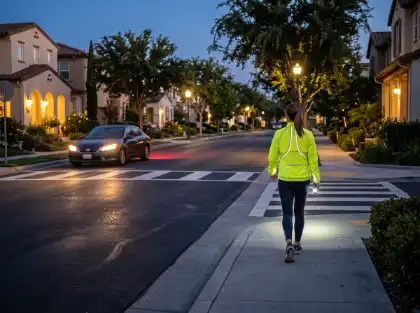 Try to make eye contact with drivers before crossing, but do not depend on it. Glare, tinted windows, and darkness can make it difficult to tell whether a driver sees you. Wait for the vehicle to stop, then check every lane before moving forward.
Be especially careful on multi-lane roads because a stopped vehicle may block you from another driver’s view. Never assume every lane is clear simply because one vehicle has stopped.
At night or during poor weather, wear bright or reflective clothing and carry a flashlight aimed toward the ground. Cross in well-lit areas and avoid shadows near trees, signs, or parked vehicles, which may make you harder to see.
Put Away Phones And Limit Headphone Use
A phone can distract you from traffic. Stop walking before reading a message, changing music, checking a map, or taking a photo near the road.
Keep the volume low enough to hear horns, engines, tires, bells, and warnings. At a crossing, pause the audio or remove an earbud. Distractions also include speaking with a group, handling bags, or managing a pet. Before entering the road, stop other tasks and focus on crossing.
Watch For Turning Vehicles
At intersections, drivers and pedestrians may enter the same space. A driver turning right may focus on traffic from the left. A driver turning left may watch oncoming cars and miss someone in the crosswalk.
Before crossing, check for:
- Turn signals and moving front wheels
- Vehicles waiting to turn
- Cars entering or leaving driveways
- Brake lights and reverse lights
- Trucks and buses making wide turns
- Quiet electric or hybrid vehicles
Never walk behind a backing vehicle. In parking lots, use marked walking paths when possible and avoid walking close behind parked cars. Assume a vehicle with its engine running may move.
Large trucks and buses have major blind spots. If you cannot see the driver in a mirror, the driver may not see you. Give large vehicles extra room. After exiting a bus, let it move away before crossing so you and the approaching drivers can see each other. Never cross directly in front of or behind a large vehicle.
Choose The Safer Route, Not Only The Shortest Route
A route that saves one or two minutes may require crossing a wide, fast road. Choose streets with sidewalks, lower speeds, good lighting, marked crossings, pedestrian signals, and traffic islands.
Avoid freeway and expressway shoulders. If you see a sign indicating pedestrian restriction on such roads, it means that walking there is not allowed. A limited exception may allow occupants of a disabled vehicle to walk on the same side toward the nearest exit for help.
Avoid Walking While Impaired
Don’t walk near traffic while under the influence of alcohol or drugs, which can slow reaction time and impair judgment. If you have been drinking, call a rideshare, take transit, or ask a sober companion to get home safely.
The National Highway Traffic Safety Administration (NHTSA) reports that California ranks among states with the highest number (1,090) of pedestrian deaths in 2024. That risk is real, but your choices as a pedestrian can make a meaningful difference.
Children And Seniors Require Extra Precaution
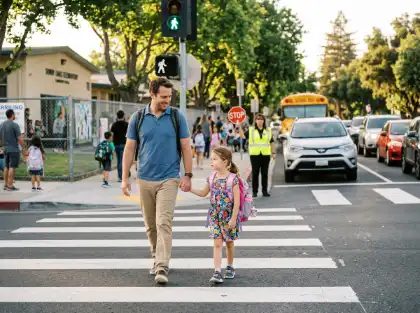
Young children may have difficulty judging vehicle speed and safe gaps. Children under 10 should not cross streets alone and should cross with a responsible adult or older person.
Some older adults may need additional crossing time because of changes in vision, hearing, reflexes, flexibility, or walking speed. If you walk with an older family member, stay close and give them time to cross safely. Keeping both children and seniors safe takes active involvement.
Common Causes Of Pedestrian Accidents
Many pedestrian accidents result from driver negligence. Knowing the common causes of pedestrian accidents can help pedestrians recognize these risks and take greater care.
Common causes include:
- Speeding
- Distracted driving
- Impaired driving
- Failing to yield at crosswalks
- Failing to see pedestrians while turning or backing up
Road and environmental conditions can also contribute, such as:
- Poor lighting
- Missing sidewalks
- Unsafe intersections
- Improperly timed signals
- Obstructed walkways
- Bad weather conditions
If a vehicle hits you, call 911 and ask for police and medical help. Move out of traffic if you can do so safely and remain available to responding officers when reasonably possible. Get the driver’s contact, license, vehicle, and insurance information. Also, collect witness details and take photos or videos of the scene. Avoid admitting fault or guessing about what caused the crash.
Understanding California Pedestrian Laws And Right-Of-Way
California law sets clear duties for both drivers and pedestrians. Those duties shape what you can seek if you are hit. Knowing these rules can protect your safety and your right to file a claim.
- California Vehicle Code 21950: Drivers must yield to pedestrians in marked crosswalks and unmarked crosswalks at intersections. However, pedestrians must use reasonable care and may not suddenly enter the path of a vehicle that is dangerously close. Drivers must also slow down or take other reasonable steps to protect pedestrians.
- California Vehicle Code 21954: A pedestrian crossing outside a marked crosswalk or an unmarked crosswalk at an intersection must yield to vehicles that are close enough to create an immediate hazard. Regardless, drivers must continue to use reasonable care for the pedestrian’s safety.
- California Vehicle Code 21955: Between adjacent intersections controlled by traffic signals or police officers, pedestrians must cross within a crosswalk.
- AB 2147, the Freedom to Walk Act: This law limits the circumstances under which police may stop pedestrians for specified traffic violations. An officer generally may not make such a stop unless a reasonably careful person would recognize an immediate danger of colliding with a moving vehicle or a device powered exclusively by people. The law limits enforcement in these situations, but it does not remove a pedestrian’s duty to follow traffic rules and use reasonable care.
How Comparative Negligence Works In Pedestrian Accidents
That duty matters because California follows pure comparative negligence. This means fault can be shared between you and a driver. Damages refer to the total value of your injuries and losses. If you are found 20% at fault, your compensation is cut by that same 20%, but not erased.
These rules can be difficult to apply to a real accident. A pedestrian accident lawyer can review how this rule may affect your claim and explain what compensation may be available based on your case facts.
Our lawyers are experienced in seeking compensation for our clients injured in pedestrian accidents. Here are some of the cases our accident attorneys have won for our clients:
- $12,000,000 — Our 74-year-old client was severely injured in a pedestrian accident while crossing the street. Just before jury selection began, we resolved the case for $12 million.
- $5,000,000 — A client was hit by a truck while in a crosswalk, and the truck company wrongly blamed him for being distracted. We successfully fought for his rights, securing compensation for his mild traumatic brain injury.
- $2,000,000 — Our client received a citation for jaywalking at night, but we effectively challenged the negative police report. We demonstrated that the accident was preventable, resulting in the client recovering $2 million in damages.
Disclaimer: Individual case results vary based on specific circumstances. Prior results do not guarantee similar outcomes in future cases.
Typical Compensation In Pedestrian Accident Claims
In a pedestrian accident claim, compensation, legally referred to as “damages,” is designed to reimburse you for the financial, physical, and emotional losses resulting from a crash. The amount depends on the injuries, available evidence, insurance coverage, and each party’s share of fault.
- Economic Damages: These cover direct, out-of-pocket costs with a clear paper trail:
- Medical expenses such as emergency room care, surgeries, diagnostic scans, prescriptions, physical therapy, chiropractic, and ongoing long-term medical treatment.
- Lost wages during the physical recovery period.
- Reduced future earning potential if your injuries permanently prevent you from returning to your prior job.
- Expenses for necessary home modifications (such as wheelchair ramps) or personal care assistance.
- Repair or replacement costs for property damaged in the crash (such as clothing, eyeglasses, phone, or mobility aids).
- Non-Economic Damages: These compensate for the non-financial, subjective impact of your injuries:
- Pain and suffering.
- Emotional distress, including post-traumatic stress disorder (PTSD), severe anxiety, depression, and fear of traffic.
- Loss of enjoyment of life, which means the inability to participate in hobbies, recreation, or daily activities you enjoyed before the incident.
- Compensation for visible scarring, amputations, or lasting physical limitations.
- Loss of consortium, which a spouse or registered domestic partner can claim.
- Punitive Damages: These damages are not intended to compensate for losses. They may be available when clear and convincing evidence shows that the defendant acted with oppression, fraud, or malice, including despicable conduct carried out with a willful and conscious disregard for the safety of others.
- Wrongful Death Claims: Eligible surviving family members may seek funeral and burial expenses, lost financial support, and loss of companionship, care, assistance, protection, and guidance. The estate may also have a separate survival claim for certain losses the pedestrian incurred before death.
Frequently Asked Questions About Pedestrian Accidents
After a pedestrian accident, you likely have concerns about your rights, insurance, and injuries. Legal terms and rules can make this process difficult to follow. The section below addresses the most common inquiries pedestrians have after a crash.
Do Pedestrians Always Legally Have The Right Of Way?
Pedestrians do not always have the right of way. California drivers must generally yield to pedestrians in crosswalks, but pedestrians must obey signals, avoid entering traffic when a vehicle is dangerously close, and yield when crossing outside a crosswalk.
Does Uninsured Motorist Insurance Cover Hit-And-Run Accidents?
In California, UM coverage may apply to injuries caused by an unidentified hit-and-run driver. For this type of claim, the statute requires physical contact with the vehicle, a report to law enforcement within 24 hours, and a sworn statement filed with the insurer within 30 days. Policy terms and other deadlines may also apply.
If you do not have uninsured motorist coverage, your health insurance or medical payments coverage may help pay your medical bills. Compensation may also be available through another insurance policy, an additional responsible party, or a claim involving a hazardous road condition.
Can I File A Claim If The Vehicle Did Not Physically Hit Me?
Possibly. A driver may still be responsible if their negligence caused you to fall, jump out of the way, or suffer another injury, even without physical contact. Evidence such as witness statements, video footage, and medical records can help connect the driver’s actions to your injuries.
How Long Do I Have To File A Pedestrian Accident Case?
California has strict time limits for pedestrian accident claims. The applicable deadline depends on who may be responsible and whether a government entity is involved.
- Personal Injury Lawsuit: You generally have 2 years to file a lawsuit. In many pedestrian accident cases, this period begins around the time of the injury, but a different start date may apply in some circumstances.
- Government Claim: If a public entity or public employee may be responsible, you generally must present an administrative claim within 6 months after the legal deadline begins for that claim.
- Lawsuit After Government Claim Rejection: If the public entity provides a written rejection that complies with Government Code § 913, you generally have 6 months from the date the notice is personally delivered or mailed to file a lawsuit.
- No Compliant Rejection Notice: If the required written notice is not provided, the lawsuit generally must be filed within 2 years from the date the legal deadline begins for the underlying claim.
Certain circumstances may pause or extend these deadlines, including when the injured person is a minor or lacks legal capacity. Missing an applicable deadline may prevent you from seeking compensation, so it is important to act promptly.
How Much Does It Cost To Hire An Attorney After A Pedestrian Accident?
The cost of hiring a pedestrian accident lawyer may vary based on factors such as the lawyer’s experience and the complexity of the case. Many California pedestrian accident lawyers work on a contingency fee basis. This means you only pay attorney’s fees if you get a settlement or court award.
Hit By A Car? Know Your Rights As A Pedestrian With Arash Law!
Being hit by a vehicle can leave you with serious injuries and high medical bills. If you’ve been in an accident and are wondering, “Do I need a personal injury lawyer?” Arash Law can help you.
Many people start by seeking free advice from a pedestrian accident lawyer who knows California law. Our team can review your situation, explain your rights, and walk you through your options. Call (888) 488-1391 to schedule a consultation with one of our personal injury lawyers.
AK Law fights for injured people across California and is ready to help you take the next step. We work on a contingency fee basis, which means you don’t pay attorney’s fees unless we secure a settlement or award for you.