TL;DR: Stadium security is negligent when a venue fails to take reasonable steps to prevent foreseeable crimes, such as assaults in parking lots or fights in the stands, and that failure leads to injury. Injured fans can lose the right to recover medical bills, lost income, and pain and suffering if they miss the 2-year lawsuit deadline or the 6-month government claim deadline.
Highlights:
- Check for past incidents that suggest the risk was predictable.
- Write down exactly where and how the incident happened.
- Note if lighting, cameras, or entry checks were not working.
- Record whether security was present but failed to step in.
- Keep tickets, messages, and any event-related records.
- Report the incident to the police and stadium security as soon as possible.
- Save all medical records linking injuries to the incident.
Tip: Stick to clear facts when describing the incident and avoid filling in gaps or assumptions.
Table of Contents
Under California law, stadium security is considered negligent when an owner or operator fails to take reasonable steps to protect attendees from foreseeable crimes or violent incidents. This may happen when prior warnings exist, security measures are clearly inadequate for the event, or known risks are ignored despite a history of problems.
Going to a game or concert at a stadium should feel safe. When violence happens in a parking lot, a stairwell, or the stands, it is fair to ask who is responsible. If you or someone you love was assaulted or robbed at a stadium, you may have a legal claim based on negligent security.
Negligence is not based on the crime itself but on whether the stadium acted reasonably to reduce predictable risks. When a security failure contributes to an assault, robbery, or injury, the venue may be held responsible under California premises liability law.
What Constitutes Negligent Security At A California Stadium?
Poor security becomes legally negligent when a stadium ignores clear warning signs and fails to protect fans. Negligence means someone failed to use reasonable care to prevent harm. Stadiums generally owe guests a duty to use reasonable care to keep the premises reasonably safe. If that safety is missing, the stadium may be liable for the resulting injuries.
That duty matters most in specific situations, such as when alcohol is served, and crowd tensions are running high. In circumstances like these, conflicts can escalate fast. Operators who recognize these risks and fail to act may be held responsible if a fan is injured.
Stadium security failures in California can take several forms. Each one creates a real risk of harm to fans:
- Poor Lighting: Dim or broken lights in parking lots and walkways leave fans exposed to potential attacks.
- No Metal Detectors: Without entry screening, someone can bring a weapon into the venue.
- Broken Locks & Gates: Damaged entry points allow unauthorized people to access areas where fans are present.
- Missing or Broken Security Cameras: Without working cameras, threats can go undetected.
- Inadequate Security Staff: Guards who lack proper training may fail to stop a fight or respond to a threat.
- Failure to Remove Intoxicated Fans: Allowing visibly drunk, aggressive fans to remain in the stadium may support a negligent security claim, depending on the facts.
Recognizing a security failure is only the first step. To have a valid negligence case, you also need to show that the failure caused your injury and that the operator knew or should have known about the risk.
How To Prove A Stadium Negligent Security Claim
To have a valid negligent security claim, you must prove four elements: duty, breach, causation, and damages. A successful claim must show that the owner owed patrons a duty to take reasonable care to prevent harm. However, they failed to provide adequate security and breached that duty. That breach must directly connect to the injury and the actual harm suffered.
In stadium cases, foreseeability (whether the crime was predictable) is where most claims are won or lost. California courts look at several factors to decide if the incident was predictable:
- Prior Incidents: A history of similar incidents at the venue is the strongest signal.
- Nature of the Event: Rivalry games or high-tension events carry a higher risk.
- Alcohol Service: Venues that serve alcohol face stricter security duties, since alcohol raises the chance that a dispute turns violent.
Notice connects foreseeability to the owner’s legal duty. Actual notice means management knew about the danger. Negligent security attorneys typically use evidence such as police reports or written complaints to determine if a stadium had actual notice of foreseeable security risks. Meanwhile, constructive notice means that warning signs existed long enough for a reasonable property owner to have noticed them.
Courts also weigh the cost of a security measure against the level of risk. In Delgado v. Trax Bar & Grill (2005), the California Supreme Court held that when a business has notice of an imminent, foreseeable threat to a patron, its duty may include taking reasonable, relatively simple, and minimally burdensome steps to try to prevent the harm. This cost-versus-risk analysis is something your attorney will need to document carefully.
To prove damages, you need records that tie your injury to the incident. Medical records from a hospital, physician, physical therapist, or chiropractor are key evidence. Without them, establishing the severity of injuries and losses can be difficult.
Does Assumption Of Risk Protect Stadiums From Liability?
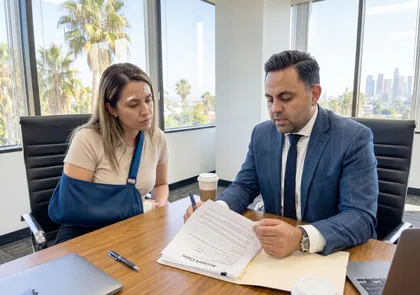
Not always. Assumption of risk is a legal doctrine that shields venues from liability for dangers built into watching a sport. A foul ball, a stray puck, or a flying bat is an expected hazard. Courts treat them as a normal part of the experience. A criminal assault in a parking garage is different.
Most tickets include waiver language that releases the venue from certain claims under the assumption-of-risk doctrine. California courts may review this language when assessing liability in negligent stadium security cases. When a stadium fails to provide reasonable security against foreseeable criminal conduct, the assumption-of-risk doctrine may not apply.
Whether you can still file a claim depends on the fine print on your ticket. Seeking free advice from a negligent security lawyer can help you understand whether the assumption of risk applies to your case or not.
Who Can Be Held Liable For Poor Stadium Security?
Stadiums divide control among several companies. When that happens, more than one party can be legally at fault for a fan’s injuries. Identifying who may be liable for your losses is one of the most important steps in building a stadium assault case.
The parties who may be sued in a stadium assault case include:
- Stadium Owner: Often a city or public agency. The owner is responsible for the actual building. Depending on the lease or ownership setup, it may also be responsible for the land around it. City-owned stadiums have extra filing rules that can affect your claim.
- Operator or Management Company: The company that runs daily stadium operations. It manages staff and is responsible for safety on event days.
- Event Promoter or Organizer: The group that put on the event. It shares responsibility for crowd safety.
- Private Security Contractor: The firm hired to patrol the venue. It has its own legal duty to do the job it was paid to do.
A security company cannot avoid blame by calling itself a contractor. Its contracts, guard logs, training files, and patrol schedules are all evidence that stadium injury lawyers can request. Those records can show whether the firm did what it was hired to do and whether it met its legal duties.
A stadium owner or operator may not necessarily avoid liability by hiring a third-party security company. For example, suppose you were injured at SoFi Stadium due to poor crowd control. In California, parties may share fault in an incident, so both the venue and the security contractor might be liable.
Even if security services are outsourced, courts could still find that the stadium owner failed to take reasonable steps to protect patrons from foreseeable harm. To illustrate, maybe they should have anticipated a large number of guests due to the popularity of a particular event, but failed to hire enough security staff to manage the crowd.
Compensation And Filing Deadlines For California Stadium Assaults
If you were physically assaulted at a California stadium, you may be able to recover economic and non-economic damages. The deadline to act depends on whether the venue is private or government-operated. Missing important deadlines can compromise the validity of your case.
Economic damages cover measurable financial losses, such as:
- Medical bills
- Lost income
- Future care costs
Non-economic damages may cover the following:
- Pain and suffering.
- Emotional distress.
- Post-traumatic stress disorder (PTSD).
California does not cap non-economic damages in standard personal injury claims. Under the Civil Code, each liable party pays their own share of non-economic damages. There is no dollar ceiling on what you can seek.
While many stadium accident injury claims are handled through insurance, some cases require civil litigation. In those situations, strict legal deadlines may limit the time you have to take legal action.
- Personal Injury Lawsuits: For injury cases involving private stadiums, you generally have two years from the date of the incident to file a lawsuit. If you miss that deadline, you lose the right to pursue a claim in court.
- Government Claims: The shorter deadline applies when the stadium is publicly owned. Many of the state’s major event venues, including the Rose Bowl in Pasadena, are owned by government entities. Under the California Government Code, you must file a written government claim within six months of your injury. This is not six months to file a lawsuit. It is six months to file a first written notice before you can file a lawsuit. Missing this step could bar your claim entirely, as California law only allows you to petition for a late claim up to one year after the injury under specific, limited exceptions.
Frequently Asked Questions About Negligent Stadium Security Cases
Being assaulted at a stadium can be traumatic. The legal questions that follow can be just as hard to address. Understanding your procedural rights, the timing of your filing, and how fault is shared can help you make informed decisions about your case.
Can I Sue If A Stadium Security Guard Uses Excessive Force?
Yes. Security guards can intervene in a fight or remove someone from the premises. However, they cannot use more force than the situation calls for. If a guard struck, shoved, or choked you when it was not necessary, that contact can support a personal injury claim in California.
Do I Have To Wait On A Suspect’s Criminal Trial To File A Negligent Security Claim?
No. Your civil claim focuses on the stadium’s failure to provide adequate security. That claim is separate from any criminal case. You can file as soon as you are ready, whether the suspect has been arrested or convicted.
How Do I Know If The Stadium Is Government-Owned?
It is not always obvious from the outside. A stadium injury attorney can check property records to determine who owns the venue. That distinction matters because the filing deadline differs for government-owned venues from that for private ones.
What If I Was Intoxicated When The Assault Happened?
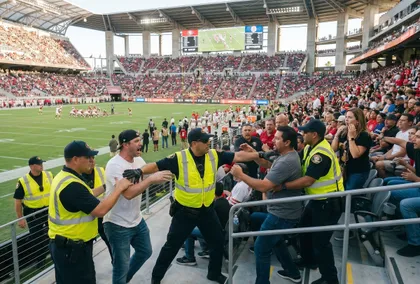
You may still have legal options, even if you were intoxicated at the time of the assault. Factors such as your conduct and the stadium’s security measures can affect how liability is assessed. Under California’s pure comparative negligence rule, a victim can still seek damages even if they share fault. A negligent security attorney can evaluate the specific facts of your situation and explain how they may impact a potential claim.
Can A Victim’s Family File A Lawsuit If The Assault Was Fatal?
Yes. When a stadium assault results in death, the victim’s family may file a wrongful death claim under California law. That claim can include funeral costs and the financial support the victim would have provided. Pre-death medical expenses are typically recovered through a survival action, a separate legal claim filed by the victim’s estate.
What Should I Do Immediately After An Assault At A Stadium?
Seek medical care first, even if your injuries seem minor. Then report the incident to stadium security and the police to create a record. If you are thinking, “I need a personal injury lawyer,” that instinct is worth following. In a stadium assault, more than one party may be liable. A stadium injury lawyer can review the facts, identify responsible parties, and advise you on the legal remedies that may be available.
Contact Arash Law After A Negligent Security Incident At A California Stadium
Stadium cameras and security logs do not stay on file for long. Venues can overwrite footage and delete staff records within days. The sooner you act, the better your chance of saving key evidence.
The stadium injury attorneys at Arash Law, also known as AK Law, can handle negligent security cases across California. Our team investigates the facts, identifies potential responsible parties, and supports victims in taking appropriate legal action.
After a negligent security incident at a stadium, you may worry about the cost of hiring a lawyer. Our personal injury attorneys work on a contingency basis. Under this fee structure, the answer to “Do lawyers only get paid if they win?” is yes. You don’t pay attorney’s fees unless your case succeeds.
Call us at (888) 488-1391 to schedule a free initial consultation.