TL;DR: In California, the at-fault driver’s liability insurance usually covers crash damages. However, liability can extend to other parties, including the vehicle owner, employer, or manufacturers, depending on the situation, affecting who ultimately pays for the damages and how compensation is pursued.
Highlights:
- At-fault drivers are typically responsible for accident damages in California.
- Other parties, like vehicle owners or employers, may share liability.
- MedPay and health insurance can cover costs before liability is settled.
- Employers may be liable if an employee is driving for work-related duties.
- Defective vehicle parts or road conditions may make manufacturers or government entities liable.
- California uses a fault-based system with a two-year statute of limitations for personal injury claims.
Tip: Always gather evidence like police reports, photos, and witness statements to strengthen your claim.
Table of Contents
If someone crashes into you, the at-fault driver’s liability insurance generally pays for the damages. California uses a fault-based system. Under it, the person or party who caused the car accident must cover the losses resulting from the collision.
Responsibility after a crash does not always fall solely on the driver. Depending on the situation, several parties may share liability for the damages. These may include:
- The vehicle owner who allowed someone else to use the car.
- An employer if the driver was working at the time of the accident.
- Other parties, such as vehicle manufacturers, repair shops, or government entities responsible for road maintenance.
Knowing who is responsible after a car accident is essential. Liability, insurance coverage, and legal rules affect who ultimately pays for damages. The sections below explain how California law determines responsibility and how victims may pursue compensation.
California Is A Fault-Based Insurance State
California follows a fault-based insurance system. That means the person responsible for causing the crash must pay for the damages. However, the process works like this in some situations:
- Your medical bills and repair costs may be paid first by your own coverage, such as MedPay or health insurance.
- The at-fault driver’s liability insurance reimburses those losses later through settlement or claim resolution.
California negligence law generally requires people to pay for harm caused by their careless actions. This rule comes from California Civil Code §1714, which establishes liability for negligent conduct.
Who May Be Liable If Someone Crashes Into You?
Liability in a car accident depends on who caused or contributed to the crash. In some cases, several parties can share responsibility based on their actions, legal relationships, or control over the vehicle. The following are some of the potentially liable parties in a car accident case.
The At-Fault Driver
The driver who caused the crash is usually the first person considered liable. Drivers must operate their vehicles with reasonable care and in accordance with traffic laws. They can be responsible when their negligent behavior leads to a collision, such as:
- Speeding or driving too fast for road conditions.
- Running a red light or stop sign.
- Failing to yield the right of way.
- Distracted driving, including phone use.
- Driving under the influence of alcohol or drugs.
The Vehicle Owner
Under California law, responsibility can extend to an owner who allows someone else to operate the vehicle. They can be liable when:
- The owner allowed another driver to use the vehicle.
- They knowingly allowed an unlicensed or unsafe driver to drive.
- The vehicle’s insurance policy covers the crash.
In many situations, auto insurance follows the vehicle. That means the owner’s insurance policy may become the primary coverage for the damages.
Owner liability for permissive use is recognized under California law, though liability may be limited in certain circumstances, depending on the insurance policy.
The Employer
The law recognizes that companies can share responsibility for actions taken by employees in the course of their work. In other words, an employer can be liable when an employee causes a crash while performing job-related duties, such as:
- Making deliveries or transporting goods.
- Driving between job sites.
- Running work-related errands.
- Operating a company vehicle during assigned tasks.
Other Parties
Some accidents involve additional parties beyond the driver, owner, or employer. Liability can extend to others when their actions, products, or responsibilities contribute to the crash. Among them are the following:
- Vehicle Manufacturers: When defective parts, such as brakes, airbags, or tires, contribute to a collision.
- Maintenance or Repair Shops: When poor repairs leave a vehicle in an unsafe condition.
- Government Agencies: When dangerous road design, missing signs, or poorly maintained roads contribute to accidents.
- Construction Contractors: When unsafe work zones or roadway debris create hazards for drivers.
How Insurance Applies After A Car Accident
Insurance usually determines who pays first and who reimburses those costs later. After a crash, MedPay or health insurance can cover treatment before the liability claim resolves. The at-fault driver’s insurance would then repay covered losses through settlement. That payment sequence matters because medical bills can arrive long before the case ends.
Uninsured drivers also affect the claims process after a car accident. A 2025 study by the Insurance Research Council reported that about 15.4% of motorists in 2023 were uninsured. That means more than one in seven drivers did not have insurance. Due to this risk, multiple insurance coverages may apply after an accident.
The following coverage options may help pay medical expenses after a crash:
- The At-Fault Driver’s Liability Insurance: The responsible driver’s liability policy usually serves as the primary source of reimbursement. The insurer may pay medical costs as part of a settlement or claim resolution.
- Health Insurance Coverage: Personal health insurance may cover treatment right away, including hospital visits, medication, and therapy. The insurer may later seek reimbursement after a settlement.
- Medical Payments Coverage (MedPay): MedPay is optional coverage under an auto insurance policy. It helps pay medical bills regardless of who caused the crash.
- Uninsured or Underinsured Motorist Coverage: UM or UIM coverage may apply when the at-fault driver has no insurance or insufficient coverage.
- Medical Liens From Healthcare Providers: Some doctors or hospitals may agree to treat an injured person under a medical lien. They won’t charge for their services until the case settles or compensation becomes available.
California Minimum Auto Insurance Limits
California requires drivers to carry the following minimum liability insurance:
- $30,000 for injury or death to one person.
- $60,000 for injury or death to more than one person.
- $15,000 for property damage.
These limits matter because a serious accident may exceed the policy’s coverage. California drivers can review the current rules through the California minimum insurance requirements (DMV) resource.
How To Prove Liability In A California Car Accident Case
Proving liability in a California car accident requires showing that another party caused the crash and the resulting harm. Car accident lawyers review the facts, evidence, and applicable laws to determine responsibility. California law applies several legal principles to determine responsibility. These principles establish who must pay for injuries, property damage, and other losses after a collision.
- Negligence: Negligence is the basis of most car accident claims. A party may become liable when careless actions lead to a crash and cause harm. To prove this principle, four elements must exist:
- Duty of Care: The defendant must act with reasonable care to prevent harm.
- Breach of Duty: The defendant fails to meet that standard of care through careless or unsafe conduct.
- Causation: The breach of duty directly causes the accident and the resulting injuries.
- Damages: The crash results in injuries, medical bills, lost income, property damage, and other measurable losses.
- Negligence Per Se: Traffic laws exist to protect public safety. When a driver violates one of these laws and a crash results, negligence per se may apply. Examples of violations that may support a claim include:
- Running a red light or stop sign.
- Driving above the speed limit.
- Driving under the influence of alcohol or drugs.
- Vicarious Liability: This legal principle extends responsibility to another party based on a legal relationship. A vehicle owner may share liability if they allow another person to drive their car. Employers may also be responsible if an employee causes a crash while performing job duties.
- Strict Liability: This concept may apply when a defective vehicle or auto part contributes to the crash. Manufacturers may be held responsible if defective brakes, airbags, or tires cause an accident. Victims do not need to prove negligence in these cases; the defect and the resulting harm establish liability.
Vital Evidence That Can Help Establish Liability
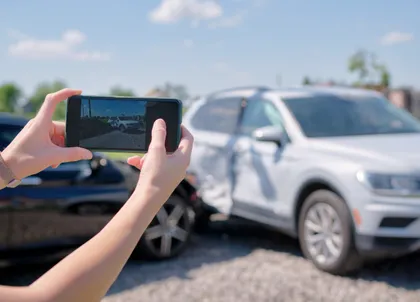
Evidence helps show how a crash happened and who caused it. Clear records support insurance claims and legal action. Strong documentation connects the accident, the conduct involved, and the resulting harm. The following types of evidence often help establish liability after a car accident.
- Police Reports: Officers document crash details, including driver statements, vehicle positions, and possible traffic violations.
- Photos & Videos From the Scene: Images may show vehicle damage, road conditions, traffic signals, skid marks, and debris.
- Witness Statements: Witnesses may describe what they saw before and during the collision.
- Traffic or Surveillance Camera Footage: Cameras near intersections or nearby buildings may capture the crash.
- Vehicle Damage & Inspection Records: Damage patterns may help explain how the vehicles collided.
- Medical Records: Medical reports document injuries and link them to the accident.
California law also requires certain accident reports. For example, drivers must file a DMV SR-1 report within 10 days if a crash causes injury, death, or property damage exceeding $1,000. This report is separate from notifying your insurance company. It creates an official accident record with the California DMV.
What Is Comparative Negligence And How Does It Work?
California law recognizes that more than one party may be at fault in a car accident. The rule of comparative negligence allows courts to apportion liability among multiple parties. It also lets injured victims recover compensation even if the court finds they share some responsibility. The court assigns a percentage of fault to each party, and the compensation decreases accordingly.
For example, the court may determine that the other driver is 80% responsible for the crash and that your actions contributed 20%. If your total damages are $100,000, you can only recover $80,000.
Some claimants seek free advice from car accident lawyers to better understand how comparative negligence may affect their claim.
How Long Do You Have To File A Lawsuit Involving A Car Accident In California?
In California, you generally have two years from the date of the accident to file a personal injury lawsuit after a car crash. State law sets this strict filing deadline, also known as the statute of limitations. Missing it can prevent you from seeking compensation through a legal action.
The exact deadline may vary depending on the type of claim:
- Property Damage Claims: You have three years to file a claim for vehicle repairs or other property losses.
- Claims Against Government Entities: You must file a government claim within six months if a public agency or government employee caused the accident.
Some injuries may appear days or weeks after the crash. In limited situations, the filing deadline may begin when the injury becomes known. Special rules may also apply to minors or people who cannot legally file a claim on their own.
Available Compensation In A Car Accident Case
A car accident can result in medical expenses, lost income, and other financial losses. California law allows injured victims to seek compensation for harm caused by a crash. The type of recovery depends on how the accident happened and the type of claim involved.
The severity of the injury can also affect the value of a claim. Minor injuries may lead to lower medical costs and shorter recovery periods. Serious injuries may result in higher medical expenses, long-term care, and greater financial losses. The following are common sources of compensation available after a car accident.
- Personal Injury Claim: Injured victims may file a personal injury claim against the party responsible for the crash. This type of claim typically includes two main categories of damages:
- Economic Damages: These cover measurable financial losses, such as:
- Medical bills and treatment costs.
- Lost wages and reduced earning capacity.
- Vehicle repair or replacement expenses.
- Non-Economic Damages: These address personal losses that do not have a direct financial value, including:
- Pain and suffering
- Emotional distress
- Disfigurement or scarring
- Reduced enjoyment of life
- Economic Damages: These cover measurable financial losses, such as:
- Workers’ Compensation Benefits: A worker injured in a car accident while performing job duties may qualify for workers’ compensation benefits. These may include:
- Medical treatment related to the work injury.
- Temporary disability payments during recovery.
- Permanent disability benefits for lasting impairments.
- Supplemental job displacement benefits for retraining.
- Death benefits for eligible family members in fatal cases.
In some situations, both types of recovery may apply. A worker injured by another driver while performing job duties may receive workers’ compensation benefits and also pursue a personal injury claim against the at-fault driver.
Frequently Asked Questions About Who Pays After A Car Accident
Questions about payment and responsibility usually arise after a crash. The answers below explain how California law handles common situations after a car accident.
What If The At-Fault Driver Has No Insurance Or Not Enough Coverage?
You can rely on other coverage if the at-fault driver has no insurance or not enough to cover your losses. Your UM/UIM coverage can help pay for medical bills, lost income, and other damages when the driver’s policy limits fall short. Some drivers also carry umbrella insurance, which can provide additional liability coverage above standard limits.
Can I Recover Damages If I’m Partially At Fault?
Yes, you can still recover damages if the court finds you partially at fault. California uses a pure comparative negligence rule. The court reduces your compensation by the percentage of fault assigned to you.
What If The Other Driver’s Insurer Refuses To Pay?
You can challenge the denial if the other driver’s insurer refuses to pay. Start by requesting the denial reason in writing and submit supporting evidence such as police reports, photos, medical records, and repair estimates. You can also file a complaint with the California Department of Insurance if the insurer delays or unfairly denies the claim.
A car accident lawyer can step in if the dispute continues or the insurer refuses to negotiate in good faith.
Do I Need To Report The Accident To My Insurer Even If I Wasn’t At Fault?
Yes, you should report the accident to your insurer even if you were not at fault. Insurance policies usually require prompt reporting. Your policy could also cover medical bills or vehicle repairs.
Do I Need A Personal Injury Lawyer For A Minor Car Accident?
Consider consulting a personal injury lawyer even after a minor car accident. Some crashes that appear minor can still result in injuries or insurance disputes. Even fender benders can cause hidden injuries, such as soft tissue damage. These injuries often require treatment, including chiropractic care for neck or back pain. A car accident lawyer can review your situation and explain your legal options before problems arise.
When Specifically Should I Contact A Car Accident Lawyer?

It is advisable to contact a car accident lawyer when a crash involves serious injuries, disputed fault, or insurance issues. A lawyer can review the accident, evaluate liability, and handle communication with insurance companies. They can also help preserve evidence and explain your legal options early in the process.
Do Lawyers Only Get Paid If They Win My Car Accident Case?
Yes, personal injury lawyers who work on a contingency fee basis only get paid if they win or secure a settlement for you. Their fee is usually a percentage of the compensation obtained.
Unsure Who Pays After A Car Accident? Speak With A Lawyer Today!
A car accident can leave you with medical bills, vehicle damage, and questions about who is responsible for payment. California law allows victims to seek compensation from the at-fault party in a crash. Consulting a legal professional can help you understand your rights and the options available to you in your situation.
Arash Law’s car accident lawyers can:
- Review the accident details and identify the responsible parties.
- Explain insurance coverage and how it applies to your claim.
- Gather records and evidence to support liability.
- Communicate with insurance companies about your claim.
- Calculate the damages you may recover under California law.
If you have questions about who may be responsible for your losses after a car accident, consider discussing your situation with a lawyer. Call AK Law at (888) 488-1391 to schedule a free initial consultation.