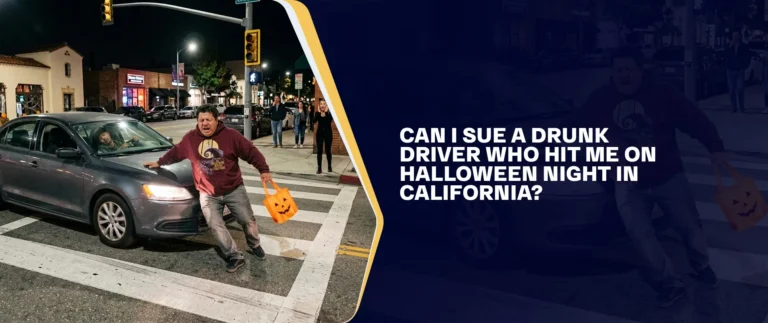
TL;DR: DUI accident cases are different from regular car accidents because impaired driving creates stronger fault evidence and possible punitive damages. Injured drivers or passengers face serious harm, parallel criminal proceedings, complex insurance disputes, and a 2-year deadline to file a lawsuit in California.
Highlights:
- Get the police report and any DUI arrest or BAC paperwork.
- Ask for available dashcam, surveillance, or body-camera footage quickly.
- Photograph vehicle damage, injuries, and the crash scene as soon as possible.
- Follow your treatment plan and keep all appointments and medication records.
- Save receipts and track missed work and reduced job capacity.
- Review UM/UIM, MedPay, and health insurance options for coverage gaps.
- Calendar key deadlines: 6 months for government claims, 3 years for property damage.
Tip: When dealing with adjusters, stick to verifiable facts and keep copies of everything you provide.
Table of Contents
DUI accident cases are different from regular car accidents because they can involve stronger evidence of misconduct, a possible negligence per se argument, potential punitive damages, and a parallel criminal case. A regular crash usually centers on whether a driver acted carelessly. A DUI crash may also involve BAC results, arrest evidence, officer observations, and criminal proceedings that can affect the civil injury claim.
That does not mean a DUI case automatically wins. The injured person still must prove causation, damages, and the full extent of losses. Still, DUI accident cases are often different from regular car accidents because the evidence, damage analysis, insurance issues, and case strategy can be more complex.
Key Differences Between DUI Accidents And Other Types Of Car Accidents
DUI accident cases are different from regular car accidents because they involve more than an ordinary driving mistake. They often involve impaired driving, clearer evidence of fault, and a parallel criminal case.
That difference can affect a personal injury claim in several ways:
- The driver’s misconduct may be more serious. A regular crash may involve distraction, misjudgment, or inattention. A DUI crash involves alleged impaired driving, which is unlawful and inherently dangerous.
- The evidence may be stronger. In addition to crash-scene evidence, a DUI case may include BAC results, officer observations, chemical tests, body camera footage, and criminal records.
- Punitive damages may be available in some cases. Most ordinary car accident claims focus on compensatory damages. A DUI case may also support punitive damages if the facts show conscious disregard for the safety of others.
- A criminal case may affect the civil claim. The DUI prosecution and the injury claim are separate, but evidence and timing in one case can affect the other.
- Insurance disputes may become more complicated. Policy limits, UM/UIM coverage, and the general rule against insuring punitive damages can all matter in a DUI injury case.
The Impact Of DUI On Personal Injury Claims
DUI does not open the door to non-economic damages. In California, non-economic damages such as pain and suffering, emotional distress, and loss of enjoyment of life are generally available in ordinary negligence car accident cases, too. What DUI can change is the strength of the liability evidence and the possibility of punitive damages in the right case.
A DUI crash may also increase the practical settlement value of a claim when the facts show severe misconduct, serious injuries, or both. Even then, compensation still depends on the evidence, the injuries, the available insurance, and whether the injured person can prove causation and damages.
Punitive Damages In California DUI Cases
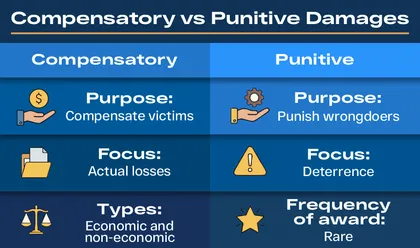
Punitive damages are one of the main reasons DUI accident cases can differ from regular car accidents. In California, punitive damages may be available when the plaintiff proves oppression, fraud, or malice. In this context, malice can include conduct carried on with a conscious disregard for the rights or safety of others.
That does not mean punitive damages apply in every DUI crash. They are fact-specific and not guaranteed. Still, California courts have recognized that intoxicated driving can support punitive damages in some cases, which is one major difference from a standard negligence-only collision.
Proving Liability In DUI Cases
To prove liability in a California DUI accident claim, you still need evidence showing that the impaired driver caused the crash and your injuries. Useful evidence may include:
- Police reports.
- BAC or chemical test results.
- Officer observations.
- Witness statements.
- Dashcam, surveillance, or body camera footage.
- Photos of the vehicles and scene.
- Medical records linking the crash to your injuries.
You still must prove the usual elements of negligence:
- Duty of Care: The driver had a duty to operate the vehicle safely.
- Breach of Duty: The driver breached that duty by driving while impaired or otherwise driving unsafely.
- Causation: The driver’s conduct caused the crash and your injuries.
- Damages: You suffered losses such as medical bills, lost income, pain and suffering, or other harm.
How A DUI Violation Can Help Prove Fault
Negligence per se means that when a driver breaks a safety law, such as California’s DUI law, that violation can help show the driver was at fault. In a DUI accident case, this rule can make liability easier to prove, but the injured person still must show that the drunk driving caused the crash and their damages.
The Role Of BAC In DUI Charges
A BAC test measures the amount of alcohol in your bloodstream. BAC levels are among the most crucial factors in determining charges and penalties in a DUI case. The results help show that the other driver was impaired, which may strengthen your claim.
Exceeding the BAC limits often results in a DUI charge. Still, the specific BAC level recorded during a test may further affect the severity of those charges:
- Standard DUI: For drivers aged 21 and older, a BAC of 0.08% or higher may result in a DUI charge.
- Commercial DUI: Commercial drivers may face a DUI charge if their BAC is 0.04% or higher. Conviction may result in suspension or revocation of their commercial license.
- Underage DUI: An underage driver with a 0.01% BAC or higher may face penalties even if the alcohol level appears negligible (zero-tolerance). Separate provisions can apply depending on the facts.
- Enhanced DUI: A BAC of 0.15% or higher may be a sentencing factor in some DUI contexts.
The Role Of Expert Witnesses In DUI Cases
Expert witnesses may help explain scientific, medical, and crash-related issues in a DUI injury case. Depending on the facts, these experts may include:
- Medical experts who explain the injuries, treatment, future care, and how the crash affected your life.
- Forensic toxicologists who explain alcohol testing, metabolism, and chemical test issues.
- Accident reconstruction experts who analyze how the crash happened.
- Treating providers, including a chiropractor, who may help document pain, treatment progress, and functional limitations when that care is appropriate and properly supported by the records.
How The Criminal DUI Case Can Affect The Civil Injury Claim
A DUI accident case is different from a regular car accident because the injury claim may move forward while a criminal DUI case is pending. These are separate proceedings with different goals and different burdens of proof, but they can overlap in important ways.
The criminal case may affect:
- When certain evidence becomes available.
- Whether the defendant answers questions in a deposition.
- How insurers evaluate settlement risk.
- How long the claim takes to resolve.
A criminal conviction does not automatically guarantee success in the civil case. Still, the criminal evidence may strengthen the injured person’s claim, depending on the facts.
What To Do After A DUI Crash
Even if the crash already happened, what you do during recovery can still affect your case. As you heal, it is important to protect your medical records, document your losses, and be careful when dealing with insurance companies.
- Follow your treatment plan and do not skip appointments.
- Keep records of your diagnosis, treatment, medications, and recovery progress.
- Save receipts and other proof of accident-related expenses.
- Track missed work and any changes in your ability to do your job.
- Be cautious when speaking with insurance adjusters.
- Organize crash-related documents in one place.
- Reach out to an attorney if you need help understanding your rights and options.
Medical And Insurance Considerations For DUI Accident Victims
DUI crashes often cause serious injuries and difficult insurance issues. Severe collisions may lead to long-term treatment, reduced earning ability, and major pain and suffering. They may also expose gaps in the at-fault driver’s insurance coverage.
Common Injuries In DUI Accidents
Injuries from drunk driving accidents in California can vary widely. These injuries can lead to lasting mental, physical, and financial problems. Depending on the details of the crash, injuries may include:
- Burns and disfigurement
- Soft tissue injuries
- Internal organ damage
- Fractures
- Amputations
- Head and brain injuries
- Spinal cord injuries
Long-Term Health Impact And Recovery
Injuries from California DUI accidents frequently have long-term, life-changing effects that go beyond the initial medical care. These “great bodily injuries” (GBIs) may increase the at-fault driver’s criminal penalty. Recovery timelines vary, and some cases may require additional surgical procedures. You may also need long-term care or specialized therapy to regain function.
Examples of these long-term health conditions are as follows:
- Chronic pain
- Loss of mobility or function
- Emotional and psychological trauma
- Permanent disability
- Ongoing medical treatments
- Lost earning potential

Medical Documentation And Its Importance
Medical documentation helps connect the crash to your injuries and shows how serious those injuries are. Strong records may include:
- Emergency Room and Hospital Reports: These outline the tests, diagnoses, and procedures done right after an accident.
- Physician Notes: Notes from your doctor, surgeon, or chiropractor can provide a clear picture of your recovery. Other helpful documents include those from physical therapy sessions and specialist consultations.
- Diagnostic Imaging and Tests: Lab results, MRI scans, and X-rays can help detect internal injuries.
- Treatment Plans and Prescriptions: Documentation of prescribed medications and treatment plans can help demonstrate the severity of your injuries and the progress of your recovery.
Navigating Insurance Coverage In DUI Accident Cases
If the at-fault driver has little or no insurance, other coverage may matter. Depending on the facts, potentially relevant coverage can include:
- Liability coverage from the at-fault driver.
- Medical Payments coverage (MedPay) for immediate medical expenses.
- Collision coverage for vehicle damage.
- Health insurance for treatment costs.
- UM/UIM coverage if the drunk driver is uninsured or underinsured.
Underinsured/Uninsured Motorist Coverage In DUI Accidents
UM/UIM coverage can be critical in DUI cases because some intoxicated drivers have no insurance or too little insurance to cover the full loss. California requires insurers to offer UM/UIM coverage, though drivers may reject it in writing. If you carry that coverage, it may help pay for medical costs, lost income, and pain and suffering when the at-fault driver’s coverage is not enough.
Comparative Fault Still Can Apply
A DUI case can be stronger than a regular accident claim, but comparative fault can still matter. The other driver’s intoxication does not automatically erase every dispute about how the crash happened.
For example, the defense may still argue that the injured person was speeding, made an unsafe lane change, failed to wear a seat belt, or otherwise contributed to the harm. That is another reason every DUI accident case still needs careful evidence development.
Frequently Asked Questions (FAQs)
Injured DUI accident victims often have questions and may benefit from free accident lawyer advice. If you’re one of these individuals, this section addresses some of these common queries.
Who Pays For The Damages Caused By A DUI Accident?
In California, the intoxicated driver’s insurance policy pays for the damages through their liability coverage. Although the driver is responsible for the accident, they don’t necessarily pay out of pocket. Instead, the driver’s insurance company is accountable for the damages.
Does A DUI Criminal Conviction Guarantee A Successful Civil Claim?
No, a criminal conviction for DUI in California doesn’t guarantee that a civil claim will succeed. However, judges may view the conviction as potential evidence of liability and of the at-fault driver’s careless driving. Also, each case is a distinct legal action. Thus, the conclusion of one case doesn’t necessarily dictate the outcome of another.
How Do I Mentally Recover From A DUI Accident?
Some ways to help you mentally recover from a DUI car accident in California are to eat healthy food and get enough sleep. Surround yourself with family and friends who can assist you emotionally. Talking with loved ones about your experiences can help you feel less alone.
Other mental health strategies to help you cope with a DUI accident include the following:
- Practice mindfulness and relaxation techniques to help lessen anxiety and tension. These activities include deep breathing exercises or meditation.
- Following a traumatic event, allow yourself to grieve and deal with your feelings at your own pace. It’s normal to feel a variety of emotions, such as shock, despair, and fear. Grief is also a natural reaction to other losses, including loss of financial security, physical well-being, or even a loved one.
- See your therapist or psychiatrist for an evaluation. They can help you improve your mental health. If you have a DUI accident claim, their testimonies and medical records can support your case.

How Much Is My DUI Accident Case Worth?
The value of your California DUI case varies based on several factors. These include injury severity, medical costs, and lost income. There’s no set amount for your claim since each case is unique. Your medical care level, how your injury affects daily life, and the insurance coverage available can also determine your case’s value.
Legal representation can also affect your case’s worth. If your lawyer works on a contingency fee basis, their legal fees come out of the settlement if the case is won or settled. You may be wondering: do lawyers only get paid if they win? Under a contingency arrangement, you pay no legal fees unless your case wins or settles — though case-related costs may still apply regardless of outcome.
What Is The Deadline To File A DUI Accident Lawsuit In California?
California typically has a two-year limit to file a DUI accident lawsuit. This limit, also called the statute of limitations, helps resolve legal disputes promptly. It also helps preserve evidence integrity and keep witness memories fresh. Other filing deadlines include the following:
- Property Damage: 3 years.
- Government Claims: The presentment deadline is generally 6 months.
Protect Your Rights By Understanding DUI Accident Cases
Unlike most other auto accidents, DUI collisions in California may result in criminal prosecution. You can still file a personal injury lawsuit against the at-fault driver. However, the state can also pursue a separate criminal case against them. Consider speaking with an attorney if you are dealing with serious injuries, disputed fault, or insurance problems, and want free advice from drunk driving accident victim lawyers.
Dealing with a DUI car accident can be a complex matter if you’re not well-versed in the legal process. In this case, you may be thinking, “I need a personal injury lawyer.” At Arash Law, our car accident lawyers handle DUI accident cases throughout California.
Our lawyers are here to help you gather evidence, seek compensation, and hold the intoxicated driver accountable. Call AK Law at (888) 488-1391 for a free case review if you or someone you know has injuries from a DUI accident.