TL;DR: Wrongful death claims after fatal scaffold accidents in California can be filed by family members when a contractor or scaffold company caused the fall. Families have 2 years from the date of death to file, or they can lose compensation for lost income, funeral costs, and companionship.
Highlights:
- Confirm who can legally file based on your relationship or dependency status.
- List every company involved onsite to spot third-party defendants beyond the employer.
- Pursue workers’ comp death benefits while evaluating a separate third-party lawsuit.
- Save and back up photos, videos, texts, and witness contact information immediately.
- Have counsel send preservation letters for the scaffold, parts, logs, and inspections.
- Request Cal/OSHA and other investigation records as soon as they are available.
- If a public entity may share fault, file a government claim within 6 months.
Tip: Before giving recorded statements, write down the timeline you know, keep every document, and stick to facts rather than guessing.
Table of Contents
Eligible family members can file a wrongful death claim after a fatal scaffold accident in California. It applies when the negligence of a contractor, property owner, scaffold company, equipment maker, or another third party contributes to the incident. This civil claim is separate from workers’ compensation death benefits. It may allow the family to pursue losses that workers’ comp does not cover.
Some fatal scaffold cases involve more than one company. Workers’ compensation rules can shield a direct employer. However, other negligent parties at the jobsite might still be liable. Understanding workers’ comp, wrongful death, and third-party liability is key to protecting your family’s rights.
The Difference Between Workers’ Compensation And Third-Party Lawsuits
After a fatal worksite accident, workers’ compensation and third-party lawsuits serve different purposes. Workers’ comp is usually the family’s claim against the direct employer. A third-party personal injury lawsuit is a separate civil case against someone else who is at fault. This party could be a contractor, a scaffold company, an equipment maker, or a property owner.
In some cases, families may pursue workers’ comp and a third-party case simultaneously. If so, it’s important to note that the two share some key differences:
| Question | Workers’ Compensation | Third-Party Lawsuit |
|---|---|---|
| Who is the claim against? | The direct employer or workers’ comp insurer. | Another negligent party, such as a contractor, a scaffold company, a property owner, or an equipment maker. |
| What’s the main purpose? | Provides death benefits and certain burial costs. | Helps the family seek damages not covered by workers’ comp. |
| Can the family sue the employer? | Usually no. Workers’ comp death benefits are claimed through the employer’s insurance. | No. This lawsuit is against other responsible parties, not the direct employer. |
| What does it cover? | Death benefits and certain burial expenses. | Lost financial support, funeral costs, lost household services, and loss of love, care, guidance, and companionship. |
| What if workers’ comp paid benefits? | The workers’ comp insurer may seek repayment from a third-party recovery. | A lien, credit, or subrogation claim may reduce part of the third-party recovery. |
| Why does a lawyer matter? | Workers’ comp can affect the final recovery. | A lawyer can identify all responsible parties and help manage lien or repayment issues. |
Who Is Eligible To File A Wrongful Death Claim In California?
When someone dies in a scaffold accident, not every family member can file a wrongful death claim. California law says certain family members, dependents, or the person handling the estate may file a claim involving wrongful deaths caused by negligence.
These people may qualify:
- Spouse or Domestic Partner: A surviving spouse or registered domestic partner may file. A person who honestly believed they were legally married to the person who died may also qualify if they depended on that person for financial support.
- Children: Surviving children may file. If one of the children has already passed away, that child’s children may be able to file in their place.
- Parents, Siblings, or Other Heirs: If the person who died did not leave behind a spouse, domestic partner, children, or grandchildren, other family members may qualify. This can include parents, siblings, or other relatives who would inherit under California law.
- Financial Dependents: Some people may qualify if they relied on the person who died for money or support. This can include stepchildren, parents, legal guardians, or the children of a person who believed they were legally married to the deceased.
- Certain Minors Living in the Home: A minor may qualify if they lived in the person’s home for at least 180 days before the death and depended on that person for at least half of their support.
If you are unsure whether you qualify, a wrongful death lawyer can review your relationship to the person who died. From here, they can outline your legal options. Once you know whether you can file, the next question is who may be responsible for the accident.
Who Is At Fault In A Fatal Scaffold Accident?
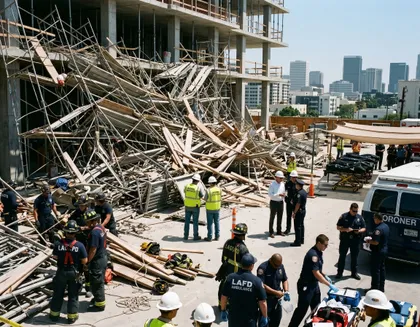
Several companies may work on one construction site. One may own the property while another may run the project. Yet other parties may install or rent the scaffold or employ the worker. One or more of these entities may be at fault if their actions directly contribute to the fatal accident.
In many cases, the civil lawsuit does not target the direct employer. Eligible dependents may seek workers’ compensation death benefits through the employer’s workers’ compensation insurance. A separate wrongful death lawsuit may target a negligent third party that controlled the unsafe condition, supplied defective equipment, or failed to follow safety rules.
Common third-party defendants may include:
- General Contractors: A general contractor may be liable if it kept control over the work or safety conditions and used that control in a way that contributed to the fatal fall.
- Subcontractors: Another subcontractor may be liable if its workers created the hazard, such as by removing guardrails, overloading the scaffold, or leaving debris on the platform.
- Scaffold Vendors, Rental Companies & Installers: These companies may be liable if the scaffold was defective, unstable, overloaded, poorly maintained, or improperly assembled.
- Property Owners: A property owner may be liable if they kept control over the work, provided unsafe equipment, or failed to warn about a hidden danger.
- Construction Managers or Safety Companies: These parties may be liable if they had safety duties and failed to report or correct a dangerous scaffold condition.
- Engineers, Designers, Manufacturers, or Suppliers: These parties may be liable if faulty plans, unsafe load calculations, or defective scaffold parts caused the accident.
- Utility Companies or Public Entities: A utility company may be liable if power lines or electrical hazards contributed to the death. A public entity may be liable if it controlled the property, project, or dangerous condition. These cases may require a government claim within six months.
An Important Rule For General Contractors And Property Owners
Claims against a general contractor or property owner follow a special rule in California. When a company hires an independent contractor to perform the work, it usually delegates responsibility for worksite safety to that contractor. As a result, a general contractor or property owner is generally not liable for the death of a contractor’s worker, because the workers’ compensation system is meant to cover that loss.
The exceptions above are what make these claims possible. A general contractor or property owner may still be held responsible when it retained control over the work and used that control in a way that contributed to the fall, or when it knew of a concealed danger the contractor could not reasonably have discovered and failed to warn about it. Whether an exception applies turns on the contracts, safety records, and conduct at the site, which is why a careful review of the evidence matters so much in these cases.
When families think, “I need a personal injury lawyer,” each company onsite may already have its own insurer and legal team. Experienced scaffolding accident lawyers can review contracts, safety logs, inspection records, photos, videos, and witness statements to identify potential responsible parties.
Common Causes And Proving Negligence
According to data from the California Department of Industrial Relations, California recorded 81 construction deaths in 2024. Falls, slips, or trips caused 43 of them, making up more than half of construction deaths that year. Scaffold accidents are among the incidents that contribute to these figures. Identifying the cause of the fatal incident is crucial to understanding whose negligent actions led to it.
Fatal scaffold falls often involve:
- Missing Guardrails: No barrier protects workers from the edge of the platform.
- Planking Failure: Loose, weak, or poorly secured boards cause the fall.
- Structural Collapse: The scaffold fails due to poor assembly or excessive weight.
- Electrocution: The scaffold or a worker comes into contact with live wires or unsafe electrical equipment.
To hold a third party responsible, your attorney must prove:
- Duty of Care: The defendant had a duty to follow safety rules.
- Breach of Duty: The defendant failed to obey those rules.
- Causation: That failure caused your loved one’s death.
- Damages: Your family suffered losses, including lost income, medical and funeral costs, and loss of support.
Cal/OSHA scaffold safety rules cover guardrails, platform boards, weight limits, and other requirements. A safety violation can help show that a contractor acted carelessly. However, it does not prove the whole case. Your attorney still needs to show that the violation helped cause the death.
Evidence can disappear quickly after a scaffold accident. Crews may remove, repair, or take apart the scaffold. An attorney can send a preservation letter to the responsible parties. This letter asks those parties to keep important items safe, such as:
- The scaffold
- Damaged parts
- Safety logs
- Inspection records
- Photos and videos
- Incident reports
What Kind Of Proof Do I Need For A Fatal Scaffold Accident Claim?
A strong scaffold accident claim seeking wrongful death damages needs evidence that shows what went wrong and how it caused the fatality. The most useful types of proof can come from state regulatory bodies and construction industry experts. Examples include:
- OSHA Investigation Reports: Cal/OSHA looks into the most fatal workplace accidents. These reports show which safety rules were broken and can help determine who was at fault.
- Photos and Videos of the Scaffold: Images of the scaffold, the fall area, and any broken or defective parts show the physical cause of the accident.
- Witness Accounts: Statements from coworkers or bystanders who saw the accident support your account of what happened.
- Expert Engineering Testimony: A licensed engineer can review the design, construction, and maintenance of the scaffold. Their analysis identifies what failed and why.
- Medical and Autopsy Records: These records establish a direct link between the scaffold failure and the cause of death.
Available Compensation And Filing Deadlines
The window you have to take legal action opens on the day your loved one dies. A successful claim can recover financial support and emotional losses for your family. However, the outcome of your case depends strongly on whether you can file it before California’s strict deadlines pass.
California wrongful death claims recover two categories of losses:
- Economic Damages: Lost income, household services, and funeral costs.
- Non-Economic Damages: Love, companionship, affection, and guidance that your family has lost.
Your family may also have a right to take a survival action under California law. A survival action belongs to the estate and is usually brought by the decedent’s personal representative or successor in interest. It may seek losses the decedent suffered before death, such as medical bills, hospital care, surgery, rehabilitation, or chiropractic care if those costs were related to the injury.
Note: Survival actions filed on or after January 1, 2026, generally cannot include damages for the decedent’s pre-death pain, suffering, or disfigurement. A proposal to extend the temporary rule that allowed those damages has not been enacted as of this review. Because this issue may change, families should confirm the current law before filing.
The damages available in a wrongful death case depend on the family’s financial losses, the relationship with the person who died, and the facts of the accident. It also depends on whether those eligible to file can do so on time. Key deadlines include:
- Two years from the date of death for wrongful death lawsuits.
- Six months for administrative claims against public entities. Filing suit becomes an option if an entity denies a claim or fails to respond to it within 45 days. Different deadlines usually apply in these cases.
Once these time limits expire, courts can dismiss cases, and family members may lose the right to pursue compensation for their loss.
How Damages Are Divided Among Multiple Companies
When more than one company is at fault, California law splits responsibility in a specific way. Economic damages, such as lost income and funeral costs, can be collected in full from any defendant found liable, even if the others cannot pay. Non-economic damages — such as the loss of love and companionship — are divided among the defendants according to each one’s share of fault. Because of this, identifying every responsible party and proving each one’s role can directly affect how much your family recovers.
Frequently Asked Questions About Wrongful Death Claims Involving Scaffold Accidents
When a worker dies in a scaffolding accident, the family is left with grief and legal questions they never expected to face. Many even seek free advice from wrongful death lawyers online to know what to do next. The following answers can help you understand your options and decide on your next steps.
What Is The Average Settlement For A Wrongful Death In California?
Each case depends on the person’s age, income, family role, life expectancy, funeral costs, available insurance, and how clearly another party caused the death. As such, there is no reliable average settlement for a wrongful death case in California.
Families may seek damages for lost financial support and the loss of love, companionship, care, guidance, and moral support. A wrongful death lawyer must review the facts before estimating what a case may be worth.
What Are Common Reasons A Judge Might Dismiss A Wrongful Death Claim?
A judge may dismiss a wrongful death claim if the case has a legal or filing problem. Common reasons include:
- The wrong person filed the claim, since California law limits who can bring a wrongful death case.
- The lawsuit was filed too late, because most wrongful death claims must be filed within two years of the death.
- A required government claim was not filed on time, even though a public agency may be responsible.
- The claim does not adequately explain who acted carelessly and how that conduct caused the death.
- Known eligible heirs were left out, even though California treats wrongful death as one shared claim.
Fixing these issues early can help keep the case from being dismissed before a jury hears it.
How Long Does It Take To Settle A Workplace Wrongful Death Claim In California?
There is no set timeline for settling a workplace wrongful death claim in California. Some cases resolve in several months. Others take two or more years.
How fast a case moves depends on the facts. Cases with clear liability and willing parties tend to settle sooner. Cases with multiple defendants or disputed safety records take longer. Competing expert opinions add further delay. If the insurer will not settle fairly, you may need to file a case in court. That extends the timeline further.
Can I Sue My Employer For A Scaffolding Fatality In California?
In most situations, you cannot sue your employer directly for a scaffolding fatality. Under California law, workers’ compensation is the exclusive remedy against your employer. That means it replaces a civil lawsuit. However, contractors, equipment suppliers, and other parties on the worksite may be named in a separate civil claim.
Do Lawyers Only Get Paid If They Win My Wrongful Death Case?
Most wrongful death attorneys in California work on a contingency fee basis. Families under financial strain can get legal help without paying anything up front. If no compensation is recovered, you owe no attorney fees. If compensation is recovered, the attorney’s fee is a set percentage of that amount, agreed on before work begins.
What If My Loved One Was Partly At Fault For The Fall?
Your family may still recover compensation even if the worker shared some blame. California follows a “pure comparative negligence” rule, which means a court reduces the award by the worker’s percentage of fault but does not erase the claim. For example, if the scaffold company was mostly responsible but the worker was found 20% at fault, the family may still recover 80% of the damages. Insurers often argue that the worker’s fault reduced a payout, so it helps to have an attorney gather evidence showing what actually caused the fall.
Can My Family File If My Loved One Was Undocumented?
Yes. In California, a worker’s immigration status generally does not prevent their family from filing a wrongful death claim or seeking workers’ compensation death benefits. State law extends civil and workplace protections to all workers, regardless of immigration status, and a person’s status is generally not admissible to reduce the damages a family can recover. If you have concerns about this, a wrongful death lawyer can explain how the law protects your family.
Get Legal Help For A Fatal Scaffold Accident Now
Arash Law helps families after fatal scaffolding accidents in California. Our attorneys at AK Law understand that these cases can involve multiple at-fault parties, including general contractors, subcontractors, and scaffold manufacturers. We work to secure key evidence early to help build your claim.
You do not have to face this alone. Our attorneys work on a contingency-fee basis, meaning you pay no attorney’s fees unless we win. There are no upfront costs.
Call (888) 488-1391 today. Every day without a lawyer is a day evidence and options narrow. Schedule your free initial consultation now.