TL;DR: The yellow barrels on the highway are crash attenuators designed to absorb collision impact and reduce injury severity for drivers and passengers. These safety devices are installed near hazards such as exit ramps or bridge supports to prevent vehicles from striking solid objects. Proper installation and maintenance are crucial for their effectiveness.
Highlights:
- Crash barrels absorb impact, reducing injury severity during collisions.
- They are placed before hazards like bridge supports, exit ramps, and toll booths.
- Ensure proper placement and maintenance for maximum safety and effectiveness.
- Water-filled barrels are for temporary use; sand-filled barrels are permanent safety measures.
- Crash barrels reduce fatalities but don’t eliminate injury risks in high-speed crashes.
- If injured due to improper placement, consider consulting an accident lawyer.
Tip: Always document the accident scene, including barrel placement, for future claims.
Table of Contents
The yellow barrels you see on highways are called crash barrels, also known as impact attenuators or Fitch barriers. They absorb crash force and reduce the impact on drivers and passengers. When a vehicle hits a solid object, such as a wall or signpost, the barrels help reduce the damage.
You’ll often see them near exit ramps, bridge supports, medians, and gore points. These are areas where drivers are more likely to lose control of their vehicles or leave the roadway.
Here’s how they work:
- Energy Absorption — Each attenuator is filled with the right amount of sand or water. These components help slow the vehicle gradually, rather than stopping it abruptly.
- Life-Saving Design — The barrels redirect crash energy to the sides, lowering the risk of serious injury.
- High Visibility — Their bright yellow color warns drivers from a distance to slow down or move safely.
- Regular Maintenance — Road workers inspect and replace damaged barrels to keep them in good condition.
These types of impact attenuators may look simple, but they play a big role in highway safety. They can help turn what could be deadly crashes into survivable ones.
The History And Evolution Of Highway Crash Barrels
John Fitch, an American race car driver and safety engineer, revolutionized highway safety. After surviving the 1955 Le Mans disaster, which killed 82 spectators and injured 120 others, including his co-driver, Pierre Levegh, Fitch dedicated his life to improving road safety.
In the 1960s, he invented the Fitch Highway Barrier System. This setup utilized sand-filled barrels arranged to slow vehicles before they collided with solid objects, such as walls or bridge supports. The design worked by absorbing impact energy, reducing the force transferred to drivers and passengers.
These yellow barrels first appeared on highways and racetracks in the late 1960s. Since then, they’ve become a standard safety feature nationwide and are credited with saving more than 17,000 lives.
Manufacturers use strong, weather-resistant plastic to build modern crash barrels. They sometimes add metal reinforcements for extra strength. For this reason, they can withstand repeated collisions and harsh weather while helping prevent serious injuries.
Types Of Crash Barrels: Sand Vs. Water
Crash barrels come in two main types. Both absorb crash force but serve different purposes depending on how and where they’re used.
| Types of Crash Barrels | Definition | Key Features | Common Uses |
| Water-Filled Crash Barrels | Used mainly in temporary construction zones, these barrels are easy to move and install. |
|
|
| Sand-Filled Crash Barrels | Found in permanent highway locations, these are stronger and built to withstand the test of time. |
|
|
Why Are Crash Barrels Placed On Highways?
Crash barrels play a key role in highway safety. They are placed in front of solid structures, such as concrete barriers. During a crash, they absorb the impact, helping reduce the risk of serious injury.
You’ll see them at exit ramps, freeway merges, bridge supports, toll booths, and construction zones. In work zones, they act as barriers to protect drivers and road workers from lane shifts, large machines, and sudden obstacles.
While crash barrels can’t stop traffic accidents, they significantly improve roadway safety. However, when they’re poorly maintained, they can cause serious damage and injuries. If you or a loved one suffered injuries in a highway crash due to dangerous road conditions or negligence, a personal injury attorney can help you understand your legal options.
Key Features Of Highway Crash Barrels
Highway crash barrels reduce the force of collisions and help save lives. They’ve been used since the 1970s and have helped reduce highway deaths nationwide. When installed and maintained correctly, they absorb impact energy, preventing deadly collisions with fixed roadside objects.
Their continued evolution promises even greater safety benefits in future highway designs. These bright yellow devices have six key features that make them highly effective in protecting drivers.
Engineered Durability And Weather Resistance
Highway crash barrels handle extreme temperatures, heavy rain, and frequent bumps. Manufacturers make them from high-density polyethylene (HDPE) and other tough plastics. These materials can withstand heavy traffic stress well.
They hold up well against:
- Salt and oil spills from vehicles.
- Debris kicked up by passing cars.
- Frequent vibrations from nearby lanes.
Barrels typically last five to ten years before needing replacement. For this reason, they are among the most durable tools for roadside safety.
High-Visibility Design
Crash barrels are bright yellow or orange, making them visible from over 500 feet away during the day. At night, they have reflective strips that shine brightly, even in fog, rain, or snow. Their vibrant color makes it easier for drivers to spot them and react quickly, giving them crucial extra seconds to avoid accidents. The reflective materials help these barrels stay visible in all conditions, 24/7.
Quick Installation And Maintenance
Crash barrels feature a simple modular design, enabling crews to replace damaged units in under 30 minutes. With basic tools such as forklifts, crews can:
- Limit lane closures.
- Reduce time spent near traffic.
Maintenance is minimal:
- Visual checks every few months.
- Full inspections once a year.
These actions help keep roads safe with minimal disruption to traffic flow.
Long-Term Cost Benefits
Crash barrels and other types of crash cushions typically cost between $2,500 and $15,000 or more to install. These low-cost crash cushions are a smart investment that helps reduce serious injuries in the event of a crash.
Benefits include:
- Fewer emergency responses and medical expenses.
- Reduced traffic delays during repairs.
Over time, they protect lives and reduce public spending.
Site-Specific Customization
Crash barrel systems are tailored to each location, accounting for factors such as traffic speed, road grade, and nearby hazards.
According to TrafFix Devices Inc., traffic engineers adjust:
- Number of Barrels — 6 to 19 per site.
- Sand Weight — 200 to 2,100 pounds per barrel.
- Layout — tapered, straight, or curved.
They use traffic data and crash analysis to design the safest configuration for each site. They will consider both the situation and location.
Rigorous Safety Certification
All highway crash barrier systems must pass strict safety tests before installation. Tests simulate real crashes at different speeds and angles, including:
- Impacts of up to 62 mph.
- Collisions involving cars and trucks.
- Safe deceleration levels under 20 G-forces.
Only systems that meet these standards receive approval for use on highways. This way, they can ensure consistent protection for drivers nationwide.
Strategic Placement Of Crash Barrels
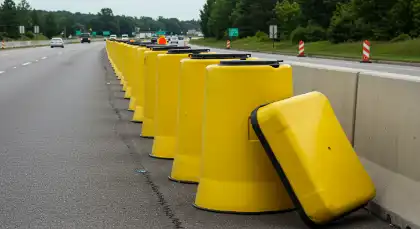
Crash barrels aren’t placed randomly along highways. Safety engineers study how cars move and crash, then determine where to place each barrel to ensure optimal safety. They evaluate vehicle speed, impact angles, and nearby structures to assess the potential for damage. This way, they can design a setup that safely absorbs energy. Every design must meet Federal Highway Administration (FHWA) and American Association of State Highway and Transportation Officials (AASHTO) safety standards.
Traffic engineers and road workers arrange the barrels by weight:
- Front Barrels — Contain less sand or water to start slowing the vehicle down gently.
- Middle Barrels — Heavier to increase resistance.
- Back Barrels — Heaviest and designed to bring the vehicle to a safe and controlled stop.
This gradual deceleration reduces the risk of serious injury. Engineers also shape the layout to ensure vehicles enter the barrels safely.
- Diamond and trapezoid patterns help direct cars into barrels in order. This setup keeps them from slipping between the units.
- Straight-line setups are great for tight spaces. They utilize internal systems to absorb impact when there is little room for error.
Installation guidelines also require a gap between the first row of barrels and the fixed object they protect. This spacing helps maximize their effectiveness in accordance with state safety regulations.
Common placement locations include:
- Ends of Rigid Barriers — Crash barrels are typically at the ends of rigid barriers, such as concrete median barriers and bridge supports. These barriers prevent vehicles from crossing into oncoming lanes or hitting solid structures.
- Toll Booths — Highway toll plazas often have crash barrels, which help protect toll booth operators and drivers from accidents.
- Exit and Entrance Ramps — You’ll find crash barrels at ramp entrances and exits on highways. They help reduce the impact of accidents when merging or exiting.
- Work Zones — Temporary crash cushions are commonly used in construction and maintenance work zones to protect workers and drivers.
Understanding The Limitations Of Highway Crash Cushions
Crash barrel placement is vital for highway safety. Accident reports from around the country highlight both successes and failures.
In August 2024, a silver sedan struck a set of yellow sand-filled crash barrels. Sand and plastic debris were scattered across multiple lanes. The accident caused major traffic delays and raised concerns about the maintenance of crash barrels.
While crash barrels help reduce injury severity, they have limitations. Their ability to protect drivers depends on several key factors:
- Crash Speed — Effective at moderate speeds but less so in high-speed impacts.
- Impact Angle — Less protective when struck from sharp angles.
- Maintenance — Damaged or underfilled barrels lose effectiveness.
On June 27, 2023, the ABC7 Eyewitness News reported a tragic crash on the 710 Freeway in Long Beach that resulted in the deaths of five people, including two 15-year-olds. A speeding car collided with crash attenuators, causing the vehicle to burst into flames and temporarily closing all northbound lanes.
These incidents underscore that crash barrels, while effective, are not infallible. Poor placement, inadequate maintenance, or high-speed impacts can still result in devastating consequences. Determining who is at fault after an accident can be tricky. Driver error, poor road design, or neglected safety barrels may all contribute to the issue.
How Crash Cushions Work To Absorb Impact
Highway crash cushions are advanced systems that manage energy. They change harmful kinetic energy into controlled deformation and movement. These engineered safety systems provide three critical protective functions during vehicle impacts:
- Controlled Deceleration Management — Impact attenuators reduce the speed of crashing vehicles more gradually than rigid obstacles. That gradual slowdown reduces the force on you during a crash. They work like a car’s crumple zones by absorbing the impact instead of sending that energy straight to the people inside.
- Trajectory Control & Secondary Collision Prevention — During impact, the cushion redirects vehicles to prevent them from veering into other lanes. This design reduces the risk of multi-vehicle crashes. It also prevents vehicles from rebounding into traffic.
- Infrastructure & Vehicle Protection — Crash cushions shield both occupants and roadway structures. The energy-absorbing design protects bridge supports, signs, and barriers from heavy damage. Fewer repairs and lower vehicle losses help reduce overall crash costs.
Most yellow barrels use compressor modules or water and sand. They help slow down vehicles and lower the chance of serious injuries. Even with these safeguards, crash barrels can still fail. If these impact attenuators are not properly maintained or are placed in the wrong location, they may not effectively protect drivers, potentially leading to serious accidents.
What To Do After A Highway Accident With Crash Barrels
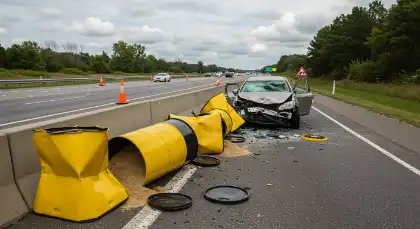
A highway accident involving yellow crash barrels can be overwhelming and disorienting. Acting quickly after a collision helps protect your health and safety. It also safeguards your legal rights. Our experienced highway accident attorneys recommend following these essential steps:
Prioritize Safety First
Remain at the accident scene unless it’s dangerous to do so. Turn on your hazard lights immediately to alert other drivers. Check yourself and your passengers for injuries before attempting to move. If anyone is seriously injured, try to keep them still to prevent aggravating potential spinal injuries.
Call 911 Immediately
Even in minor accidents involving crash barrels, always call emergency services. Request police presence and medical assistance if needed. A police report is crucial for filing insurance claims and pursuing legal actions. It creates an official record of the circumstances surrounding the crash barrel collision.
Move To Safety When Possible
If your vehicle is drivable and it’s safe to do so, carefully move it to the shoulder or nearest exit. This step reduces the risk of secondary collisions with oncoming traffic. If you cannot move your vehicle, remain inside with seatbelts fastened until emergency services arrive.
Document The Accident Scene Thoroughly
Comprehensive documentation strengthens your case significantly:
- Take multiple photos of the crash site from different angles.
- Capture images of all vehicle damage, the crash barrels, and the surrounding road conditions.
- Photograph skid marks, debris patterns, and nearby traffic signs or signals.
- Record videos showing the overall scene and weather conditions.
- Note the exact location, including mile markers or exit numbers.
Gather Complete Information
Exchange and collect all relevant details:
- Names, phone numbers, addresses, and email addresses of all involved parties.
- Drivers’ license and plate numbers.
- Insurance company names and policy numbers.
- Make, model, and year of all vehicles involved.
- Badge numbers of responding police officers.
- Incident report number.
Secure Witness Statements
Witness testimony can be invaluable for your claim. Approach witnesses respectfully and ask if they saw what happened. Collect their names and contact information. Then, ask if they would be willing to provide a brief recorded statement on your phone. For perspective, note their location at the time of the collision.
Seek Immediate Medical Evaluation
Never decline medical attention after a barrel accident, even if you feel fine. Some injuries, like internal bleeding or head trauma, don’t show immediate symptoms.
Keep all your medical records, treatment notes, and receipts in one place. These documents help establish a connection between your injuries and the accident. Follow your doctor’s instructions to support both your recovery and your claim.
Notify Your Insurance Company Properly
Report the accident promptly but carefully:
- Provide factual information about the crash without speculating about who is at fault.
- Specifically, mention the involvement of highway crash barrels.
- Reference the police report number.
- Avoid giving recorded statements without legal counsel.
- Don’t accept quick settlement offers before understanding the full extent of your injuries.
Document Your Recovery Process
Create a comprehensive record of how the accident impacts your life:
- Keep a daily journal noting pain levels, limitations, and emotional effects.
- Save all medical bills, repair estimates, and receipts for accident-related expenses.
- Document missed workdays and opportunities.
- Take photos of visible injuries as they heal.
- Record how the injuries affect your daily activities and quality of life.
Consult With A Specialized Highway Accident Attorney

An experienced personal injury lawyer specializing in highway infrastructure cases offers critical advantages:
- Expert evaluation of your specific crash barrel accident circumstances.
- Knowledge of relevant highway safety regulations and maintenance responsibilities.
- Ability to identify all potentially liable parties, including government entities.
- Skills to navigate complex insurance claims processes.
- Resources to properly value long-term damages and future needs.
- Experience negotiating fair settlements or pursuing litigation when necessary.
Frequently Asked Questions About Yellow Barrels On The Highway
This section answers the most common questions about yellow barrels — how long they last, why they get hit, and what to do in a highway accident involving these yellow barrels.
How Long Do Crash Barrels Last?
Crash barrels typically last five to ten years, depending on their location and maintenance. Newer barrels made from high-density plastic can last longer if inspected and repaired regularly.
Several factors influence service life:
- Weather & Environment:
- Extreme heat, cold, or sunlight can accelerate the wear and tear on materials.
- Areas with frequent freeze-thaw cycles or strong UV exposure often experience accelerated barrel aging.
- Traffic Volume:
- Barrels on busy highways experience greater impacts and vibration.
- Frequent bumps or accidents can reduce their lifespan by about 20–30%.
- Maintenance:
- Regular inspections, cleaning, and prompt repairs help extend barrel life.
- Neglecting maintenance can lead to premature damage or failure.
- Installation Quality:
- Barrels installed correctly according to manufacturer guidelines remain more durable over time.
- Improper placement or setup can lead to premature wear or reduced performance.
Most highway departments inspect crash barrels on a regular schedule. Permanent barrels are typically replaced every 7 to 10 years. Engineers can reuse temporary barrels multiple times if they pass inspection.
Proper care and placement ensure these safety systems continue to function effectively. This maintenance is crucial not only for everyday traffic safety but also for reducing the severity of highway construction accidents, where even a single mistake can lead to serious injuries.
What Materials Are Used In Yellow Crash Barrels?
Yellow crash barrels, also known as impact attenuators, are made from tough, energy-absorbing materials. They withstand repeated impacts and harsh weather conditions. Their design protects motorists and nearby structures by reducing the forces of collision.
Crash barrels are typically made from:
- High-Impact Plastic (Polyethylene or HDPE) — HDPE is a strong, lightweight plastic. It resists cracking, fading, and UV damage. It flexes under pressure, absorbing energy instead of shattering.
- Plastic-Metal Blends — Some models incorporate metal components for enhanced strength and stability, particularly in high-speed applications.
- Water or Sand Fill — These materials are added to the barrels to absorb impact energy and safely slow vehicles.
These materials allow crash barrels to perform well in various highway conditions:
- Weather Resistance — HDPE and reinforced plastics resist damage from heat, rain, and sunlight.
- Energy Absorption — Sand or water dissipates crash energy, thereby reducing the risk of injury.
- Durability — These materials withstand repeated minor collisions without losing structural integrity.
How Are Crash Barrels Maintained?
Road crews regularly maintain crash barrels to ensure they function properly. They inspect each barrel for cracks, leaks, or other signs of damage. Crews check that each barrel contains the right amount of sand or water. They also make sure it’s positioned correctly.
When a barrel gets hit or damaged by weather, workers promptly repair or replace it. Regular checks keep the barrels effective and protect drivers on the road.
Why Do Crash Barrels Get Hit?
Drivers often hit crash barrels due to distracted driving, overcorrection, or impaired driving. Other factors, such as low visibility at night, high traffic speeds, and hazardous road conditions, increase the risk of crashes. Additionally, high speeds and sudden lane changes, especially by drivers unfamiliar with the area, can lead to miscalculations, causing collisions with crash barrels.
Who Can I Sue For A Crash Barrel Accident?
Determining who is responsible for a crash involving highway safety barrels can be complex. These accidents may involve multiple parties, depending on the cause of the incident. Several parties may be held responsible:
- Negligent Drivers — A driver who was speeding, distracted, or driving recklessly may be responsible for causing the collision. If their actions resulted in your injuries, they can be held financially liable for the damages.
- Government Entities or Contractors — State or local highway departments are responsible for properly placing and maintaining crash barrels. The agency or its contractor may share responsibility if:
- Attenuators were installed incorrectly.
- Placed in the wrong spot.
- Poorly maintained.
- Product Manufacturers & Distributors — In some cases, the crash barrel itself may fail to function properly. Under California’s product liability laws, manufacturers and sellers must ensure that their safety products perform reliably and effectively.
Potentially responsible parties include the following:
- The company that designed or produced the crash barrel system.
- The supplier or distributor that provided the barrels to the government.
- The manufacturer of specific components, such as connection hardware or internal components.
Injury victims may be able to file a product liability claim if the crash barrel failed due to a design flaw, manufacturing defect, or lack of proper warnings.
Establishing liability requires a thorough investigation to determine negligence or fault. Consulting with a personal injury attorney can be beneficial. They can help you understand the legal issues and explain your options for compensation.
Is It Worth Hiring An Attorney After A Highway Accident?

After a highway accident, you might wonder, “Do I need a personal injury lawyer?” While not required, hiring a lawyer can be helpful, especially if the crash resulted in serious injuries, substantial damages, or complex liability issues.
Here’s why hiring a personal injury attorney can be highly beneficial:
- Helping You Understand Your Legal Rights — An attorney explains how the law applies to your situation. They can tell you what steps to take, what deadlines to meet, and what options you have for compensation. Legal guidance also helps you avoid mistakes that could affect your claim.
- Proving Liability & Damages — Attorneys have the resources to:
- Conduct thorough investigations.
- Gather essential evidence.
- Consult experts to establish fault and substantiate the extent of your injuries and losses.
- Comprehensive Damages Assessment & Recovery — Highway accidents involving crash barrels can still cause serious injuries. These cases often need medical reviews and long-term care planning. A personal injury attorney may team up with doctors, care planners, and financial experts. They help estimate the long-term costs of injuries, which include:
- Current and future medical expenses.
- Lost income and reduced earning capacity.
- Property damage or vehicle replacement costs.
- Physical pain and emotional distress.
- Lifestyle limitations and reduced quality of life.
- Family-related effects, such as loss of companionship.
With legal help, you can understand your rights, gather proof of your losses, and seek payment for your damages. Not every case needs a lawyer, but having one can help you make smart choices after a serious highway accident.
How Much Will Legal Representation Cost After A Crash Barrel Accident?
The cost of hiring a lawyer after a crash barrel accident depends on the payment structure used by the injury law firm. Some attorneys charge by the hour, while others may use a contingency fee or a flat fee, depending on the case type and complexity.
Several factors can affect the total cost of legal representation:
- The complexity of the case and how long it takes to resolve.
- The amount of evidence needed, such as expert reports or accident reconstruction.
- Court filing fees and other administrative expenses.
- Whether the case is settled out of court or proceeds to trial.
- The lawyer’s experience and location.
Many personal injury lawyers, including our car accident lawyers, work on a contingency fee basis. In this agreement, clients don’t pay upfront costs or hourly fees. Instead, the attorney receives a percentage of the settlement or court award if the case is successful. One of our injury attorneys will explain the contingency fee agreement before starting your case, so you’ll know what to expect.
Navigating The Aftermath Of A Highway Accident
Crash barrels help reduce the severity of crashes, but some motor vehicle accidents can still result in serious injuries. Understanding your legal rights is crucial if you or a loved one sustains an injury due to a defective or improperly placed crash barrel. Highway accidents involving crash attenuation systems often require legal knowledge that covers traffic safety standards, product liability laws, government claims procedures, and accident analysis.
The accident attorneys at Arash Law are familiar with crash barrel design standards, installation practices, and maintenance requirements, which can be key in determining responsibility. Our team assists clients throughout the legal process. This way, they can focus on recovery while we handle the case details.
We represent clients from Los Angeles, Riverside, San Diego, Sherman Oaks, Pasadena, Sacramento, San Jose, San Francisco, and other areas in California. If you sustain an injury in a highway accident and believe you have a valid claim, you can complete our “Do I Have A Case?” form. One of our attorneys will review your situation and reach out to discuss your options.
You can contact AK Law at (888) 488-1391. You can also complete our online contact form on the website or through your mobile device to request a free initial consultation. This way, you can learn more about the next steps available under California law.