
TL;DR: Yes, many personal injury law firms in California offer free consultations. These meetings allow you to discuss your case, assess your legal options, and decide whether to proceed. There is no obligation to hire a lawyer after the consultation, and consultations are confidential.
Highlights:
- Personal injury law firms offer free consultations to discuss your case.
- Meetings are confidential, with no obligation to hire a lawyer.
- Some firms respond within 24 hours and offer 24/7 access for consultations.
- Prepare key documents, such as photos, medical records, and accident details, in advance.
- Look out for warning signs, such as pressure to sign or unclear fee discussions.
- Consultations generally last from a few minutes to an hour, depending on case details.
Tip: Take time to evaluate the lawyer’s experience, communication style, and approach to handling your case before deciding whether to hire them.
Table of Contents
Many personal injury law firms in California offer free consultations. You can speak with a lawyer about your case without paying up front. These consultations often cover car accidents, slip-and-fall incidents, workplace injuries, and wrongful death claims.
A free consultation gives you a chance to understand your rights and next steps. The lawyer reviews the facts, explains how the claims process works, and answers your questions. You can also decide if you feel comfortable working with the lawyer and their firm. There is no obligation to hire the attorney after the meeting, so you can take your time to choose the best fit for your case.
Why Personal Injury Law Firms Offer Free Consultations
Personal injury law firms offer free consultations to give you access to legal guidance without financial pressure. You can learn your options early and make informed decisions about your case.
Here are the main reasons law firms provide free consultations:
- No-Cost Access: You can speak with a lawyer and review your case without paying any fees. You owe nothing if you decide not to move forward.
- Case Clarity: You can find out if you have a valid legal claim. The lawyer reviews your facts and explains your potential next steps.
- Rights Awareness: You learn about your rights before dealing with insurance companies. Early guidance can help you avoid common mistakes.
- Client Fit: You can ask questions and evaluate how the lawyer communicates. You can then decide if they’re the best fit for your needs.
What “Free Consultation” Really Means
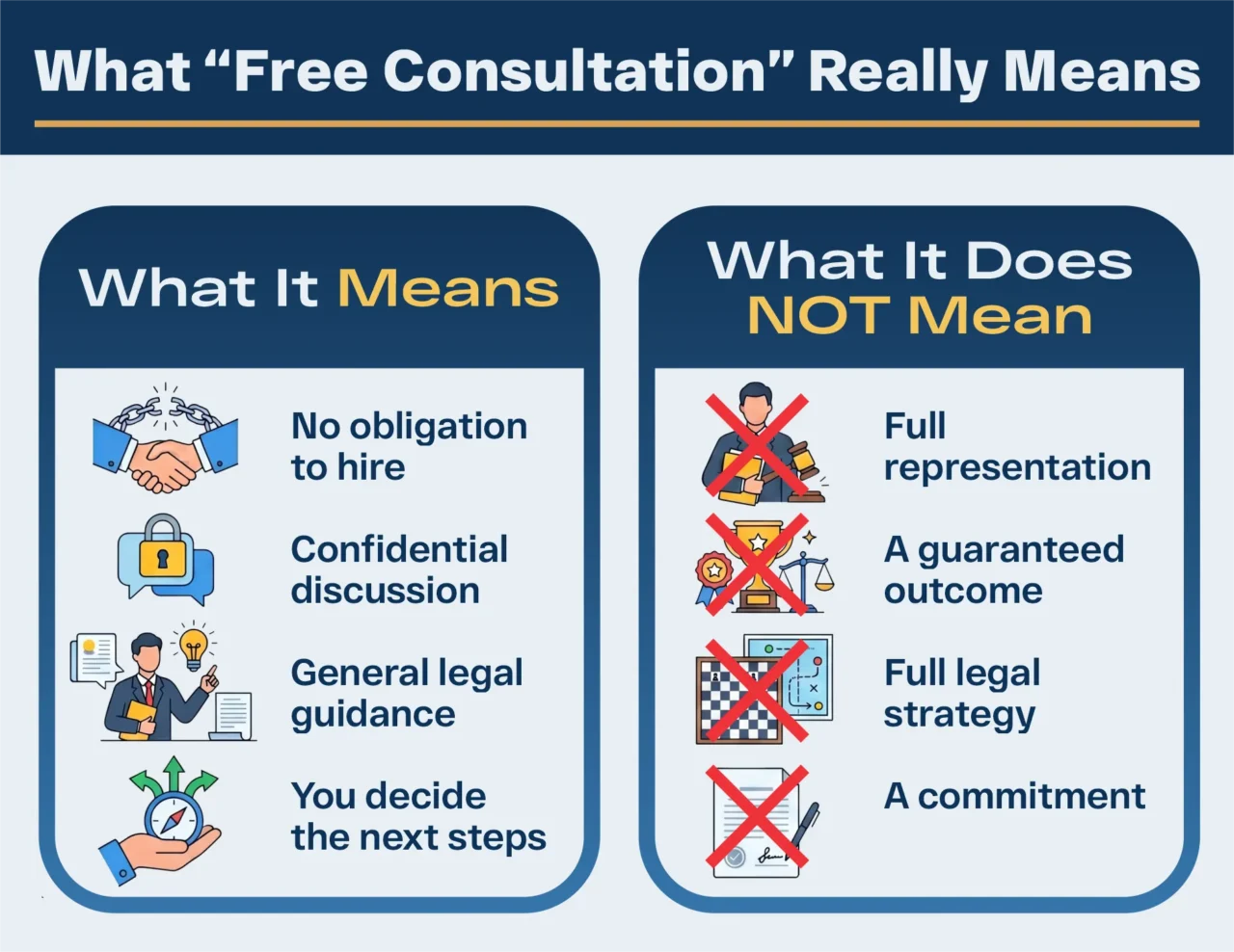
A free consultation is your first meeting with a personal injury lawyer. You can review your situation and understand your options without paying up front. Some firms respond within 24 hours, while others offer 24/7 access. You can meet in person, by phone, or through a virtual call.
A free consultation usually means:
- No Obligation to Hire: You do not need to sign any agreement during the meeting. You can take your time thinking before making a decision.
- No Attorney-Client Relationship: The lawyer does not represent you at this stage. Representation begins only after a written agreement is signed, though in some cases it may be implied by conduct.
- Confidential Discussion: Under California’s Rules of Professional Conduct, lawyers owe former, existing, and potential clients the same duty of confidentiality. That means you can share details about your case in a private setting, even if there’s no attorney-client relationship.
- Preliminary Legal Guidance: The lawyer gives general guidance based on what you share. A full legal strategy may require more investigation.
- Decision Space for You: You can compare firms, ask follow-up questions, and choose what works best for your situation.
What Happens During A Free Consultation?
During a free consultation, a lawyer can assess your situation and explain your rights and available legal options. You’ll also have the opportunity to gauge their fit for your claim.
Here is what typically happens during the meeting:
- Case Review: The lawyer listens to your account of the accident and reviews key facts. That helps them confirm what happened and how the injury relates to the incident.
- Document Review: You may share photos, reports, or medical records if available. The attorney uses these materials to understand your situation better.
- Liability Discussion: The lawyer explains who may be legally responsible based on the facts. That way, they can tell you how fault may affect your claim.
- Potential Defenses: The attorney can outline arguments the other side could raise so you can understand the potential challenges you may face when pursuing compensation.
- Fee Discussion: The lawyer explains how contingency fees and case costs work. You can ask clear questions about payment before moving forward.
- Realistic Outcomes: The attorney discusses possible case results based on similar situations, so you get a general idea of what to expect without any guarantees.
After the review, the lawyer outlines practical next steps based on your situation. These include preserving evidence, seeking care, or avoiding actions that could affect your claim. You also have time to ask questions about communication, case handling, and expectations, so you can decide how to move forward.
Common Situations Injury Victims Ask About
Injury cases often raise specific concerns that do not always fit into general advice. You may face situations that feel unclear or unexpected after an accident.
Here are some common situations and what you should know:
- Hit-and-Run Accidents: You may still have options through uninsured motorist coverage or other policies. Early reporting and evidence collection matter.
- Injuries That Appear Later: Delayed symptoms are common. Medical records that link symptoms to the incident help support your claim.
- Unclear Fault: A lawyer can review reports, photos, and witness statements to assess liability. Shared fault can still allow recovery under California law.
- Minor Damage but Real Pain: Low vehicle damage does not always mean minor injury. Medical evaluation and consistent records help show the impact.
Questions like “What if the other driver fled?” or “What if injuries appear days later?” often come up after an accident. A free consultation gives you the chance to ask these questions and receive clear, tailored guidance.
What You Should Prepare Before The Meeting

Clear details and records help the lawyer understand your case more quickly and provide more accurate guidance. Here are key items you should prepare before the meeting:
- Basic Accident Information:
- Date, time, and exact location of the incident.
- Step-by-step description of how the injury happened.
- Names and contact details of people involved or witnesses.
- Evidence & Records:
- Photos or videos showing the scene, hazard, and injuries.
- Medical records, bills, and chiropractic treatment notes or receipts.
- Police reports, incident reports, or any written statements.
- Financial Impact:
- Pay stubs or other proof of missed work and lost income.
- Receipts for out-of-pocket expenses related to the injury.
- Notes on ongoing care needs, such as therapy and chiropractic care.
- Questions for the Lawyer:
- What is your approach to handling cases like mine?
- How do you charge legal fees and case costs?
- How often will I receive updates and case progress reports?
Red Flags To Watch During A Consultation
A consultation should feel clear, respectful, and informative. You should never feel rushed or confused about what the lawyer is saying.
Here are common warning signs to watch for during a consultation:
- Pressure to Sign Immediately: A lawyer should give you time to review any agreement. You should never feel pushed to make a quick decision on the spot.
- Lack of Fee Transparency: The attorney should clearly explain fees and costs. You should also receive the fee agreement in writing before signing.
- Promises of Guaranteed Results: No lawyer can promise a specific outcome or settlement amount. Be cautious of anyone who makes firm guarantees about your case.
- Vague Answers About Experience: An attorney should clearly explain their experience with cases that are similar to yours. General or unclear answers may raise concerns about their background.
- Upfront Fees in Standard Injury Cases: Most personal injury cases use a contingency fee. Be cautious if a lawyer asks for payment before any recovery.
- Poor Communication or Lack of Attention: The attorney should listen carefully and answer your questions clearly. Rushed or unclear responses may signal future communication issues.
Every case has challenges. A lawyer should explain potential risks, possible defenses, and realistic outcomes in clear terms. If the discussion focuses only on positive results and avoids challenges, you may not get a complete enough picture to make an informed decision.
Common Questions About Free Consultations For Injury Claims
Many people look for free advice from an injury lawyer to better understand their situation. If you’re searching online for a “free consultation near me,” the answers below can help you understand what to expect and move forward with more confidence.
Do Most Law Firms Offer Free Consultations?
Several personal injury law firms in California offer free and confidential consultations. You can discuss your case, ask questions, and understand your options without paying anything upfront. You also have no obligation to hire the lawyer after the meeting.
How Long Does A Free Consultation Take?
A free consultation usually takes a short amount of time, often from a few minutes to about an hour. The length depends on how detailed your case is and how many questions you ask. More complex cases may take longer to review.
Does A Free Consultation Mean The Lawyer Represents Me?
No. A free consultation does not create an attorney-client relationship. The lawyer only represents you after you both sign a written agreement. Until then, the meeting is only for evaluation and discussion.
What Is The Deadline To File A Personal Injury Claim?
California law generally gives you two years from the date of the accident to file a personal injury lawsuit. Some cases have shorter deadlines. If a government entity is involved, you must submit an administrative claim within 6 months. Missing these time limits can bar the case, even if the liability is clear. Many people start thinking, “I need a personal injury lawyer,” when they realize how quickly time can run out. Acting early helps protect your rights and preserve important evidence.
Do Lawyers Only Get Paid If They Win?
In most injury cases, yes. Many personal injury lawyers work on a contingency fee basis. They are only paid if the case results in a settlement or a court award. The fee is usually a percentage of the recovery, which you can review before signing an agreement.
Contact Arash Law For A Free Consultation
Arash Law offers free initial consultations for injury claims across California. You can discuss your case, ask questions, and understand your options without paying upfront.
Our injury attorneys review your case facts, explain the process, and outline possible next steps. We also handle personal injury cases on a contingency fee basis. That means you pay no attorney fees unless the case results in compensation.
If you suffered an injury due to someone else’s actions, call AK Law at (888) 488-1391 to schedule your free initial consultation and explore your legal options.