TL;DR: In California, you can sue for a cat bite if the owner knew the cat was dangerous, negligently failed to prevent a foreseeable bite, or broke a safety law. Cat bites carry a significantly higher risk of infection than dog bites, so medical attention is important. You have 2 years from the date of the bite to file a lawsuit seeking compensation for damages such as medical bills, lost wages, and pain and suffering.
You can sue for a cat bite in California if the owner’s negligence caused your injury, meaning they failed to take reasonable care to prevent it. Cat owners are not automatically liable for bites the way dog owners are. Depending on the circumstances, a claim may also be based on the owner’s knowledge of the cat’s dangerous tendencies or the violation of a safety law that supports negligence per se.
What surprises many people is how serious a cat bite can become. A small puncture wound is deceptively dangerous: cat teeth are narrow and sharp, so they drive bacteria deep into tissue layers that resist surface cleaning. That elevated risk can lead to costly medical bills and makes evidence gathering critical from the moment the bite occurs.
Key Facts About Suing For A Cat Bite In California
- No Automatic Strict Liability for Cats: Cat bites do not carry the same statutory strict liability that applies to dog bites. Proof that the owner knew or should have known of a dangerous tendency is required for common-law strict liability, but an injured person may also have an ordinary negligence claim.
- Filing Deadlines Can Be Short: If a public entity is involved, Government Code § 911.2 generally requires a written claim to be presented to that entity within six months before you can sue the agency.
- Rabies-Protocol Reporting (17 CCR § 2606): Under 17 CCR § 2606, a person who knows the whereabouts of an animal known or suspected to have rabies must report immediately to the local health officer. Bite and quarantine records created under this protocol may serve as evidence in your case.
- Animal Control Records Are Time-Limited: Bite complaint histories, quarantine orders, and prior incident reports held by county or city animal control agencies may be purged under local retention schedules. Requesting those records promptly through a California Public Records Act (Government Code §7920.000 et seq.) request can significantly affect your ability to prove that the owner had notice.
Table of Contents

The “One-Bite” Rule For Cat Bites In California
State law treats dog and cat bites differently under strict liability law because domestic cats are not treated as inherently dangerous. California’s “one-bite rule” establishes that a single bite does not automatically make an owner liable.
For a cat owner to be strictly liable for a bite, the victim must prove:
- The cat had a dangerous or harmful tendency.
- The owner knew or reasonably should have known about it.
- That tendency caused the injury.
That’s why your legal options after a dog bite are different from your options after a cat bite. Under California Civil Code Section 3342, dog owners are strictly liable for bites, even if the dog has never shown aggression before. However, in the case of cat bites, you may need concrete evidence to show the owner knew the cat could be dangerous.
However, a prior bite or known history of aggression is not always required to bring a cat-bite claim. California also recognizes ordinary negligence. An owner may be liable if the circumstances created a foreseeable risk of injury and the owner failed to use reasonable care to prevent it.
Previous incidents of scratching, attacks, threats, complaints, or other aggressive behavior may be sufficient to show that the owner had notice.
Evidence that can help prove your case includes:
- Prior Complaints: Letters or emails you sent to the owner about a prior attack.
- Neighbor or Visitor Testimony: Statements from people who saw the cat act aggressively. This may include neighbors, visitors, pet sitters, groomers, or veterinarians.
- Medical Records: Records of an earlier bite or scratch.
- Owner Statements: The owner’s warnings, admissions, emails, texts, or social media posts about the cat.
- Images: Footage or photographs of the cat showing threatening or aggressive conduct.
Animal control records and public health bite reports can be strong evidence. You can also seek evidence that the owner routinely confined, restrained, or isolated the cat due to aggression.
California state law requires healthcare providers to report animal bites to the local health officer under 17 CCR §2606, so a report may already be on file. Your animal bite injury lawyer can request a copy from the reporting agency.
Negligence Per Se: When A Cat Owner Violates A Safety Law
 A cat owner may sometimes face liability based on the violation of a law intended to protect others from a particular type of harm. California refers to this doctrine as negligence per se.
Under California Evidence Code § 669, a violation may create a rebuttable presumption of negligence when:
- The owner violated a statute, ordinance, or regulation.
- The violation caused the person’s injury.
- The injury was the type the law was designed to prevent.
- The injured person was among the class of people the law was intended to protect.
Whether negligence per se applies depends on the particular law and the circumstances of the bite. For example, Los Angeles County Code § 10.20.220 generally requires a person who keeps or harbors a cat over four months old within the Department’s jurisdiction to have the cat vaccinated against rabies. An owner’s failure to comply would not automatically make the owner liable for every injury caused by the cat. However, a vaccination violation could potentially support negligence per se if it caused the type of rabies-related harm the requirement was intended to prevent.
California Penal Code § 398 also requires a person who owns or controls an animal and knows or has reason to know that it has bitten someone to provide specified contact and animal-identification information as soon as practicable, but no later than 48 hours after the bite. When the animal is legally required to have a rabies vaccination, the person must also provide information about its vaccination status within 48 hours.
A violation of an animal-control or safety law, therefore, may be relevant to a cat-bite claim, but the violation alone does not automatically establish civil liability. The requirements of California’s negligence-per-se rule must still be satisfied.
Premises Liability: Does It Apply To A Cat Bite?
In California, premises liability may apply to a cat bite when a property owner or occupier failed to address a foreseeable danger on the property.
The injured person generally must prove that:
- The defendant owned, occupied, leased, or controlled the property.
- The cat presented a danger that the defendant knew or reasonably should have known about.
- The defendant failed to take reasonable precautions, such as restraining the cat or warning visitors.
- That failure caused the bite and resulting injuries.
For example, a homeowner may be liable for inviting a guest inside without warning that a resident cat has previously attacked visitors. A landlord may be liable only if the landlord knew about the dangerous cat and had sufficient control or legal authority to address the danger. A business could be liable if it allowed a cat known to threaten customers to remain accessible.
Premises liability does not create automatic liability merely because the bite occurred on someone’s property. A cat bite injury claim typically depends on notice, control, foreseeability, and a failure to exercise reasonable care. It may be asserted alongside common-law strict liability or ordinary negligence.
Can I Still File A Claim If I Provoked The Cat?
Yes, you can still file a claim. California uses a pure comparative fault rule. Your compensation is reduced by your share of the fault, but not eliminated. If a court finds you were 30% responsible, your total compensation would be reduced by 30%.
Why Cat Bites Are Dangerous And What To Do Right Away
Cat teeth are narrow and sharp, driving bacteria from the cat’s mouth deep into tissue layers that are difficult to clean. Once inside, those bacteria can cause serious infections that are difficult to clear without fast treatment. Left untreated, a bite can lead to sepsis or nerve damage.
If you have been bitten, take these steps right away:
- Wash the wound thoroughly with soap and warm water, apply gentle pressure with a clean cloth to control bleeding, and cover it with a clean bandage.
- Seek medical care immediately, even if the bite looks minor.
- Watch for redness, swelling, pus, or fever within 24 to 48 hours, as these are signs of infection.
Early treatment can prevent serious complications and can help support a potential compensation claim. If you find yourself thinking, I need a personal injury lawyer, acting on that instinct early, while documenting your injuries and medical costs, can help preserve your legal options while you recover.
How To File A Cat Bite Claim In California
Filing a California cat bite claim typically begins with a personal injury claim to the cat owner’s insurance carrier (often their homeowners or renters policy). If the insurer denies the claim or refuses to offer fair value, you can escalate to a lawsuit.
These steps outline the process following a cat bite:
- Secure medical records and bills from every treating provider, including emergency room, urgent care, follow-up visits, and any specialist (infectious disease, orthopedic, plastic surgery).
- Report the bite to animal control and the local health department as appropriate under local procedure; when rabies exposure is a concern, see the FAQ below for the reporting duty under 17 CCR §2606. Request copies of any official records under the California Public Records Act.
- Photograph injuries and gather evidence: wound photos, scene photos, owner contact information, witness names, and any surveillance or doorbell footage of the incident.
- Identify every responsible party: the cat owner, the property owner or landlord if different, and any business entity involved.
- Determine the liability theory: scienter-based negligence under the one-bite rule, where the owner knew or should have known of the cat’s dangerous propensity, meaning the owner’s prior knowledge of the cat’s dangerous tendency, negligence under Civil Code §1714, negligence per se where a health or safety ordinance was violated, or premises liability.
- Document all losses: past and projected medical bills, lost income during recovery, future earning capacity, pain and suffering, and psychological harm.
- File the insurance claim and negotiate. A cat bite claim may be resolved through settlement, depending on the evidence, liability disputes, insurance coverage, and damages at issue. Arash Law handles insurer communications with the insurer or other party so you can focus on recovery.
- File a lawsuit if negotiations fail. If the insurer denies the claim or undervalues it, Arash Law files suit and litigates on your behalf.
Many personal injury cases are settled before going to trial. An animal attack attorney can file the cat bite lawsuit on your behalf and handle the insurance companies so you can focus on your recovery.
What Compensation Can You Recover For A Cat Bite?
After a cat bite or scratch, California law allows you to seek the full value of your losses. This includes the money you spend and the effect the injury has on your life.
Your personal injury claim may include:
- Medical Bills: Past and future costs, from the ER and surgery to rabies shots and chiropractic care.
- Lost Wages: Pay you missed while healing and any future income you lose.
- Pain and Suffering: Physical pain and emotional distress from the attack.
- Permanent Scarring: Visible scars may factor into your damages, based on your case.
- Psychological Trauma: Anxiety, post-traumatic stress disorder (PTSD), and lasting phobias from the attack.
Punitive damages also may be available only if clear and convincing evidence shows that the owner acted with malice, oppression, or fraud — for example, through despicable conduct carried out with a willful and conscious disregard for others’ safety.
What you recover depends on how serious your injuries are. If a cat bites or attacks you, animal attack lawyers can help find all responsible parties and fight for the compensation you may be entitled to recover. Getting legal help early puts you in a good position to build your case.
Case Results: Holding Negligent Parties Accountable
Animal attack and premises liability cases share a common thread: they turn on whether the responsible party knew about the danger and failed to act. That is the exact theory Arash Law pursues in cat bite cases, and it is the same theory behind some of the firm’s largest results.
In one premises liability matter, Arash Law secured a $41,950,000 verdict after demonstrating that a property owner’s failure to control a foreseeable danger on their premises caused a catastrophic injury. The same failure-to-act framework (notice and inaction) may apply to a cat bite where the owner had prior complaints or warnings about the animal’s aggression.
In a separate premises liability case, the firm recovered $14,000,000 for a client who suffered a serious injury despite multiple defenses raised by the opposing party. That result illustrates Arash Law’s approach when insurers or property owners contest liability.
In a dog attack case, Arash Law recovered $2,300,000 for a client visiting from Canada. He was attacked by an unleashed dog while on his daily walk, causing him to fall and strike his head on the asphalt. The firm secured the maximum policy limits available under the dog owner’s homeowners insurance.
These case results were achieved in separate matters and involved different facts. Past results do not guarantee future outcomes. Every case is different, and results depend on the specific facts and evidence involved.
California’s Statute Of Limitations For Cat Bites
Under the California Code of Civil Procedure (CCP) §335.1, you have two years from the date of the bite to file a personal injury lawsuit against a private party. Missing that deadline can permanently bar your claim, as courts typically dismiss late filings regardless of the severity of the injuries.
Some conditions can shorten or extend that deadline.
- For many private personal injury claims, the filing deadline may be tolled (or paused) while the injured person is a minor.
- Tolling may also apply if the victim was legally incapacitated at the time of the bite or if the cat owner left the state or concealed their identity.
- If the liable party is a government entity, a separate, much shorter deadline applies: a written claim must generally be filed within 6 months under Government Code § 911.2.
A bite that seems minor, especially on a child, can still have a filing deadline that arrives faster than you expect. Consulting an attorney early preserves your options.
Frequently Asked Questions About Cat Bites In California
Cat bite cases in California come with many practical questions. After an incident, you may be wondering what happens if a cat bites you. The answers below address the most common concerns so you can move forward with confidence.
Does The Veterinarian’s Rule Apply To Cat Bites?
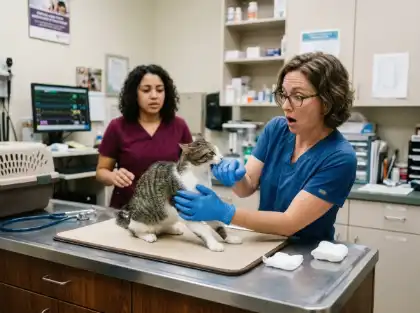
Yes. California recognizes a “veterinarian’s rule” that can limit claims by veterinarians and certain other animal-care professionals who are injured by an animal entrusted to their professional care. Courts have applied the rule where the injury arose from a risk inherent in treating or handling the animal.
Whether the rule applies to a particular cat-bite claim depends on the professional relationship, who controlled the animal, and how the bite occurred. It may not protect an owner who concealed a known danger.
Are Doctors Required To Report Cat Bites?
Yes. Under Title 17 of the California Code of Regulations §2606, doctors must report any bite from an animal capable of carrying rabies to the local public health department, even if the cat shows no signs of rabies. More broadly, anyone who knows where a rabid or suspected rabid animal is must report it immediately. These reports become official records that your attorney can later request as evidence.
Will The Cat Have To Be Quarantined After A Bite?
Usually, yes. A cat that bites someone is generally confined and observed for 10 days. However, a local health officer may, in limited cases, approve release after at least 5 days of veterinary observation or order testing instead. Exact procedures vary by jurisdiction. These quarantine records are public and can be strong evidence, especially if the cat had bitten before, and it went unreported.
Who Pays When A Store’s Cat Bites Me?
The business’s general liability insurance typically covers injuries to customers or visitors. If the business knew the cat was dangerous and let it roam near patrons anyway, it may also be liable under premises liability law. If insurance is missing or insufficient, you can pursue the business owner directly.
Do Lawyers Only Get Paid If They Win?
Yes, if they work on a contingency basis, which is how most personal injury attorneys, including Arash Law, handle these cases. Under Business and Professions Code §6147, the fee agreement must be in writing and signed. You pay nothing up front, and the attorney only gets paid if your case results in a settlement or verdict. No recovery means no attorney’s fees.
Talk to Arash Law About Your Cat Bite Claim
A cat bite that looks small can leave you with weeks of antibiotics, a possible surgical procedure, nerve damage, and medical bills you were not expecting. If the owner knew the cat was dangerous and did nothing, or broke a law designed to protect you, California law gives you the right to hold them accountable.
Arash Law has recovered over $1 billion for injured clients across California. Our animal bite attorneys move quickly to gather and preserve the evidence your case depends on: animal control records, bite reports, medical documentation, and owner communications. We handle every insurer negotiation so you can focus on getting better.
Call (888) 488-1391 for a free case evaluation.
Arash Law. Make ‘em pay. Call AK.
Sources
California Department of Public Health (CDPH): Animal Bites Program. CDPH oversees statewide animal-bite surveillance and rabies reporting, and coordinates with local health officers on animal-bite quarantine and disease control. cdph.ca.gov
California Department of Public Health (CDPH): Rabies Program. State guidance to local health departments on rabies quarantine, observation periods, and laboratory testing following an animal bite. cdph.ca.gov
California Code of Regulations, Title 17, §2606: Rabies, Animal Reporting. Mandatory reporting requirement for animals suspected of carrying rabies and for animal bites; local health officer notification standard. law.cornell.edu
California Legislature: LegInfo (California Code of Civil Procedure §335.1; Government Code §911.2; Civil Code §§1714, 3342). Statutory sources for the two-year personal injury deadline, the six-month government-claim deadline, the general negligence duty, and dog-bite strict liability. leginfo.legislature.ca.gov
California Department of General Services / Office of Risk and Insurance Management (DGS/ORIM): Government Claims Program. The routing pathway for personal injury claims against California state agencies before a lawsuit may be filed under Government Code §911.2. dgs.ca.gov
Disclaimer
The information on this page is for general educational purposes and does not constitute legal advice. No attorney-client relationship is formed by reading or relying on this content. If you were injured, consult a licensed California personal injury attorney about your specific situation. Arash Law: (888) 488-1391.