TL;DR: Soft tissue injuries are the most commonly documented marching band injury in national research. Families may be able to pursue compensation for them if another’s negligence caused them. In California, injury claims against public school districts must be filed within 6 months of the date of injury. However, special rules may apply when minors are involved.
According to a 2024 study published in the academic journal Clinical Pediatrics, soft-tissue injuries are the most commonly documented injuries in marching bands nationwide. These often affect the lower extremities, such as the legs, ankles, and feet. Meanwhile, a 2021 study published in the International Journal of Biometeorology found that exertional heat illnesses are also common among marching band artists.
These documented patterns directly matter to California families whose children sustain a marching band injury. The findings of these studies may allow lawyers, insurers, or courts to establish “foreseeability.” In other words, they may help prove that these injuries are predictable and recurring. As a result, reasonable supervision and safety protocols should have prevented them.
When a school, band program, or event organizer fails to take reasonable precautions, and your child gets injured at marching band, you may have a personal injury claim against one or more of those parties. Filing one may allow you to pursue compensation for your child’s injuries and losses.
Data Note: This page cites national findings from Clinical Pediatrics (2024) and the International Journal of Biometeorology (2021). Their conclusions were drawn from sample-based methodologies. They do not describe California-specific counts. These two studies used different methodologies and different populations. Figures from one study cannot be added to figures from the other. This page will be revised to reflect newer findings on this topic as they become available.
Key Facts About Marching Band Injuries
- Soft tissue injuries are the most common in marching bands. A national peer-reviewed study analyzed U.S. emergency department data from 2012 through 2021 and estimated that 20,335 marching band injuries occurred: 50% involved the lower extremities, and 49% were soft-tissue diagnoses such as sprains and strains.
- Heat illnesses are also common marching band injuries. A separate 2021 heat-illness case series identified at least 393 heat illness events across 34 news-reported incidents between 1990 and 2020, with roughly 88% of the recorded events involving high school marching bands. The most common heat illnesses identified in the study were heat syncope (~55%) and heat exhaustion (~44%).
- Marching band injury claims may be filed against public entities. California public school districts are local public entities. A written injury claim must generally be presented directly to the school district (not to a state agency) within six months of the injury, as per Government Code (GOV) § 911.2.
- Special filing rules apply to claims involving minors. California Code of Civil Procedure (CCP) § 352 tolls or pauses the filing deadline when lawsuits against a private party involve an injured minor. However, minor tolling does not automatically apply to government-entity claims against public school districts, so the applicable deadlines should be reviewed with an attorney promptly after any injury.
Table of Contents

The Most Common Injuries In A Marching Band
The most common marching band injuries are soft tissue injuries. Many marching band artists also experience heat illnesses. Sometimes, marching band artists may sustain more serious injuries, such as head trauma and heat stroke.
Marching band research published in Clinical Pediatrics points most strongly toward soft-tissue diagnoses. This study examined data from the National Electronic Injury Surveillance System (NEISS), which collects emergency department data nationwide. It found that, between 2012 and 2021:
- Children across the U.S. visited emergency departments for over 20,335 marching band injuries.
- Girls (70%) aged 14 to 18 years old (85%) sustained the majority of these injuries.
- The majority of the injuries occurred in the lower extremities (50%).
- The most frequently observed diagnosis was the soft tissue injury (49%).
- Mild traumatic brain injuries were present in 6% of the recorded cases.
- Around 98% of these marching band injuries did not require an escalation of care.
Heat illnesses are another common marching band injury, according to the 2021 study Exertional Heat Illnesses in Marching Band Artists. This case series used an online news dataset to identify how often, and under what conditions, exertional heat illnesses (EHIs) occurred among U.S. marching band artists between 1990 and 2020. It concluded that:
- There were at least 34 separate events resulting in at least 393 total EHIs.
- The most common heat illnesses were heat syncope (~55%) and heat exhaustion (~44%).
- A few of the analyzed news items reported exertional heat stroke cases.
- EHIs were reported across different types of marching band activities:
- Rehearsal (~32%)
- Parades (~29%)
- Competitions (~21%)
- Performances (~15%)
- An estimated 88% of events involved high school marching bands.
- The vast majority of the documented EHIs occurred when the weather was unusually hot by local conditions.
Why Are Soft Tissue Marching Band Injuries So Common?
Marching requires repetitive motion: hundreds or thousands of identical steps, sharp turns, abrupt halts, and long periods on your feet. Performers simultaneously carry heavy instruments and maintain precise body positions, concentrating mechanical stress on the ankles, knees, and hips with every repetition.
Under these conditions, lower-body soft tissue injuries can occur when:
- The marching band artist is wearing the wrong footwear for the terrain.
- Uneven ground, wet grass, loose gravel, or debris on parade routes create slip, trip, and fall hazards that would not exist on a standard athletic field.
The National Athletic Trainers’ Association even recognizes the physical demands of marching band activities and acknowledges that they pose foreseeable injury risks. That is why it has previously recommended mitigation strategies for band directors, athletic trainers, and parents to follow, including:
- Conducting pre-season conditioning.
- Encouraging the use of supportive footwear.
- Teaching safe instrument-carrying techniques.
- Regularly inspecting practice fields and parade routes for hazards.
When schools or event organizers skip those precautions, the law may consider their actions negligent. That may give you the legal right to pursue compensation for your child’s injuries and losses.
Who Is Liable For A Marching Band Injury In California?
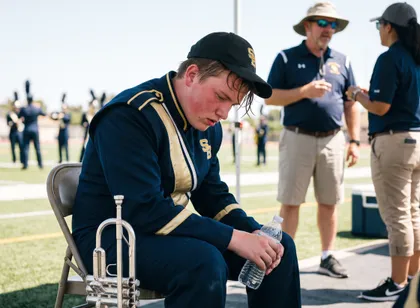
Any party whose actions contributed to your child’s marching band injury may be found liable, or legally responsible, for the resulting losses. Those liable parties may include one or more of the following:
- Private schools.
- Public schools.
- Marching band event organizers.
- School employees, such as band directors.
Depending on whether the liable party is a public or private entity, you may have the right to file a personal injury or government claim against them. To protect your position from the start, getting immediate medical care and reporting a marching band injury can be one of the most important things you can do if your kid gets injured at school. These steps can help you create documented records of what happened.
Personal Injury Claims Against Private Parties
You typically file a personal injury claim against a private party, such as a private school or marching band event organizer. To have a valid claim, you must show that:
- Under California Civil Code § 1714, the at-fault party owed a legal duty to act reasonably and prevent harm.
- They failed to meet that duty.
- That failure directly caused the injury.
- Your child sustained actual losses.
For example, suppose a private school allowed marching band rehearsals on a field with known hazards. As a result, a student fell and sustained a concussion. That student’s parents or legal guardians can file a personal injury claim. The school’s insurance carrier may have to compensate them for the medical bills incurred as a result of the concussion.
Government Claims Against Public School Districts
Claims against public schools operate under a different framework. GOV § 815 generally protects public entities from liability unless another law specifically allows a claim. One of those laws is GOV § 815.2. It establishes that a public entity is responsible when:
- An employee causes an injury while acting within the scope of their job.
- The employee could personally be held legally responsible for that conduct.
To illustrate, suppose a band director ignored posted heat advisories and skipped mandatory water breaks during a summer rehearsal. As a result, a student suffered a heat illness. Because of the band director’s actions, the student’s parents or legal guardians may have a claim against the school district.
The location of the activity carries legal weight as well. California Education Code (EDC) § 44808 addresses school-sponsored activities away from school property. Under that statute, a school district is generally not liable for student safety off-campus. Exceptions may apply. For example:
- The school district undertakes transportation.
- The school district undertakes a school-sponsored off-campus activity.
- The school district specifically assumes responsibility.
- The school district fails to exercise reasonable care under the circumstances.
Band directors, chaperones, and coaches often undertake some form of supervision at away competitions, parades, and off-campus rehearsals. When one of the specific undertakings described in EDC § 44808 applies, liability may also depend on whether the student was or should have been under the immediate and direct supervision of a district employee. Whether the district may be liable depends on the specific facts.
Families facing these situations should document the supervision structure, any written safety protocols the district maintained, and communications from staff in the period around the injury. Prompt preservation of these records matters because school district retention schedules can limit how long internal reports are kept.
Can A School Waiver Affect A Marching Band Injury Claim?
Signing a permission slip or activity waiver does not mean a family surrenders all legal rights. The way these documents affect a claim depends on their specific language and the circumstances of the injury.
California courts have enforced school-related releases in some cases. In Brown v. El Dorado Union High School District (2022), the Courts of Appeal upheld a school district’s liability release signed by a high school athlete and guardian before a football season. It concluded that an express assumption of risk by the participant and their guardian can relieve a school district of negligence arising from a school activity.
California also recognizes the primary assumption of risk doctrine. This is a principle the California Supreme Court has applied to voluntary physical activities. Under it, performers generally accept the inherent risks of a physical activity. That includes some risk of falls, contact injuries, and physical fatigue.
However, in the specific context of marching band injury cases, enforceability depends on the language of the document and the circumstances. For example, a court may not enforce a waiver if the school or its employees created risks beyond the scope of the waiver’s contents. For instance, a band director who continues a full-intensity rehearsal after a student shows clear signs of heat stroke may create circumstances where a signed waiver may not apply.
How Long Do You Have To Present A Marching Band Injury Case?
Under § 335.1 of the state’s Code of Civil Procedure (CCP), you generally have two years from the date of the marching band injury to file a personal injury lawsuit against an at-fault party. Crucially, if the injured party is a minor, the law may toll, or pause, that deadline until they turn 18. However, a parent or legal guardian can sue on their behalf before this time.
Because public school districts are public entities, a shorter, stricter deadline will apply. Before you can even file a lawsuit, you must first present an administrative claim directly to the school district, and you only have six months after the date of the marching band injury to do so (GOV § 911.2). Missing this initial filing window can bar a later lawsuit.
GOV § 911.4 provides a process for applying for permission to present a late claim in limited circumstances, but approval is not automatic and is subject to strict timing requirements. The application must be filed within a reasonable time, and no later than one year after the date of injury. GOV § 911.6 provides important additional protection: if the injured person was a minor throughout the six-month claim-presentation period, the public entity must grant a timely late-claim application.
A critical distinction for families of students who are minors: The tolling that applies to personal injury cases involving minors does not automatically extend the initial six-month deadline for presenting a government claim.
Results Arash Law Has Obtained Against Government Defendants And For Injured Minors
Arash Law has recovered over $1 billion for clients across California. The case results below don’t involve marching band injuries, and they don’t promise similar outcomes for your situation. However, they do illustrate our firm’s experience handling cases involving both government defendants and injured minors:
Auto Injury Verdict Against County Of Los Angeles: $17,900,000
After years of litigation, Arash Law secured a unanimous jury verdict against the County of Los Angeles, the kind of institutional opponent that routinely contests every stage of a claim. The case involved an auto accident that caused one client to sustain head and orthopedic trauma, and another to suffer a knee injury requiring physical therapy. The jury deliberated for just 90 minutes before reaching its decision.
Bicyclist Vs. Auto: $3,500,000
Our client, a 6-year-old boy, suffered a traumatic brain injury because a pickup truck ran him over while he was biking across the street. The at-fault driver attempted to shift blame to our young client. Discovery proved the driver was distracted, and the recovery reflected the severity of a pediatric TBI.
Brain Injury Against City Of Simi Valley: $1,075,000
A vehicle hit our client, a crossing guard, while they were working. Our client suffered orthopedic and traumatic brain injuries. We directly sought accountability from the city by complying with the government claim procedures established by GOV § 911.2.
Past results do not guarantee future outcomes. Every case is different, and results depend on the specific facts and evidence involved.
Injured During Marching Band? Talk To Arash Law
If your child was hurt during band practice, a competition, or a parade, early action can protect your family’s legal options. That’s especially true if your child goes to public school: you’ll have only six months to present a government claim (GOV § 911.2). That deadline starts on the date of the marching band injury, not the date you first consult a lawyer.
Call Arash Law at (888) 488-1391 for a free case evaluation. Our child injury attorneys can review the facts, identify who may be responsible, and help you understand what pursuing a personal injury claim on behalf of your child may involve.
Frequently Asked Questions About Marching Band Injuries In California
Can I Sue The School If My Child Gets Hurt In Band Practice?
You could, depending on the facts of the case. A student’s injury alone does not automatically establish liability. However, if the actions of a school or its employee contributed to your child’s band practice injury, you may have a claim against them. Examples of those actions could include inadequate supervision, failure to follow heat safety protocols, or allowing practice on unsafe surfaces. After you file a claim, suing may become possible if the other party or their insurer refuses to offer fair compensation for your documented losses.
Can My Family Still Recover Compensation If My Child Was Partly At Fault?
It’s possible. Generally, California applies pure comparative negligence, which allows injured victims to recover compensation even if they’re up to 99% at fault for their injury. However, that percentage would reduce their potential recovery.
How Long Do I Have To File A Lawsuit Against A California School District?
For claims against a California school district, a written government claim must be presented to the district within six months after the cause of action accrues under GOV § 911.2, and separate lawsuit deadlines may follow (GOV § 945.6):
- If the district rejects the claim, you have six months from the date that the written denial was personally delivered or mailed to sue.
- If the district fails to respond within 45 days, the claim is deemed automatically rejected. Since you did not receive a compliant written denial, you have two years from the date of your marching band injury to sue.
Because the deadlines differ from standard personal injury lawsuits, and exceptions can further change these filing windows when minors are involved, it’s ideal to consult an attorney promptly after any marching band injury.
What Should I Do Right Away After A Marching Band Injury?
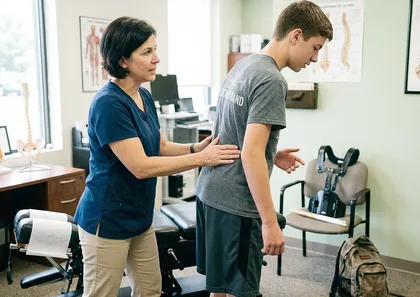
Here are some things you and your child can do immediately after a marching band injury:
- Seek medical care immediately, even if the injury seems minor.
- Report the incident to the school in writing and keep a dated copy of all communications about it.
- Photograph the scene, the equipment involved, and your child’s injuries as soon as possible.
- Collect contact information for any witnesses, including fellow students, chaperones, or other staff present. Witness memory fades quickly, and school district records may be subject to retention schedules that limit how long internal reports are kept.
Can We Get Compensation If The Injury Was Caused By Defective Band Equipment?
Possibly. A defect in band equipment could support a product liability claim against the manufacturer, distributor, or seller, depending on the facts and evidence. Product liability claims follow different rules, so it’s best to consult a lawyer about your options.
Does The School’s Insurance Cover Heat Stroke Injuries?
It depends on the policy your child’s school carries. Even if it is covered, the school’s insurance carrier likely won’t automatically cover a heat stroke injury. For example, you may still have to establish that school staff ignored posted heat safety guidelines, failed to monitor students during outdoor rehearsals, or did not provide adequate water and rest breaks. In these cases, a claim for negligent supervision may apply. Whether the school’s insurer ultimately responds depends on whether liability can be established under the applicable legal standards.
What If The Injury Happened During A Parade Or Away Competition?
Off-campus injuries may still support a school district claim if an exception applies under EDC § 44808. The Liability section above explains those exceptions and the specific factors courts examine.
Your Family Deserves Answers: Arash Law Is Ready
If your child was injured during a marching band rehearsal, competition, or performance, you do not have to navigate what comes next alone. Arash Law has recovered over $1 billion for injured Californians, including cases against counties, cities, and school-linked government defendants.
You pay nothing to get started, and you do not owe the attorney’s fees unless your case resolves in your favor. Call us at (888) 488-1391 for a free case evaluation. We are available 24 hours a day. Arash Law. Make ‘em pay. Call AK.
Sources
- California Code of Civil Procedure § 335.1: two-year statute of limitations for personal injury and wrongful death claims against private parties. Leginfo. https://leginfo.legislature.ca.gov/faces/codes_displaySection.xhtml?sectionNum=335.1.&lawCode=CCP leginfo.legislature.ca.gov
- California Code of Civil Procedure § 352: minor tolling of statutes of limitations; CCP § 352(b) expressly excludes government-entity and public-employee claims. Leginfo. https://leginfo.legislature.ca.gov/faces/codes_displaySection.xhtml?sectionNum=352.&lawCode=CCP leginfo.legislature.ca.gov
- California Government Code § 815: default public entity immunity rule. Leginfo. https://leginfo.legislature.ca.gov/faces/codes_displaySection.xhtml?sectionNum=815.&lawCode=GOV leginfo.legislature.ca.gov
- California Government Code § 815.2: derivative public entity liability through employee negligence. Leginfo. https://leginfo.legislature.ca.gov/faces/codes_displaySection.xhtml?sectionNum=815.2.&lawCode=GOV leginfo.legislature.ca.gov
- California Government Code § 911.2: six-month government claim deadline for injury claims against public entities. Leginfo. https://leginfo.legislature.ca.gov/faces/codes_displaySection.xhtml?sectionNum=911.2.&lawCode=GOV leginfo.legislature.ca.gov
- California Government Code § 911.4: late government claim application, up to one year after accrual. Leginfo. https://leginfo.legislature.ca.gov/faces/codes_displaySection.xhtml?sectionNum=911.4.&lawCode=GOV leginfo.legislature.ca.gov
- California Government Code § 911.6: mandatory relief for a timely late-claim application when the injured person was a minor throughout the six-month claim-presentation period. Leginfo. https://leginfo.legislature.ca.gov/faces/codes_displaySection.xhtml?sectionNum=911.6.&lawCode=GOV leginfo.legislature.ca.gov
- California Government Code § 912.4: a public entity generally has 45 days to act on a claim; failure or refusal to act within that period generally results in the claim being deemed rejected. Leginfo. https://leginfo.legislature.ca.gov/faces/codes_displaySection.xhtml?sectionNum=912.4.&lawCode=GOV leginfo.legislature.ca.gov
- California Government Code § 945.6: lawsuit deadlines after a government claim, including the six-month period after a compliant written rejection and the two-year period when a compliant written notice is not given. Leginfo. https://leginfo.legislature.ca.gov/faces/codes_displaySection.xhtml?sectionNum=945.6.&lawCode=GOV leginfo.legislature.ca.gov
- California Education Code § 44808: school district duty of care and supervision for off-campus activities. Leginfo. https://leginfo.legislature.ca.gov/faces/codes_displaySection.xhtml?sectionNum=44808.&lawCode=EDC leginfo.legislature.ca.gov
- Peer-reviewed study of U.S. marching band emergency department injuries, 2012–2021: National Electronic Injury Surveillance System (NEISS)-based estimate of 20,335 injuries; 50% lower extremity; 49% soft tissue; 6% mild TBI. National Library of Medicine / PubMed. pubmed.ncbi.nlm.nih.gov/37924241/ pubmed.ncbi.nlm.nih.gov
- Peer-reviewed case series on exertional heat illnesses in U.S. marching band participants, 1990–2020: identified 34 events and at least 393 heat illnesses; about 55% were heat syncope, and about 44% were heat exhaustion. National Library of Medicine / PubMed. pubmed.ncbi.nlm.nih.gov/34424411/ pubmed.ncbi.nlm.nih.gov
- National Athletic Trainers’ Association: marching band safety recommendations addressing conditioning, heat acclimatization, hydration, footwear, proper instrument technique, monitoring for heat illness, and inspection of fields and parade routes. nata.org/press-release/nata-offers-timely-recommendations-keep-marching-band-members-healthy-and-well-prepared-activity nata.org
- Brown v. El Dorado Union High School District (2022) 76 Cal.App.5th 1003: express assumption of risk by a high school participant and guardian relieves school district of negligence liability on those specific facts. California Court of Appeals. https://www4.courts.ca.gov/opinions/archive/C088204.PDF courts.ca.gov
- Knight v. Jewett (1992) 3 Cal.4th 296: primary assumption of risk doctrine in voluntary physical activities. California Supreme Court. https://appellatecases.courtinfo.ca.gov/search/case/mainCaseScreen.cfm?dist=0&doc_id=1750811&doc_no=S019021&request_token=NiIwLSEnPkw3W1BVSCItXExIMEg0UDxbIiBORzhTICAgCg%3D%3D appellatecases.courtinfo.ca.gov
- Li v. Yellow Cab Co. (1975) 13 Cal.3d 804: California adopted pure comparative negligence. California Supreme Court. https://scholarlycommons.pacific.edu/cgi/viewcontent.cgi?article=2458&context=mlr scholarlycommons.pacific.edu
- Arash Law case results. arashlaw.com
Disclaimer
The information on this page is for general educational purposes and does not constitute legal advice. No attorney-client relationship is formed by reading or relying on this content. If you were injured, consult a licensed California personal injury attorney about your specific situation. Arash Law — (888) 488-1391.