TL;DR: Though California doesn’t set a strict deadline that insurers have to settle claims by, it does give them 15 days to acknowledge, 40 days after proof of claim to decide, and 30 days to pay after acceptance. For injured Californians, disputed liability, medical evidence, and negotiations can extend settlement time, while lawsuit and government-claim deadlines continue to run separately.
In California, insurers generally must acknowledge a claim, initiate any necessary investigation, and provide the required forms and assistance within 15 calendar days of receiving notice of the claim. Additionally, they typically have to accept or deny a claim, in whole or in part, within 40 calendar days of receiving proof of claim. Once a claim is accepted, payment must usually be made within 30 calendar days and, when necessary, after receipt of a properly executed release. However, there’s no actual deadline for settling a claim.
There are only time limits for handling claims, as outlined in California’s Fair Claims Settlement Practices Regulations under Title 10, California Code of Regulations (CCR), §§ 2695.5 and 2695.7. They are regulatory deadlines, not a guarantee that an entire personal injury or property damage claim will settle within that period. Specific requirements and exceptions can also vary by claim type and coverage.
If an insurer needs more than 40 days to determine whether to accept or deny a claim, § 2695.7 generally requires written notice explaining why additional time is needed. The insurer must then provide additional written notices every 30 calendar days while the determination remains pending, subject to the regulation’s exceptions. The California Department of Insurance (CDI) can take regulatory action for violations of California’s claims-handling requirements.
Key Facts About California Insurance Claim Settlement Timelines
- An insurer generally must acknowledge receipt of a claim, provide necessary forms and assistance, and begin any necessary investigation no later than 15 calendar days after receiving notice of the claim (10 CCR § 2695.5(e)).
- If an insurer cannot accept or deny a claim within the initial 40-day period, it generally must send written notice within that period explaining why more time is needed and identifying any additional information required, then provide updated written notices every 30 calendar days while the determination remains pending (10 CCR § 2695.7(c)).
- When a first-party claim is denied in whole or in part, the insurer generally must provide a written denial stating the reasons and the factual and legal bases known to the insurer at the time (10 CCR § 2695.7(b)).
- When a properly executed release is required, the 30-day payment period generally begins after the insurer receives the release, not simply when the settlement is signed (10 CCR § 2695.7(h)).
- Under Government Code (GOV) § 911.2, a written claim involving death, personal injury, or injury to personal property generally must be presented to the appropriate public entity within six months after the cause of action accrues, or when the claim arises.
- Under California Code of Civil Procedure (CCP) § 335.1, most personal injury and wrongful death lawsuits generally must be filed within 2 years, and filing an insurance claim does not pause that deadline.
Table of Contents

California’s Mandatory Insurance Claim Timeline
California’s Fair Claims Settlement Practices Regulations establish several claims-handling deadlines for insurers. The 15-day acknowledgment requirement appears in 10 CCR § 2695.5, while the 40-day claim-decision and 30-day payment requirements appear in § 2695.7.
The regulations establish minimum standards intended to promote prompt, efficient, equitable, and good-faith handling of insurance claims. Specific exceptions and different timeframes can apply to certain types of insurance or claims.
Step 1: Acknowledgment Within 15 Calendar Days
Under 10 CCR § 2695.5(e), an insurer generally must act within 15 calendar days after receiving notice of a claim. Within that period, the insurer must acknowledge receipt of the claim unless payment has already been made. It must also provide necessary forms, instructions, and reasonable assistance and begin any necessary investigation.
The 15-day period generally begins when the insurer receives notice of the claim, not when the claimant has supplied every document that may ultimately be needed.
Step 2: Accept Or Deny Within 40 Calendar Days Of Proof Of Claim
Under 10 CCR § 2695.7(b), an insurer generally must accept or deny a claim, in whole or in part, immediately but no later than 40 calendar days after receiving proof of claim.
If a first-party claim is denied in whole or in part, the insurer generally must provide a written denial stating the reasons for the decision and the factual and legal bases known to the insurer at the time. If the insurer denies a third-party claim or disputes liability or damages, the insurer must also communicate that position in writing.
The regulation contains exceptions for certain types of coverage and claims, so the 40-day period does not apply identically in every insurance matter.
Step 3: Payment Within 30 Calendar Days After Acceptance
Under 10 CCR § 2695.7(h), once an insurer accepts a claim in whole or in part, it generally must tender payment or otherwise perform its claim obligation immediately. In California, these settlements must be paid out within no later than 30 calendar days.
When a properly executed release is required, the 30-day period generally begins upon the insurer’s receipt of the release. Certain policies and claim types are subject to exceptions, including policies that provide a waiting period before benefits become payable.
This deadline, therefore, should not be described simply as 30 days after signing a settlement agreement.
When Can The 40-Day Determination Period Be Extended?
If an insurer cannot determine whether to accept or deny the claim within the initial 40-day period, 10 CCR § 2695.7(c) generally requires the insurer to send written notice within that period.
The notice must identify any additional information the insurer needs and state the continuing reasons why it cannot yet decide. The insurer generally must send another written notice every 30 calendar days until it decides or receives notice of legal action.
If the decision depends on a future event, the insurer must generally explain the situation and provide an estimate of when it expects to make the determination. An extension, therefore, does not depend solely on the parties agreeing to continue settlement negotiations.
An insurer must also conduct and diligently pursue a thorough, fair, and objective investigation and may not continue requesting information that is not reasonably required or material to resolving the claim.
The Insurance Claim Process In California: Step By Step
A California personal injury insurance claim commonly involves reporting the claim, investigation, an acceptance or denial decision, and, when appropriate, settlement negotiations. The timing and sequence can vary depending on the coverage, disputed issues, injuries, and information needed to evaluate the claim.
Reporting And Opening The Claim
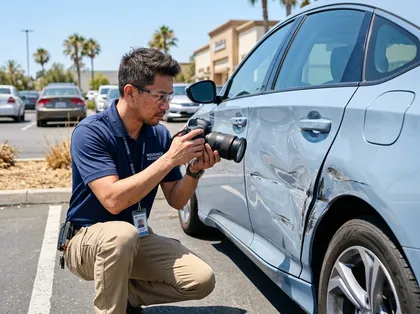
The process generally begins when the accident or loss is reported. You should notify your own insurer as required by your policy. You may also notify the at-fault party’s insurer if you intend to pursue a third-party personal injury claim.
Prompt notice can help preserve evidence and allow the insurer to begin its investigation. Policy terms may also impose notice and cooperation requirements in first-party claims.
Evidence can become unavailable over time. Surveillance footage may be overwritten, physical evidence may change, and witnesses can become harder to locate, so preserving relevant documentation early can be important.
Investigation And Adjuster Review
Once a claim is opened, the insurer may assign a claims adjuster to investigate and evaluate it. California regulations require insurers to conduct a thorough, fair, and objective investigation and to pursue it diligently.
Common requests may include:
- Medical bills and records.
- Police or crash reports.
- Photographs or videos.
- Information about lost income.
- Other evidence relevant to liability and damages.
A claimant should review the scope of any medical authorization before signing it because an authorization may permit access to records beyond those directly related to the claimed injuries.
The adjuster may also request a recorded statement. The claimant’s obligations depend on the type of claim:
- Third-Party Claim: A claimant pursuing compensation from another person’s insurer generally does not have the same contractual cooperation obligations that may apply under their own policy.
- First-Party Claim: The insured’s policy may contain cooperation provisions requiring information or statements reasonably related to the insurer’s investigation.
The specific obligations depend on the policy, coverage, and circumstances of the claim.
Acceptance Or Denial
After receiving proof of claim, an insurer generally must accept or deny the claim, in whole or in part, within the time required by 10 CCR § 2695.7, subject to permitted extensions.
- If accepted, the claim may move to payment or settlement negotiations. Acceptance does not necessarily mean the parties agree on the amount of damages.
- If denied, the insurer must generally provide written notice explaining the basis for the denial. Different requirements apply to first-party and third-party claims.
A claimant who disagrees with a denial may submit additional information, dispute the decision, file a complaint with the CDI, or pursue other available legal remedies. Bad-faith claims generally arise from duties an insurer owes to its own insured, not to an adverse third-party claimant.
Factors That Can Affect How Long An Insurance Claim Takes To Settle In California
California’s claims-handling regulations set deadlines for certain insurer actions, but they do not set a fixed deadline for settling. Common factors that can affect how long a claim takes to settle include:
- Severity of Injuries and Medical Recovery: More serious injuries often take longer to evaluate because the full extent of treatment, future medical needs, permanent limitations, and lost earning capacity may not be known right away. Settlement discussions may be delayed until the medical outlook becomes clearer.
- Disputed Liability: If the parties disagree about who caused the accident or how to divide fault, they may need to conduct further investigation. Witness statements, photographs, expert analysis, or accident reconstruction can delay the insurer’s liability position.
- Multiple Rounds of Negotiation: A claim may take longer when the parties exchange several settlement offers and counteroffers. Additional time may also be needed when an adjuster must obtain higher-level approval for a larger settlement amount.
- Litigation: If settlement negotiations do not resolve the claim, filing a lawsuit usually extends the timeline. Pleadings, discovery, depositions, motions, mediation, and trial preparation can add months or longer before the case is resolved.
- Government-Entity Involvement: Claims involving a public entity can require a written government claim before a lawsuit may proceed. GOV § 911.2 generally requires claims involving death, personal injury, or injury to personal property to be presented within six months after accrual. In contrast, GOV § 945.4 generally requires that the claim be presented and acted upon, or deemed rejected, before a covered lawsuit is filed.
- Claim Complexity: Claims involving multiple parties, commercial vehicles, severe injuries, disputed medical causation, or significant property damage often require more records, investigation, expert input, and coordination. Each additional issue can lengthen the evaluation and negotiation process.
A longer settlement process does not, by itself, extend the legal deadline for filing a lawsuit. Insurance negotiations and statutes of limitations generally operate on separate timelines, although tolling, estoppel, or other exceptions may affect the deadline in some cases.
How To Help Your Claim Move Faster Without Settling For Less
Certain steps can help reduce avoidable delays while preserving the information needed to evaluate a claim.
- Preserve evidence early. Request the California Highway Patrol (CHP) or police collision report when applicable. Photograph the scene, vehicles, and visible injuries, obtain witness contact information, and preserve relevant surveillance footage when possible. Early documentation can make it easier for the insurer to investigate liability and damages.
- Notify the appropriate insurer promptly. Timely notice allows the insurer to open the claim and begin its investigation. Your policy may also provide applicable benefits, such as uninsured/underinsured motorist coverage (UM/UIM) or medical payments coverage (MedPay), depending on the policy and circumstances.
- Respond carefully to information requests. Provide documentation reasonably related to the claim, such as medical bills, records, photographs, and collision reports. Before giving a recorded statement to another party’s insurer or signing a broad medical authorization, consider carefully reviewing the request and your obligations.
- Track communications. Keep copies of correspondence with the insurer and note important dates, requests, responses, and status updates. These records can help document how the claim was handled and whether required notices were provided.
- Know when to seek additional help. Consider consulting an attorney if there is a significant dispute over liability or damages, the insurer denies the claim, required claim-handling notices are not provided, or negotiations remain unresolved.
Consumers may also file a complaint with the CDI about insurer claim-handling concerns or call its consumer hotline at 1-800-927-4357.
California Statutes Of Limitations For Personal Injury Lawsuits
The insurance claim process and the deadline to file a lawsuit are separate. An open insurance claim generally does not, by itself, stop the applicable statute of limitations from running.
| What You Are Filing | General Deadline | What the Rule Means |
|---|---|---|
| Personal Injury Lawsuit | 2 years | Most personal injury lawsuits must be filed within 2 years of the injury when it results from another person’s wrongful act or neglect (CCP § 335.1). |
| Wrongful Death Lawsuit | 2 years | Wrongful death lawsuits are also generally subject to a two-year filing period under CCP § 335.1. |
| Property Damage Lawsuit | 3 years | Lawsuits for injury to personal property generally must be filed within three years (CCP § 338(c)(1)). |
| Lawsuit Involving a Minor | Varies; often tolled during minority | The limitations period for many private-party personal injury claims is generally tolled while the injured person is a minor (CCP § 352(a)). For a claim otherwise governed by CCP § 335.1, the two-year period may begin when the person turns 18. Different rules apply to certain claims, including those against public entities or employees. |
| Government Claim Before a Lawsuit | Generally 6 months | A written claim involving death, personal injury, or injury to personal property generally must be presented to the appropriate public entity within six months after the cause of action accrues (GOV § 911.2). This is a pre-suit requirement, not the time limit for filing the lawsuit itself. A separate deadline to sue may apply after the public entity acts on or rejects the claim. |
Ongoing settlement discussions with an insurer generally do not, by themselves, extend the deadline to file a lawsuit. This means a lawsuit deadline can continue to run even while an insurance claim remains under review or negotiation.
What These Timelines Look Like In Practice: Arash Law Results
Insurance claims do not all resolve on the same timeline. Some cases settle after investigation and negotiation, while others require extensive medical development, discovery, or trial preparation before the parties reach an agreement.
Arash Law’s past case results include matters that resolved at different stages of the process:
$3,500,000 — Auto vs. Auto: Our legal team obtained a $3.5 million settlement for a client who suffered serious spinal injuries after being struck from behind while stopped at a red light. The matter was resolved three days before the scheduled trial.
$2,500,000 — Car Crash: Though we originally settled for the at-fault party’s policy limits, their insurer failed to pay the agreed-upon amount within the required time frame. We obtained this result for our client after pursuing accountability for this unnecessary delay.
These examples illustrate why the time it takes to settle a claim can depend on the severity of the injuries, the evidence available, the extent of negotiations, and whether litigation becomes necessary.
Past results do not guarantee future outcomes. Every case is different, and results depend on the specific facts and evidence involved.
Questions About Your Insurance Claim Timeline? Contact Arash Law
If your California insurance claim is delayed, disputed, or approaching an important filing deadline, Arash Law can review the circumstances and explain what may be affecting the timeline. Our California injury attorneys can also evaluate claim-handling issues, applicable deadlines, and whether further action may be appropriate.
Call (888) 488-1391 for a free case evaluation.
Frequently Asked Questions About Insurance Claim Timelines In California
Insurance claim timelines can vary depending on the type of claim, the insurer’s investigation, disputed issues, and whether a lawsuit becomes necessary. The answers below address common questions about California claim-handling deadlines, filing deadlines, government claims, settlement offers, and documentation.
What Happens If An Insurance Company Misses These Deadlines?
If an insurer violates applicable claims-handling deadlines, the CDI may investigate and take enforcement action. A missed deadline does not automatically create a separate legal claim.
For residential property insurance claims, this area may soon change. SB 878, which has passed the California Legislature and is awaiting the Governor’s action as of September 2026, would codify certain claims-handling deadlines and impose interest on specified late payments. The bill is not yet law and does not apply generally to personal injury liability claims.
Does Filing An Insurance Claim Pause The Statute Of Limitations?
Generally, no. Filing a claim with an insurer does not, by itself, pause California’s two-year personal injury deadline under CCP § 335.1. Separate tolling rules or other exceptions may affect the deadline in some cases.
Can An Insurance Company Extend The 15/40/30-Day Deadlines?
Yes, but not all three deadlines are extended in the same way. If an insurer cannot accept or deny a claim within the initial 40-day period, 10 CCR § 2695.7(c) generally requires written notice explaining why more time is needed and identifying any additional information required.
The insurer generally must provide updated written notices every 30 calendar days while the determination remains pending. Different rules and exceptions apply to the 15-day acknowledgment and 30-day payment requirements.
What If A Government Entity Caused My Accident?
If you are pursuing a claim against a California public entity for death, personal injury, or injury to personal property, GOV § 911.2 generally requires the written claim to be presented within six months after the cause of action accrues. Different presentation periods can apply to other types of claims.
For claims against the State of California or its agencies, the Government Claims Program is administered through the Department of General Services, Office of Risk and Insurance Management (DGS/ORIM).
Should I Accept The Insurance Company’s First Settlement Offer?
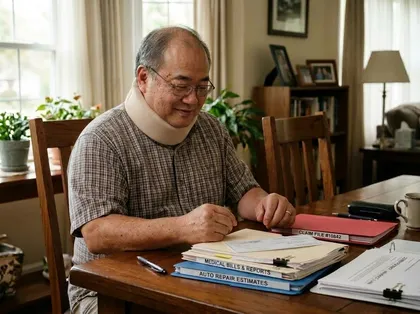
Not necessarily. Before accepting a first settlement offer, compare it with your documented medical expenses, lost income, future treatment needs, other damages, and the terms of any release.
Once a settlement is finalized and a release is signed, you generally cannot seek additional compensation for the same released claim. If the full extent of your injuries or future losses is still unclear, consider reviewing the offer carefully before accepting it.
What Documentation Should I Gather To Support My Claim?
Gather any incident, police, or collision report that applies to the accident. Also, preserve photographs or videos of the scene, hazardous conditions, vehicles or equipment involved, visible injuries, and any available surveillance or dashcam footage.
Keep witness contact information, medical bills and records, proof of lost income, receipts for out-of-pocket expenses, and other documents related to your damages. Thorough documentation can help the insurer evaluate liability and the extent of your losses.
Talk To Arash Law About Your California Insurance Claim
If your California insurance claim is delayed, denied, or disputed, Arash Law can review the circumstances, applicable claim-handling requirements, and filing deadlines. We have recovered over $1 billion for California injury victims and handle cases involving insurer disputes, complex evidence, and litigation when necessary.
Call Arash Law at (888) 488-1391 for a free case evaluation. We handle personal injury cases on a contingency fee basis under a written agreement consistent with California Business & Professions Code § 6147. Under that agreement, you generally do not pay the attorney’s fees unless we recover compensation on your behalf.
Arash Law — Make Them Pay, Call AK.
Sources
California Department of Insurance: Fair Claims Settlement Practices Regulations, including 10 CCR §§ 2695.5 and 2695.7, governing acknowledgment, investigation, acceptance or denial, extensions, and payment of insurance claims.
https://www.insurance.ca.gov/01-consumers/130-laws-regs-hearings/05-CCR/fair-claims-regs.cfmCalifornia Department of Insurance: Consumer Help and Complaint Filing, including the CDI consumer hotline at 1-800-927-4357.
https://insurance.ca.gov/01-consumers/101-helpCalifornia Code of Civil Procedure § 335.1: Two-year statute of limitations for personal injury and wrongful death lawsuits.
https://leginfo.legislature.ca.gov/faces/codes_displaySection.xhtml?sectionNum=335.1.&lawCode=CCPCalifornia Code of Civil Procedure § 338(c)(1): Three-year statute of limitations for lawsuits involving injury to personal property.
https://leginfo.legislature.ca.gov/faces/codes_displaySection.xhtml?sectionNum=338.&lawCode=CCPCalifornia Code of Civil Procedure § 352(a): Tolling rules that may apply when an injured person is a minor at the time the cause of action accrues.
https://leginfo.legislature.ca.gov/faces/codes_displaySection.xhtml?sectionNum=352.&lawCode=CCPCalifornia Government Code § 911.2: Government claim-presentation requirement generally requiring claims involving death, personal injury, or injury to personal property to be presented within six months after the cause of action accrues.
https://leginfo.legislature.ca.gov/faces/codes_displaySection.xhtml?sectionNum=911.2.&lawCode=GOVCalifornia Department of General Services, Office of Risk and Insurance Management: Government Claims Program for claims against the State of California and its agencies.
https://www.dgs.ca.gov/ORIM/File-A-ClaimCalifornia Business & Professions Code § 6147: Requirements for written contingency fee agreements between attorneys and clients.
https://leginfo.legislature.ca.gov/faces/codes_displaySection.xhtml?sectionNum=6147.&lawCode=BPCCalMatters Digital Democracy: California SB 878 (2025–2026), including bill text, legislative history, votes, and current status.
https://calmatters.digitaldemocracy.org/bills/ca_202520260sb878Arash Law: Case Results, including the settlements referenced in the article.
https://arashlaw.com/case-results/Disclaimer
The information on this page is for general educational purposes and does not constitute legal advice. Reading or relying on this content does not create an attorney-client relationship. To learn more about California’s settlement timeline, consult a licensed personal injury attorney. Arash Law — (888) 488-1391.