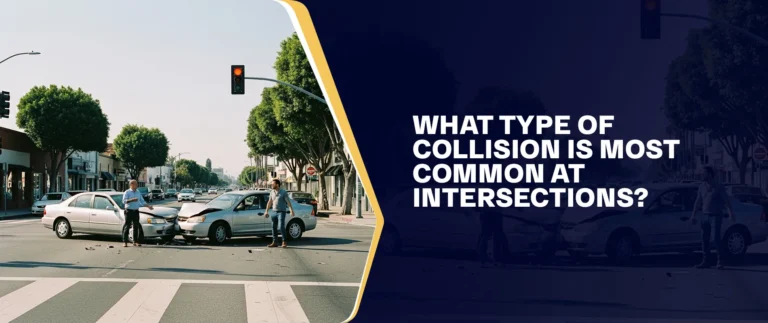
TL;DR: Creating safer domains for pedestrians and bicyclists requires cities to build sidewalks, bike lanes, and crossings that reduce crashes from speeding or failure to yield. Drivers who ignore right of way laws face fines and civil liability, while poor infrastructure exposes cities to lawsuits as injuries to children continue.
Highlights:
- Map key destinations and note where walking and biking routes break.
- Advocate for uninterrupted routes that avoid highway barriers and dead ends.
- Request wider sidewalks, curb ramps, and buffer space for wheelchair users.
- Audit wide intersections for walk-signal timing, lighting, and clear sightlines.
- Keep sidewalks and bike lanes clear of debris, construction, and parked vehicles.
- In California, clear a minor helmet citation by finishing a program within 120 days.
- On California Class I bikeways, stay after crashes and exchange information.
Tip: After a crash or near-miss, photograph the scene, signage, lighting, and injuries immediately, and when reporting to insurers or police, stick to facts and avoid guessing.
Table of Contents
Creating Safer Domains For Pedestrians And Bicyclists
We have, as a society, recently developed a greater appreciation for communities where we can walk or bike to the places we want or need to be. In doing so, we have found it increasingly obvious that, for some time, residential areas were not designed to aid that goal. For decades, our communities have reflected a cultural love affair with the automobile, with all roads, wherever they led, being made for cars and cars alone.
Moving Away From The Car
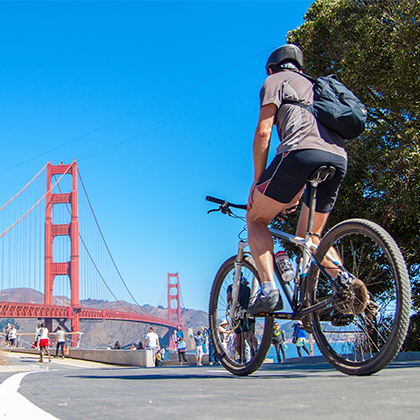
However, many communities have recently begun to seek a return to an era when residents could walk or cycle from one location to another. Walkability became a watchword in urban design, and people began to look at their particular community’s existing obstacles to mobility and their potential for removing or modifying those obstacles. We will examine some of these issues, followed by suggestions to consider for making positive changes in your community.
What Are The Common Problems?
Many suburban and metropolitan areas built in the mid-to-late 20th century were characterized by a car-focused design. New urban housing developments were built away from city centers, and suburban developments were characterized by large, centralized shopping malls and acres of McMansion homes, often located far from anything but other McMansions and an occasional school, which could be reached by bus.
Consequently, residents end up in an area, whether urban or suburban, where they’re afraid to cross the street and aren’t comfortable letting their kids ride their bikes anywhere. Plus, there’s not much nearby to make either crossing streets or riding bikes worthwhile in the first place. Specific issues include:
- Nearby Locations — Pedestrians, cyclists, and those in wheelchairs need easy access to nearby locations. This access requires two things. There must be locations nearby that people want to access, and those locations must be accessible. There should be convenient and barrier-free routes to key locations, including schools, businesses, healthcare facilities, and transportation hubs.
- Safe Ways to Travel — Getting to those nearby locations needs to be both direct and secure. For walkers, safe travel means well-maintained and unobstructed walkways, such as dedicated sidewalks or paths. For those in wheelchairs, walkways should be wide enough to allow wheelchairs traveling in opposite directions to pass each other. Bike riders need designated bike lanes or paths. In some less-traveled areas, the shoulder may be sufficient for cyclists or walkers. Communities should have sufficient pedestrian and bicycle-safe intersections with signals that allow enough time for those not in cars, especially the disabled and the elderly, to cross safely.
- Uninterrupted Routes — Not only should there be safe routes for walkers and cyclists to use, but those safer roads should provide uninterrupted routes to important municipal locations. A safe walking path interrupted by a multi-lane interstate highway is of little use to someone in a wheelchair or on a bike.
- Well-Marked Routes — Both drivers and users of pedestrian/cyclist walkways need to know where those walkways are. Signage for these routes must be clear, easily seen, and understandable to anyone.
- Accessible Routes — Sidewalks and pathways should be easily accessible. Government mandates for curb ramps should be in place, while sudden changes in the walkway’s width, texture, or direction should be avoided as much as possible.
- Visibility — Both drivers and pedestrians using walkways need to be visible to one another. Pathways should be well-lit and provide clear visibility between pedestrians and vehicles at all times of day. Children can be especially difficult to see and should receive training on how and where to cross safely.
Specific Mobility Problems
Problems with getting around can be general, affecting everyone who isn’t in a car, and specific, such as the problems that confront bikers versus those that impact pedestrians and people with disabilities. We will look at each group of problems separately. Please note that, under California law, a “pedestrian” is someone who is walking, riding something propelled by their effort, including a wheelchair (but not a bicycle), or is riding a motorized wheelchair, tricycle, or quadricycle and is disabled.
Pedestrian Problems
- No Place to Run — One major problem pedestrians face in many suburban and urban areas is that there is simply no place for them to walk. Municipalities once required that developers build sidewalks into suburban developments. However, in the late 20th century, this requirement faded away, and new housing estates opened with streets and yards but no pre-built sidewalks. Fortunately, this century has seen the resurgence of sidewalks in response to the Americans with Disabilities Act (ADA).
- No Place to Pass — Sidewalks should be wide enough to allow two pedestrians to pass one another or walk side-by-side.
- Blocked Walkways — In both urban and suburban environments, sidewalks can be obstructed by debris, construction, vehicles, and barriers such as vegetation, snow, and trash.
- Wide Intersections — Many Walk/Don’t Walk signals are too short to permit pedestrians, particularly the elderly, to cross comfortably in the time allowed. Pathway planners should inspect lights at broad intersections and verify that all pedestrians have sufficient time to cross safely.
- Directions and Signage — Everyone using the roads needs to know how to get where they need to go, even in an era of widespread GPS use.
Cyclist Problems
- No Place to Ride — Few communities have developed good bike pathway networks to make getting around on a bike easy or safe. Although this difficulty has been somewhat alleviated by requirements that bikes follow the same rules as other vehicles on the road, their presence can still pose a danger. Cyclists on sidewalks pose a hazard to pedestrians and people with disabilities, while traffic can be hazardous for the riders themselves. The formal designation of bike paths and bike lanes in traffic can help manage this risk.
- Blocked Pathways — Bike routes can also be blocked by debris, construction, and other vehicles. Sometimes, where bike lanes adjoin the curb, they may also be blocked by parked or standing motor vehicles.
- No Connections — All too often, communities lack complete routes to important centers within the municipality. Bikers need to be able to reach schools, city or town centers, and other important facilities without dealing with dead ends, broken bike lanes, or no direct bike routes.
- No Place to Park — Those who ride bikes need designated parking spaces when they arrive at their destination. Bike racks need to be more common and accessible than they currently are, particularly at schools, hospitals, libraries, and shopping districts.
Problems For The Disabled
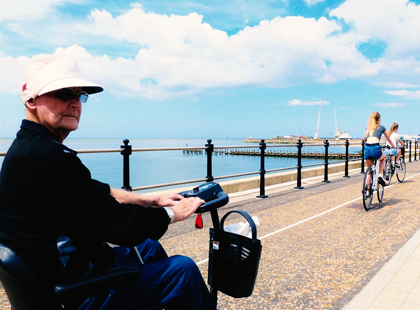
- No Place to Pass — To be useful for those in wheelchairs, sidewalks, and shoulders must be wide enough to allow chairs to pass one another safely and comfortably. Generally, the roughness and unfinished nature of shoulders make them unsuitable for use by individuals in wheelchairs.
- Protective Zones — There needs to be space between the road and the disabled. By definition, not as agile as others on the road might be, those in wheelchairs need space to separate themselves from cars on the road.
- Not Enough Time — As noted with pedestrians, those in wheelchairs can have difficulty making it across wide or divided highways in the time allotted by the traffic signal. Communities should assess and adjust traffic signals as necessary, allowing individuals with disabilities to cross intersections safely.
- Not Enough Curb Ramps — Since the ADA was enacted in 1990, state and local governments should investigate whether people with disabilities have access to public pedestrian routes. Governments generally provide this access by installing curb ramps at intersections. The ADA did not require that all curbs be immediately made accessible by ramps. Compliance has been somewhat uneven, with smaller municipalities tending to require curbing only on new and reconstructed or reconditioned roadways or complete “spot” ramps on a per-request basis. Failure to comply can result in lawsuits and penalties, and many local government entities have been sued for non-compliance.
Recent California Changes For Safer Mobility
In January 2019, several California Active Transportation Laws took effect. Intended to make the state’s roads safer for those on bikes and on foot, the new laws cover various issues.
Changes To Helmet Laws
Under Assembly Bill 3077, a “fix-it” ticket will be offered to those under 18 who are cited for not wearing a helmet while operating or riding as passengers on:
- Bicycles
- Skateboards
- Non-Motorized Scooters
- Rollerblades
The ticket provision allows the cited minor to cure the violation by completing a safety program within 120 days of the citation.
Changes For Motorized Scooters
Under AB 2989, those over 18 are no longer required to wear a helmet while riding a motorized scooter. However, these same scooters are now prohibited on roadways with speed limits above 25 mph or on roads with a speed limit of up to 35 mph, unless they are traveling in a qualifying cycle track or bike lane.
Changes To Hit-And-Run Laws
Bikers on Class I bikeways are now subject to all collision-related rules that apply to a car driver during a hit-and-run accident. Under the new law, anyone involved in a collision while riding a bicycle on a path with a separate right-of-way for pedestrians and bicycles must remain at the scene and exchange information with the parties involved.
Commitment To Vulnerable Road Users
California communities have devoted considerable time and attention to making their roads safer for vulnerable road users in recent years. A vulnerable road user (VRU) is anyone not protected by the steel frame of an automobile. The VRU laws protect those walking and rolling on California roads from death or injury resulting from the negligent or intentional behavior of drivers.
By increasing fines and penalties for this misconduct related to VRUs, these laws enhance incentives to avoid bad behavior and facilitate VRUs in pursuing civil actions after an accident. Several California communities have already adopted VRU laws. For a broad overview of California’s rules and regulations relating to pedestrians and cyclists, see Bicyclist and Pedestrian Safety – California DMV.
Public Transit Isn’t Necessarily The Answer
The problems confronting pedestrians, bicyclists, and individuals with disabilities cannot be solved simply by telling them to use public transit. Although many municipalities have made significant strides in making their public transit vehicles safe and accessible for people with disabilities, issues still remain related to the bus stops themselves. Often, they are located in areas that are difficult to access on foot or by bike, or for those with disabilities. Some of the specific issues relating to bus stops include:
- Sidewalks & Bike Racks — If there are no sidewalks or bike racks at the bus stop, those on foot or on bicycles will be unlikely to use that stop. Some cities address this issue by installing bike racks on the front of buses, but these racks can only accommodate one or two bikes at a time.
- Unsafe Locations — Bus stops can often be located in poorly lit areas or with no obvious street crossing to access them. The bus stop shelter or other obstacles may block access to the bus stop, and the seating may be too close to traffic, making waiting there a poor user experience. There is frequently no shelter at all, requiring potential passengers to stand in the elements while waiting for a bus.
Subways and trains face many of the same issues, compounded by the fact that many train stations are not yet accessible to people with disabilities. If a disabled passenger needs to get to point A, but the nearest train stop is several miles away, public transportation is not a viable solution.
Drivers Are A Large Part Of The Problem
There is no question that drivers are often unaware of or indifferent to those sharing the road with them who are not operating motor vehicles. Many drivers treat pedestrians, bikers, and the disabled as intruders in a wholly motorized world. While pedestrians are required, by law, to exercise due care for their own safety, motorists also have a duty to care for them. Here are some of the specific problems.
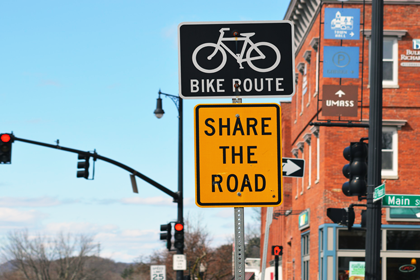
- Failure to Yield — In California, pedestrians have the right of way over motor vehicles in various circumstances, particularly when attempting to cross at an intersection. Yet, despite these rights, over 13,000 pedestrians are involved in car accidents in California every year. These accidents occur because drivers either fail to stop or fail to yield to pedestrians attempting to cross the roadway.
- DUIs and Distractions — Distracted driving and driving under the influence of drugs or alcohol are among the major causes of road accidents. Both drunk driving and drug-impaired driving, regardless of whether the drugs are legal or illegal, remain significant factors in highway crashes.
- Speeding & Disobeying Traffic Signals — In addition to failing to yield to pedestrians, drivers often travel at speeds dangerous to pedestrians. They also occasionally ignore traffic signals or turn right on a red light when a pedestrian is crossing the street. These reckless behaviors contribute to the dangers for pedestrians and cyclists on the roads.
So Are Pedestrians And Cyclists
It would be easy to place all the blame on neglectful municipalities and discourteous drivers, but pedestrians and bikers also add to their own risks on the road. Bike riders have been subject to all the provisions of the traffic laws that apply to drivers since January 2019, so they should be aware of exactly what they are required to do. Pedestrians should consider their duty to take care and act accordingly. Some specific issues include the following.
- Jaywalking — Jaywalking is, essentially, crossing the street where you’re not supposed to do so. The law requires that you go to a marked intersection to cross the street. Failure to do so can result in being invisible to oncoming or fast-moving vehicles, potentially leading to an accident.
- Not Paying Attention — Officer Friendly taught us all to look both ways before crossing the street. You still need to do that, even in a marked intersection with a traffic light where you have the right-of-way. Remember, distracted driving and DUI are still issues at those intersections.
- Going in the Right Direction — Remember, pedestrians walk facing traffic, while bikers ride with it. Doing otherwise can cause unpleasant surprises for drivers at intersections.
- Helmets — Always wear a helmet when advised or required to do so. It won’t prevent an accident, but it can help reduce the risk of traumatic brain injury.
Reach Out To Our Bicycle And Pedestrian Accident Injury Lawyers
Nothing and no one can prevent all accidents involving pedestrians and bikers. Having said that, communities can begin to address the issues discussed above and plan to respond to them. You can help by getting involved on the local level, advocating for good planning for mobility, and advocating for change to municipal codes that don’t require sidewalks and pathway networks. California is working toward protecting vulnerable road users, but we all need to participate at the state, county, and local levels to achieve these goals.
While we hope you never need these services, if you need help from California bicycle accident lawyers, contact Arash Law for a free initial consultation. Furthermore, our injury law firm consists of car accident lawyers, truck accident attorneys, motorcycle accident lawyers, and injury attorneys focusing on slip-and-falls, dog bites, and workplace accidents.