TL;DR: You can ask an injury firm to arrange a consultation away from your home and limit communications with household members. Discuss meeting options, approved contact channels, voicemail restrictions, and permission to speak with others. California law protects qualifying confidential legal communications, but privacy preferences do not guarantee that every detail of a claim will remain undisclosed.
You can request a private injury consultation without inviting a lawyer to your home or involving household members. An injury firm may offer different ways to discuss your case, including telephone conversations or appointments at an office. Available arrangements depend on the firm’s procedures.
You can also ask the firm to limit how it contacts you. For example, you may prefer calls to a personal number, messages without case details, or no correspondence sent to your home address.
California law provides confidentiality protections for qualifying communications with attorneys. However, these protections differ from practical contact preferences. Discussing both can help you understand how your information will be handled before sharing sensitive details.
Table of Contents

I Do Not Want a Legal Consultation at Home or Messages Shared With My Household. What Privacy and Meeting Arrangements Should I Discuss With an Injury Firm?
Tell the injury firm that you want a consultation away from home, specify which contact methods it may use, and explain whether anyone else has permission to receive case information. Ask the firm to confirm which requests it can accommodate before discussing sensitive details.
You generally do not need to explain why you want to limit household involvement. Your preference for private communication is enough to start a conversation about available arrangements.
Key Facts About Private Injury Consultations in California
- Consultation Arrangements: California law generally does not require that an initial injury consultation take place at the client’s home. You can ask about other meeting options.
- Communication Preferences: You can discuss preferred contact methods and ask which restrictions the firm can accommodate. California Rule of Professional Conduct 1.4 governs attorneys’ communication duties during representation.
- Independent Legal Consultation: An adult generally may seek legal advice about their own injury claim without another household member’s permission.
- Prospective-Client Confidentiality: California Rule of Professional Conduct 1.18 protects qualifying information shared during a consultation, even if the attorney is not hired.
- Attorney-Client Privilege: California Evidence Code §§ 951, 952, and 954 protect qualifying confidential legal communications, including certain consultations before formal representation.
- Third-Party Disclosures: California Evidence Code §§ 912 and 952 explain when sharing privileged communications may waive protection and when limited third-party involvement preserves confidentiality.
In addition to understanding these legal protections, consider discussing the following meeting and communication preferences with the injury firm before your first appointment.
Request a Meeting Away From Home
You can ask for an office appointment, telephone consultation, or another meeting format that provides suitable privacy.
Confirm whether the firm can provide your preferred meeting location, video consultation, or another arrangement when scheduling.
Ask whether the firm can:
- Schedule an appointment at an office rather than your residence.
- Arrange an initial discussion by telephone.
- Provide a video consultation, if available.
- Avoid scheduling home visits.
- Explain how later meetings will be arranged if you retain the firm.
A telephone or video meeting may be convenient, but the location and device you use matter. Choose a private setting, and avoid shared or monitored phones, computers, or email accounts. Using a shared or monitored device may create privacy risks, particularly if unauthorized people can access your communications.
Whether a communication qualifies for attorney-client privilege depends partly on the circumstances in which it was made and whether it was intended to remain confidential under California Evidence Code § 952.
Identify Which Communication Channels Are Allowed
You can ask the injury law firm to use only the phone number or email address you approve. For example, you may prefer a personal mobile number instead of a shared household telephone. You may also want messages sent to an email account that other people cannot access.
Explain whether the firm may:
- Call your personal phone.
- Leave voicemail messages.
- Send text messages.
- Contact you through email.
- Send documents electronically.
- Mail documents to your residence.
Your availability may also affect how the firm contacts you. If you can’t take calls during work while starting an injury case, ask about suitable callback times or alternative communication methods.
Confirm which requests the firm’s communication systems can support, including how it delivers important notices and case documents.
Set Clear Voicemail and Text Message Boundaries
You can request limits on what the injury law firm includes in voicemail messages and texts. Even a missed call or message preview may reveal that a law firm contacted you. A message without case details may reduce that risk, but it cannot guarantee complete privacy.
Tell the injury firm whether you permit voicemail. If you do, specify whether the message may include the firm’s name, the caller’s name, or only a callback request. You can also ask whether the firm can avoid sending appointment reminders or other routine texts.
Explain Whether Anyone Else May Receive Information
You can tell the injury law firm not to share information with household members unless you specifically authorize that communication. A person’s presence in your household does not automatically make them an authorized participant in your legal matter.
Ask how the firm records permission to speak with another person. You may also want to discuss how it verifies someone’s identity before releasing information.
If you later decide that someone may assist with scheduling or document collection, clarify the scope of that permission. Authorization for one task does not necessarily mean you want that person involved in every legal discussion.
Contact-Permission and Meeting-Preference Checklist
Use this checklist when arranging an initial consultation. Each item identifies a preference to discuss, not a service the injury law firm necessarily provides.
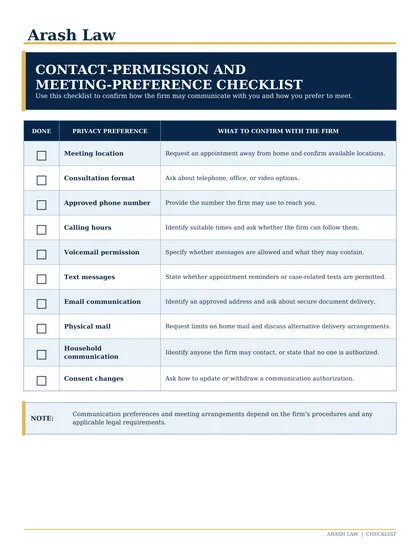
With this checklist, you can more easily identify your privacy preferences before speaking with an injury firm. It covers meeting locations, consultation formats, approved contact methods, voicemail and text message restrictions, and permission to communicate with household members.
You can download or print the checklist and use it to discuss your preferences with the firm. Ask which arrangements it can accommodate and how to update or withdraw your communication permissions if your needs change.
How Can You Change Your Contact Permissions?
You can ask the injury law firm to update your communication instructions when your preferences change. Contact them through an approved channel and identify the specific change. For example, you might withdraw permission to leave voicemail or replace an email address.
Ask the firm to confirm that the update has been recorded. A written request may help create a clear record, but the firm should explain its actual procedure and when the change will take effect.
Changing contact preferences does not necessarily withdraw previously disclosed information or reverse communications that have already occurred.
How California Law Protects Private Injury Consultations
California law may protect confidential communications made during an initial legal consultation, even when the person has not hired the attorney.
The following rules explain how confidentiality applies when someone is seeking legal advice or considering whether to hire a firm:
- Attorney-Client Privilege: California Evidence Code §§ 951, 952, and 954 protect qualifying confidential communications between a person seeking legal advice and an attorney. This protection can apply during an initial consultation, even if the person does not ultimately hire the attorney.
- Prospective Client Confidentiality: California Rule of Professional Conduct 1.18 generally prohibits attorneys from improperly using or disclosing confidential information obtained during a qualifying consultation. This duty may apply even when the firm declines representation. However, not every unsolicited inquiry qualifies for protection.
- Third-Party Involvement: California Evidence Code § 952 allows certain third parties to be involved in confidential legal communications when they further the client’s interests in the consultation or are reasonably necessary to transmit information or accomplish the consultation’s purpose. Other third-party involvement may affect privilege.
- Waiver of Privilege: California Evidence Code § 912 provides that voluntarily disclosing a significant part of a privileged communication, or consenting to its disclosure, can waive protection. Certain confidential disclosures necessary for the legal consultation do not constitute a waiver.
A consultation does not automatically establish legal representation. Whether an attorney-client relationship exists depends on the circumstances, including the parties’ conduct. A signed agreement is not always necessary to create that relationship.
You can ask the firm to limit communications with household members and explain who, if anyone, may receive information about your inquiry. Confirm the firm’s privacy procedures before sharing sensitive details.
These protections do not guarantee absolute secrecy. Whether information is legally protected depends on the circumstances, and applicable exceptions or disclosure requirements may apply.
Can I Keep an Injury Claim Completely Private From My Household?
You can ask an injury firm to limit communications with household members, but complete privacy cannot be guaranteed if you later pursue a claim. Your preferences may help control routine contact, including phone calls, emails, and physical mail.
What Information Might Be Shared During a Claim?
An injury claim may require disclosure of information about the incident, injuries, medical treatment, and claimed losses.
If you later file a lawsuit, California Code of Civil Procedure § 2017.010 generally allows parties to obtain relevant, nonprivileged information through discovery, subject to applicable privacy protections and court-imposed limitations. Discovery is the legal process used to exchange evidence and information during litigation.
California Rules of Court, Rule 2.550 generally presumes court records are open to the public unless confidentiality is required by law. Some information may qualify for privacy protections or restricted access.
Qualifying confidential communications with an attorney may remain protected by attorney-client privilege. California Evidence Code § 954 generally protects these communications from compelled disclosure, subject to applicable exceptions and waiver rules.
What Should I Ask Before Filing a Lawsuit?
You can ask an attorney what information might become accessible to others if you decide to pursue an injury claim.
Consider discussing:
- Whether your situation requires filing a lawsuit or may be addressed through an insurance claim.
- What personal, medical, or financial information may need to be disclosed.
- Whether court filings could reveal your identity or information about your injuries.
- What legal protections may apply to sensitive information.
- How the firm can accommodate your contact preferences during future proceedings.
An initial consultation does not require you to file a lawsuit or commit to representation. You can discuss potential privacy concerns and available legal options before deciding how to proceed.
What Should I Prepare for a Private Consultation With an Injury Lawyer?
You can begin a private injury consultation with a basic account of what happened and any supporting records you have. You do not need a complete set of documents before contacting an attorney.
The following information may help the firm evaluate your situation:
- Incident Details: The date, location, and a brief description of how the injury occurred.
- Photos and Videos: Images of the accident scene, visible hazards, property conditions, or injuries.
- Incident Reports: Available police, workplace, or property accident reports.
- Involved Parties and Witnesses: Names and contact information of people involved or anyone who witnessed the incident.
- Medical Records: Treatment summaries, diagnoses, medical bills, and information about continuing symptoms.
- Financial Records: Insurance correspondence, missed-work records, and documents showing income losses.
If your injury occurred on someone else’s property in California, premises liability attorneys can assess evidence involving unsafe property conditions and potentially responsible parties.
California Health and Safety Code § 123110 generally allows patients to inspect and obtain copies of their medical records, subject to applicable requirements and exceptions.
Before sharing documents, ask the firm how it securely receives and stores sensitive information. Confirm which communication channels you authorize, especially if other household members can access your email, phone, or physical mail.
What Happens After the Initial Consultation?
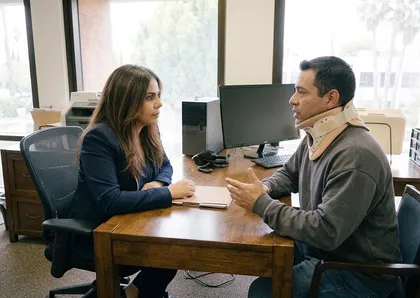
An initial consultation helps the injury law firm assess whether their lawyers may be able to represent you and explain possible next steps. The law firm may review the available facts, identify legal issues, consider applicable deadlines, and explain what additional evidence it may need.
They may also need to check for conflicts of interest before reviewing detailed information. A conflict can arise when professional obligations to another client or prospective client limit the firm’s ability to take a case.
If you later decide to retain legal counsel, understanding what happens after you hire an attorney can help you prepare for future case updates, document requests, and communication arrangements.
Does an Initial Consultation Mean You Have Hired the Firm?
Contacting an injury firm does not automatically establish an attorney-client relationship. A consultation may help you decide whether to proceed, but the firm must also determine whether it can accept your case.
You can ask whether law firms offer free consultations for injury claims before scheduling an appointment. If the firm offers representation, review the proposed agreement and its terms before signing.
How Are Attorney’s Fees Handled?
Many injury law firms handle qualifying personal injury matters on a contingency fee basis, meaning attorney’s fees generally depend on recovering compensation.
California Business and Professions Code §6147 requires covered contingency fee agreements to be in writing, signed by the attorney and client, and to explain the fee arrangement and treatment of case-related costs. The attorney must also provide the client with a signed copy of the agreement upon execution of the contract.
Ask the firm how it communicates fee documents, signature requests, and future correspondence if you want to restrict physical mail or household access.
Have Questions About Starting a Private Injury Consultation?
You can discuss your legal options without committing to representation. Arash Law can help you understand what to expect during an initial consultation and address your privacy concerns.
Call (888) 488-1391 to speak with our intake team and learn about the available consultation options.
Frequently Asked Questions About Private Injury Consultations
Do I Need Another Household Member’s Permission to Consult a Lawyer?
If you are 18 or older, you generally do not need another household member’s permission to consult a lawyer about your own injury claim. Under California Family Code § 6501, you are legally an adult at age 18. You can discuss your legal options privately and ask the firm to limit household involvement.
Can I Change Who Is Authorized to Speak With the Injury Law Firm?
You can request changes to, or the withdrawal of, your permission for the firm to communicate with another person. Ask how the firm records these changes and when they take effect. Withdrawing permission does not reverse information already shared.
Does a Private Consultation Guarantee That My Claim Will Remain Secret?
A private consultation does not guarantee that every detail of a future injury claim will remain confidential. Qualifying legal communications may be protected, but pursuing a claim may require disclosures to insurers, opposing parties, or courts. These disclosures do not automatically mean household members will receive the information.
How Long Do I Have to File a Personal Injury Lawsuit in California?
California Code of Civil Procedure § 335.1 generally allows two years from the date of injury to file a personal injury lawsuit. Claims involving government entities generally require claimants to present a claim within six months under Government Code § 911.2. If the agency rejects the claim in writing, the lawsuit deadline may be as short as six months from the date of that notice under Government Code § 945.6. Other exceptions and deadlines may apply, and an initial consultation does not pause them.
Discuss Your Privacy Preferences With Arash Law
You can contact Arash Law about an injury claim and ask about the available consultation and communication arrangements. Tell the intake team whether you prefer an appointment away from home, restricted voicemail messages, a specific contact number, or limited communication with others.
Our injury attorneys can explain which preferences we can accommodate, how we handle confidential information, and what communication may be necessary if your case proceeds.
Call us at (888) 488-1391, available 24 hours a day, seven days a week, to discuss your situation and request suitable arrangements.
Sources
- California Rules of Professional Conduct, Rules 1.4 and 1.18 — Attorney communication duties and confidentiality obligations involving qualifying prospective clients.
https://www.calbar.ca.gov/legal-professionals/rules/rules-professional-conduct/current-rules-professional-conduct/chapter-1-lawyer-client-relationship- California Evidence Code § 951 — Definition of a client, including a person consulting an attorney for legal services or advice.
https://leginfo.legislature.ca.gov/faces/codes_displaySection.xhtml?sectionNum=951.&lawCode=EVID- California Evidence Code § 952 — Definition of confidential attorney-client communications, including circumstances in which third-party involvement does not defeat confidentiality.
https://leginfo.legislature.ca.gov/faces/codes_displaySection.xhtml?sectionNum=952.&lawCode=EVID- California Evidence Code § 954 — Attorney-client privilege, allowing clients to refuse disclosure and prevent others from disclosing qualifying confidential legal communications.
https://leginfo.legislature.ca.gov/faces/codes_displaySection.xhtml?sectionNum=954.&lawCode=EVID- California Evidence Code § 912 — Waiver of privilege, including voluntary disclosure of a significant part of a privileged communication and applicable exceptions.
https://leginfo.legislature.ca.gov/faces/codes_displaySection.xhtml?sectionNum=912.&lawCode=EVID- California Code of Civil Procedure § 2017.010 — Scope of civil discovery, including access to relevant, nonprivileged information during litigation, subject to applicable limitations.
https://leginfo.legislature.ca.gov/faces/codes_displaySection.xhtml?sectionNum=2017.010.&lawCode=CCP- California Rules of Court, Rule 2.550 — Presumption of public access to court records and requirements for sealing records, subject to applicable exceptions.
https://courts.ca.gov/cms/rules/index/two/rule2_550- California Health and Safety Code § 123110 — Patient rights to inspect and obtain copies of medical records, subject to statutory requirements and exceptions.
https://leginfo.legislature.ca.gov/faces/codes_displaySection.xhtml?sectionNum=123110.&lawCode=HSC- California Business and Professions Code § 6147 — Requirements for covered contingency fee agreements, including written terms, signatures, fee rates, litigation costs, and delivery of a signed copy.
https://leginfo.legislature.ca.gov/faces/codes_displaySection.xhtml?sectionNum=6147.&lawCode=BPC- California Family Code § 6501 — Defines an adult as an individual who is 18 years of age or older.
https://leginfo.legislature.ca.gov/faces/codes_displaySection.xhtml?sectionNum=6501.&lawCode=FAM- California Code of Civil Procedure § 335.1 — General two-year filing period for personal injury and wrongful death lawsuits caused by another person’s wrongful act or neglect.
https://leginfo.legislature.ca.gov/faces/codes_displaySection.xhtml?sectionNum=335.1.&lawCode=CCP- California Government Code § 911.2 — General six-month claim presentation requirement for personal injury, death, and certain property-related claims against public entities.
https://leginfo.legislature.ca.gov/faces/codes_displaySection.xhtml?sectionNum=911.2.&lawCode=GOVDisclaimer
This article provides general educational information, not legal advice. Reading this material or contacting the firm does not, by itself, establish an attorney-client relationship. Privacy protections and communication arrangements depend on the facts and applicable procedures. Consult a licensed California attorney about your specific circumstances. Arash Law — (888) 488-1391.