TL;DR: A lawyer investigates who drove, owned, and operated the garbage truck that injured you. They can review the police report, vehicle registration, company records, and city waste collection contracts. A city is not automatically responsible just because the truck collects public trash. Depending on who may be liable, different filing deadlines apply. Personal injury lawsuits against private parties generally have a two-year deadline, while claims against public entities typically require a written claim within six months.
A California personal injury lawyer can identify which company or public agency may be responsible for a garbage truck accident by reviewing police reports, vehicle registration, employment records, and city waste collection contracts. These records can help identify who drove and owned the truck, which company operated it, and who employed the driver. The lawyer then investigates each party’s role to determine who may be legally responsible for the crash.
Private companies often provide municipal trash collection services under city contracts, even when the trucks operate on public collection routes. Identifying the parties involved also helps an attorney determine which insurance policies and legal deadlines may apply.
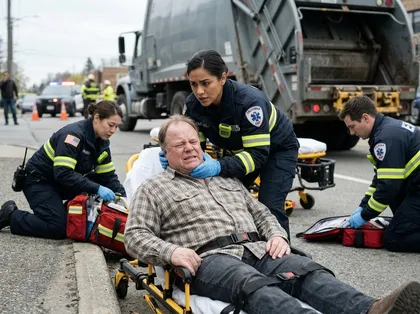
Garbage trucks are heavy commercial vehicles that can cause serious injuries in a collision. Depending on the circumstances, these crashes may result in spinal fractures, traumatic brain injuries, broken pelvises, or crush injuries.
What can make these crashes legally distinct from an ordinary car collision is the possibility of multiple parties with different responsibilities. A single collection route may involve a city contract, a privately licensed franchise hauler, a wholly owned subsidiary that operates the vehicles, and a staffing agency that supplies drivers. None of them necessarily share a name with the logo on the door.
Table of Contents

What Can a Lawyer Investigate If I Was Injured by a Garbage Truck and I Don’t Know Whether It Belongs to a Private Company or a City?
A lawyer can investigate whether a garbage truck belonged to a private company, a public agency, or another party. The investigation focuses on who drove, owned, and operated the truck and whether a city service contract was involved.
Key Facts About Identifying Who Is Responsible for a Garbage Truck Accident
- Driver and Employer: Police reports and employment records can help identify the driver and their employer.
- Truck Ownership: Vehicle registration can help identify the registered owner, while DOT records and city contracts may help identify the operator and potential contractors.
- Employer Liability: Employers may be responsible for accidents caused by employees acting within the scope of their employment.
- Digital Evidence: Camera footage, GPS data, and dispatch records can help establish the truck’s operations and may need prompt preservation.
- Filing Deadlines: Private personal injury lawsuits generally have a two-year deadline, while claims against public entities typically require written claim presentation within six months.
Records a Lawyer Can Check to Identify the Garbage Truck’s Owner or Operator
Truck accident lawyers can start by examining four types of records to identify the people and organizations connected to the truck. Each source provides different information, and no single record necessarily establishes liability.
Police Accident Report
The California Highway Patrol (CHP) investigates many crashes on state highways and in unincorporated areas. Local police departments or sheriff’s offices may investigate crashes in other locations. A collision report may identify the driver, vehicle, registered owner, and insurance information. It can also include witness statements and the investigating officer’s findings. An attorney can request the report to help identify the parties involved in the crash.
Vehicle Registration and VIN
A garbage truck’s vehicle identification number (VIN) and registration records can help identify its registered owner. The owner may be a waste collection company, leasing business, or another entity. An attorney can use available registration information or appropriate legal procedures to investigate ownership. However, the registered owner may not be the company operating the truck or employing its driver.
FMCSA SAFER Database: DOT Number
A lawyer can search the Federal Motor Carrier Safety Administration’s (FMCSA) SAFER database using a company’s name or USDOT number. The database may provide the carrier’s legal name, business address, and safety information. California commercial carriers may also have state identification records for motor carriers. These records can help identify a potential operator, but they do not necessarily establish who owned the truck or employed the driver.
Municipal Franchise Contract
A city may provide garbage collection services directly or hire a private company to perform them. An attorney can review municipal franchise agreements and service contracts to identify the companies involved. These contracts may be available through a California Public Records Act request. They can help establish which company was authorized to provide collection services and what responsibilities it agreed to undertake. However, a contract does not automatically establish liability. A city is not responsible for a collision simply because the truck was collecting public trash.
How Can a Lawyer Identify Who Owned or Operated the Garbage Truck?
A garbage truck may be owned, operated, or managed by different companies or public agencies. A lawyer can review the available records to identify each party’s role and investigate who may be responsible for the collision.
| What Is Known | Who May Be Involved | Records to Check | Questions to Answer |
|---|---|---|---|
| Someone was driving the truck. | Truck driver | Police report, driver information, witness statements. | Who was driving? Were they working at the time? |
| The truck has a license plate or vehicle identification number (VIN). | Truck owner | Vehicle registration and DMV records. | Who owns the truck? Is the owner also the operator? |
| The truck was being used for waste collection. | Truck operator | Company markings, route assignments, dispatch and fleet records. | Who managed the truck and its daily operations? |
| The driver may work for a company or public agency. | Driver’s employer | Employment records, work schedules, payroll records. | Who employed the driver? Were they performing job duties during the collision? |
| Waste collection may be handled by a private contractor. | Waste collection company | City service agreements, contracts, and collection schedules. | Was a contractor involved? Did it operate this particular truck? |
| A city or public agency may provide or arrange waste collection. | City or public agency | Public contracts, fleet records, and agency reports. | Did the agency own, operate, or control the truck? |
These roles may overlap. For example, the same company might own the truck, employ the driver, and manage the collection route. Identifying each party does not automatically establish liability. A lawyer must also investigate how the collision occurred and whether anyone’s actions contributed to it.
How Employer Liability Works in California Garbage Truck Cases
In California, an employer may be legally responsible when a garbage truck driver causes an accident while performing job duties. This rule, known as respondeat superior, generally applies when the driver is an employee acting within the scope of employment.
Vehicle ownership may also create liability. Under California Vehicle Code (CVC) § 17150, a vehicle owner may be responsible for injuries caused by someone driving with the owner’s permission, even if the driver works for another company. However, statutory limits may apply under § 17151.
A garbage truck driver may work directly for a waste collection company or another business. If the employment relationship is unclear, an attorney can review payroll records, work schedules, dispatch logs, and employment agreements. These records help determine who controlled the driver’s work and whether an employer may be responsible.
A garbage truck crash may involve several responsible parties. In cases involving multiple parties in truck accidents, attorneys examine the driver’s actions, employment relationship, vehicle ownership, and maintenance responsibilities to determine who may be liable.
What Evidence a Lawyer Uses to Prove Who Is Responsible
A lawyer can use company records, electronic data, and witness accounts to investigate who operated the garbage truck and how the collision occurred. Some records may be held by the truck operator, a public agency, or another company, making prompt preservation requests important.
Records That Can Help Establish Responsibility
- Dash Camera and Exterior Camera Footage: These recordings may be overwritten within days, depending on the operator’s retention policies. An attorney can promptly request that relevant footage be preserved.
- GPS and Telematics Data: These records may show the truck’s route, speed, and location around the time of the crash. Retention periods vary depending on the fleet management system.
- Electronic Logging Device (ELD) Records: When required, ELDs track driving time and duty status. Federal rules generally require six months of record retention. However, some local garbage truck drivers qualify for exceptions and may not use ELDs.
- Maintenance Records: Brake inspections, equipment repairs, and service logs can help identify mechanical problems and determine who maintained the truck.
- Driver Drug and Alcohol Test Records: Federal post-accident testing requirements apply to certain commercial drivers under specific crash conditions. An attorney may request relevant records from any testing conducted after the crash.
- Dispatch and Route Logs: These records can show the driver’s assigned route, work schedule, and whether the driver was performing job duties at the time of the crash.
- Witness Statements and Surveillance Footage: Witness accounts and recordings from nearby businesses, traffic cameras, or residences may help establish how the collision happened.
How an Evidence Preservation Letter Helps Protect Your Claim
An evidence preservation letter, sometimes called a spoliation letter, asks a company or public agency to preserve relevant crash records before they are lost or overwritten. The letter creates a written record of the request. If a party intentionally conceals or destroys relevant evidence, a court may allow the jury to consider whether that evidence would have been unfavorable to that party.
You can also document the truck accident scene yourself. Photos of the license plate, company markings, vehicle damage, and surrounding area can help an attorney investigate the crash, even before additional records become available.
Why Identifying the Truck Owner Quickly Matters for Your Claim Deadline
Identifying who may be responsible for a garbage truck accident helps determine which legal deadlines apply. A crash may involve a private waste company, a public entity, or both. Different claims may have different filing requirements.
California’s general deadlines include:
| Type of Claim | Deadline | Legal Requirement |
|---|---|---|
| Personal Injury Claim Against a Private Party | 2 years | File a lawsuit, generally within two years of the injury (CCP § 335.1). |
| Government Entity Claim | 6 months | Present a written claim to the appropriate public entity, generally within six months after the claim arises (Gov. Code § 911.2). |
A government claim is not the same as a lawsuit. For city and county claims, Government Code (GOV) § 915 establishes where and how to present the claim. Claims against the State of California generally go through the Department of General Services (DGS).
After presenting a government claim, the following rules generally apply:
- Written Rejection: You generally have six months from the mailing or personal delivery of a legally compliant rejection notice to file a lawsuit (Gov. Code § 945.6(a)(1)).
- No Response Within 45 Days: The claim is generally considered rejected. However, this action does not automatically start the six-month lawsuit deadline (Gov. Code § 912.4).
- No Compliant Written Rejection: You generally have two years from when the legal claim arose to file a lawsuit (Gov. Code § 945.6(a)(2)).
Missing the six-month government claim deadline may prevent you from pursuing compensation against a public entity. However, limited relief may be available. Under Government Code § 911.4, you may apply for permission to present a late claim. The application generally must be submitted within a reasonable time, no later than one year after the claim arose. If the public entity denies the application or it is deemed denied, you generally have six months from the denial date to petition the court for relief (Gov. Code § 946.6). Approval is not guaranteed.
For many private personal injury claims, the filing deadline may be paused while the injured person is a minor. Government claims and certain specialized cases follow different rules.
What to Do After a Garbage Truck Crash in California
After a garbage truck crash in California, seek medical care, document the scene, and be cautious when speaking with insurance adjusters. These steps can help protect your health and preserve evidence for a potential injury claim.
- Get Medical Care Promptly: See a doctor even if your injuries seem minor. Some injuries, including concussions and internal bleeding, may not cause immediate symptoms. Medical records can also help document the connection between your injuries and the crash.
- Photograph the Accident Scene: If it is safe to do so, take pictures of the truck’s license plate, company markings, visible VIN, vehicle damage, road conditions, and your injuries. These details may help identify the truck’s owner or operator.
- Be Careful When Speaking With Insurance Adjusters: Avoid speculating about fault, minimizing your injuries, or accepting an early settlement without understanding your losses. California follows a pure comparative negligence rule, which means your share of fault can reduce your compensation. A truck accident attorney can help you understand your options before providing a recorded statement.
If you were injured in a collision with a garbage truck, you do not need to know who owns or operates it before seeking legal guidance. Our truck accident lawyers can review your injuries, available vehicle information, and accident records to investigate which parties may be responsible.
Call (888) 488-1391 for a free case evaluation. Our attorneys can assess your situation and explain which legal options and filing deadlines may apply.
Frequently Asked Questions About Garbage Truck Accident Liability in California
Do Garbage Trucks Have Cameras?
Some garbage trucks have dash cameras, exterior cameras, or GPS tracking systems. These devices may record information about the collision. However, their availability and retention periods vary by operator. A lawyer can investigate whether relevant footage or electronic records exist and request that they be preserved.
Can I Sue the City If I Was Hit by a Government Garbage Truck?
Yes, you may sue the city if its negligence, or that of an employee acting within the scope of employment, caused the crash. California’s Government Claims Act generally requires you to present a written claim to the appropriate public entity within six months after the claim arises (Gov. Code § 911.2).
What If a Private Company Runs the Trash Pickup in My City?
If a private contractor operated the truck, your claim may be against that company and other parties whose conduct or legal responsibilities contributed to the crash. A parent company or municipality is not automatically liable because of its relationship with the contractor. The contractor’s liability insurance may provide coverage, depending on the policy terms. A lawyer can investigate the contractor’s role and determine whether private-party or government claim procedures apply.
Who Can Be Held Liable in a California Garbage Truck Accident?
More than one party may be liable, including the truck driver, the waste hauler, the company’s parent entity, a third-party maintenance contractor, or, if the truck was government-operated, the city or county. Liability turns on who employed the driver, what the franchise contract said about responsibility, and whether a mechanical defect contributed to the crash. A lawyer examines these relationships to determine who may be responsible.
What Happens If a Mechanical Failure Caused the Garbage Truck Crash?
A mechanical failure may create additional liability if negligent maintenance or a defective part contributed to the crash. Depending on the evidence, the company responsible for servicing the truck, the manufacturer of a defective component, or another party may be liable.
Maintenance records can help identify who inspected or repaired the equipment and whether a mechanical problem contributed to the crash. These records may be held by the truck owner, operator, or maintenance contractor. An attorney can request their preservation and, when legally permissible, seek them through discovery, including by subpoena.
Do I Need to Identify the Company Before Contacting a Lawyer?
No. You do not need to identify the garbage truck’s owner or operator before contacting a lawyer. An attorney can review vehicle records, employment information, and service contracts to investigate potentially responsible parties. If a public entity may be liable, the attorney can also assess whether the six-month government claim deadline applies.
What If the Injured Person Is a Minor?
If the injured person is a minor, the deadline for filing a personal injury lawsuit may be extended. California generally pauses the filing period for many private injury claims until the person turns 18. However, government-entity claims, medical malpractice claims, and other specialized cases follow different timing rules, so the applicable deadline should be reviewed with an attorney.
Talk to Arash Law About Your California Garbage Truck Accident
If you or someone you love was injured in a garbage truck accident in California, Arash Law can review your injuries and available accident information. Our attorneys can investigate potentially responsible parties, evaluate applicable insurance coverage, and explain your legal options.
We handle every case on a contingency fee basis. You pay no attorney fees unless we recover money for you. Call (888) 488-1391 for a free case evaluation.
Sources
- California Code of Civil Procedure § 335.1: Two-year statute of limitations for most personal injury lawsuits. https://leginfo.legislature.ca.gov/faces/codes_displaySection.xhtml?sectionNum=335.1.&lawCode=CCP
- California Government Code § 911.2: Six-month claim presentation deadline for many personal injury claims against public entities. https://leginfo.legislature.ca.gov/faces/codes_displaySection.xhtml?sectionNum=911.2.&lawCode=GOV
- California Government Code § 915: Procedures for presenting claims to the appropriate public entity. https://leginfo.legislature.ca.gov/faces/codes_displaySection.xhtml?sectionNum=915.&lawCode=GOV
- California Government Code § 912.4: Time limits for government entities to act on claims and deemed rejection. https://leginfo.legislature.ca.gov/faces/codes_displaySection.xhtml?sectionNum=912.4.&lawCode=GOV
- California Government Code § 945.6: Deadlines for filing lawsuits after government claims rejection, including written and deemed rejections. https://leginfo.legislature.ca.gov/faces/codes_displaySection.xhtml?sectionNum=945.6.&lawCode=GOV
- California Government Code § 911.4: Application requirements and time limits for presenting a late government claim. https://leginfo.legislature.ca.gov/faces/codes_displaySection.xhtml?sectionNum=911.4.&lawCode=GOV
- California Government Code § 946.6: Court petitions for relief after denial of a late government claim application. https://leginfo.legislature.ca.gov/faces/codes_displaySection.xhtml?sectionNum=946.6.&lawCode=GOV
- California Government Code § 7920.000 et seq.: California Public Records Act, which allows requests for public records, including municipal waste collection contracts. https://leginfo.legislature.ca.gov/faces/codes_displaySection.xhtml?sectionNum=7920.000.&lawCode=GOV
- California Vehicle Code § 17150 — Vehicle owner liability for permissive drivers. https://leginfo.legislature.ca.gov/faces/codes_displaySection.xhtml?sectionNum=17150.&lawCode=VEH
- California Vehicle Code § 17151 — Statutory limits on certain vehicle owner liability. https://leginfo.legislature.ca.gov/faces/codes_displaySection.xhtml?sectionNum=17151.&lawCode=VEH
- California Judicial Council, CACI No. 3704: Factors used to determine employee status when an employment relationship is disputed. https://www.justia.com/trials-litigation/docs/caci/3700/3704/
- California Judicial Council, CACI No. 204: Jury instructions concerning intentional concealment or destruction of evidence. https://www.justia.com/trials-litigation/docs/caci/200/204/
- Federal Motor Carrier Safety Administration (FMCSA), SAFER System: Company Snapshot database for checking motor carrier registration, identification, and safety information. https://safer.fmcsa.dot.gov/companysnapshot.aspx
- Federal Motor Carrier Safety Administration (FMCSA), General Information About the ELD Rule: Electronic logging device requirements, exceptions, and retention obligations. https://www.fmcsa.dot.gov/hours-service/elds/general-information-about-eld-rule
- 49 C.F.R. § 395.8: Federal hours-of-service records and record retention requirements. https://www.ecfr.gov/current/title-49/section-395.8
- 49 C.F.R. § 382.303: Federal post-accident drug and alcohol testing requirements for covered commercial drivers. https://www.ecfr.gov/current/title-49/section-382.303
- National Safety Council (NSC), Injury Facts — Large Trucks: National fatal crash involvement statistics for large trucks, including 2024 data. https://injuryfacts.nsc.org/motor-vehicle/road-users/large-trucks/
- California Highway Patrol (CHP): California traffic collision investigations and collision reporting information. https://www.chp.ca.gov/
Disclaimer
Past results do not guarantee future outcomes. Every case is different. The information on this page is for general educational purposes and does not constitute legal advice. Reading or relying on this content does not create an attorney-client relationship. If you were injured, consult a licensed California personal injury attorney about your specific situation.