TL;DR: Yes, you can start an injury consultation before identifying the responsible agency or contractor. Bring the location, dates, photographs, notices, contacts, and records you have. A lawyer can review possible next steps and applicable deadlines while responsibility remains uncertain. A consultation does not stop deadlines or guarantee representation.
You can consult an injury lawyer before knowing which agency or contractor may be responsible. You do not need to identify everyone involved before seeking legal advice. A lawyer can help investigate who owned, controlled, maintained, or worked in the area.
Bring the incident location, date, photographs, project notices, incident contacts, and available records. These details can help your lawyer identify what happened and which records may need review.
Ask about deadlines even if you do not know who was responsible. Missing names or records do not automatically extend deadlines, and a consultation does not pause them.
Key Facts About Consulting Before Identifying Responsible Parties
- You can consult a lawyer before identifying responsible parties. You do not need a complete list of potentially liable parties to request an initial legal consultation.
- A company name does not prove responsibility. Signs, permits, and logos can help identify organizations that worked nearby, but their presence does not establish liability.
- Different organizations may have different duties. Property ownership, site control, maintenance, and construction work involve separate responsibilities.
- Public work does not always mean government liability. A public agency, private property owner, or contractor may have had different responsibilities at the location.
- Some government claims have shorter deadlines. California Government Code §911.2 generally requires covered public-entity personal injury claims to be presented within six months after the claim accrues.
- A consultation does not stop deadlines. Confirm whether an attorney has accepted your case and agreed to handle any required filings.
Table of Contents

I Was Injured Near Public Work and Do Not Know Which Agency or Contractor Controlled the Area. Can I Start a Legal Consultation Before I Identify the Correct Parties?
Yes. You can consult an injury lawyer even if you do not know who owned, controlled, or maintained the area. A lawyer can review the known facts and help determine which organizations and records may require investigation.
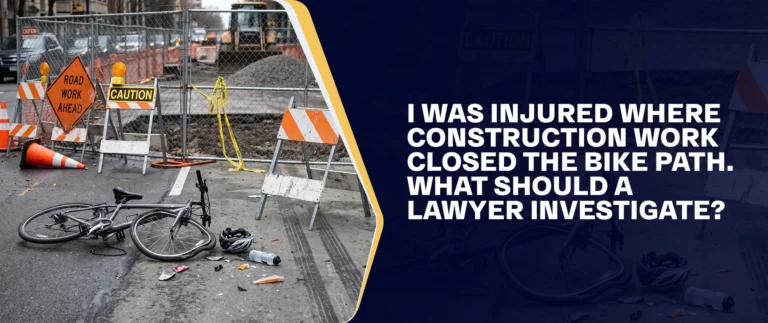
For example, you may have suffered an injury involving electrical wires at a public construction site without knowing who installed the wiring, maintained the equipment, or controlled access to the area.
Depending on the circumstances, the incident may raise questions involving premises liability, government liability, or negligence by a private contractor. The location alone does not establish which legal theory applies.
Start by sharing these details:
- Incident Details: Explain where the injury happened, what you were doing, and what caused your injury.
- Signs and Equipment: Describe any construction signs, exposed electrical wires, barriers, or equipment you noticed. A company name may help identify who worked nearby, but it does not prove responsibility.
- People You Spoke With: Tell the lawyer whether anyone explained who handled the work. Their answers may help identify relevant project records.
- Reason for Being There: Explain whether you were passing through, visiting the property, or working when the injury occurred.
- Work-Related Injuries: If you were working, ask about workers’ compensation benefits and possible claims involving parties other than your employer.
You do not need to determine whether the case involves a public agency or a private contractor before requesting a consultation. That distinction can be part of the legal review.
What Should I Bring If I Do Not Know the Responsible Parties?
Bring whatever information you have about the incident. You can explain which documents are missing instead of waiting until you have a complete file. California courts identify photographs, medical records, and witness information as evidence that may support an injury claim.
The following details can help your lawyer understand what happened:
- Location Details: Provide the address, nearest intersection, entrance, sidewalk, or landmark. Try to identify the exact spot where you were injured.
- Dates and Times: Share when the incident happened. Explain if you remember only an approximate time or date.
- Photos or Video: Bring photos or videos of the area, equipment, barriers, warning signs, and visible company names. Keep the original files if possible.
- Project Notices: Include project signs, permit numbers, posted contractor names, or letters about nearby work.
- Incident Contacts: List witnesses, site workers, or anyone who received your report. Include names, phone numbers, and report numbers when available.
- Available Records: Bring medical documents, incident reports, emails, agency letters, claim forms, and delivery confirmations.
If you were injured while working, bring any employer incident reports and workers’ compensation paperwork. A lawyer can review these records and assess possible claims involving other parties.
Tell your lawyer which details you observed yourself and which came from others. You do not need contracts, property records, or inspection logs before requesting a consultation. Your lawyer can explain which additional documents may be useful.
How Can a Lawyer Find Out Who Was Responsible for the Area?
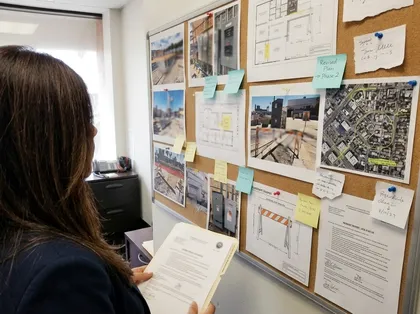
A lawyer can review property records, contracts, permits, and maintenance logs to determine who had responsibilities at the location of the injury. Different records may point to different organizations.
The investigation may focus on these areas:
- Property Ownership: Property records may identify who owned the land or building where the injury happened.
- Site Control: Contracts and site records may show who managed access, barriers, equipment, and work areas.
- Maintenance: Inspection logs and repair records may identify who performed maintenance or inspections.
- Contractor Work: Permits, contracts, and work orders may identify which companies performed particular tasks near the injury location.
One company may handle several tasks, or different organizations may share responsibility for particular aspects of the work. Ownership alone does not establish who controlled the hazard.
For an electrical injury, the review might include who installed, repaired, maintained, or controlled the electrical source. Electrical injury attorneys can examine these records and assess whether they support a personal injury claim.
Public Involvement Does Not Automatically Establish Government Liability
An injury near public works does not automatically make a government agency responsible. Government Code §835 addresses liability for dangerous conditions of public property.
A claim under that provision generally requires proof that a dangerous condition of the public entity’s property caused the injury and created a reasonably foreseeable risk of that type of harm.
The claim must also establish that either:
- A public employee’s negligent or wrongful act or omission within the scope of employment created the dangerous condition.
- The public entity had actual or constructive notice of the condition and sufficient time to take protective measures.
A separate investigation may be necessary to determine whether a private contractor or a property owner was responsible.
For example, the presence of electrical wires at a public construction site does not automatically establish that a government agency installed, maintained, or controlled them. The relevant contracts, work records, and evidence of site control matter.
A Guide to Organizing Information for Your First Consultation
Use this table to organize known actors, possible roles, document sources, unanswered questions, and dates requiring legal review. It is a starting point for discussion, not a determination of responsibility.
| Name or Organization (If Known) |
Possible Role | Records to Check | Questions to Ask | Important Dates |
|---|---|---|---|---|
| Property owner | May have owned the property. | Property records and deeds. | Who owned the precise injury location? | Incident and ownership dates. |
| Site operator | May have controlled access and safety conditions. | Contracts, site plans, and project notices. | Who controlled the area when the injury happened? | Incident and contract dates. |
| Maintenance company | May have inspected or repaired the area. | Inspection logs, repair records, and work orders. | Who handled the unsafe condition? | Inspection, repair, and incident dates. |
| Company named on a sign or document | May have performed construction or electrical work. | Permits, contracts, and contractor license records. | What work did this company actually perform? | Work, permit, and incident dates. |
| The person you contacted | May have witnessed or received a report. | Reports, emails, or notes. | What did this person see or record? | Incident and reporting dates. |
| Government agency | May have owned, controlled, or overseen part of the area. | Agency correspondence, property records, and project documents. | Did the agency have a legally relevant responsibility? | Incident, agency contact, and any claim dates. |
Leave an actor unidentified if you do not know who it is. Do not assign responsibility to an agency solely because the injury happened on a public road, near government work, or beside equipment bearing a particular logo.
You do not need to complete the table before consulting a lawyer. Bring the information you have and identify any missing details.
Request a Review With the Information You Have. Call Arash Law at (888) 488-1391 for a free initial consultation. Share the known facts, relevant dates, and any agency correspondence so the circumstances and potential timing requirements can be reviewed.
Should I Wait for Records Before Asking About Deadlines?
No. Ask about deadlines while gathering records and identifying who was involved. Waiting for an agency response or a contractor’s name does not automatically give you more time.
There is no single filing deadline that applies to every injury near public work. The relevant requirements depend on the type of claim, the responsible parties, and other facts.
Government Claims May Require Earlier Action
California Government Code §911.2 generally requires covered public-entity personal injury claims to be presented within six months after the claim accrues. This requirement does not apply automatically to every injury near public construction.
For covered claims, presenting a government claim is generally a separate step before suing the public entity. Having government-claim paperwork does not mean you have filed a lawsuit.
California also has other filing periods that may apply depending on the circumstances:
- Personal Injury Claims: Code of Civil Procedure §335.1 generally provides a two-year statute of limitations for filing a lawsuit.
- Property Damage Claims: Code of Civil Procedure §338 generally provides a three-year statute of limitations for property damage claims.
- Covered Government Claims: Government Code §911.2 generally requires earlier claim presentation for covered personal injury and certain property damage claims.
These periods are not interchangeable. Exceptions, accrual rules, claim-presentation requirements, and other procedures may affect the applicable dates.
Missing a governing filing or government claim-presentation deadline may bar the affected claim. A lawyer should review the circumstances rather than assume that one deadline applies to every potential party.
Evidence also requires timely attention. Construction conditions can change, footage may be overwritten, and project records may become harder to obtain. These evidence-preservation concerns affect the strength of proof, even when a legal filing deadline has not expired.
An Agency Investigation Does Not Automatically Extend Deadlines
An agency’s investigation does not mean it accepts responsibility or extends your deadlines. Caltrans explains that undertaking a claim investigation does not constitute an admission of liability or waive legal requirements and defenses.
Ask a lawyer to review correspondence while the investigation remains open. Do not assume that ongoing discussions protect your ability to pursue a claim.
Likewise, an initial consultation does not suspend a filing period. Prompt, individualized review is important even when the responsible organizations remain unidentified.
What Should I Confirm After the Initial Consultation?
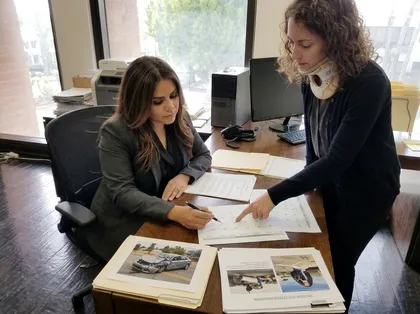
Confirm whether the law firm has agreed to take your case. Speaking with an attorney does not automatically create an ongoing attorney-client relationship or mean the firm will handle filings.
Before relying on the firm to act, ask who will handle these tasks:
- Deadline Review: Identify which filing periods apply to your situation.
- Investigation: Check which agencies, companies, or property owners may have been involved.
- Records Requests: Determine who will request contracts, permits, ownership records, or other documents.
- Required Filings: Confirm who will prepare and submit any necessary claims or court paperwork.
- Communication: Find out how to send new documents, agency letters, or updates.
If the firm has not accepted representation, ask what actions remain your responsibility. Do not assume that discussing a deadline means someone has agreed to handle it.
Frequently Asked Questions About Consulting a Lawyer When Responsible Parties Are Unknown
Can I Consult a Lawyer Without a Police or Incident Report?
Yes. You can speak with a lawyer even if you do not have a completed police or incident report.
Explain whether you reported the injury, whom you contacted, and whether you received a report number. Other records and witness details may help with the initial review.
Can Public Records Help Identify Who Worked at the Site?
Yes. Public records may identify contractors, permits, inspections, and project assignments. You can request available records from the agency that maintains them.
However, disclosure rules may limit what you receive. Agencies generally do not have to create records or conduct research to answer your questions.
Does a Contractor License Search Prove Who Caused My Injury?
No. A contractor license search can help verify a company’s licensing information, but it does not prove who caused the injury.
The Contractors State License Board allows searches using identifying information such as a business name or license number. A lawyer can compare the results with project records to assess the company’s involvement.
What If an Agency Says Another Organization Was Responsible?
Share the agency’s response with your lawyer. It may help identify another company or organization involved in the work.
However, the response does not establish responsibility or automatically extend your deadlines. Your lawyer can review the statement alongside other records.
Does an Injury Near Public Construction Always Require a Government Claim?
No. An injury near public construction does not automatically trigger a government claim requirement.
The applicable process depends on the legal claim and the parties involved. A private contractor may be involved, a public entity may have a relevant role, or both may require investigation.
Must I Decide to Sue Before Requesting a Consultation?
No. You can consult a lawyer before deciding whether to pursue a personal injury claim.
The discussion can help you understand your options, the evidence you may need, and the applicable timing requirements. You can then decide how to proceed.
Discuss Your Injury Before Every Responsible Party Is Known
You do not need the names of every agency or contractor before seeking legal advice. Bring your available records and questions to the consultation.
Call Arash Law at (888) 488-1391 for a free initial consultation. The discussion can address the known circumstances, possible next steps, and applicable deadlines. It does not guarantee that every responsible party will be identified or that the firm will accept representation.
Sources
- California Courts — Personal Injury Cases: Unclear responsibility, potential defendants, and supporting evidence.
https://selfhelp.courts.ca.gov/civil-lawsuit/personal-injury- Code of Civil Procedure §335.1: General two-year personal injury lawsuit deadline.
https://leginfo.legislature.ca.gov/faces/codes_displaySection.xhtml?lawCode=CCP§ionNum=335.1.- Government Code §830(c): Definition of public property through public-entity ownership or control.
https://leginfo.legislature.ca.gov/faces/codes_displaySection.xhtml?lawCode=GOV§ionNum=830.- Government Code §835: Requirements for dangerous-public-property liability.
https://leginfo.legislature.ca.gov/faces/codes_displaySection.xhtml?lawCode=GOV§ionNum=835.- Government Code §945.4: Claim presentation before covered public-entity lawsuits.
https://leginfo.legislature.ca.gov/faces/codes_displaySection.xhtml?lawCode=GOV§ionNum=945.4- Government Code §911.2: Presentation deadlines for covered government claims.
https://leginfo.legislature.ca.gov/faces/codes_displaySection.xhtml?lawCode=GOV§ionNum=911.2- Government Code §915: Authorized recipients and methods for presenting government claims.
https://leginfo.legislature.ca.gov/faces/codes_displaySection.xhtml?lawCode=GOV§ionNum=915.- Judicial Council of California — CACI Nos. 1100 and 1101: Dangerous-public-property claim elements and control.
https://courts.ca.gov/system/files/file/judicial_council_of_california_civil_jury_instructions_2025.pdf- California Courts — Deadlines to Sue Someone: Filing periods vary by claim and potential defendant.
https://selfhelp.courts.ca.gov/civil-lawsuit/statute-limitations- Caltrans — Submit Damage Claim: Investigations do not admit liability or waive legal requirements.
https://dot.ca.gov/online-services/submit-damage-claim- California Secretary of State — Public Records FAQs: Existing records, request scope, and disclosure limitations.
https://www.sos.ca.gov/administration/public-records-act-requests/public-records-act-frequently-asked-questions- Contractors State License Board — Check a License: Searches by business name, personnel name, or license number.
https://www.cslb.ca.gov/onlineservices/checklicenseII/checklicense.aspx- Arash Law — Electrical Injury Attorneys: Electrical injury representation and free initial consultations.
https://arashlaw.com/practice-areas/electrical-injury-attorneys/Disclaimer
This content provides general educational information and does not create an attorney-client relationship. Consult a licensed California attorney about your circumstances and deadlines. Past results do not guarantee future outcomes. Arash Law (888) 488-1391.