TL;DR: You can hire an injury lawyer even if you did not leave the accident scene in an ambulance. Explain why you used a private car, what responders did, and any care you received afterward. Your transportation choice does not establish injury severity or determine your right to compensation.
Yes, you can still hire an injury lawyer if an ambulance arrived after your accident, but you left in your own car. California law does not require ambulance transportation before you can pursue a personal injury claim.
You may have left because you felt frightened or preferred another way to travel. That decision does not automatically prevent you from seeking compensation.
A lawyer can review what responders did, what happened afterward, and any available evidence of your injuries and losses.
Key Facts About Hiring an Injury Lawyer Without Ambulance Transport
- Ambulance transportation is not required to pursue California injury claims. A personal injury claim requires evidence of liability and resulting harm. Ambulance transportation is not required.
- An ambulance’s arrival does not prove that an examination occurred. Emergency medical services (EMS) attendance, patient assessment, treatment, and transportation are distinct events. Available EMS records may clarify which occurred.
- Leaving in your own car cannot establish injury severity alone. Medical professionals evaluate injuries based on clinical findings. The CDC confirms that some concussion symptoms may appear hours or days later.
- Medical and incident records can help clarify the accident timeline. California Health and Safety Code § 123110 generally allows patients to obtain medical records. EMS records and witness accounts may provide additional evidence.
- Treatment delays do not automatically reduce compensation after an accident. Under CACI No. 3930, defendants must prove that reasonable efforts could have prevented additional harm. A transportation decision alone does not meet that burden.
Table of Contents

An Ambulance Came After the Accident, but We Left in Our Own Car. Can I Still Speak With an Injury Lawyer, and What Should I Explain About What Happened Next?
Yes. You can speak with an injury lawyer even if an ambulance arrived, but you or your family chose to leave in a private vehicle. You do not need an ambulance report, confirmed diagnosis, or complete medical records before requesting a consultation.
Explain the sequence of events as accurately as possible, including:
- Ambulance Arrival: When responders arrived and what you remember about their involvement.
- Examination or Treatment: Whether responders examined the injured person, provided treatment, or offered care that was declined.
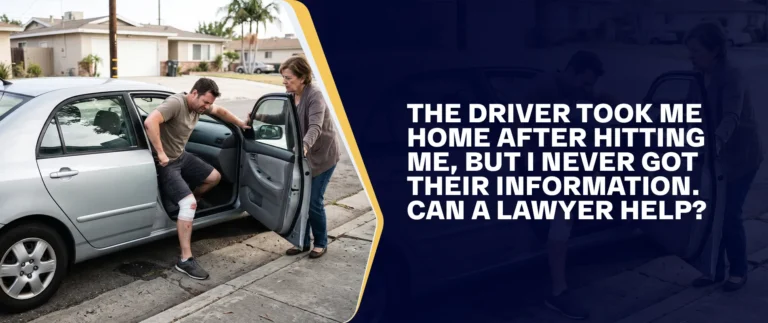
- Reason for Leaving: Why you used a private vehicle. For example, a family may have driven an injured pedestrian home or to a hospital because the person was frightened.
- Destination and Subsequent Care: Where you went after leaving and whether the injured person later received a professional medical evaluation.
- Medical Diagnosis: Whether a medical professional later diagnosed a condition such as shock. Feeling frightened does not necessarily mean someone experienced medical shock.
- Unknown Details: Any conversations, examinations, or other events you cannot confidently remember.
Declining ambulance transportation is not necessarily the same as refusing an examination, a specific treatment, or all medical care. Explain what actually happened without making assumptions.
Your lawyer can compare your account with available records and identify information that still needs confirmation.
What Does It Mean When an Ambulance Arrives but Does Not Transport You?
An ambulance’s arrival does not necessarily mean someone received medical treatment. Emergency medical services (EMS) attendance, examination, treatment, and transportation are separate events.
Responders may examine someone who later declines transport. In other situations, they may speak with the person without conducting a full medical assessment.
An ambulance may also arrive without providing direct care to every person involved. EMS records, if available, can help clarify what occurred.
Explaining Your Interaction With Paramedics
If paramedics examined you, tell your lawyer what they checked and what they said. Their assessment may document your condition at that moment, but it does not establish that you had no injuries.
If you left without an examination, explain any contact you had with responders. Avoid describing the incident as a refusal of all medical care unless that accurately reflects what happened.
For example, someone may have accepted an examination but declined transport. Another person may have refused both assessment and transportation. Explain which situation applies rather than treating every decision to decline transport as a refusal of all medical care.
You may also have signed a refusal-of-transport form. Such a document generally records your decision regarding transportation rather than releasing the person responsible for the accident from liability.
However, the wording is important. Keep a copy and show it to your lawyer. A medical transport refusal differs from an insurance settlement or liability release.
What Should You Do After Leaving the Accident in Your Own Car?
After leaving the scene, focus on your health, reporting responsibilities, and available evidence.
- Address medical concerns. Seek appropriate care if symptoms develop or you have concerns about your condition. Follow medical advice based on your health needs.
- Report the accident when required. Notify your insurer in accordance with your policy. If you were an involved driver, check your legal reporting obligations.
- Request available records. Contact the responding EMS provider about patient care reports and any refusal form. Obtain police reports if officers responded.
- Preserve accident evidence. Save photographs, witness contact information, messages, and available video recordings. Document vehicle damage before repairs or disposal.
- Record subsequent events. Note where you went, who accompanied you, and any later professional medical evaluations.
- Consult an injury lawyer. Explain the transportation decision and provide the records you have. Identify details that remain unknown.
Choosing to leave in a private vehicle is different from leaving a collision scene without meeting your legal obligations. Failing to exchange required information is among the common mistakes people make after a vehicular accident. Drivers must still comply with applicable reporting and assistance requirements.
Driver Reporting Requirements
California law imposes separate duties on drivers involved in injury collisions.
Under Vehicle Code §§ 20001 and 20003, drivers involved in a collision generally must stop, provide identifying information, and render reasonable assistance.
These obligations depend on the driver’s role and the circumstances. An injured passenger or pedestrian leaving in a family vehicle does not automatically violate these driver requirements.
Under California Vehicle Code § 20008, drivers involved in injury or fatal collisions generally must also make or arrange a written report to the California Highway Patrol or local police within 24 hours. Do not assume that an officer’s attendance automatically satisfies the driver’s reporting obligation; confirm that the required report was made. This requirement is separate from the 10-day SR-1 reporting requirement of the California Department of Motor Vehicles (DMV).
California Vehicle Code § 16000 also requires drivers to report qualifying collisions to the DMV within 10 days.
A report is generally required if someone was injured or killed, or property damage exceeded $1,000. This requirement applies even if police responded.
The California DMV’s accident reporting instructions explain the SR-1 process.
How to Prepare a Scene-to-Care Timeline for Your Lawyer
A scene-to-care timeline helps your lawyer separate personal recollections from documented observations. It also identifies transportation details, later medical care, and information that remains unknown.
Use the following worksheet to organize the events.
| Stage | Your Personal Recollection | Documents or Observations to Verify |
|---|---|---|
| 1. Accident Scene | Record the date, location, and what you personally saw or heard. | Accident reports, photographs, messages, and witness statements. |
| 2. Ambulance Arrival | Note when responders arrived and any conversations you remember. | EMS dispatch records and patient care reports, if available. |
| 3. Examination or Treatment | Describe any checks, care, or instructions you recall receiving. Note separately if you declined examination, specific care, or all care. | EMS assessments, treatment notes, and refusal forms, if any. |
| 4. Private Transportation | Identify the driver, vehicle, departure time, destination, and reason for leaving. | Messages, receipts, and existing travel records. |
| 5. Later Medical Care | Record your symptoms and the dates of any professional medical evaluations. | Medical notes, test results, prescriptions, and discharge instructions. Include any documented diagnosis of shock, if applicable. |
| 6. Unknown Details | List events or conversations you cannot confidently remember. | Leave these details unconfirmed until supporting information becomes available. |
You do not need to complete every row before consulting a lawyer.
For example, your family may remember that an ambulance arrived and that you felt frightened. However, no one may recall whether responders checked your vital signs.
Keep your own recollections separate from observations recorded by responders, witnesses, or medical providers. Identify which records you already have and which you still need to request.
If family members remember events differently, preserve their individual accounts rather than combining them into one version.
Evidence That Can Support Your Timeline
You can gather useful evidence even if you have no ambulance transport record. Depending on the circumstances, available evidence may include:
- EMS and dispatch records. These may document responder observations, patient assessments, treatment, and transportation decisions.
- Police or collision reports. Reports may identify involved parties, witnesses, and accident details.
- Medical records. Later evaluations may document symptoms, examination findings, diagnoses, and treatment recommendations.
- Photographs and videos. Images may show the accident scene, vehicle damage, and surrounding conditions.
- Witness statements. Witnesses may help confirm the sequence of events and what occurred before your departure.
- Travel and communication records. Messages, receipts, and existing location records may help establish your departure time and destination.
- Financial records. Medical bills, wage records, and receipts may document accident-related expenses and lost income.
Dashcam, doorbell, and business surveillance footage may also help establish what happened. Some recordings may be overwritten, and evidence can disappear quickly. Requesting that relevant footage be preserved early may help prevent its loss.
Under California Health and Safety Code § 123110, patients generally can request copies of their medical records.
For collisions involving a pedestrian, pedestrian accident lawyers can review available records and investigate liability.
Arash Law can review what happened, your transportation decision, and available EMS or medical records. Our team can identify unresolved questions and discuss possible legal options.
Call (888) 488-1391 for a free initial consultation about your California personal injury claim.
Can Leaving in Your Own Car Affect Your Injury Claim?
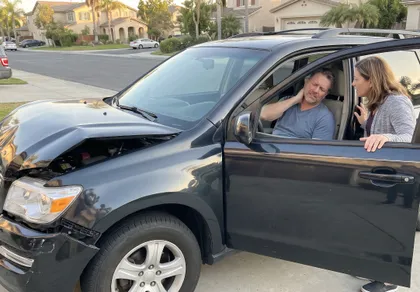
Yes. Your transportation decision may become part of an insurance investigation. However, it does not automatically establish that you were uninjured or reduce your potential compensation.
An insurer may question the period between the accident and your first medical evaluation. For example, it may argue that another event caused symptoms documented several days later.
Your lawyer can examine medical findings, witness statements, and accident evidence to address these questions.
Delayed Medical Care and Avoidable Damages
California law recognizes a principle called mitigation of damages. It concerns taking reasonable steps to limit harm after an injury.
Under CACI No. 3930, a defendant must prove that reasonable efforts could have prevented some additional harm.
The rule considers the injured person’s circumstances, including their ability to obtain care without undue hardship.
Declining ambulance transportation does not automatically establish that someone acted unreasonably. A delayed medical visit also does not prove that an injury worsened because of the delay.
An attorney can assess this issue separately from the evidence connecting an injury to the accident.
Liability and Available Compensation
Your choice of transportation does not establish who caused the accident. A personal injury claim still requires evidence connecting another party’s conduct to your injuries.
Depending on the circumstances, a negligent driver, vehicle owner, or another responsible party may face liability.
If the evidence supports a claim, recoverable damages may include:
- Medical expenses
- Lost earnings
- Future care costs
- Pain and suffering
Available insurance coverage also affects potential recovery. An attorney may review the responsible driver’s liability insurance and any applicable uninsured or underinsured motorist coverage.
The vehicle you used to leave the scene does not determine your claim’s value.
When Should You Seek Medical Care After Leaving the Scene?
Seek appropriate medical advice if you develop symptoms after an accident or have concerns about your condition. Medical decisions should reflect your health needs and professional guidance. You do not need unnecessary treatment solely to create evidence for an injury claim.
According to the CDC’s concussion guidance, some symptoms of mild traumatic brain injuries may appear hours or days later. The CDC identifies worsening headaches, repeated vomiting, seizures, unusual confusion, and weakness as potential emergency warning signs after a head injury.
Call 911 or seek emergency care if these warning signs occur.
MedlinePlus also identifies medical shock as a potentially life-threatening emergency involving inadequate blood flow and oxygen delivery to tissues. A person’s fear or decision to decline ambulance transportation does not, by itself, establish a diagnosis of medical shock. Suspected medical shock requires emergency medical attention.
If you receive medical care, explain the accident and when your symptoms began. Give your provider accurate information without making assumptions about a diagnosis.
Paying for Medical Care After the Accident
Available payment options depend on your insurance policies and medical provider. Health insurance may cover eligible treatment, subject to plan requirements. Medical payments coverage under an applicable auto policy may also cover qualifying expenses regardless of fault.
Some providers may offer treatment under a medical lien, depending on the circumstances. A lien may require repayment from a future settlement or recovery.
Health insurers and other payers may also have reimbursement rights.
An attorney can help identify possible insurance and payment issues. Treatment decisions should remain based on your medical needs.
How Long Do You Have to File an Injury Claim in California?
Leaving an accident scene in a private car rather than an ambulance does not alter California’s filing deadlines. What matters is the type of claim, who may be responsible, and whether any exceptions apply.
The main deadlines to know are:
- Two Years for Personal Injuries: Under California Code of Civil Procedure § 335.1, most personal injury lawsuits must be filed within two years of the injury.
- Three Years for Property Damage: Under Code of Civil Procedure § 338, claims involving damage to personal property, such as a vehicle, generally have a three-year filing deadline.
- Six Months for Government Claims: Under Government Code § 911.2, injury claims against public entities generally must be presented within six months of the incident.
The government claim deadline may matter if a pedestrian was injured because of a dangerous condition on a public road. If the public entity properly rejects a timely claim in writing, Government Code § 945.6 generally allows six months to file a lawsuit. Different rules may apply if the entity does not provide the required written rejection.
Exceptions, including certain rules for minors, may change the applicable deadlines. Insurance policies may also have separate notification requirements.
What if evidence disappears before the filing deadline? The legal deadline is not the only time-sensitive concern. Even if you have months or years to file a lawsuit, evidence from the accident may become harder to obtain.
For example:
- EMS Records: Available reports may help establish whether responders examined or treated you before you left in a private car.
- Surveillance Footage: Nearby cameras may have captured the accident or your departure, but the footage can be overwritten.
- Witness Accounts: People who witnessed the accident may forget details over time.
- Vehicle Evidence: Repairs or disposal may affect the availability of photographs and physical evidence.
These situations have different legal consequences. Missing a lawsuit or government claim deadline may bar the claim entirely. Failing to meet a reporting obligation may create administrative problems, while delays in preserving evidence can weaken your ability to prove what happened.
An injury lawyer can review the applicable deadlines alongside your accident timeline and available records. You do not need to know every detail of the ambulance response before requesting that review.
Frequently Asked Questions About Injury Claims Without Ambulance Transport
Can I Hire a Lawyer if I Never Went to the Hospital?
Yes. You can consult a personal injury lawyer even if you never visited a hospital after the accident. However, your ability to recover compensation still depends on evidence supporting your injuries and losses.
An attorney can review the circumstances without assuming that an injury occurred.
Can My Family Contact an Injury Lawyer on My Behalf?
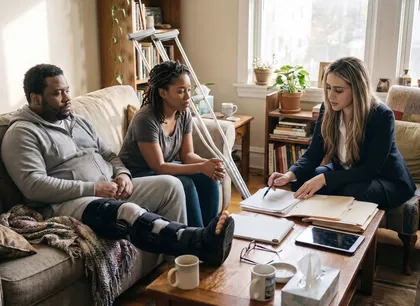
Yes. A family member can contact a law firm to discuss an accident and request information about a consultation. However, the injured person’s consent and legal capacity may affect representation and access to private records.
Parents or legal guardians may have authority to act on behalf of minors or certain other individuals.
Does Refusing Ambulance Transport Mean I Refused All Medical Care?
No. Declining ambulance transportation does not necessarily mean you refused an examination or all medical care. Responders may have assessed or treated you before you left, or you may have declined every offered service. Explain what you accepted or declined and provide any refusal forms. If the details are unclear, identify them as unknown rather than guessing.
What if I Cannot Find the Ambulance Report?
You can still contact an attorney without an ambulance report. The responding provider may have created an electronic patient care record. Dispatch information or an incident report may help identify the responsible agency.
If no report exists, other evidence may help establish what happened at the scene.
Can I Hire an Injury Lawyer if I Was a Passenger or Pedestrian?
Yes. Passengers and pedestrians can consult personal injury lawyers even when they leave the scene without ambulance transportation. Their legal options depend on the circumstances of the accident, the responsible parties, and evidence of injuries.
You do not need to have been driving to pursue a qualifying personal injury claim.
Do I Have to Give an Insurance Adjuster a Recorded Statement?
You generally do not have to provide a recorded statement to the other driver’s insurer. However, your own insurance policy may require cooperation with its investigation. An attorney can explain the applicable obligations.
Review any settlement agreement or release carefully before signing. Accepting a settlement may prevent further recovery for the same claim.
Do I Need to File a Lawsuit to Hire an Injury Lawyer?
No. You can hire an attorney before filing a lawsuit or submitting an insurance claim. An attorney may investigate the accident, review insurance coverage, and negotiate with an insurer.
A lawsuit may become necessary if the parties cannot resolve the claim or must act before a legal deadline.
How Much Does It Cost to Hire an Injury Lawyer?
If a personal injury attorney works on a contingency-fee basis, you generally do not pay attorney fees upfront. Instead, the attorney receives an agreed percentage of any settlement or recovery.
Under California Business and Professions Code § 6147, contingency-fee agreements must be in writing and explain the fee percentage and how case expenses affect your recovery. Depending on the agreement, you may remain responsible for certain costs even if your case is unsuccessful.
Speak With Arash Law About Your Injury Claim
Leaving an accident scene in a family vehicle does not automatically prevent you from hiring a lawyer or pursuing an injury claim. You can begin with the information you have, even when some details remain unknown.
Arash Law can review the circumstances of your accident, available records, and questions surrounding your decision not to use ambulance transportation. Bring any EMS notes, refusal forms, medical records, and your scene-to-care timeline. Our team can review the known facts, identify remaining gaps, and discuss possible legal options without promising case acceptance or a particular outcome.
Call (888) 488-1391 for a free case evaluation. Our accident hotline is available 24 hours a day, seven days a week.
Sources
- California Emergency Medical Services Authority. Statewide EMS documentation, assessments, and transportation outcomes. https://emsa.ca.gov/wp-content/uploads/sites/71/2023/10/CQM-Manual-SYS-100-20-2024-Data-10.2.24.pdf
- California Department of Motor Vehicles. Traffic collision reporting and SR-1 requirements. https://www.dmv.ca.gov/portal/dmv-virtual-office/accident-reporting/
- California Legislature. Vehicle Code § 20001, duties following an injury collision. https://leginfo.legislature.ca.gov/faces/codes_displaySection.xhtml?lawCode=VEH§ionNum=20001.
- California Legislature. Vehicle Code § 20003, information exchange and assistance requirements. https://leginfo.legislature.ca.gov/faces/codes_displaySection.xhtml?lawCode=VEH§ionNum=20003.
- California Legislature. Vehicle Code § 20008, injury collision reporting to law enforcement. https://leginfo.legislature.ca.gov/faces/codes_displaySection.xhtml?lawCode=VEH§ionNum=20008.
- California Legislature. Vehicle Code § 16000, DMV collision reporting requirements. https://leginfo.legislature.ca.gov/faces/codes_displaySection.xhtml?lawCode=VEH§ionNum=16000.
- Medical Board of California. Patient rights and medical records access. https://www.mbc.ca.gov/Resources/Medical-Resources/Access-Records.aspx
- California Legislature. Health and Safety Code § 123110, access to patient records. https://leginfo.legislature.ca.gov/faces/codes_displaySection.xhtml?lawCode=HSC§ionNum=123110.
- Judicial Council of California. CACI No. 3930, mitigation of damages in personal injury cases. https://courts.ca.gov/partners/california-jury-instructions/civil-jury-instructions-resource-center/civil-jury-instructions
- California Department of Insurance. Liability, uninsured motorist, and medical payments insurance coverage. https://www.insurance.ca.gov/01-consumers/105-type/95-guides/01-auto/auto101.cfm
- Centers for Disease Control and Prevention. Concussion symptoms and emergency warning signs. https://www.cdc.gov/traumatic-brain-injury/signs-symptoms/index.html
- California Legislature. Code of Civil Procedure § 335.1, personal injury lawsuit deadlines. https://leginfo.legislature.ca.gov/faces/codes_displaySection.xhtml?lawCode=CCP§ionNum=335.1.
- California Courts. Government claim presentation and lawsuit deadlines. https://selfhelp.courts.ca.gov/civil-lawsuit/government-claim
- California Legislature. Government Code § 911.2, government claim presentation deadlines. https://leginfo.legislature.ca.gov/faces/codes_displaySection.xhtml?lawCode=GOV§ionNum=911.2.
- California Legislature. Government Code § 945.6, deadlines for lawsuits against government entities. https://leginfo.legislature.ca.gov/faces/codes_displaySection.xhtml?lawCode=GOV§ionNum=945.6.
- California Legislature. Business and Professions Code § 6147, written contingency-fee agreements. https://leginfo.legislature.ca.gov/faces/codes_displaySection.xhtml?lawCode=BPC§ionNum=6147.
Disclaimer
The information on this page is for general educational purposes and does not constitute legal advice. No attorney-client relationship is formed by reading or relying on this content. If you were injured, consult a licensed California personal injury attorney about your specific situation. Arash Law: (888) 488-1391.