TL;DR: A lawyer reviews conflicting accounts of your child’s accident by identifying who witnessed the event, separating firsthand observations from secondhand information, and comparing statements with available evidence. The attorney can check whether a purported witness was present, review who recorded each account and how, and investigate inconsistencies without assuming anyone is dishonest. Disputed accounts do not automatically invalidate a claim.
When accounts of your child’s accident conflict, an attorney can investigate where each version originated and whether the person providing it actually witnessed the event. Police reports, insurance notes, and conversations with others may contain both direct observations and information repeated from another source.
A lawyer compares these accounts with available records, photographs, and other evidence to identify which details the records confirm and which remain uncertain. This review may clarify important differences without requiring the attorney to decide in advance who is telling the truth.
Table of Contents

There Are Different Versions of the Story About My Son’s Accident, and I Don’t Know Who Actually Saw It. How Can a Lawyer Review the Accounts and Evidence Without Assuming Who Is Telling the Truth?
A lawyer can review conflicting accounts of your son’s accident by identifying who personally witnessed the event, what each person actually observed, and where the information originated. The attorney compares firsthand statements, secondhand reports, and later recollections with available records and physical evidence.
A lawyer can also distinguish measurements from estimates, such as someone’s impression of speed, distance, or elapsed time. They can ask how the person reached the estimate and whether records or physical evidence support it.
The investigation may include checking a witness’s location, reviewing when each person gave their statement, requesting the original reports, and seeking independent corroboration. The goal is to determine what the evidence supports without assuming that anyone is telling the truth or lying. A disagreement between witnesses does not automatically mean that either account is false.
Key Facts About Reviewing Conflicting Accounts in California Child Accident Cases
- Firsthand Knowledge Matters: A lawyer can distinguish personal observations from information someone learned through others. California Evidence Code Section 702.
- Credibility Depends on Several Factors: Courts may consider a witness’s memory, opportunity to observe, bias, and prior statements. California Evidence Code Section 780.
- Different Accounts Do Not Automatically Mean Dishonesty: California jury instructions recognize that people may honestly remember the same event differently. CACI No. 5003.
- Witness Numbers Alone Do Not Determine the Facts: California jury instructions tell jurors to evaluate testimony rather than count the number of witnesses on each side. CACI No. 5003.
- Young Witnesses Receive Special Courtroom Protections: California courts must use age-appropriate questions and restrict unnecessary repeated questioning for witnesses under 14. California Evidence Code Section 765(b).
What a Lawyer Does When Accounts of a Child’s Accident Conflict
A California personal injury lawyer evaluates witness accounts, investigates disputed details, and identifies gaps in the evidence. The review may include assessing credibility, confirming firsthand knowledge, organizing statements, and using appropriate questions when speaking with a child.
The following hypothetical examples illustrate how conflicting accounts may arise:
- School Playground Injury: A child says another student pushed them, while a staff member reports a fall. A lawyer can investigate what each person actually saw.
- Pedestrian Accident: A driver says the child crossed outside a crosswalk, while a witness recalls the child crossing within it. An attorney can compare both accounts with footage and scene photographs.
- Scooter Accident: A driver says the child entered against a red light, while the child remembers a green signal. Scooter accident lawyers can review available footage, witness statements, and signal records to investigate the disagreement.
How Lawyers Determine Whether Someone Actually Witnessed an Accident
A lawyer can investigate whether someone actually witnessed your child’s accident by checking where that person was, what they could see, and how their account entered the record. Being identified as a witness does not necessarily mean the person saw the accident.
An attorney may ask these questions from possible witnesses:
- Presence: Were you at the scene when the accident happened, or did you arrive afterward?
- Vantage Point: Where were you standing? What could you see of the child, the surrounding area, and the moment the injury occurred?
- Timing: When did you first describe what happened? Had you discussed the accident with anyone before giving that account?
- Source of Information: What did you personally see or hear? Which details did you learn from others or infer afterward?
- Original Record: Who first documented your account? Did they preserve your exact words or summarize what you said?
- Corroboration: Do you know of photographs, cameras, location records, or other evidence that could help verify what you observed?
A firsthand witness may provide details about when and where the accident happened and the conditions around it. In vehicle cases, understanding what a witness should do after seeing a car accident can also help distinguish direct observations from estimates or information learned afterward.
For example, a police report, a school incident report, or a daycare log may identify someone as a witness without establishing that the person witnessed the moment the child was hurt. An attorney can review the original statement and surrounding evidence to determine what the person actually knows.
The investigation may confirm the witness’s presence, reveal that the account was secondhand, or leave the question unresolved. None of these possibilities should be assumed before reviewing the available evidence.
How Lawyers Review a Child’s Account Without Coaching Their Testimony
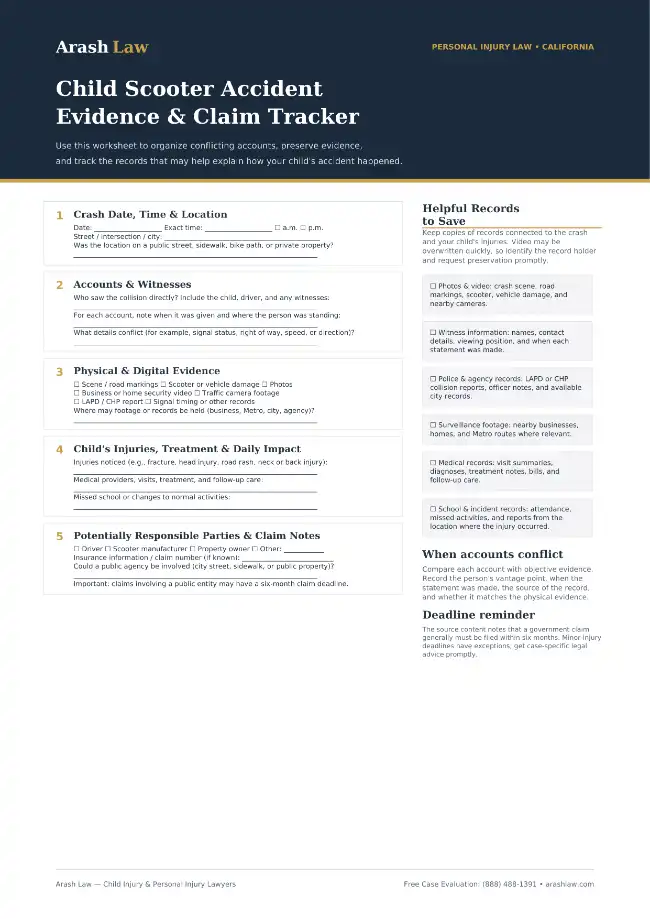
A lawyer can review a child’s account through neutral, open-ended questions and document the child’s recollection in their own words. The goal is to preserve that recollection without steering the child toward another person’s version.
For example, an attorney may ask what the child remembers seeing before a collision rather than suggesting that a driver ran a red light. The lawyer can separate original memories from details learned later through conversations with parents or witnesses. A trained professional may assist with a developmentally appropriate interview.
California Rule of Professional Conduct 3.4 prohibits falsifying evidence or counseling false testimony. A lawyer can investigate inconsistencies without assuming dishonesty and without pressuring a child to change their account.
Under California Evidence Code § 701, a witness must communicate understandably and understand the duty to tell the truth. Many children can testify, but courts assess each child’s ability to meet these requirements. Age alone does not determine whether a child can testify.
If a child cannot testify, footage, photographs, physical evidence, medical records, and other witnesses may still support the claim. The child’s account remains part of the investigation, and a lawyer can compare it with the available evidence to clarify which details are supported and which remain uncertain.
How California Law Weighs Witness Testimony
Under California Evidence Code § 780, courts may consider a witness’s opportunity to observe an event, ability to recall details, potential bias, and consistency with other evidence.
A lawyer can use these factors to evaluate conflicting statements during an investigation. Differences between accounts do not automatically establish that a witness is dishonest or that a child’s injury claim lacks merit.
Account-Source Matrix for Reviewing Conflicting Statements
A comparison of different accounts helps lawyers compare statements, identify firsthand knowledge, and track questions that still need answers. It organizes each account alongside its timing, source, and available supporting evidence.
Here’s an example of an account-source matrix that lawyers may follow to review contradicting statements:
The example separates reported accounts from verified facts. It also shows why uncertainty about a traffic signal does not necessarily contradict another person’s statement.
A lawyer can use this format to identify missing records and plan follow-up questions. The matrix alone does not establish fault or witness credibility.
This example is hypothetical and does not describe a verified accident, witness interview, or investigation conducted by Arash Law.
Where Can a Lawyer Find Evidence to Verify Conflicting Accounts?
A lawyer can seek evidence from schools, daycare facilities, law enforcement agencies, businesses, witnesses, medical providers, and property owners. These sources may help clarify what happened and who personally observed the accident.
The evidence needed for a personal injury claim depends on the accident’s circumstances. An attorney can identify records that may support or contradict specific accounts, subject to applicable access and privacy rules.
- Accident and Incident Reports: School reports, daycare logs, business incident forms, and collision reports may identify witnesses and summarize early accounts. A lawyer can check who supplied each detail and whether the writer personally observed the event.
- Surveillance Footage: Schools, stores, nearby businesses, and property owners may have recordings of the accident or events surrounding it. An attorney can request preservation and investigate whether relevant footage exists.
- Physical Evidence: Photographs, damaged equipment, playground conditions, floor surfaces, debris, and vehicle damage may help evaluate competing descriptions of an accident.
- Original Witness Statements: Written accounts, recorded interviews, staff notes, and officers’ field notes may reveal differences between someone’s original words and later summaries.
- Medical Records: Treatment records may document injuries and early descriptions of how they occurred. A lawyer can identify who supplied those descriptions and distinguish reported history from clinical findings.
- Supervision and Maintenance Records: Staff schedules, inspection logs, and repair records may help assess accounts involving supervision, unsafe equipment, or property conditions.
Records may become unavailable over time, and recording systems may overwrite footage. Prompt preservation requests may help protect relevant evidence, but they cannot guarantee its availability.
How an Attorney Reviews Insurance Disputes Involving Conflicting Accounts
When an insurer disputes responsibility for a child’s accident, an attorney can review the reasons given for its decision and the evidence supporting those conclusions.
For example, if the insurer relies on a purported witness, the attorney may investigate whether that person actually witnessed the accident, where the statement originated, and whether independent evidence supports it.
California’s Fair Claims Settlement Practices Regulations require insurers to conduct a thorough, fair, and objective investigation of available information (Cal. Code Regs., tit. 10, § 2695.7(d)).
An attorney can assess whether additional evidence supports challenging the insurer’s position. However, conflicting statements do not automatically establish that the insurer acted improperly or guarantee that its decision will change.
How Conflicting Accounts Can Affect Liability in California
When witnesses or parties tell different stories about an accident, liability turns on which account the evidence supports and how fault is divided among those involved.
- Burden of Proof: In California civil cases, the injured party generally must prove negligence by a preponderance of the evidence, meaning more likely than not. Conflicting accounts make this harder, because if the evidence is evenly balanced, the party with the burden of proof usually loses.
- Who Resolves the Conflict: The judge or jury decides whom to believe, weighing each witness’s opportunity to observe, memory, bias, prior inconsistent statements, and supporting evidence (Evid. Code § 780). They may accept all, part, or none of any testimony, and one credible witness’s testimony can be enough to prove a fact (Evid. Code § 411).
- Comparative Fault: California follows pure comparative negligence under Li v. Yellow Cab Co. (1975) 13 Cal.3d 804. Disputed accounts often produce a division of fault rather than an all-or-nothing result. Recovery is reduced by the injured party’s percentage of fault but is not barred, even if that party is mostly at fault.
- Children’s Conduct: A child’s conduct is generally measured against that of a reasonable child of similar age, intelligence, knowledge, and experience (CACI No. 402), and very young children may be found incapable of negligence as a matter of law.
- Disputes Over Right-of-Way, Signals, and Movements: Surveillance footage, photographs, physical evidence, incident records, and independent witnesses may help clarify conflicting accounts. Depending on the circumstances of the accident, a lawyer may also consult a reconstruction expert.
An attorney can help gather and preserve evidence and evaluate how the conflict affects the case. Deadlines also matter, as California follows different filing deadlines for different claims.
Filing Deadlines for Minors in California
Even when accident accounts conflict, families must comply with applicable filing deadlines. Investigating witness statements or waiting for an insurer’s decision does not automatically extend the time to take legal action.
California generally applies the following rules:
-
Personal Injury Lawsuits: Code of Civil Procedure § 335.1 generally establishes a two-year filing deadline. Under § 352(a), the law generally tolls (pauses) this period while the injured person is under 18. Different rules may apply to certain claims.
- Parental Claims for Medical Expenses Are Not Tolled: Under California law, parents’ claims for medical expenses are generally not tolled and must still be filed within the standard two-year statute of limitations outlined in CCP § 335.1. If a public entity is involved, parents generally must present a government claim within six months after the claim accrues under Gov. Code § 911.2. A separate lawsuit-filing deadline applies under § 945.6.
- Government Claims: Under Government Code § 911.2, injured claimants generally must present injury claims against public entities within six months after the claim arose, even when the injured person is a minor. Government Code §§ 911.4 and 911.6 provide late-claim procedures that may apply in certain circumstances involving minors.
- Lawsuits After Government Claim Rejection: Under Government Code § 945.6, a claimant generally must file a lawsuit within six months after the public entity delivers or mails a legally compliant written rejection notice. If the entity does not provide a compliant notice, a two-year deadline generally applies from when the claim arose, subject to applicable exceptions.
Claims involving public roads, school districts, or government-owned property may require additional procedures. An attorney can review the applicable deadlines while investigating the conflicting accounts of the accident.
Who Can Pursue a Child Injury Claim in California?
A parent or legal guardian can help pursue a personal injury claim on behalf of an injured child. If the family files a lawsuit, California Code of Civil Procedure § 372 generally requires the child to appear through a court-appointed guardian ad litem, or a guardian of the estate.
An attorney can help the child’s legal representative review conflicting statements, request relevant records, and investigate liability without placing the responsibility for handling the legal proceedings on the child.
Court Approval of Settlements: Under California Probate Code § 3500 and Code of Civil Procedure § 372, settlements involving a minor’s disputed injury claim generally require court approval. The court reviews the proposed agreement to protect the child’s interests and determines how the settlement funds should be handled.
What Arash Law Has Recovered in Representative Cases
Arash Law has represented injured clients in California personal injury cases involving serious injuries and disputed liability. The following published case results illustrate the firm’s experience handling injury claims:
$2,350,000 — Thirteen-Year-Old Pedestrian: A police report blamed the child. Our team obtained admissions regarding the driver’s awareness of students frequently crossing there and his failure to brake sooner.
$1,250,000 — Five-Year-Old Pedestrian: The insurer argued that the child darted into the street and the collision was unavoidable. Expert accident reconstruction helped our team demonstrate otherwise.
Past results do not guarantee future outcomes. Every case is different, and results depend on the specific facts and evidence involved.
How Arash Law Can Help With Disputed Child Accident Accounts
When parents receive conflicting explanations about their child’s accident, they may be unsure which statements are reliable or what information is missing. Arash Law’s California personal injury attorneys can review existing records, assess discrepancies between accounts, and identify additional evidence that may help clarify what happened.
Depending on the circumstances, legal assistance may include requesting original statements, contacting relevant record custodians, evaluating an insurer’s position, and consulting accident reconstruction experts when appropriate. The goal is to help families understand what the available evidence supports, which facts remain uncertain, and what legal options may be available. An investigation cannot guarantee resolution to every contradiction.
If your child was injured and accounts of the accident conflict, call Arash Law at (888) 488-1391 for a free case evaluation. Our attorneys can move quickly to seek preservation of evidence before it disappears.
Frequently Asked Questions About Conflicting Accident Accounts in California
Does Inconsistent Testimony Mean a Witness Is Lying?
Not necessarily. Witnesses may remember events differently because of their location, attention, or information learned afterward. An attorney can investigate whether the disagreement involves an important fact and compare the statements with available evidence. Inconsistent accounts do not automatically establish dishonesty.
Can My Child Still Receive Compensation If the Collision Report Says Fault Is Disputed?
A disputed fault determination in a collision report does not automatically prevent a child from pursuing compensation. An attorney can independently review witness statements, photographs, and other available evidence to assess liability. Whether compensation is recoverable depends on the facts, applicable law, and available insurance coverage.
Do Child Injury Lawyers Get Paid Only If They Win?
Child injury lawyers commonly work on a contingency fee basis, meaning clients pay legal fees only if the lawyer wins or settles the case. Arash Law offers free initial case evaluations. Families should review the written fee agreement to understand how attorney fees, litigation expenses, and case costs are handled.
What Should I Bring to a Lawyer if Accident Accounts Conflict?
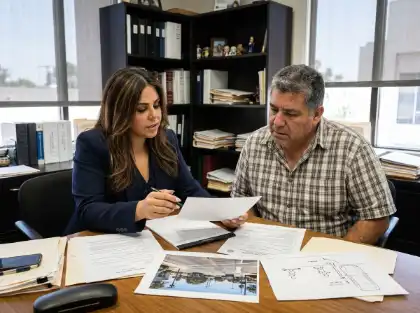
Bring any accident or incident reports, witness contact information, photographs, messages, insurance correspondence, and written descriptions of what happened. Identify which details you personally observed and which came from your child or someone else. You do not need to resolve the contradictions before consulting an attorney. The lawyer can review the existing information and identify what still needs verification.
Request a Review of the Accounts and Records in Your Child’s Case
Conflicting accounts can leave parents uncertain about what happened and whether the available evidence supports their child’s claim. Arash Law can review existing statements and records, identify unanswered questions, and evaluate possible legal options.
Our California personal injury attorneys can help families investigate disputed information without assuming that a witness is dishonest or promising a particular outcome.
Call (888) 488-1391 for a free case evaluation. We represent injured clients and families throughout California.
Sources
- California Evidence Code § 780: Witness Credibility. Establishes factors courts may consider when evaluating witness testimony, including the opportunity to observe an event, ability to recall details, potential bias, and consistency with other evidence. Statute cited: Evidence Code § 780. Official text available at leginfo.legislature.ca.gov.
- California Evidence Code § 411: Testimony of a Single Witness. Provides that the testimony of one credible witness may be sufficient to prove a fact unless additional evidence is legally required. Statute cited: Evidence Code § 411. Official text available at leginfo.legislature.ca.gov.
- California Vehicle Code § 20012: Access to Traffic Collision Reports. Governs access to law enforcement accident reports by qualifying individuals, including injured parties and authorized representatives. Statute cited: Vehicle Code § 20012. Official text available at leginfo.legislature.ca.gov.
- California Department of Insurance: Fair Claims Settlement Practices Regulations, California Code of Regulations, Title 10, § 2695.7(d). Requires insurers to conduct a thorough, fair, and objective investigation of available information when evaluating claims. Official regulations available at insurance.ca.gov.
- California Rules of Professional Conduct, Rule 3.4: Fairness to Opposing Party and Counsel. Establishes ethical restrictions against falsifying evidence, counseling false testimony, and unlawfully concealing or destroying relevant evidence. Official rule available at calbar.ca.gov.
- California Code of Civil Procedure § 335.1: Two-Year Personal Injury Statute of Limitations. Establishes the general two-year deadline for filing personal injury lawsuits in California. Statute cited: CCP § 335.1. Official text available at leginfo.legislature.ca.gov.
- California Code of Civil Procedure § 352: Tolling for Minors. Generally excludes the period of minority when calculating certain statutes of limitations, subject to applicable exceptions. Statute cited: CCP § 352(a). Official text available at leginfo.legislature.ca.gov.
- California Government Code § 911.2: Six-Month Government Claims Deadline. Generally requires personal injury claims against public entities to be presented within six months after the cause of action accrues. Statute cited: Gov. Code § 911.2. Official text available at leginfo.legislature.ca.gov.
- California Government Code §§ 911.4 and 911.6: Late Government Claim Procedures. Establish procedures and conditions for presenting late government claims, including provisions applicable to minors. Statutes cited: Gov. Code §§ 911.4 and 911.6. Official text available at leginfo.legislature.ca.gov.
- California Government Code § 945.6: Deadlines Following Government Claim Rejection. Establishes deadlines for filing lawsuits after government claims rejection, including the general six-month period following a compliant written rejection notice. Statute cited: Gov. Code § 945.6. Official text available at leginfo.legislature.ca.gov.
- California Code of Civil Procedure § 372: Representation of Minors in Civil Proceedings. Governs the representation of minors in civil litigation through guardians and guardians ad litem. Statute cited: CCP § 372. Official text available at leginfo.legislature.ca.gov.
- California Probate Code § 3500: Compromise of a Minor’s Disputed Claim. Establishes procedures for court approval of settlements involving minors’ disputed injury claims. Statute cited: Probate Code § 3500. Official text available at leginfo.legislature.ca.gov.
- California Rules of Court, Rule 7.950: Petition for Approval of Compromise of Claim. Establishes procedural requirements for obtaining court approval of settlements involving minors. Official rule available at courts.ca.gov.
- California Civil Jury Instructions (CACI) No. 402: Standard of Care for Minors. Explains how a minor’s age, intelligence, knowledge, and experience affect the standard of care used to evaluate negligence. Official jury instruction available at courts.ca.gov.
- California Civil Jury Instructions (CACI) No. 5003: Witnesses. Tells jurors to evaluate credibility, not to decide testimony is untrue merely because it differs, and not to decide based on the number of witnesses. Official instruction is available at courts.ca.gov.
- California Evidence Code §§ 701, 702, and 765(b): Witness Competency, Personal Knowledge, and Examination of Young Witnesses. Statutes cited: Evidence Code §§ 701, 702, 765(b). Official text available at leginfo.legislature.ca.gov.
- Li v. Yellow Cab Co., 13 Cal. 3d 804 (1975). California Supreme Court decision establishing the pure comparative negligence rule for personal injury cases. Official judicial resources are available at courts.ca.gov.
Disclaimer
Past results do not guarantee future outcomes. Every case is different. The information on this page is for general educational purposes and does not constitute legal advice. Reading or relying on this content does not create an attorney-client relationship. If you were injured, consult a licensed California personal injury attorney about your specific situation. Arash Law: (888) 488-1391.