TL;DR: You can sue a third party after a scaffold accident in Sacramento if their negligence caused your injuries and losses. Injured construction workers can seek damages for medical treatment, lost wages, and pain and suffering, but you have 2 years to file or lose your right to recover.
Highlights:
- Get medical care immediately and follow up if you notice or experience delayed symptoms.
- Report the fall to your supervisor in writing and keep a copy.
- Photograph the scaffold setup, missing guardrails, anchors, and base plates.
- Collect witness names, employer companies on-site, and equipment manufacturer details.
- Ask for incident reports, inspection logs, and any Cal/OSHA-related documents.
- File a civil injury lawsuit within 2 years of the injury date.
- If a public agency is involved, file a government claim within 6 months.
Tip: Preserve the equipment involved in the accident and save any messages related to job or the incident if possible, and when describing the accident, stick to observable facts and avoid guessing about fault.
Table of Contents
Yes. Under California’s “exclusive remedy” rule, workers’ comp usually stops you from suing your employer for a work injury. However, you may be eligible to file a personal injury claim against third-party individuals or companies if their negligence caused your injury.
Downtown, Midtown, the Railyards, and West Sacramento’s Bridge District continue to develop, with several construction projects constantly underway. In the City of Sacramento, projects such as utility upgrades, infrastructure improvements, and public works construction often rely heavily on scaffolding. As work at elevated heights increases, so does the risk of scaffolding accidents caused by unsafe conditions, equipment failures, or inadequate fall protection.
Scaffold falls cause severe injuries. Broken bones, spine damage, and head trauma are all common. Some of these injuries last a lifetime.
It can be hard to know who is to blame when a job site has many companies working on it at once. That confusion is normal. In Sacramento, you have the right to file a civil lawsuit against any party whose negligence caused your injury.
Why You Can Sue Someone Other Than Your Employer
Many employees think workers’ compensation is their only option after a scaffold fall in Sacramento. It is not. While workers’ comp is generally your exclusive remedy against your employer, California law allows you to sue other parties whose actions contributed to your injuries.
Key California statutes for third-party personal injury claims:
- Exclusive Remedy Rule (Labor Code Section 3602): This is the rule that limits your claims against your own employer. If workers’ comp covers your injury, it’s generally your sole remedy against the employer. Exceptions exist (such as a willful assault by the employer, fraudulent concealment of an injury, or a defective product the employer made and sold) but they are narrow and rarely apply.
- Third-Party Claims (Labor Code Section 3852): This is what opens the door to suing non-employers, such as subcontractors, other contractors, property owners, or equipment suppliers. It lets you pursue a civil claim against an at-fault third party even while you continue to receive workers’ comp benefits. Related sections (§§ 3852–3856) coordinate the two systems, including your employer’s or its insurer’s right to be reimbursed out of your third-party recovery for benefits it paid.
- Duty of Care (Civil Code Section 1714): Under this foundational statute, everyone is responsible for injuries caused by their lack of ordinary care. On a construction site, a party that fails to act with reasonable care can be held liable, and that breach is the basis of a negligence claim.
One important caveat for claims against a general contractor: while § 3852 gives you the right to sue a non-employer, the Privette doctrine presumptively shields a general contractor from liability for a subcontractor’s injured worker unless a recognized exception applies (retained control, a concealed hazard, or unsafe equipment). In other words, § 3852 opens the door, but for a general contractor specifically, Privette often narrows it, which is why identifying the right defendants matters so much.
Because third-party liability can be complex on multi-employer job sites, many injured workers consult experienced construction injury lawyers to determine which companies may be legally responsible.
Who Are The Third Parties You Can Sue For A Sacramento Scaffold Accident?
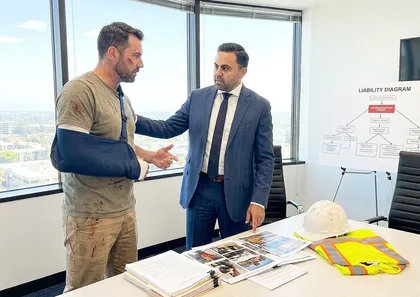
A Sacramento job site can have many companies working at the same time. Any of them could be at fault for your fall. If more than one party acted carelessly, you may have a claim against more than one of them.
Potentially liable parties:
- Subcontractors: An outside contractor or independent installer who made scaffolds unsafe or failed to follow safety protocols.
- Equipment Manufacturers: Scaffold defects, faulty parts, or missing safety warnings.
- Property Owners: Owners who knew of hazards and did not warn or correct them.
- General Contractors: Supervisors who ignored hazards, directed unsafe work, or provided defective equipment.
California law has a rule called the Privette Doctrine, refined in Gonzalez v. Mathis (2021) 12 Cal. 5th 29. This rule can shield a general contractor in Sacramento when one of a subcontractor’s workers is injured. In most cases, the general contractor is not held responsible for those injuries.
The Privette Doctrine does not protect a general contractor in every case. California courts recognize two main exceptions:
- Retained Control: The doctrine may not apply when the general contractor retained and exercised control over how the work was performed, in a manner that contributed to the injury. Mere authority to control safety on the jobsite is not enough.
- Concealed Hazards: The doctrine may not apply if the general contractor knew or should have known of a hidden danger, the subcontractor did not know and could not reasonably have found it, and failed to warn the subcontractor.
- Defective Equipment: If the general contractor provided or required the use of unsafe or defective equipment that caused the injury, the doctrine may not shield them from liability.
The key question is not just who was on site. It is whether the general contractor controlled the work in a way that caused harm, failed to warn about hidden dangers, or supplied unsafe equipment that led to the injury.
Knowing what to do after a scaffold fall on a Sacramento construction site can help you identify and preserve key evidence as soon as possible. Evidence from scaffolding accidents can help show how the injury happened, who may be responsible, and what legal options may be available.
How OSHA Violations Prove Third-party Negligence In Sacramento
To prove a third party is legally responsible, you usually need to show they broke a safety rule. Violating California safety rules is often direct proof of fault in a civil claim in Sacramento.
Cal/OSHA Title 8 sets fall protection rules in the state. If a third party violates these safety rules and causes an injury they were meant to prevent, it may support a claim of negligence per se under California Evidence Code § 669.
For that reason, OSHA violations that cause a Sacramento scaffold accident could create a rebuttable presumption of negligence. This means that the injured person does not need to separately prove the defendant failed to act with reasonable care, as long as the legal requirements are met. However, it is not an automatic win. The injured person must still prove that the violation was a substantial factor in causing the fall and injuries.
These are the most common scaffold failures tied to safety violations:
- Improper Assembly or Missing Base Plates: A qualified person must supervise the erection and dismantling of scaffolds in accordance with Cal/OSHA Title 8, Section 1637. A competent person must inspect the scaffold before each work shift and after any condition that could affect its safety to identify hazards. Missing base plates or weak bracing can make a platform collapse.
- Missing Guardrails: Cal/OSHA Section 1621 requires guardrails on all open sides of scaffolds over 7 1/2 feet high. Without them, there is nothing to stop a worker from falling.
- Overloading: Every scaffold has a weight limit. Too many workers or heavy tools on a platform can cause it to break apart.
- Defective Anchors: Scaffolds must be anchored to a stable structure. Worn, poorly placed, or unapproved anchors can cause the entire structure to tip or collapse.
Scaffold falls often stem from the same hazards seen in other workplace incidents. In many cases, victims may not immediately know whether a Cal/OSHA violation contributed to the accident. Getting free advice from a scaffold accident lawyer online can help, but discussing your case in person with an actual attorney can help you understand what your possible options are.
Damages You Can Recover In A Civil Injury Claim
Workers’ compensation is a no-fault system, which means you can receive benefits even if you caused the accident. However, those benefits are limited and do not cover all losses. A third-party claim is based on negligence, meaning you must prove another person or company caused your injury, but the potential compensation is much broader.
That matters because a third-party case may be able to help you pursue the full value of your losses. To illustrate, here’s a breakdown of what workers’ comp and third-party claims cover:
| Category | Workers’ Compensation | Third-Party Claim |
|---|---|---|
| Medical Costs | Pays for approved medical care. | Can cover past and future medical expenses, such as for surgery, prescription medication, and chiropractic care, without network limits. |
| Lost Wages | Pays a capped percentage of lost wages. | Can seek 100% of past and future lost earning capacity. |
| Pain and Suffering | Not available | Available, alongside other non-economic damages such as emotional distress, loss of consortium, and loss of quality of life. |
| Compensation after a fatal accident | Available to eligible surviving family members through death benefits. | Available to eligible surviving family members through wrongful death damages. |
Other factors can affect how much you keep, including liens and subrogation.
A lienholder is a person or company with a legal right to be repaid from your settlement proceeds. In injury cases, this often includes:
- Health insurance companies
- Medical providers
- Workers’ compensation insurers
A subrogation allows the insurer to be repaid from your civil award if they covered some of your losses, such as medical bills, during the claims process.
Subrogation only applies in certain situations, usually when:
- Your workers’ compensation insurer or health insurer paid for your injury-related costs; and
- You also recover money from a third-party lawsuit for the same injury.
In those cases, the insurer may seek reimbursement from your third-party settlement. However, these lien amounts are often negotiable. Sacramento scaffold injury lawyers can negotiate that amount with the lienholder.
Below are examples of third-party liability claims handled by Arash Law. These results do not guarantee or predict similar outcomes in any future case. The value of a claim depends on factors such as injury severity, total damages, liability, and the outcome of negotiations.
- Personal Injury: This construction accident case was previously thought to be workers’ compensation only. After aggressive discovery and depositions, we uncovered a strong third-party liability claim. This changed the case from having no offer to a $9,000,000 settlement within three weeks.
-
Workers’ Compensation: We obtained over $6,500,000 for our client after they fell from a roof and suffered a mild TBI and spinal cord injury. The employer initially denied liability, claiming the work was outside the course and scope of employment.
We took the case to trial and secured a finding of liability. We obtained rehabilitation benefits and a combined settlement that included both workers’ compensation and a third-party recovery to support the client’s recovery.
-
Workers’ Compensation: This case was referred to us shortly before the statute of limitations expired on the personal injury claim. At first, it appeared to be a workers’ compensation-only case.
After further investigation, we identified a third-party liability theory and resolved the case within six months for the full policy limits, securing $1,000,000 for the client.
California Deadlines To File Your Scaffold Accident Case
After a scaffold accident, you have a limited time to file a claim. Construction sites change fast, and evidence can vanish within days. Acting quickly can help protect your rights. Here are the main timelines to follow:
- Personal Injury Lawsuit: Under California Code of Civil Procedure §335.1, you have two years from the date of your injury to file. Certain exceptions, such as the delayed discovery of injuries, may modify this timeline.
- Government Claim: If the City or County of Sacramento or the state is involved in the scaffolding accident, you have six months to file an administrative claim under California Government Code §911.2, subject to limited exceptions for late claim relief. This may apply in cases where a scaffold collapse occurs during a public construction project, such as a city building renovation, street improvement work, or a state-funded infrastructure project where a government agency owns or controls the site or hires the contractor.
Missing either deadline can generally mean losing your right to sue. Thinking, “I need a personal injury lawyer to handle my scaffolding accident case,” is a valid thought. An attorney can manage evidence collection and critical deadlines to help preserve your ability to seek compensation.
Evidence To Preserve After A Scaffold Accident
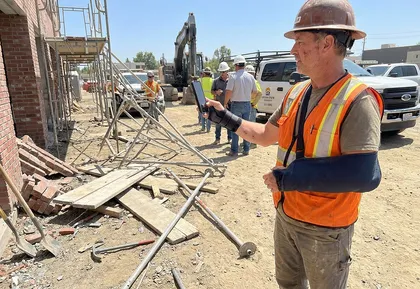
To strengthen a third-party scaffold accident claim:
-
- Take photos or videos of the scaffold, accident scene, missing guardrails, unstable platforms, debris, warning signs, and other hazards.
- Collect the names and contact details of all witnesses, including coworkers, subcontractors, vendors, and property representatives.
- Keep medical records, bills, reports, prescriptions, and work restrictions from the accident date onward.
- Write down what happened while the details are fresh, including your task, who was nearby, and what equipment was involved.
- Obtain official accident investigation reports and citation histories from Cal/OSHA.
- Save damaged clothing, shoes, tools, or safety gear.
- Ask a scaffold accident lawyer about sending preservation letters for inspection reports, maintenance logs, videos, incident reports, and other key records.
Frequently Asked Questions About Sacramento Scaffold Accidents
These answers address the questions workers most often ask in this situation. Each stands on its own, so read the ones that apply to you.
What Are My First Steps After A Scaffold Accident in Sacramento?
Get medical care right away, even if you feel okay. In Sacramento, you can go to Sacramento Medical Center, Sutter Medical Center, UC Davis Medical Center, or other nearby medical facilities. Some injuries do not show up until hours or days later. After you see a doctor, report the accident to your supervisor in writing.
Take photos of the area where you fell, your injuries, and any equipment involved. If there were witnesses, get their names and contact information. Keep copies of every medical record, report, and bill from the date of the accident onward.
What If I Were Partially At Fault For The Scaffold Accident?
You may still be able to pursue compensation, depending on the facts of your case. California follows a pure comparative negligence system. This means your share of fault reduces your total compensation, but you can still seek recovery. For example, if a Sacramento court finds you 20% at fault, any compensation awarded to you would be reduced by 20%.
Will Filing A Third-Party Claim Affect My Workers’ Compensation Benefits?
No. Filing a third-party lawsuit does not stop your workers’ compensation benefits. The two claims run concurrently and do not cancel each other out.
However, if you win a civil settlement, your workers’ compensation carrier has the right to be repaid from that recovery. Scaffold accident attorneys often review it to ensure it is fair and properly allocated, which can affect the amount ultimately repaid.
Is It Worth Suing For Pain And Suffering?
Workers’ compensation does not cover pain and suffering. It only pays for medical bills and lost wages. A civil lawsuit against a third party lets you claim non-economic damages, which cover pain, emotional distress, and loss of enjoyment of life.
If you suffered a spinal injury, brain injury, or permanent disability, these damages can be a large part of your total losses. In a civil third-party lawsuit, California law does not set a limit on non-economic damages.
How Long Do Scaffold Accident Cases Take?
It depends on whether the case settles or goes to trial. Workers’ compensation claims vary widely in how long they take to close, depending on the severity of the injury and whether the claim is disputed.
Third-party civil lawsuits often take several years, particularly when multiple parties are involved or the case goes to trial. Many cases settle before that point. The more parties involved and the more serious the injuries, the longer the process tends to run.
Consult Arash Law For Your Sacramento Scaffolding Injury Case
Our Sacramento scaffold injury lawyers at Arash Law (AK Law) can handle complex cases like yours. We can help identify each liable party, from contractors to equipment makers, and we can pursue the compensation available to you under California law.
If you’re wondering, “Do lawyers only get paid if they win?” at our Sacramento injury law firm, the answer is yes. Our team works on a contingency fee basis. We only get paid attorney’s fees if we obtain compensation for you. Call us today at (888) 488-1391 for a free initial consultation.