TL;DR: Night driving becomes especially difficult in late adulthood because pupils admit less light, the eye’s lens scatters more glare, and the retina and brain may adjust more slowly to darkness. Reduced contrast sensitivity can also make pedestrians, faded lane markings, and other low-visibility hazards harder to detect.
Highlights:
- Schedule an eye exam if you notice trouble reading signs, sensitivity to headlight glare, or worsening night vision. Some vision changes signal treatable conditions, such as cataracts.
- Clean and align your headlights, dim dashboard lights, and wipe your windshield inside and out to reduce glare and improve visibility.
- Ask your eye doctor about anti-reflective lenses if you wear prescription glasses to cut glare from oncoming headlights and streetlights.
- When bright headlights approach, shift your gaze to the right white line rather than into the glare to stay in your lane.
- Drive slower at night to give yourself more time to react if an obstacle appears on the road ahead.
- California does not restrict or revoke a license based on age alone. The DMV may take action if a medical or vision condition affects a person’s ability to drive safely.
Tip: If you were injured in a nighttime crash, seek legal help promptly because California generally gives you two years from the accident date to file a lawsuit, and acting early protects your rights.
Table of Contents
The reason night driving becomes especially difficult in late adulthood is that age can change how the eyes and brain respond to darkness, glare, movement, and contrast. Less light may reach the retina, making road details harder to distinguish against dark backgrounds.
For many older adults, driving supports independence. It provides access to medical appointments, family, work, and daily activities. Night driving difficulty is not, by itself, a sign of poor driving skill, but it should prompt drivers to notice changes and adjust their habits when needed.
Several age-related changes help explain why night driving becomes harder. The pupils let in less light, the lens scatters more glare, and the retina becomes less sensitive in low-light conditions. Contrast sensitivity, distance judgment, and visual processing may also decline. Together, these changes can make nighttime hazards harder to detect and leave less time to respond.
How Normal Aging Affects Your Eyesight At Night
As you get older, several physical changes make night driving harder. Your pupils shrink and let in less light, your eye’s lens stiffens and yellows, and the rod cells in your retina decrease in number. These shifts affect how well you see in the dark, how you handle glare, and how fast you react.
- Reduced light intake. Pupils can constrict and react more slowly to changes in light. This means less light enters the eye, making it harder to see on dark roads and at dimly lit intersections.
- Increased glare and slower recovery. The lens inside the eye may become less clear and more prone to scattering light, creating stronger glare from headlights and streetlights. After bright headlights pass, an older driver’s useful vision may take longer to recover. During that time, lane markings, pedestrians, and road hazards may remain difficult to see.
- Reduced night vision adaptation. The retina uses rod cells to support vision in dim conditions. Rod-based vision and dark adaptation may become less effective with age, making it harder to adjust after leaving a brightly lit area or entering a dark roadway.
- Lower contrast sensitivity. Aging may also reduce contrast sensitivity, which is the ability to distinguish an object from a background with a similar shade. Reduced contrast can make it harder to see:
- A pedestrian wearing dark clothing.
- Faded lane markings.
- The edge of the roadway.
- A stopped vehicle without bright lights.
- Objects hidden by shadows, fog, or rain.
- Worsened visibility in wet conditions. Rain can make nighttime driving especially difficult on California roads. Water on dark pavement reflects headlights and streetlights. This can hide lane markings, road edges, pedestrians, and standing water. Older drivers with reduced contrast sensitivity may have more trouble detecting dark clothing and other low-contrast hazards on wet roads.
- Reduced depth perception and distance judgment. Depth perception and distance judgment can also become more difficult in low light. A driver may have trouble estimating how far away an oncoming vehicle is or how quickly it is approaching. This can be especially important when making a left turn across traffic, merging, or entering an intersection.
- Slower visual processing and reduced peripheral awareness. Finally, age-related changes may affect peripheral awareness and the speed at which the brain processes visual information. Driving requires a person to see a hazard, recognize it, decide how to respond, and then brake or steer. Even a small delay at each stage can matter when visibility is poor.
If an eye disease or another health condition is present, these problems may become more serious.
Normal Aging Vs. Common Eye Conditions: What’s The Difference?
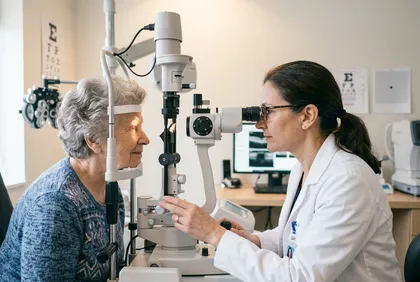
Not all vision changes are the same. Normal aging causes your eyes to let in less light and to recover from glare more slowly. Some eye diseases go much further, though. Certain eye conditions can impact vision in ways that aging alone does not. Some of these include:
- Cataracts: The lens of your eye becomes cloudy. Light scatters instead of passing through cleanly. This creates intense glare, blurs your vision, and can make oncoming headlights feel blinding at night.
- Glaucoma: This disease damages the optic nerve, which connects your eye to your brain. It can gradually damage peripheral vision, often before a person notices clear symptoms. Losing side vision while driving means you may not see other cars or pedestrians in time.
- Macular Degeneration: This condition affects the center of the retina. The retina’s center controls what you see directly in front of you. When it is damaged, reading road signs or seeing the lane ahead becomes difficult.
Other factors may also affect night driving. Dry eyes, diabetic eye disease, an outdated prescription, fatigue, and medication side effects may cause blurred vision, drowsiness, glare, or slower reactions. A medical professional can help determine whether a medical condition or medication may affect driving.
These conditions require medical evaluation, and available treatment depends on the diagnosis and its stage. Catching them early may keep your treatment options open.
Signs You Need An Eye Exam And Practical Safety Tips
Some signs mean it’s time to see an eye doctor, not just update your prescription. If you notice trouble reading street signs, strong sensitivity to headlight glare, or worsening night vision, schedule an eye exam. These changes may signal a treatable condition. Consider scheduling an eye exam if you notice:
- Trouble reading street signs.
- Severe glare from headlights.
- Halos around lights.
- Difficulty seeing lane markings.
- Slower recovery after bright lights pass.
- Increasing trouble seeing pedestrians or objects at night.
- Repeated near misses after dark.
Sudden vision loss, new double vision, flashes, a curtain-like shadow, severe eye pain, or a rapid change in vision may require prompt medical evaluation. Avoiding night driving may be safer until the cause is assessed.
Beyond regular eye exams, a few simple changes to your vehicle and driving habits can improve how well you see at night:
- Clean and Aim Headlights: Dirty or misaligned headlights reduce your visibility. Clean the lenses and check the aim regularly.
- Dim the Dashboard: Bright dashboard lights create contrast, making the road harder to see. Turn them down when driving at night.
- Clean the Windshield: Streaks and film scatter light, increasing glare. Wipe both the inside and outside of the glass before driving.
- Wear Anti-Reflective Glasses: If you wear prescription glasses, ask your eye doctor whether anti-reflective lenses may reduce distracting reflections from headlights and streetlights.
- Look to the Right White Line: When bright headlights approach, avoid staring directly at them. Use the right edge of the road as a guide while continuing to watch surrounding traffic.
- Reduce Your Speed at Night: Drive a little slower than usual. This gives you more time to react if something appears in the road ahead.
These steps may help you avoid common causes of accidents while driving at night. However, some accidents may still occur despite exercising reasonable care, particularly if another road user acts recklessly. Likewise, difficulty seeing at night does not, by itself, mean that an accident was caused by impaired vision. Liability generally depends on the specific facts and circumstances of the incident, including how the collision occurred.
How California DMV Rules Apply To Older Drivers
The California Department of Motor Vehicles (DMV) does not restrict or revoke a driver’s license solely because of age. However, drivers age 70 and older must renew in person every five years and complete a vision screening.
The DMV’s current vision screening standard generally requires:
- 20/40 vision with both eyes tested together.
- 20/40 vision in one eye.
- At least 20/70 vision in the other eye.
The standard may be met with or without corrective lenses. A person who does not pass the screening is generally referred to a vision specialist and asked to submit a Report of Vision Examination (Form DL 62). The DMV makes the final licensing decision after reviewing vision information and, when required, driving test results.
The DMV may impose restrictions on when a person can drive safely, only under certain conditions. California Vehicle Code §§ 12806 and 12809 authorize the DMV to refuse to issue or renew a license when a physical or mental condition prevents safe operation of a vehicle. Restrictions may include:
- Daylight driving only.
- Wearing corrective glasses or contact lenses.
If a driver violates a daylight-only or corrective-lens restriction, that violation may be relevant after a crash. However, the violation does not automatically establish liability. The injured person must still connect the violation to the collision and resulting harm.
If a driver with unmanaged vision problems caused your crash, that medical history can matter to your claim. Both the older driver and any injured party have legal rights, no matter what the DMV decides. Night-driving accident lawyers can help you find out what your options are and what evidence applies.
Proving Liability In California Nighttime Accidents
In a nighttime crash, fault is determined by asking whether each driver acted as a reasonably careful person would have in the same situation. In California, a person bringing a claim usually must show four things:
- The other driver had a duty to drive safely.
- They failed to meet that duty.
- That failure caused the crash.
- The crash caused harm or losses.
Things like darkness, a driver’s age, or a medical condition do not automatically make someone at fault, but they can be considered when deciding whether the driver acted carefully enough.
California drivers must use reasonable care at night and adjust their driving to darkness, rain, fog, and other conditions that reduce visibility. Relevant legal duties include:
- Use proper lighting. California Vehicle Code §§ 24250 and 24400 require drivers to use headlights at night and in low-visibility conditions. This includes when it’s raining enough to require windshield wipers to stay on constantly. Failing to use required lighting may support a negligence claim if it contributed to the collision.
- Adjust speed to conditions. In California, drivers must follow the Basic Speed Law. This means they should drive at a reasonable speed for the conditions. Factors to consider include visibility, weather, traffic, and roadway design. A driver may be negligent even if traveling below the posted speed limit if the speed is unsafe for the conditions.
- Consider known vision limitations. California Vehicle Code § 14603 says you can’t drive if you break a restriction on your driver’s license. This includes rules such as requiring corrective lenses. A driver’s known vision impairment or failure to wear required corrective lenses may be relevant if it contributed to the collision. However, liability still depends on whether the impairment or violation caused the crash.
Even if you share some of the blame, you may still have a path to compensation. Under California’s pure comparative negligence rule, your compensation may be reduced by your percentage of fault, but sharing responsibility does not automatically prevent recovery. Proving fault requires solid evidence from the crash scene. The stronger your proof, the clearer the liability picture. Get free advice from a night-driving accident lawyer before deciding what to do next.
Frequently Asked Questions About Night Driving In Late Adulthood
Changes in night vision can raise concerns about driving safety, independence, and what happens after a crash. The answers below explain how California law addresses driver age, vision standards, liability, compensation, and filing deadlines.
Are Older Drivers Automatically At Fault For Night Accidents?
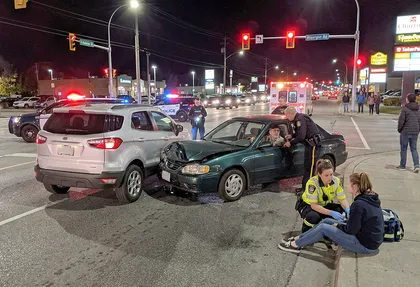
No. Age alone does not establish fault. Liability depends on each person’s conduct and whether that conduct contributed to the crash.
An older driver may be found responsible when evidence shows unreasonable conduct, such as ignoring a known severe vision problem or violating a relevant license restriction. An older driver may also be entirely free from fault.
Can The DMV Take Away My License Just Because Of My Age?
No. The California DMV cannot restrict or revoke a license solely based on age. However, it may review a person’s driving privileges if vision, a medical condition, test results, or driving performance raises safety concerns. Depending on the findings, the DMV may require further evaluation, impose restrictions, or take other action.
Can Poor Night Vision Affect Fault After A Crash?
Yes, but poor night vision does not automatically make a driver responsible for a crash. Fault depends on whether the driver acted reasonably under the circumstances and whether their actions contributed to the accident. For example, a driver who knew they had serious trouble seeing at night but continued driving too fast for the available visibility may be found negligent. Medical records, vision test results, witness statements, and evidence from the crash scene may help show what happened.
Discuss Your Nighttime Accident With Arash Law
Arash Law provides people hurt in nighttime crashes the legal help they need. Our night-driving accident lawyers work on a contingency fee basis, meaning you pay nothing up front and owe no attorney’s fees unless we win money for you. If we take your case, we can help you pursue compensation for your medical bills, lost wages, pain and suffering, and other losses.
Here are some traffic accident cases we’ve successfully handled:
- $4.1 Million Recovery After a Fog-Related Crash: Our client suffered multiple fractures after another driver turned left in front of their vehicle during heavy fog. After years of litigation, we recovered $4.1 million.
- $17.9 Million Auto Accident Verdict: Our attorneys secured a unanimous $17.9 million verdict for two clients injured in an auto accident, overcoming Los Angeles County’s attempts to shift fault for the accident.
- $8.8 Million Recovery After a Company Van Crash: Our client suffered severe injuries when a speeding company van driver caused a crash. Key depositions helped establish liability, leading to an $8.8 million recovery.
Disclaimer: Every case is different, and past results do not guarantee a similar outcome. These results reflect our experience handling complex personal injury claims.
We represent injured clients across California, from Los Angeles to the Bay Area. Call AK Law at (888) 488-1391 to schedule a free initial consultation with our team.