TL;DR: Defective truck parts can cause catastrophic crashes when brake, tire, steering, or hitch failures lead to rollovers, jackknifes, or multi-vehicle collisions. Liability may extend to manufacturers, maintenance providers, or trucking companies, depending on the source of the defect.
Highlights:
- Inspect brake performance issues that may signal system-wide failure risk.
- Document tire damage patterns that can indicate blowouts or tread separation defects.
- Preserve steering response evidence after sudden handling loss or directional instability.
- Secure photos of hitch and coupling damage after trailer separation incidents.
- Request maintenance and inspection records showing prior warnings or repair history.
- Collect ECM and ELD data to capture speed, braking, and driving behavior.
- Identify recall notices tied to suspected defective truck components.
Tip: Stick to documenting conditions immediately after the crash to preserve key mechanical evidence before it is lost or overwritten.
Table of Contents
A defective truck part on a commercial truck can cause a catastrophic collision. When a part fails, the driver may lose control of the vehicle before any warning is possible. The size and weight of these trucks mean the impact force can be fatal.
A brake failure or a tire blowout drastically reduces a truck’s stopping ability. The truck may swerve across lanes or jackknife on the roadway. Other drivers may have little or no time to react. A truck crash at highway speed can cause severe head, spinal, and internal injuries.
Other defective parts create similar dangers. A steering system failure can prevent the driver from controlling the truck. Defective lights can reduce visibility and make it harder for other drivers to see the truck. Faulty cargo securement equipment can allow cargo to shift or fall into traffic.
These cases are legally complex because liability can reach across the entire supply chain. Specific part failures each create distinct dangers that raise different legal questions. Depending on the facts, injured victims may seek compensation for their losses. Among these are medical expenses, lost income, pain and suffering, and other accident-related losses.
How Defective Truck Components Cause Devastating Crashes
Commercial trucks can carry up to 80,000 pounds, which puts massive stress on brakes, tires, and steering components. These parts must be regularly inspected and maintained to remain safe. Without proper maintenance, worn or damaged parts can fail without warning. When they do, the driver can lose control of the truck.
Below are examples of how defective truck parts can contribute to accidents:
- Brake System Failures: Worn pads, air leaks, or overheated brakes can prevent the truck from slowing in time, leading to rear-end collisions or multi-vehicle pileups.
- Tire Blowouts & Tread Separation: A sudden blowout can cause the truck to jerk to the side, leading the driver to lose lane control. That could lead to rollovers or lane departure accidents.
- Steering System Failures: A worn steering system can suddenly take control away from the driver, increasing the risks of head-on collisions and high-speed roadside impact crashes.
- Coupling & Hitch Failures: When the trailer breaks free from the cab, it becomes a loose hazard on the road. That could result in jackknifing or multi-vehicle accidents on multi-lane highways.
- Underride Guard Failures: Weak, corroded, defectively built, or missing rear and side underride guards can let a smaller vehicle slide beneath the trailer, leading to severe or fatal injuries to its occupants.
- Wheel & Axle Failures: Improperly torqued lug nuts, failed bearings, or a broken axle can cause a wheel to detach or the truck to lose control, sending a heavy wheel into traffic as a projectile.
- Suspension Failures: Broken leaf springs or failed air-suspension components can cause the truck to lean or sway, contributing to rollovers and instability under braking.
- Defective Lights & Reflectors: Burned-out brake and marker lights or missing reflective tape can make a large trailer nearly invisible at night, leading to rear-end and underride collisions.
- Cargo Securement Failures: Worn or defective straps, chains, and tie-downs can allow cargo to shift or spill onto the roadway, destabilizing the trailer and triggering a jackknife or rollover.
- Electronic & Safety System Defects: Faulty anti-lock brakes, stability control, or collision-mitigation systems can fail to intervene in an emergency, or activate incorrectly, exactly when they are needed most.
Knowing what happens after a truck crashes helps you understand who may be responsible. California law may hold trucking companies or parts makers liable for these failures.
How California’s Product Liability Law Applies To Truck Accidents

California’s product liability law imposes strict liability when a defective truck part causes an injury. The law may apply to companies along the product’s distribution chain. Manufacturers, sellers, and distributors may be legally responsible for defects in truck parts.
You do not need to prove that anyone acted carelessly. You only need to show that the part was defective and caused your injury.
California law recognizes three types of defects:
- Design Defects: The part is unsafe by design, even when built correctly.
- Manufacturing Defects: A flaw during production makes one unit dangerous.
- Failure to Warn: The maker did not warn users about known risks.
If state or federal regulations require it, manufacturers must also recall parts they know are dangerous. If a part should have been recalled but was not, proof of the recall can support your claim.
Who Can Be Held Liable For A Truck Failure?
A truck part failure does not always trace back to a single party. California’s pure comparative fault system allows liability to be divided among multiple parties based on their share of fault. Several of them may face liability for an accident caused by mechanical failures in a vehicle:
- The Trucking Company (Carrier): They can be held liable if they skipped inspections or ignored known safety problems.
- Maintenance or Repair Shops: A mechanic can be accountable for installing a part incorrectly or failing to detect a worn part.
- Cargo Loaders: Uneven or heavy cargo can cause tires or axles to fail as the truck travels.
- Parts Distributors: A company that sold or supplied a defective part may face liability, even if it did not make the part.
- The Part Manufacturer: If the defect started in the production process, the manufacturer can be held liable.
If you are thinking, “I need a personal injury lawyer,” experienced legal professionals can help. Truck accident lawyers can investigate the crash and assess who may be legally responsible.
Critical Evidence You Must Preserve After A Truck Accident
You need strong evidence to prove what caused a truck crash and who was responsible. Some of the most important evidence can disappear quickly. Preserving records early helps protect your claim and prevents the loss of key information. Without the right proof, insurers may dispute the facts of your case.
Two devices inside a modern truck can provide critical evidence after a crash:
- Electronic Logging Device (ELD) Data: ELD records can reveal hours-of-service violations, route deviations, and other driver activity.
- Electronic Control Module (ECM) Data: ECMs can record speed, braking, throttle use, and other vehicle data in the moments before impact.
Together, these devices help show what the driver was doing and how the truck operated before the collision.
Many trucking companies will not preserve this data for you. They can overwrite or delete the data within days of the crash. A spoliation letter is a legal notice that requires the preservation of evidence. An attorney can send one immediately after the crash to help prevent the loss of critical proof.
Other important records include:
- Maintenance Logs: These records can show missed repairs or ongoing mechanical issues.
- Inspection Reports: These reports can reveal safety violations or known defects.
- Recall Notices: These notices can show that a company knew about a defective part before the crash.
California Deadlines To File A Defective Truck Part Case
California law generally gives injury victims two years to file a personal injury lawsuit. The filing period usually begins on the date of the accident. If you miss that deadline, the court will likely dismiss your case. That could bar you from pursuing compensation altogether.
Some truck accidents involve government-owned vehicles, such as city garbage trucks, public utility trucks, or road maintenance trucks. In those cases, you generally have only six months from the accident date to file a government claim. This step is generally necessary before you can file a lawsuit.
- If the agency rejects your claim, you generally have six months from the date of the rejection notice to file a lawsuit.
- If they do not respond within a 45-day notice, you generally have up to two years from the date of the accident to sue.
While you focus on medical treatment and recovery, the legal deadline continues to run. Missing the correct deadline will likely prevent you from pursuing compensation, regardless of how strong your case may be.
If you are searching for free advice from truck accident lawyers, seek help as early as possible. Taking action early helps protect both your evidence and your legal rights.
Frequently Asked Questions About Defective Truck Parts
A truck accident with a defective part raises serious legal questions. You may not know who is responsible, how the claims process works, or what you can do. Under California law, you may be able to seek compensation from every party whose actions or inaction contributed to your crash.
Does Defective Equipment Cause Most Truck Accidents?
Human error causes more crashes than equipment failure. When a part fails, though, injuries can be catastrophic. The Federal Motor Carrier Safety Administration (FMCSA) reported that in about 4% of the large trucks involved in fatal crashes, vehicle-related factors were coded. “Tires” was one of the most common vehicle-related factors in these crashes. This data comes from the agency’s Large Truck and Bus Crash Facts Report for 2022, which is the most recent report available on the FMCSA site as of June 2026.
Even if equipment failure was not the main cause, you may still be able to seek compensation through a defective part claim. Whether a defective part claim applies depends on the facts of your case.
Can I Sue If The Trucking Company Says The Mechanical Failure Was Unforeseeable?
You may still have the option to pursue a claim. Trucking companies often argue that failures were unexpected. However, proper inspections may have identified the problem before the crash.
Repair logs and inspection records can show that the failure was avoidable. If a company delayed necessary repairs or ignored warning signs, such conduct can constitute strong evidence of negligence. A lawyer can use those records to help build your case.
What Role Do Maintenance Records Play In A Truck Accident Case?
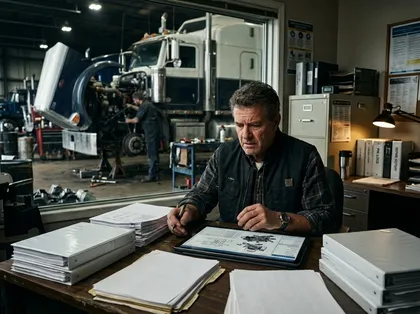
Maintenance records show whether a company performed required inspections and repairs. Missing or incomplete records may indicate that the company skipped inspections.
Records showing that a company left known defects unrepaired can serve as strong evidence of negligence. Federal rules require trucking companies to keep these records on file. If a company cannot produce them, that failure alone can help support your case.
How Does A Recall Affect My Defective Truck Part Claim?
A recall is direct evidence that the part was defective, which strengthens your product liability claim significantly. That can make it easier to connect the defective part to your injuries in court.
What Other Evidence Can Help Strengthen My Truck Accident Claim?
Several types of evidence can help support your claim. Strong evidence can help show what caused the crash and how it affected you. These include:
- Photos of the damaged truck and failed parts.
- Witness statements and crash reports.
- Medical, physical therapy, and chiropractic records.
- Records of lost wages and other losses.
Preserving these pieces of evidence early can help strengthen your claim.
Hurt In A Truck Crash Caused By Mechanical Failure? Arash Law Can Help
Commercial truck accident claims often involve multiple parties and require detailed evidence. Our truck accident lawyers help injured victims move forward after serious crashes. We have experience handling these complex cases. That experience can make a real difference in the outcome of your case.
Time matters in these cases. Critical evidence, such as vehicle data and maintenance logs, can disappear quickly after a crash. Our legal team takes immediate steps to preserve that evidence and investigate the cause of the collision.
If you’re concerned about fees, you may be wondering, “Do lawyers only get paid if they win?” Arash Law works on a contingency fee basis. That means you don’t pay the attorney’s fees unless we recover compensation for you.
Call AK Law at (888) 488-1391 to schedule a free initial consultation. Tell us what happened, and we can discuss how our team can help you.