TL;DR: You may need a workers’ comp lawyer for disputed benefits or a personal injury lawyer for a possible claim against another party. Some workplace injuries require both types of legal help, but not necessarily two separate firms. Before hiring, ask who will handle each claim, track deadlines, share evidence, and coordinate settlement decisions.
Whether you require a workers’ compensation lawyer, a personal injury lawyer, or both depends on your injury and legal needs. A workers’ comp lawyer may help if your employer’s insurer denies or disputes benefits. You may need a personal injury lawyer if someone outside your employer caused your injury. Both may help when each claim requires different legal services. An attorney can review the circumstances and explain which type of representation may be appropriate.
Table of Contents

I Was Hurt While Working, and Someone Outside My Employer May Be Involved. How Do I Choose the Right Lawyer and Avoid Confusion Over Who Handles Each Claim?
Choose a lawyer with relevant work-injury experience who clearly explains which claims they will handle. First, ask whether your circumstances support workers’ compensation, a third-party personal injury claim, or both. Then confirm which services each lawyer agrees to provide.
For example, a dog bite during a delivery may support workers’ compensation and a separate claim against the dog owner. An on-duty collision caused by another driver may also involve both types of claims. Eligibility depends on the facts and applicable law. Our guide explains the differences between workers’ compensation claims and personal injury lawsuits.
Having two possible claims does not automatically mean you need two lawyers. One firm may agree to handle both matters, or separate lawyers may divide the work. You may also manage a straightforward workers’ compensation claim yourself while a personal injury lawyer handles the third-party case.
To avoid confusion, ask these questions before hiring:
- Which Claims Will You Handle? Ask about experience with workers’ compensation proceedings and third-party injury claims. Confirm which matters the lawyer agrees to accept.
- Who Will Investigate the Accident? Identify who will collect reports, contact witnesses, preserve evidence, review insurance coverage, and communicate with each insurer.
- Who Will Track the Deadlines? Confirm who handles workers’ compensation filings, civil lawsuits, and any required government claims.
- How Will You Share Records and Coordinate Settlements? Ask how counsel will exchange medical reports and insurer letters. Confirm how they will review settlements that could affect the other claim.
- Who Will Address Reimbursement and Future Benefits? Identify who will review benefit payments, address reimbursement demands, and assess potential credits against future workers’ compensation benefits.
- How Much Will Representation Cost? Request written details about attorney fees, case expenses, and any fee-sharing arrangements.
- Who Will Provide Updates? Identify your main contact for each claim, how often to expect updates, and what information you must provide.
Your written agreements should match these answers and identify any services excluded or tasks you must handle yourself. Clear responsibilities help prevent missed deadlines, duplicated work, and confusion over who handles each claim.
Key Facts About Hiring Workers’ Comp and Personal Injury Lawyers.
- A workplace injury does not always require two separate lawyers. California’s Division of Workers’ Compensation (DWC) confirms that injured workers can manage their claims without an attorney.
- Workers may pursue third-party claims alongside their workers’ compensation benefits. California Labor Code § 3852 permits qualifying civil claims against responsible third parties.
- Each lawyer should clarify exactly which legal tasks they handle. California Rule of Professional Conduct 1.2 permits reasonable limits on representation with the client’s informed consent.
- Workers’ compensation and personal injury lawyers handle different legal proceedings. Workers’ comp lawyers address benefit disputes before the Workers’ Compensation Appeals Board. Personal injury lawyers handle civil claims against responsible parties.
- Related claims may require coordination before either legal case settles. California Labor Code §§ 3856 and 3860 govern reimbursement and settlement issues involving workers’ compensation and third-party recoveries.
When Should You Hire a Workers’ Comp Lawyer?
Consider hiring a workers’ comp lawyer when you need help obtaining or protecting benefits after a workplace injury. California generally provides workers’ compensation benefits without requiring an injured employee to prove employer negligence.
Those benefits may include medical care, disability payments, and other benefits allowed by law. However, disputes can arise over whether an injury qualifies or what benefits the insurer must provide.
A workers’ comp lawyer may help you with:
- A denied workers’ compensation claim.
- Delayed or disputed medical treatment.
- Incorrect disability payments or ratings.
- Disagreements over your ability to return to work.
- Hearings before the Workers’ Compensation Appeals Board (WCAB).
- Settlement terms that affect future benefits.
You do not always need an attorney to receive these benefits. The DWC confirms that workers can represent themselves, even when they disagree with a claims administrator. Legal help may be useful when disputes become difficult to resolve.
A workers’ comp lawyer does not automatically handle a separate lawsuit against another person or company. Understanding what workers’ compensation lawyers do can help you compare their usual responsibilities with the services in your agreement. Ask whether the attorney also agrees to handle any third-party injury claim.

When Should You Hire a Personal Injury Lawyer?
Consider hiring a personal injury lawyer when someone apart from your employer may be legally responsible for your workplace injury. The lawyer can investigate the accident, identify responsible parties, review insurance coverage, and assess whether a separate civil claim is available.
California’s exclusive remedy rule generally limits claims against employers for ordinary workplace negligence to workers’ compensation (Labor Code § 3602). It also protects coworkers acting within the scope of employment (Labor Code § 3601).
Exceptions may permit lawsuits against illegally uninsured employers or employers whose conduct meets specific statutory requirements. Coworkers may also face civil liability when their intoxication or willful, unprovoked physical aggression causes an injury. A lawyer can assess whether an exception applies.
Other incidents may support a claim against a third party, such as:
- A negligent driver hits you while you are working.
- A dog bites you while you are making a delivery.
- Defective equipment causes an injury in your workplace.
- Another contractor causes an accident at a construction site.
- A property owner fails to address a dangerous condition.
A third party’s involvement does not automatically establish liability. Your lawyer must assess that party’s legal responsibility and how their conduct or product contributed to your injury.
A qualifying third-party claim may proceed alongside workers’ compensation. It may seek damages for pain and suffering and for financial losses that workers’ compensation does not fully cover. A personal injury lawyer can evaluate those damages. However, the lawyer may not handle disputes over your workers’ compensation benefits.
What if Your Employer Does Not Have Workers’ Compensation Insurance?
You may need both types of legal representation if your employer lacks workers’ compensation coverage illegally. California Labor Code § 3706 allows qualifying workers to sue uninsured employers.
Eligible workers may also seek benefits through the Uninsured Employers Benefits Trust Fund (UEBTF) when an uninsured employer fails to pay the benefits awarded. Payment is not automatic; specific filing and procedural requirements apply.
Ask an attorney to assess both options and confirm who will handle the workers’ compensation proceedings, any UEBTF claim, and the civil lawsuit.
Can One Lawyer Handle Both Claims, or Should You Hire Two?
One lawyer or firm may handle both claims if it provides those services and agrees to represent you in both matters. The best arrangement depends on your legal needs, each attorney’s work, and the agreement you sign.
Consider these options:
- One lawyer or firm may be appropriate when they agree to handle both claims. Ask whether separate attorneys or teams will manage the workers’ compensation and civil matters.
- Separate lawyers may be appropriate if your workers’ comp attorney does not handle personal injury lawsuits. Ask how the lawyers will coordinate their work.
- One personal injury lawyer may be enough when your workers’ compensation claim has no disputes. You can manage that claim yourself while the attorney handles the possible third-party case.
For example, after a work-related car accident, your workers’ comp insurer may deny treatment while another driver’s insurer disputes fault. A workers’ comp lawyer can address the treatment dispute, while a personal injury lawyer investigates the collision. Those lawyers may work at the same firm or separate firms.
Coordination is especially useful when:
- Your workplace accident involves several potentially responsible parties.
- Your workers’ comp claim and personal injury claim require different evidence or filings.
- The workers’ compensation insurer seeks repayment from your civil settlement.
- A settlement could affect the other claim or future benefits.
Before hiring a work injury lawyer, confirm exactly who will handle each matter, share records, track deadlines, and review settlement consequences.
Under California Rule of Professional Conduct 1.2, an attorney may limit representation when the limits are reasonable, and the client gives informed consent. Your agreement should clearly identify the services included. Do not assume that hiring a workers’ compensation lawyer means the firm accepts every legal issue arising from your accident.
Who Handles Each Part of Your Workers’ Comp and Personal Injury Claims?
Workers’ compensation and personal injury claims involve different responsibilities. The workers’ compensation claims administrator makes initial benefit decisions, while a workers’ comp lawyer helps resolve disputes. A personal injury lawyer investigates third-party liability and handles the civil claim.
The key is knowing who handles each issue, especially when both claims involve the same injury. Whether you hire one firm or separate lawyers, confirm how responsibilities are divided and how information will be shared.
Who Is Responsible for Each Claim?
| Responsibility | Workers’ Comp Claim | Personal Injury Claim |
|---|---|---|
| Main contact | Claims administrator or workers’ comp lawyer, if hired | Personal injury lawyer |
| Benefits and treatment | Administrator reviews benefits and treatment requests; lawyer handles disputes | Lawyer reviews medical records to assess injury-related losses |
| Fault and liability | Generally not required to establish workers’ comp eligibility | Lawyer investigates whether a third party is legally responsible |
| Insurance matters | Administrator manages workers’ comp benefits | Lawyer handles the third-party insurance claim and discusses offers |
| Filing deadlines | Worker or workers’ comp lawyer tracks workers’ comp deadlines | Personal injury lawyer tracks civil claim deadlines |
| Settlement decisions | Worker decides whether to accept, subject to required approvals | Client decides whether to accept, subject to any required approvals |
What Requires Coordination Between the Two Claims?
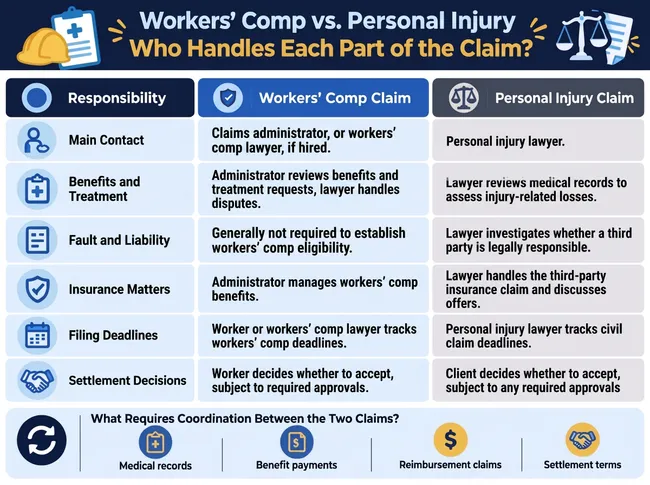
Some issues affect both claims and require communication between the responsible parties:
- Medical records: Share relevant treatment updates so both claims reflect the worker’s injuries and recovery.
- Benefit payments: Keep records of workers’ comp payments that may affect reimbursement obligations.
- Reimbursement claims: Ask the lawyers to review potential liens or deductions before a third-party settlement.
- Settlement terms: Confirm how resolving one claim could affect benefits, reimbursement rights, or the other claim.
What If You Don’t Have a Workers’ Comp Lawyer?
You can communicate directly with the claims administrator about benefits, treatment requests, and claim notices. You’ll also need to monitor workers’ comp deadlines yourself.
If you have a personal injury lawyer, share relevant workers’ comp records and updates with them. Do not assume your personal injury lawyer is also handling your workers’ comp claim. Confirm the scope of representation and who is responsible for each deadline.
Who Handles Workers’ Comp Reimbursement Before a Personal Injury Settlement?
Your personal injury lawyer may handle reimbursement demands, but confirm this responsibility in your agreement. Your workers’ comp lawyer, if you have one, should help assess effects on future benefits.
Before accepting a settlement, ask your lawyers to explain:
- Repayment: The workers’ comp insurer may seek reimbursement for benefits already paid under California Labor Code §§ 3856 and 3860. An allowed credit may reduce or delay future medical and disability payments.
- Future Benefits: A credit under Labor Code § 3861 may reduce or delay future medical and disability payments.
- Your Net Recovery: Attorney fees, costs, and repayment may reduce the amount you receive.
Employer fault and other legal rules may limit reimbursement or credit rights. Qualifying peace officers and firefighters have additional protections under Labor Code §§ 3852(b) and 3861(b). Reductions are not automatic.
Injured at work? Arash Law can review the accident and assess whether a third-party personal injury claim may apply. Our California work injury lawyers can discuss your legal needs and the scope of representation the firm may offer. Call (888) 488-1391 for a free case evaluation.
Who Tracks Filing Deadlines When You Have Both Lawyers?
Each lawyer should track the deadlines for the claims they agree to handle. Workers’ compensation proceedings and civil lawsuits follow different filing rules in California. Missing the deadline can prevent you from pursuing compensation.
| Legal Action or Requirement | General Deadline |
|---|---|
| Report your workplace injury to your employer | Within 30 days, subject to exceptions. |
| Submit the DWC-1 claim form | As soon as possible after the injury. |
| Start workers’ compensation proceedings | Generally, one year from an applicable statutory starting date. |
| File a personal injury lawsuit against a private party. | Generally, two years from the injury date. |
| Present an injury claim against a public entity | Generally, six months from the applicable starting date. |
Legal Basis: Labor Code §§ 5400, 5401, and 5405; Code of Civil Procedure § 335.1; Government Code § 911.2.
The one-year workers’ compensation period has different starting points under Labor Code § 5405. These include specific dates related to disability payments and medical benefits.
The DWC-1 is California’s workers’ compensation claim form. Complete the employee section, return it to your employer promptly, and keep a copy. This starts the workers’ comp claim process; it does not file a separate personal injury lawsuit.
Government claims also have separate deadlines for filing lawsuits after a claim is rejected or otherwise resolved. Filing a workers’ comp claim does not automatically preserve a separate personal injury lawsuit.
What Should You Bring When Meeting a Workers’ Comp or Personal Injury Lawyer?
Bring records that show how the injury happened and what claims you have already started. Your lawyer should review the payment records, claim status, and any agreements you signed.
Useful documents include:
- Accident reports, photographs, and witness information.
- Medical records and work restrictions.
- Workers’ compensation claim forms and insurer letters.
- Information about the other party and possible insurance coverage.
- Any settlement offers or releases.
- Existing attorney agreements.
Tell the lawyer if your employer has paid medical expenses or continued your wages after the incident. Those payments do not automatically prove that your workers’ compensation claim was accepted. They also do not, by themselves, mean you waived a possible third-party claim.
FAQs About Workers’ Comp and Personal Injury Claims in California
Can I Hire a Personal Injury Lawyer if I Already Have a Workers’ Comp Lawyer?
Yes. You can hire a personal injury lawyer to investigate a possible third-party claim while another attorney handles your workers’ compensation case. Review your current agreement first. Confirm whether it covers third-party lawsuits and whether your existing lawyer will coordinate with the new attorney.
Does a Work-Related Dog Bite Require Both Lawyers?
Not necessarily. A worker bitten by a dog while performing job duties may qualify for workers’ compensation. The worker may also have a claim against the dog owner under Civil Code § 3342. A personal injury lawyer can investigate that claim and any available homeowners’ insurance. You may need a workers’ comp lawyer only if benefit issues require legal representation.
Can I Change Lawyers if My Current Attorney Does Not Handle Both Claims?
Yes. Clients generally have the right to change attorneys, although existing agreements and pending proceedings may affect the process. Ask about outstanding fees, case records, and approaching deadlines. You can also keep your current lawyer and hire another attorney for the separate claim.
Will Receiving Workers’ Comp Benefits Stop Me From Filing a Personal Injury Claim?
No. Workers’ compensation benefits do not automatically prevent a separate claim against a responsible third party. California Labor Code § 3852 preserves qualifying third-party claims. However, reimbursement and credit rules may affect how the two recoveries interact.
Who Decides Whether to Accept a Settlement if I Have Two Lawyers?
You decide whether to accept a settlement after discussing the offer with your attorney. California Rule of Professional Conduct 1.2 requires lawyers to follow their clients’ settlement decisions. Workers’ compensation settlements also require approval through the workers’ compensation system.
When both claims are involved, ask each lawyer to explain how the proposed settlement could affect the other case.
How Much Does It Cost to Hire Both Lawyers?
California workers’ compensation attorney fees generally come from a portion of your benefits and require approval by a workers’ compensation judge.
Personal injury lawyers commonly charge contingency fees. California Business and Professions Code § 6147 generally requires a written agreement explaining the fee rate and how case expenses affect your recovery.
Each claim may involve a separate attorney fee, even when one firm handles both. Ask for a written explanation of fees and expenses for each matter. If lawyers from different firms divide a fee, Rule of Professional Conduct 1.5.1 requires written disclosure and your written consent. The total fee cannot increase solely because of that arrangement.
Arash Law Results in Cases Involving Both Types of Claims
Arash Law has experience handling workplace injuries involving both workers’ compensation and personal injury claims. These examples of our case results show the firm’s experience coordinating related claims arising from the same accident.
$1,000,000 — Workplace Injury: The case initially appeared limited to workers’ comp. Arash Law uncovered third-party liability and secured the maximum policy limits in under six months.
Past results do not guarantee future outcomes. Every case depends on its specific facts, evidence, and applicable law.
Talk to Arash Law About Your Work Injury and Legal Options
A workplace injury may involve workers’ compensation, a separate personal injury claim, or both. The right representation depends on what happened, who may be responsible, and whether your benefits are disputed.
Arash Law can review your circumstances and discuss whether a personal injury claim may apply alongside workers’ compensation. You can discuss your existing claim, possible legal options, and questions about coordinating representation with our team.
Call (888) 488-1391 for a free initial consultation. We are available 24/7.
Sources
- California Division of Workers’ Compensation. Attorney representation and benefits. https://www.dir.ca.gov/dwc/WCFaqIW.html
- California Division of Workers’ Compensation. Filing a workplace injury claim. https://www.dir.ca.gov/dwc/FileAClaim.htm
- California State Bar, Rules of Professional Conduct. Representation scope, settlements, and attorney fees. https://www.calbar.ca.gov/legal-professionals/rules/rules-professional-conduct/current-rules-professional-conduct/chapter-1-lawyer-client-relationship
- California Labor Code § 3601. Workers’ compensation exclusivity for coworkers. https://leginfo.legislature.ca.gov/faces/codes_displaySection.xhtml?sectionNum=3601.&lawCode=LAB
- California Labor Code § 3602. Exclusive remedy rule and employer liability exceptions. https://leginfo.legislature.ca.gov/faces/codes_displaySection.xhtml?sectionNum=3602.&lawCode=LAB
- California Labor Code § 3706. Civil lawsuits against uninsured employers. https://leginfo.legislature.ca.gov/faces/codes_displaySection.xhtml?sectionNum=3706.&lawCode=LAB
- California Labor Code § 3715. Claims involving uninsured employers. https://leginfo.legislature.ca.gov/faces/codes_displaySection.xhtml?sectionNum=3715.&lawCode=LAB
- California Labor Code § 3852. Third-party workplace injury claims and reimbursement limits. https://leginfo.legislature.ca.gov/faces/codes_displaySection.xhtml?sectionNum=3852.&lawCode=LAB
- California Labor Code § 3853. Third-party lawsuit notices. https://leginfo.legislature.ca.gov/faces/codes_displaySection.xhtml?sectionNum=3853.&lawCode=LAB
- California Labor Code § 3856. Reimbursement and attorney fees. https://leginfo.legislature.ca.gov/faces/codes_displaySection.xhtml?sectionNum=3856.&lawCode=LAB
- California Labor Code § 3860. Third-party settlements and reimbursement. https://leginfo.legislature.ca.gov/faces/codes_displaySection.xhtml?sectionNum=3860.&lawCode=LAB
- California Labor Code § 3861. Credits against future workers’ compensation benefits. https://leginfo.legislature.ca.gov/faces/codes_displaySection.xhtml?sectionNum=3861.&lawCode=LAB
- California Labor Code § 5405. Workers’ compensation filing deadlines. https://leginfo.legislature.ca.gov/faces/codes_displaySection.xhtml?sectionNum=5405.&lawCode=LAB
- California Code of Civil Procedure § 335.1. Personal injury lawsuit deadline. https://leginfo.legislature.ca.gov/faces/codes_displaySection.xhtml?sectionNum=335.1.&lawCode=CCP
- California Government Code § 911.2. Government injury claim deadline. https://leginfo.legislature.ca.gov/faces/codes_displaySection.xhtml?sectionNum=911.2.&lawCode=GOV
- California Business and Professions Code § 6147. Contingency-fee agreement requirements. https://leginfo.legislature.ca.gov/faces/codes_displaySection.xhtml?sectionNum=6147.&lawCode=BPC
- California Civil Code § 3342. Dog owner liability for bites. https://leginfo.legislature.ca.gov/faces/codes_displaySection.xhtml?sectionNum=3342.&lawCode=CIV
Disclaimer
The information on this page is for general educational purposes and does not constitute legal advice. No attorney-client relationship is formed by reading or relying on this content. If you were injured, consult a licensed California personal injury attorney about your specific situation. Arash Law: (888) 488-1391.