TL;DR: California workers’ compensation usually does not cover a car accident during a normal commute, but job-related travel exceptions may apply. Injured drivers may still have a claim against the at-fault motorist, so work orders, trip records, crash evidence, and deadlines can matter.
Usually, no. California workers’ compensation generally does not cover injuries from an employee’s ordinary commute to a fixed workplace. Under the going-and-coming rule, routine travel to and from work normally falls outside the course of employment. However, exceptions may apply when the trip has a stronger connection to the employee’s job.
That does not mean an injured commuter has no claim. If another driver caused the crash, the worker may still have a personal injury claim against that driver even when workers’ compensation does not apply. If the trip itself qualifies as work-related, both workers’ compensation and a third-party claim may be possible under the circumstances.
Table of Contents

I Was Driving to Work When Another Driver Caused a Crash. Does California Workers’ Compensation Cover an Accident During My Normal Commute?
Usually, no. California workers’ compensation generally does not cover injuries from an ordinary commute between home and a regular workplace. Under the going-and-coming rule, travel is normally treated as personal rather than part of the employee’s work duties.
Coverage may still be possible if the trip involved a work-related exception, such as a special errand, employer-required travel, required vehicle use, employer-provided transportation, or travel between work locations. Whether an exception applies depends on facts such as the trip’s purpose, the employer’s instructions, and how the employee’s vehicle was used for work.
Even if workers’ compensation does not cover the commute, a claim against the driver who caused the crash may still be available. If the trip qualifies as work-related and another driver was negligent, the worker may potentially have both a workers’ compensation claim and a separate third-party injury claim.
Key Facts About California Commute Crashes
- Ordinary commutes are generally excluded. Travel between home and a fixed workplace at regular hours normally falls under California’s going-and-coming rule.
- A work errand can change the analysis. A trip may qualify differently when an employer directs an employee to perform a special task during the commute.
- Required vehicle use can matter. California decisions recognize an exception when an employee is expressly or implicitly expected to provide transportation for the employer’s purposes.
- Employer transportation can matter too. Transportation furnished as an incident of employment may bring travel within the course of employment, depending on the arrangement.
- Another driver may still be liable. Workers’ compensation rules do not erase a potential negligence claim against a driver who caused the collision.
- Proof of a trip’s purpose can support a claim. Schedules, employer instructions, vehicle requirements, reimbursement records, and crash evidence can help establish why the employee was traveling.
How California’s Going-and-Coming Rule Applies to a Normal Commute
California’s going-and-coming rule generally means that workers’ compensation does not cover injuries that happen during an employee’s normal trip between home and a regular workplace. In plain language, the law usually treats that commute as personal travel because the employee is not yet performing work for the employer.
California Labor Code § 3600 requires a compensable injury to arise out of and occur in the course of employment. A routine drive to the same workplace for a regular shift usually does not, by itself, meet that standard. The trip needs a stronger connection to the job, such as an employer-directed errand, required travel, or another work-related purpose.
California courts have also rejected the idea that voluntarily working from home automatically turns travel between home and the office into travel between 2 workplaces. The employment arrangement must make the home a worksite, rather than the employee simply choosing to work there (Wilson v. Workers’ Compensation Appeals Board, 16 Cal.3d 181). A 2026 Court of Appeal decision applied the same principle to a hybrid employee’s commute in an employer-liability case. (Chang v. Southern California Permanente Medical Group (2026), B340770).
The distinction can be summarized this way:
| Travel Situation | General Workers’ Compensation Treatment |
|---|---|
| The employee travels normally from home to a fixed workplace. | The trip is generally treated as an ordinary commute. |
| The employer sends the worker on a special errand. | The trip may fall within an exception. |
| The worker must travel between assigned work locations. | The travel may be part of the employment. |
| The employer requires the worker to bring a vehicle for job duties. | The required-vehicle exception may apply. |
| The employer furnishes transportation as part of the job. | The transportation arrangement may affect coverage. |
Legal basis: California Labor Code § 3600 and California decisions applying the going-and-coming rule.
Exceptions to California’s Going-and-Coming Rule That May Make a Commute Crash Work-Related
A commute does not become compensable simply because it has some connection to the job. The relevant question is whether the circumstances bring the travel within the course of employment rather than an employee’s ordinary trip to or from work.
Special Errands and Employer Requests
A special errand can create an exception when the employer directs the employee to perform a work-related task outside the normal commute. If an employee is asked to pick up supplies, attend a work event, or complete another employer-directed task on the way to work, this exception may apply.
The details matter. The employee should be able to identify what the employer requested, when the request was made, where the employee was supposed to go, and whether a personal deviation occurred before the crash.
Required Vehicle Use
Using a personal car does not automatically prevent workers’ compensation coverage. California recognizes a required-vehicle exception when an employer expressly or implicitly requires an employee to have transportation available to carry out the job.
That issue can arise when an employee must use a vehicle to visit customers, move among work locations, transport equipment, or perform other assigned driving. The key is not simply who owns the car. The more important question is whether having that vehicle available was part of fulfilling the employer’s requirements.
Employer-Provided Transportation and Travel Arrangements
Employer-provided transportation can also change the going-and-coming analysis. California authority recognizes that transportation furnished as an incident of employment may extend the employment relationship into the trip.
Travel payments may also be relevant, particularly when the arrangement goes beyond reimbursement for an ordinary local commute. However, mileage reimbursement, a transportation subsidy, or participation in a commute program does not automatically make you eligible for workers’ compensation coverage. The complete arrangement still matters.
Travel Between Work Locations
Travel required by the job is different from simply getting to work. California cases have recognized coverage where the structure of the employment required workers to have transportation available to move between separate work locations during the workday.
A worker driving from one assigned location to another, to an off-site meeting, or to perform a work task may therefore present a very different case from that of an employee making a regular morning commute.
Trips That Serve an Employer’s Business Purpose
An employer benefit can be relevant when the employee’s travel is tied to a job requirement, a special errand, a required vehicle, or a genuine business purpose. It does not follow that every trip benefiting the employer in some broad sense becomes work-related.
California’s Supreme Court has emphasized that the going-and-coming rule and its exceptions depend on the particular employment arrangement and facts. A worker should therefore avoid assuming that a commute is either automatically excluded or automatically covered.
What Evidence Matters After a Commute Crash?

Evidence should show both what happened in the collision and why the worker was making that particular trip. When determining whether workers’ compensation coverage applies, employment records and evidence of the trip’s purpose can be as important as the accident report.
Useful evidence may include:
- Work Schedule: Shift records can show the worker’s normal hours and whether the trip occurred outside the usual routine.
- Employer Instructions: Emails, texts, dispatch messages, or written assignments can document an employer-requested errand or destination.
- Trip Purpose: Calendars, delivery records, appointment information, and other records can show why the worker was traveling.
- Route Information: Location and route records can help distinguish a normal commute from travel to another work site or assigned destination.
- Vehicle-Use Requirements: Employment policies, job descriptions, or communications may show whether a personal vehicle was expected for work duties.
- Mileage and Travel Records: Reimbursement documents can help establish how the employer treated the travel, although reimbursement alone does not decide coverage.
- Accident Records: Collision reports, scene photographs, witness information, and vehicle photographs can support a separate claim against the driver who caused the crash.
- Medical Records: Prompt documentation can connect the injuries and treatment to the collision.
Preserve electronic records early. Messages, location information, surveillance footage, dispatch data, and other records may disappear before any formal filing deadline expires.
If you were injured while driving to work and are unsure whether the trip qualifies as an ordinary commute, a work injury lawyer can review the travel facts and potential claims. Arash Law’s California workers’ compensation lawyers can discuss your options during a free initial consultation at (888) 488-1391.
Can You Still Bring a Third-Party Claim if Workers’ Comp Doesn’t Apply?
Yes. A third-party injury claim is separate from workers’ compensation. Even if the going-and-coming rule excludes a normal commute, you may still pursue the at-fault driver if their negligence caused the crash. Who pays if someone crashes into you depends on liability, available insurance coverage, and the circumstances of the collision.
A third-party claim focuses on fault and the losses caused by the collision. Job-related benefits, by contrast, depend on whether the injury arose out of and occurred in the course of employment.
If both claims apply, California Labor Code § 3852 generally preserves the injured worker’s right to pursue damages from a responsible third party. The employer or insurer may have reimbursement or credit rights for benefits already paid. A third-party claim may also cover additional losses, including pain and suffering.
Deadlines Can Run on Different Tracks
A commute crash can involve several different deadlines because workers’ compensation, personal injury, property damage, and government claims follow separate rules. Missing a statute of limitations or an applicable government-claim deadline can bar that claim entirely.
- Workers’ Compensation Injury Notice: California Labor Code § 5400 generally requires notice of a work-related injury within 30 days. Late notice can jeopardize benefits. Additionally, this reporting requirement is different from the deadline for commencing workers’ compensation proceedings. The Division of Workers’ Compensation advises employees to report a work injury promptly.
- Workers’ Compensation Claim Form: If a commuting exception may apply, request a Workers’ Compensation Claim Form (DWC 1) from your employer. The employer must generally provide it within one working day of learning of the work-related injury. Complete the employee section and return the form promptly to initiate the claims process.
- Workers’ Compensation Proceedings: Labor Code § 5405 generally provides one year measured from one of the triggering events specified in the statute, including the injury date where appropriate.
- Personal Injury Lawsuit: California Code of Civil Procedure § 335.1 generally provides 2 years to bring an injury lawsuit against a private party.
- Property Damage Lawsuit: Code of Civil Procedure § 338 generally provides 3 years to sue for damage to personal property, such as a vehicle.
- Government Claim: If a public entity may be responsible, Government Code § 911.2 generally requires presentation of a personal injury or property claim within six months.
These legal periods should not be conflated with the urgency of preserving evidence. Traffic video, electronic records, witness recollections, and employer communications may become unavailable much sooner.
Frequently Asked Questions About California Commute Crashes and Workers’ Compensation
Does Workers’ Compensation Cover an Accident While Driving to Work in California?
Generally, an ordinary commute is not covered. California’s going-and-coming rule normally excludes injuries sustained while traveling between home and a fixed workplace. However, recognized exceptions can apply when employment creates a stronger connection to the trip.
What If My Employer Asked Me to Stop Somewhere Before Work?
An employer-directed stop may qualify as a special errand depending on the facts. The request, purpose of the stop, timing of the trip, and any personal deviation can all affect whether the travel occurred in the course of employment.
What If I Was Driving My Own Car?
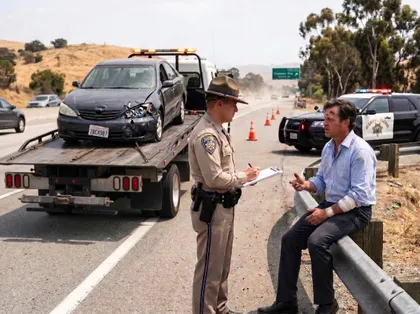
Driving a personal vehicle does not automatically defeat a workers’ compensation claim. If the employer expressly or implicitly required the vehicle to be available for work duties, California’s required-vehicle exception may apply.
Does Mileage Reimbursement Mean My Commute Is Covered?
Not always. Mileage reimbursement can serve as evidence of the employer’s travel arrangement. However, it does not automatically make every commute work-related travel. Courts examine the reason for the payment and the broader employment circumstances.
What If I Were Driving Between Two Work Locations?
Travel between work locations can be within the course of employment when the job requires the employee to make that trip. California authority distinguishes this type of required travel from an ordinary trip between home and a regular workplace.
Can I Sue the At-Fault Driver If Workers’ Compensation Does Not Cover My Commute?
Yes, potentially. The fact that workers’ compensation does not apply to an ordinary commute does not prevent an injured person from pursuing a negligence claim against the driver who caused the collision.
Can I Have Both a Workers’ Compensation Claim and a Car Accident Claim?
Yes, when the crash qualifies as work-related, and someone outside the employment relationship caused it. Labor Code § 3852 generally preserves an injured employee’s right to seek tort damages from a responsible third party. However, reimbursement and credit issues may affect how much you can recover from the two claims.
Get Help Determining Which Claim Applies
Whether a commute crash qualifies for workers’ compensation can turn on details that are easy to overlook: why the worker was traveling, what the employer requested, whether a vehicle was required, where the employee was headed, and whether the trip served an active business purpose.
Arash Law can review those facts and determine whether a workers’ compensation claim, a third-party car accident claim, or both may be available. Call (888) 488-1391 for a free case evaluation.
Sources
- California Court of Appeal, Chang v. Southern California Permanente Medical Group (2026), B340770, discussing the going-and-coming rule and the home-worksite distinction in an employer-liability case. https://www4.courts.ca.gov/opinions/archive/B340770.PDF
- California Department of Industrial Relations, Division of Workers’ Compensation, How to File a Claim, explaining the DWC 1 claim form, the employer’s one-working-day obligation, and the workers’ compensation claims process. https://www.dir.ca.gov/dwc/FileAClaim.htm
- California Department of Industrial Relations, Workers’ Compensation Appeals Board, Kang Lee, ADJ13239935, discussing the going-and-coming rule and routine commutes. https://www.dir.ca.gov/wcab/Panel-Decisions-2022/Kang-LEE-ADJ13239935.pdf
- California Department of Industrial Relations, Workers’ Compensation Appeals Board, Jean Concepcion, ADJ18125440, discussing the required-vehicle exception. https://www.dir.ca.gov/wcab/Panel-Decisions-2025/Jean-CONCEPCION-ADJ18125440.pdf
- California Department of Industrial Relations, Workers’ Compensation Appeals Board, Norman Miller, ADJ18137953, discussing ordinary commutes and the special-mission or special-errand exception. https://www.dir.ca.gov/wcab/Panel-Decisions-2025/Norman-MILLER-ADJ18137953.pdf
- California Department of Industrial Relations, Workers’ Compensation Appeals Board, Jasmine Orberg, ADJ10492342, discussing employer-provided transportation. https://www.dir.ca.gov/wcab/Panel-Decisions-2023/Jasmine-ORBERG-ADJ10492342.pdf
- California Department of Industrial Relations, Division of Workers’ Compensation, provides information for injured workers on reporting injuries and available benefits. https://www.dir.ca.gov/dwc/injuredWorker.htm
- Judicial Branch of California, California Courts Self-Help Guide, personal injury and civil filing deadlines. https://www.selfhelp.courts.ca.gov/civil-lawsuit/statute-limitations
- California Labor Code § 3600, conditions for workers’ compensation liability. https://leginfo.legislature.ca.gov/faces/codes_displaySection.xhtml?lawCode=LAB§ionNum=3600
- California Labor Code § 3852, third-party claims involving injured employees. https://leginfo.legislature.ca.gov/faces/codes_displaySection.xhtml?lawCode=LAB§ionNum=3852
- California Labor Code § 5400, workers’ compensation injury notice. https://leginfo.legislature.ca.gov/faces/codes_displaySection.xhtml?lawCode=LAB§ionNum=5400
- California Labor Code § 5401, workers’ compensation claim-form requirements. https://leginfo.legislature.ca.gov/faces/codes_displaySection.xhtml?lawCode=LAB§ionNum=5401
- California Labor Code § 5405, time limits for commencing workers’ compensation proceedings. https://leginfo.legislature.ca.gov/faces/codes_displaySection.xhtml?lawCode=LAB§ionNum=5405
- California Code of Civil Procedure § 335.1, personal injury statute of limitations. https://leginfo.legislature.ca.gov/faces/codes_displaySection.xhtml?lawCode=CCP§ionNum=335.1
- California Code of Civil Procedure § 338, property damage statute of limitations. https://leginfo.legislature.ca.gov/faces/codes_displaySection.xhtml?lawCode=CCP§ionNum=338
- California Government Code § 911.2, government-claim presentation period. https://leginfo.legislature.ca.gov/faces/codes_displaySection.xhtml?lawCode=GOV§ionNum=911.2
Disclaimer
This content is for educational purposes only and is not legal advice. Reading this page or contacting the firm through it does not create an attorney-client relationship. Laws and deadlines can depend on the specific facts, so consult a licensed California attorney about your situation. Arash Law — (888) 488-1391.