TL;DR: Contact a California wrongful death attorney to request a phone or video consultation, specifying your language and time zone. Identify potential claimants, any estate representative, and anyone helping the family communicate. Prepare available death, relationship, accident, financial support, and authority records. Counsel should review eligibility, existing representation, deadlines, and which later steps can occur remotely. You do not need a complete file to request the consultation.
To start a wrongful death consultation from abroad, ask a California lawyer for a phone or video appointment. Say where each family member lives, who may join the call, and whether you prefer to speak in Spanish. Share the date and location of the accident and bring the records you already have.
Living abroad does not by itself prevent an eligible person from bringing a California wrongful death claim. California law considers a person’s relationship to the deceased and, for some relatives, whether the deceased supported them financially. A relative in California can help arrange the call while the lawyer identifies who may have a claim and who can act on behalf of whom.
Arash Law’s wrongful death lawyers can review eligibility, existing representation, authority documents, and urgent deadlines during the consultation.
Key Facts About California Wrongful Death Claims for Families Abroad
- Families abroad can request a consultation by phone or video. California law allows certain relatives or the deceased person’s court-appointed personal representative to bring a wrongful death claim.
- Living abroad does not automatically prevent a claim. Eligibility depends on family relationships and sometimes on financial dependency.
- Bring available records. Death certificates, accident reports, relationship documents, and financial support records help counsel assess the case.
- Helping communicate does not establish legal authority. Counsel must verify who can hire a lawyer or approve a settlement on behalf of others.
- Later remote procedures require individual review. Signing, testimony, and travel requirements depend on the proceeding and the participant’s country.
Table of Contents

Our Family Lives Outside the United States, and a Relative Died in an Accident in California. Who Should Be Involved in the Consultation, and What Documents Should We Prepare?
Invite family members who may have a claim and tell the lawyer if a court has appointed someone to handle the estate. A relative who helps with calls or records can join if the participants agree and the lawyer confirms who should attend. Gather any death or accident records, documents that show family relationships or financial support, and paperwork that gives someone authority to act.
In one example, a family lives abroad after a relative dies in a California accident. A family member in California asks how to hire a lawyer. The map shows how the family could organize the first call. The roles and records are examples to check with the family.
Family Consultation Map
| Relationship to the Deceased | Location | Record Holder and Available Records | Permission to Confirm | Authority to Verify |
|---|---|---|---|---|
| Surviving spouse or partner, if any | Abroad. Note country and time zone. | Spouse or partner may hold a marriage or partnership record. | May the California relative schedule the call or share the record? | Who can sign the fee agreement or give instructions for this person? |
| Child or parent, if any | Abroad or in California. Note each person’s location. | Child or parent may hold birth records. A parent may have remittance receipts. | Who may join the call or share the records? | Does anyone need a representative, such as a child under 18? |
| Relative coordinating the call | California | Relative may have the investigating agency’s name and report number. | Has each person agreed to the help and its scope? | Is there a document authorizing any proposed signing or decision? |
| Personal representative, if appointed | Where the representative is based | Representative may hold the court appointment and estate records. | Which estate records may the representative share? | What does the appointment authorize, and whose interests does it cover? |
Tell the lawyer if anyone in California or abroad already has an attorney. Have the lawyer’s name, whom they represent, what they were hired to do, and any signed agreement or court papers on hand. Mention any power of attorney and who signed it. Counsel should check its scope and whether it is still valid before anyone relies on it.
Your Family Lives Abroad and a Relative Died in California: Who to Contact and What to Gather
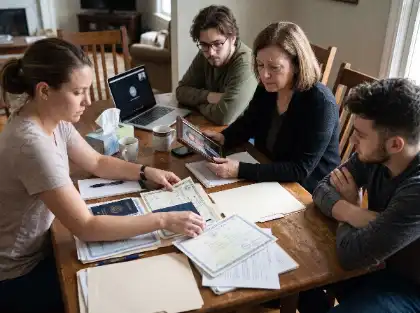 Contact a California wrongful death attorney to discuss the consultation, and gather the records you already have. The investigating agency, the coroner, the funeral home, and the relevant consulate may assist with reports, death documentation, or arrangements for the remains.
Who to Contact First?
Contact a California attorney, the investigating agency, and a funeral home. Consular assistance may also help with international arrangements.
- Home country embassy or consulate (if the deceased was not a U.S. citizen). Contact the decedent’s home country embassy or consulate in the United States as soon as possible. They can issue official notifications and assist with arrangements to return the remains to your country.
- Destination country’s consulate in the United States (if the remains will be sent abroad). Whether or not the deceased was a U.S. citizen, if your family plans to return the remains to another country, contact that country’s consulate in the United States. It can explain the documents required to bring the remains into that country, and the funeral home typically coordinates with the relevant authorities.
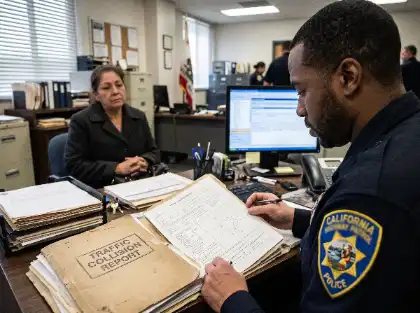
- California law enforcement or the county coroner. The California Highway Patrol (CHP) prepares a collision report (Form CHP 555) for traffic fatalities on state highways. This report is primary evidence in wrongful death cases. Contact the agency that investigated the incident for its report-request procedure. For a CHP collision report, an eligible party of interest or authorized representative can use Form CHP 190 (Vehicle Code § 20012).
- A licensed California funeral home. A California-licensed funeral home can manage local arrangements and coordinate with foreign consulates or home-country funeral services to return the remains.
Which Records Should the Family Prepare?
- Death and accident records. Bring a death certificate if you have one, plus the date and location of the accident, the investigating agency, and the report number. If the California Highway Patrol investigated a crash, ask counsel who can request the report.
- Relationship and support records. Gather available birth, marriage, partnership, or adoption records. Include transfer receipts or other records of regular support if it may affect eligibility. Flag any differences in names or dates across documents.
- Case and authority records. Gather available insurance letters, attorney agreements, court appointments, and documents someone is relying on to act for another person. Note who holds any originals.
You can schedule the call while you gather records. For more on what the lawyer may ask, see what happens during a first consultation for wrongful death.
How Should I Arrange a Spanish-Language Consultation From Abroad?
Ask for a phone or video consultation in Spanish. Share each participant’s country, time zone, and contact details. Confirm whether an interpreter is needed, how to send records securely, and whether anyone needs to speak privately with the lawyer.
Bring records in their original language and any translations you already have. Before paying for translation or certification, ask what’s required. Your lawyer can also confirm which steps, such as signing documents, notarizing them, or testifying, can happen remotely.
Call Arash Law at (888) 488-1391 for a free initial consultation. We can review who may qualify, who can act for your family, and what steps may be available from abroad. Hablamos español.
Who Can File a California Wrongful Death Claim From Abroad?
California law does not require U.S. citizenship, permanent residency, or physical presence in California to file a wrongful death claim. Under CCP § 377.60, standing depends entirely on your family relationship to the person who died and, in some cases, on financial dependency.
These family members may file:
- Surviving Spouse or Domestic Partner: Eligible based on the marital or domestic partnership with the deceased at the time of death.
- Surviving Children: Eligible regardless of where they live or whether they are U.S. citizens.
- Issue of Deceased Children: Grandchildren of the decedent may also have standing if their parent (the decedent’s child) predeceased the decedent.
- Surviving Parents: May qualify through intestate succession when the deceased left no surviving descendants. Financially dependent parents may qualify even when descendants survive.
- Other Qualifying Dependents: Financially dependent putative spouses, children of putative spouses, and stepchildren may qualify even when closer heirs survive. Financial dependency alone does not make every relative eligible.
California law requires all eligible heirs to join together in a single lawsuit. Separate parallel claims are not permitted. This rule ensures the court can fairly allocate any recovery among the family.
If you are unsure whether your relationship qualifies, the attorneys at Arash Law can assess your standing and, where appropriate, guide your family through the entire process from abroad, including the initial wrongful death consultation after the fatal accident.
What Compensation Can Foreign Relatives Recover?
Eligible relatives living abroad may recover financial losses and compensation for lost companionship through a wrongful death claim under CCP § 377.61. A separate survival action may recover losses the deceased suffered before death. Both claims may be available, but they compensate different losses and have different eligibility requirements.
-
Wrongful Death Claim: It compensates eligible surviving family members for financial losses and the loss of their loved one’s companionship and support.
- Economic Damages: Funeral and burial costs, the present value of the financial support your relative would have provided over their expected lifetime, the value of household services they would have contributed, and lost income.
- Non-Economic Damages: The loss of your loved one’s love, companionship, comfort, care, assistance, protection, affection, society, and moral support.
- Survival Action: It compensates the estate for economic losses the deceased suffered before death, such as medical bills and lost wages during any period of survival. For survival actions filed on or after January 1, 2026, California law generally does not allow recovery for the deceased’s pre-death pain, suffering, or disfigurement (CCP § 377.34). The temporary exception that allowed those damages applied only to cases filed between January 1, 2022, and December 31, 2025.
For more detail about these categories, you can read our guide to what damages are available in a wrongful death case.
Deadlines to Know After a Wrongful Death in California
- Lawsuit against a private party. You generally have two years from the date of death to file. Missing the deadline can bar the claim (Code of Civil Procedure § 335.1).
- Claim against a government agency. Before suing, you generally must submit a written claim within six months of the death. For a state agency such as Caltrans, use the California Department of General Services’ Government Claims Program. For a city, county, or school district, submit the claim directly to that agency (Government Code §§ 911.2 and 915).
- Lawsuit after a government claim. The agency generally has 45 days to respond. If it mails or personally delivers a legally compliant rejection notice, you generally have six months from that date to sue. If it gives no compliant written notice, you generally have two years from the date of death, provided you met the claim requirements (§§ 912.4 and 945.6).
- Late government claim. If you miss the six-month deadline, you can generally apply to submit a late claim within a reasonable time and no later than one year after the death. If the agency denies the application, you may be able to ask a court for relief (§§ 911.4 and 946.6).
- Deadlines for minors. The lawsuit deadline against a private party may pause until age 18. Government claim deadlines generally still apply, though special late-claim rules may help.
Promptly share any agency notices and time-sensitive evidence, such as video footage, with counsel. For more on which cases may qualify, see what is considered wrongful death in California.
FAQs About a California Wrongful Death Consultation From Abroad
Does Our Family Have to Travel to California to File the Lawsuit or Attend Trial?
You generally do not need to travel to California to start the case, but trial attendance and other travel requirements need individual review. You can begin the consultation from abroad by phone or video.
Later travel requirements depend on your role, the court’s orders, and the rules in your location. California’s remote-deposition rules do not override foreign-country restrictions. Your attorney should confirm whether signing, testimony, or attendance can occur remotely before making arrangements.
Can Undocumented Family Members or Non-U.S. Citizens Receive a Settlement?
Yes. California Evidence Code § 351.2 bars the use of immigration status as evidence in a wrongful death or personal injury case. It also prohibits the other side from raising immigration status during discovery, the formal process of exchanging evidence before trial. All family members, regardless of citizenship or documentation status, have the same right to seek compensation under California law.
How Are Legal Documents Served Internationally for a California Claim?
International service of process in California litigation is governed by CCP § 413.10(c), subject to the Hague Service Convention when applicable. The Hague Service Convention establishes procedures for serving judicial documents abroad. Your California attorney handles this process; it is a standard procedural step in international cases and does not require your family to travel.
Can We Sue a Foreign Company If They Caused the Accident in California?
Yes, if a California court has jurisdiction, it has the legal authority to hear the case against that company. Specific jurisdiction may exist when the company purposefully established California contacts and the claim arises from or relates to those contacts. General jurisdiction usually exists where a company is incorporated or has its principal place of business.
An accident occurring in California does not automatically establish jurisdiction over every foreign company involved. Your attorney can evaluate the company’s California connections and their relationship to the death.
Get a Wrongful Death Consultation with Arash Law
Distance should not prevent your family from pursuing justice, and working with attorneys who understand what international families face in California courts can make the difference between a dismissed claim and a full recovery.
Our wrongful death lawyers at Arash Law can review eligibility, authority to act, deadlines, and practical next steps. During a free initial consultation, we can review your family’s circumstances and explain what documents and arrangements may be needed to proceed from abroad.
Arash Law’s attorneys work on a contingency fee basis, meaning you pay no attorney fees unless your case results in a recovery.
Call Arash Law at (888) 488-1391. Our team is available 24 hours a day, and we consult families anywhere by video or phone.
Sources
- California Code of Civil Procedure § 377.60: Eligibility to bring a wrongful death action, including family relationship and dependency requirements. California Legislative Information. https://leginfo.legislature.ca.gov/faces/codes_displaySection.xhtml?lawCode=CCP§ionNum=377.60.
- California Code of Civil Procedure § 335.1: Standard two-year statute of limitations for wrongful death lawsuits. California Legislative Information. https://leginfo.legislature.ca.gov/faces/codes_displaySection.xhtml?lawCode=CCP§ionNum=335.1.
- California Government Code § 911.2: General six-month deadline to present a public-entity claim involving death or personal injury. California Legislative Information. https://leginfo.legislature.ca.gov/faces/codes_displaySection.xhtml?lawCode=GOV§ionNum=911.2.
- California Government Code § 945.6: Lawsuit deadlines following compliant written rejection notices and when no compliant written notice is given. California Legislative Information. https://leginfo.legislature.ca.gov/faces/codes_displaySection.xhtml?lawCode=GOV§ionNum=945.6.
- California Probate Code § 8402: Residency requirements for estate personal representatives and exceptions for named executors or successor executors. California Legislative Information. https://leginfo.legislature.ca.gov/faces/codes_displaySection.xhtml?lawCode=PROB§ionNum=8402.
- California Code of Civil Procedure §§ 377.30–377.34: Authority to pursue survival actions, successor-in-interest requirements, and recoverable damages. California Legislative Information. https://leginfo.legislature.ca.gov/faces/codes_displayText.xhtml?lawCode=CCP&division=&title=3.&part=2.&chapter=4.&article=3.
- California Rules of Court, Rule 3.1110(g): English translations of foreign-language exhibits, certified under oath by a qualified interpreter. Judicial Branch of California. https://courts.ca.gov/cms/rules/index/three/rule3_1110
- California Rules of Professional Conduct, Rules 1.2 and 1.6: Attorney-client decision-making authority, including settlement decisions, and protection of confidential client information. State Bar of California. https://www.calbar.ca.gov/legal-professionals/rules/rules-professional-conduct/current-rules-professional-conduct/chapter-1-lawyer-client-relationship
- California Civil Jury Instructions, CACI No. 3921: Wrongful death damages involving an adult decedent, including financial support, funeral expenses, household services, and loss of companionship. Judicial Branch of California. https://courts.ca.gov/system/files/file/judicial_council_of_california_civil_jury_instructions_2026.pdf
- California Highway Patrol. Request a Crash Report: Eligibility requirements, the CHP Crash Portal, and Form CHP 190. https://www.chp.ca.gov/traffic/request-a-crash-report/
- U.S. Department of State. Foreign Affairs Manual, 7 FAM 920: Foreign-country restrictions and permission requirements for depositions, including remote testimony. https://fam.state.gov/fam/07fam/07fam0920.html
Disclaimer
Past results do not guarantee future outcomes. Every case is different. The information on this page is for general educational purposes and does not constitute legal advice. No attorney-client relationship is formed by reading or relying on this content. If you were injured, consult a licensed California personal injury attorney about your specific situation. Arash Law: (888) 488-1391.