TL;DR: If someone runs a red light and you hit them, California law typically holds the red-light runner primarily liable. However, insurers may argue you share blame for speeding or failing to avoid the crash. Under comparative negligence rules, your percentage of fault can reduce your recovery, and you have 2 years from the date of the crash to file a lawsuit before losing the right to sue.
Highlights:
- Call 911 and move to safety while waiting for emergency responders to arrive.
- Take photos of lights, vehicles, and the intersection layout.
- Collect witness names and contact information at the scene.
- Check for traffic cameras and nearby surveillance footage.
- Avoid giving recorded statements to insurance adjusters early.
- Save dashcam, phone, and vehicle data immediately after a crash.
- Track medical visits and symptoms from the first day.
Tip: Stick to facts when speaking with insurers and avoid guessing about signal timing or speed.
Table of Contents
If you hit someone who ran a red light, California law usually holds the red-light runner responsible for the crash. Running a red light breaks California traffic laws. It may also qualify as negligence per se under Evidence Code §669. That means the traffic violation itself can create a rebuttable presumption that the driver acted negligently.
Even if your vehicle struck the other car, legal responsibility usually remains with the driver who entered the intersection unlawfully and caused the collision.
However, responsibility is not always all-or-nothing. California follows a pure comparative negligence rule. If your actions contributed to the crash, such as speeding or failing to react in time, a court may assign you a percentage of the blame. That percentage then reduces your compensation.
To determine who is responsible, investigators review the evidence and the facts surrounding the collision. California’s Vehicle Code provides the legal basis for holding a driver who runs a red light liable.
Why The Red-Light Runner Is Usually At Fault Under California Law
The California Vehicle Code generally gives drivers with a green light the legal right of way. A driver who runs a red signal violates that statute and is usually responsible for the resulting crash. Under the law, every driver must:
- Come to a complete stop at the limit line, crosswalk, or intersection before entering on a red light.
- Remain stopped until the signal permits movement.
- Avoid entering the intersection against a red signal.
A driver who enters the intersection on a red light violates the law, even if they made only a rolling stop or entered moments after the signal changed.
That violation carries significant legal weight because of a doctrine called negligence per se. Under that doctrine, a violation of a traffic safety law serves as evidence that the driver breached their duty of care. A duty of care is the legal obligation to drive safely and avoid harming others.
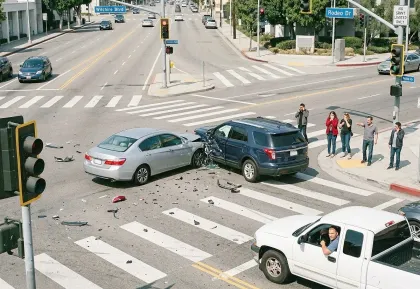
In California, someone can be negligent per se if they violate a safety law and cause the exact type of harm the law was meant to prevent. Drivers who run a red light may be considered negligent per se. Their actions can cause intersection accidents, such as T-bone crashes, in which the front of one vehicle strikes the side of another. These crashes can cause severe injuries due to limited side-impact protection.
Some insurance companies still try to shift some of the blame onto the injured victim by questioning their speed, reaction time, or other actions before the collision. Experienced red-light accident lawyers can use the traffic violation and other evidence to challenge those arguments and protect your claim.
How California’s Comparative Fault Rule Affects Your Claim
California follows a rule called “pure comparative negligence.” It can affect your claim not by barring it, but by allowing a court to reduce your compensation by your percentage of fault. For example, if a court finds you 40% at fault, you can recover up to 60% of your damages. Damages include medical bills, lost wages, and pain and suffering.
Even when another driver runs a red light, the insurance company may not accept full liability right away. Some adjusters look for reasons to reduce your claim. They review your actions before and during the crash. Then they look for facts that support arguments that you contributed to the collision. Under the comparative fault rule, this may reduce the amount of compensation they owe.
Insurance companies often try to shift part of the blame by arguing that:
- Your speed contributed to the crash or increased the severity of your injuries.
- You weren’t paying attention to the road, so you failed to notice the other car and missed a chance to react sooner.
- You had enough time to brake or swerve before the collision.
Fault disputes become more difficult when drivers disagree about signal timing, visibility, or blocked sight lines. In those situations, the evidence plays a key role in determining fault and compensation. A red-light accident lawyer can use relevant proof to challenge these arguments and protect your claim.
Situations That Can Complicate Fault In A Red-Light Crash
Fault is not always automatic in a red-light accident. When drivers disagree about the traffic signal, investigators must look at the evidence to determine who had the right of way. Without supporting evidence, both drivers may claim they entered the intersection legally.
Some of the most common fault disputes involve:
- Left-Turn Collisions: Drivers making left turns must yield to oncoming traffic in California. Because of that rule, police and insurers may initially blame the turning driver. However, if the oncoming driver ran a red light, that driver may be at fault. Physical evidence often plays a key role in proving what happened.
- Yellow-Light Disputes: California law allows drivers to enter an intersection on a yellow light. The dispute usually centers on whether the driver entered while the light was still yellow or after it turned red.
- Right Turn on Red: California law allows a right turn on red after a complete stop unless posted signs prohibit it. A driver making a right turn in this scenario must still yield to oncoming traffic and pedestrians in the crosswalk. Fault disputes may focus on whether the turning driver entered safely and whether the injured driver or pedestrian had the right of way.
- Exceptions for Emergency Vehicles: Police cars, fire trucks, and ambulances may proceed through red lights when responding to emergencies. Other drivers must yield to them and clear the intersection when safe to do so. However, emergency vehicles must still use caution and activate lights and sirens when entering intersections. Fault analysis in these cases often focuses on whether each driver followed emergency response rules.
- Broken or Dark Traffic Signals: When a traffic signal is out of service, California treats the intersection as a four-way stop. Every driver must stop and yield before proceeding.
These cases require more than conflicting statements from the drivers. Investigators often rely on physical evidence and other records to determine who had the right of way.
Because fault disputes can quickly become complicated, many victims look online for free advice from a red-light accident lawyer. Working with an attorney early can help you understand the evidence, assess your legal options, and protect your claim before the insurance company shapes the narrative.
Evidence That Can Help Prove The Other Driver Ran A Red Light
Key evidence in a red-light crash can disappear within days. Camera systems often overwrite footage on a set schedule. Vehicle data can disappear if someone repairs, resets, or continues driving the vehicle. Strong evidence carries far more weight than conflicting statements from the drivers.
Some of the most useful evidence includes:
- Red Light & Intersection Cameras: Many California intersections use cameras that capture vehicles entering against a red signal. These systems may record the light color, timestamp, and license plate number.
- Dashcams & Business Surveillance Footage: Dashcams and nearby security cameras may capture the traffic signal, the vehicles involved, and the collision itself. Many systems overwrite footage within 24 to 72 hours.
- Eyewitness Testimony: Witnesses who saw the crash may help confirm which driver had the right of way.
- Event Data Recorders (EDRs): Most vehicles built after 2012 contain a black box, formally known as an EDR. It records information such as speed, braking, and throttle use in the moments before a crash. That data may help show whether the other driver slowed down, accelerated, or attempted to stop.
- Police Reports & Traffic Citations: Officers may document statements from drivers and witnesses, as well as physical evidence at the scene. These findings could support claims that the other driver ran a red light. While their accident report itself does not provide conclusive or admissible proof of liability in a civil claim, insurers may consider it during early fault decisions. Any citations issued at the scene may also influence liability assessments.
Because evidence can disappear quickly, acting promptly matters. An attorney can send a preservation letter requiring the other driver to retain relevant evidence. If a nearby business has surveillance footage, red light accident lawyers can request that footage and seek a court order when necessary.
What To Do Immediately If Someone Runs A Red Light And You Hit Them

What you do after a side-impact crash can affect the strength of your claim. Focus on getting medical care, preserving evidence, and protecting your legal rights. Missing an important step can make it harder to pursue compensation, so consider taking the following steps as soon as possible:
- Get Medical Care: See a medical professional even if you feel fine. Side-impact crashes can cause whiplash, internal injuries, and other conditions that may not appear right away. Records from your doctor or chiropractor can strengthen your claim.
- Preserve Time-Sensitive Evidence: Gather and save photos, videos, witness information, and camera footage as soon as possible. Some evidence may disappear within days.
- Avoid Recorded Statements: Avoid giving a recorded statement to the other driver’s insurance company without legal advice.
- Do Not Accept an Early Settlement: Insurance companies may make quick offers before they know the full extent of your injuries.
California law limits the time you have to file a lawsuit. Under the California Code of Civil Procedure, most injury victims have two years from the date of the crash to file suit. If a government vehicle or public entity was involved, you generally must file a government claim within six months. Exceptions may apply in limited situations.
If you need a personal injury lawyer, do not wait too long to seek help. A lawyer can protect important evidence, track deadlines, and help you avoid mistakes that could hurt your claim. Similar to situations where someone runs a red light and hits you, early legal guidance can make a significant difference in preserving your rights and building a strong claim.
Frequently Asked Questions About Red-Light Accident Cases
Red-light accidents often lead to questions about fault, proof, and legal responsibility. Below are answers to some of the most common questions California crash victims ask after a driver runs a red light.
Is The Red-Light Runner Always 100% At Fault In California?
Not always. A driver who runs a red light is usually at fault for violating California traffic laws. However, an insurer may argue that you share some fault if your actions contributed to the crash, such as speeding or driving while distracted.
What Happens If There Are No Witnesses Or Cameras To Prove They Ran The Red Light?
You can still prove what happened without witnesses or camera footage. Specialists examine physical evidence, including skid marks, vehicle damage, debris positions, and signal timing. From that, they can determine how fast each car was going and where the crash started. Courts and juries find this reconstructed evidence persuasive.
If I Was Turning Left And Hit Someone Who Ran A Red Light, Who Is Liable?
Left-turn drivers must yield to oncoming traffic before turning. Because of that rule, they are often presumed at fault after a collision. The exception is when the oncoming driver runs a red light.
If you turned on a green light and the other driver entered the intersection against a red light, that driver is likely liable for the crash. A traffic camera, dashcam, or witness can help prove what happened if the other driver claims they had the green light.
Get Answers About Fault And Compensation After A Red-Light Crash
When an insurance company tries to pin blame on you for a crash you didn’t cause, the facts alone may not be enough. An experienced attorney knows how insurers build those arguments and how to push back.
Arash Law handles red-light accident cases across California. If the other driver ran a red light, we can evaluate fault, challenge blame-shifting tactics, and explain your legal options.
Concerned about the cost of hiring a lawyer? Wondering, “Do lawyers only get paid if they win?” At Arash Law, or AK Law, we work on a contingency fee basis. You pay no attorney’s fees unless we recover compensation for you.
Call (888) 488-1391 for a free initial consultation. We will review your case, explain your options, and discuss how to preserve important evidence.