TL;DR: Yes, report a hit-and-run to law enforcement and your insurer to protect your Uninsured Motorist (UM) coverage. Notify your insurer as soon as possible. Your policy may contain specific notice requirements, so review the policy. If the driver remains unidentified, submit the required sworn statement to your insurer within 30 days. Missing a deadline may give your insurer grounds to deny or dispute UM benefits.
Yes, you should promptly report a hit-and-run to your insurance company if you may seek coverage. Your policy may contain specific notice requirements. For an unidentified-driver UM claim, California’s statutory reporting deadlines run from the date of the accident. This coverage may apply if there was qualifying physical contact with the unknown vehicle and the required reporting steps are completed.
Key Facts About California Hit-and-Run Insurance Claims
- Several reporting deadlines may apply. An injury or fatal crash may trigger a 24-hour law-enforcement reporting requirement. Your policy may require prompt notice to the insurer. An unidentified-driver UM claim also has a 30-day sworn-statement requirement.
- UM claims involving an unidentified hit-and-run driver have special requirements. Under California Insurance Code § 11580.2, bodily-injury UM coverage for an unidentified vehicle generally requires physical contact, a law-enforcement report within 24 hours, and a timely sworn statement to the insurer.
- California law limits when an insurer may treat a driver as principally at fault for rating purposes. An insurer generally cannot make that determination unless the driver’s actions or omissions were at least 51% of the legal cause of the accident, and the other regulatory requirements are met.
- Send a preservation demand to nearby businesses and traffic agencies right away. Surveillance footage may be overwritten or deleted, so act quickly after the crash.
Table of Contents

How Soon Must You Report a California Hit-and-Run?
The following reporting obligations may apply after a hit-and-run in California, each with its own deadline. Meeting deadlines is key to keeping UM eligibility and avoiding coverage disputes. Your specific policy terms and the details of the crash also play a role in what applies.
- The 24-Hour Police Report: If the crash causes injury or death, California law requires a written report to the appropriate law enforcement agency within 24 hours. This duty applies even if you do not have UM coverage. For an unidentified-driver UMBI claim, a separate 24-hour reporting requirement also applies under California Insurance Code § 11580.2.
- The Insurer Notice Requirement: Let your insurer or agent know right away. The California Department of Insurance (CDI) suggests giving immediate notice. However, the exact rules may vary based on your policy. Waiting to notify your insurer may create a coverage dispute, particularly if the delay affects the insurer’s ability to investigate the claim. A delay does not necessarily mean coverage is automatically lost.
- The 30-Day Sworn Statement: This applies when the at-fault driver is not identified. California Insurance Code § 11580.2 requires you to send a sworn statement to your insurer within 30 days of the collision. This sworn statement says you have a damage claim against an unknown person. It also outlines the facts of the collision. Missing this deadline may give your insurer grounds to dispute or close the claim.
- The 10-Day California Department of Motor Vehicles (DMV) SR-1: This report is a separate legal obligation from the police report. Any traffic collision that results in injury, death, or property damage over $1,000 requires you to file an SR-1 directly with the DMV within 10 days. You can do this task through the DMV’s online portal.
What Information Should You Give Your Insurance Company?
When reporting the hit-and-run, provide the facts you know without guessing. Useful information may include:
- The date, time, and location of the crash.
- The police agency and report number, if available.
- A description of the fleeing vehicle, including its color, make, model, partial plate number, or distinguishing features.
- Photos or videos of the scene and vehicle damage.
- Witness names and contact information.
- Whether you were injured and whether you received medical care.
- A general description of the property damage.
If you do not know an answer, say so rather than estimating. You can provide additional records as they become available. If you were injured or the insurer requests a detailed statement, hit-and-run accident attorneys can help you understand what information to provide and communicate with the insurer on your behalf.
What Happens After You Report the Hit-and-Run?
After receiving notice, the insurer may open a claim and assign an adjuster. The adjuster may review the policy to determine whether uninsured motorist coverage, collision coverage, Medical Payments coverage, a collision deductible waiver, or other coverage applies.
Depending on the claim, the insurer may also:
- Request the police report and photographs.
- Inspect or obtain an estimate for vehicle damage.
- Ask for witness information.
- Request medical records, bills, or proof of lost income for an injury claim.
- Ask for a written or recorded statement.
- Investigate whether an unidentified-driver UM claim satisfies California’s physical-contact and reporting requirements.
Your own insurer still evaluates whether the policy covers the loss, whether another driver was legally responsible, and how much is owed. As a result, you and the insurer may disagree about fault, coverage, injuries, or the value of the claim. California Insurance Code § 11580.2 provides for arbitration of disputes over whether an insured is legally entitled to recover from an uninsured motorist and the amount of damages when the parties cannot agree.
For a serious injury claim, an attorney can review coverage, communicate with the insurer, document damages, and address disputes before the claim is resolved.
How Your Auto Insurance Covers a Hit-and-Run
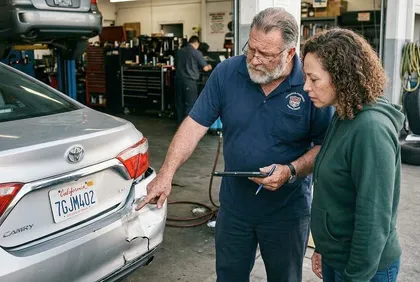
Your own auto insurance may cover hit-and-run losses through several types of coverage. In California, bodily injury UM claims involving an unknown driver are subject to additional rules. There must be qualifying physical contact, and you must report the accident to the appropriate law enforcement agency within 24 hours.
-
Uninsured Motorist Bodily Injury (UMBI): UMBI can compensate an insured for bodily injury caused by an at-fault uninsured motorist or a qualifying unidentified hit-and-run driver. Recoverable damages may include medical expenses, lost income, and non-economic damages, subject to the policy and California law.
California requires insurers issuing qualifying auto liability policies to offer UMBI coverage, although an insured may, as permitted by law, reject or reduce it in writing.
- Uninsured Motorist Property Damage (UMPD): UMPD may pay for vehicle damage caused by an uninsured motorist, subject to statutory and policy requirements. California generally requires that the uninsured vehicle, or its owner or operator, be identified for UMPD, so this coverage ordinarily does not pay for damage caused by a completely unidentified hit-and-run vehicle.
- Medical Payments Coverage (MedPay): An optional coverage that may pay eligible medical expenses up to the policy limit, regardless of fault. It can start paying before a UMBI claim is settled and does not require proof that the other driver was at fault.
- Collision Coverage: This coverage may pay for damage to your insured vehicle regardless of fault, subject to your deductible and policy terms. If the hit-and-run driver remains unidentified, collision coverage may therefore be the primary source of insurance payment for damage to your own vehicle.
Remember, under California Insurance Code § 11580.26, UMPD and Collision Deductible Waiver (CDW) won’t pay if the hit-and-run driver is completely unknown. If you only have collision coverage and don’t know the other driver, you usually have to pay your regular deductible.
California’s standard minimum auto liability limits are:
- $30,000 per person for bodily injury or death.
- $60,000 per accident for bodily injury or death.
- $15,000 for property damage.
The $30,000/$60,000 bodily injury limits are also relevant to the minimum UMBI coverage required under California law when UM coverage has not been validly rejected or reduced as permitted by law.
Should I Report the Hit-and-Run If I Do Not Have UM Coverage?
Usually, you should still review your policy and notify the insurer promptly if you may have a covered loss. Other coverage may apply even if you rejected UMBI. For example, collision coverage may pay for vehicle damage, and MedPay may cover certain medical expenses regardless of fault.
Reporting can also preserve a record of the collision while law enforcement continues trying to identify the fleeing driver.
Will a Hit-and-Run Claim Raise Your California Insurance Rates?
A hit-and-run claim does not automatically mean your premium will increase. California’s rating rules limit when an insurer may classify a driver as principally at fault, and qualifying hit-and-run crashes may receive a not-at-fault presumption. The insurer may still investigate the circumstances before deciding how to classify the loss.
Reporting a collision and receiving payment under a policy are separate issues. Do not delay a potentially time-sensitive UM claim just because you are worried that reporting the crash will raise your premium. If you believe your insurer improperly increased your rate because of a not-at-fault accident, you may contact the California Department of Insurance for information or assistance.
What to Do After a Hit-and-Run to Protect Your Claim
As soon as possible after a hit-and-run accident, consider these steps:
- File a police report.
- Document the scene.
- Request nearby surveillance footage so it isn’t overwritten.
Surveillance footage may be overwritten, witnesses can become harder to locate, and insurers may begin investigating the claim. Acting promptly can help preserve useful evidence.
Here is what to do immediately:
- Do not chase the fleeing driver. Following the other vehicle is dangerous and can undermine your claim by making your own actions a factor in the analysis.
- Call 911 if anyone is injured or there is an emergency. Contact law enforcement promptly after the hit-and-run. An officer may investigate the crash, but you should not assume that an officer’s response automatically satisfies every reporting requirement. For an injury or fatal crash, Vehicle Code § 20008 requires the driver to make or cause to be made the required written report within 24 hours.
- Document the scene before you leave. Take photos of the damage to your vehicle from different angles. Also, photograph skid marks and debris. Take note of any partial license plate numbers, vehicle colors, or unique markings while the details are still fresh.
- Collect witness contact information. Names, phone numbers, and descriptions of what witnesses saw can be important when the driver is never found.
- Send preservation letters right away. Write to nearby businesses, gas stations, transit agencies, and other entities that may have relevant footage. Surveillance footage may be overwritten or deleted, so request preservation as soon as possible.
- File your police report and notify your insurer the same day. Give your insurer the report number, vehicle description, and timeline. Reporting promptly can help avoid disputes over reporting requirements.
- Review your policy before giving a recorded statement to your own insurer. Your insurer may request a written or recorded statement as part of its investigation, and your policy may require reasonable cooperation. If you are unsure about your rights or obligations, you may wish to consult an attorney before providing a detailed statement.
How Arash Law Has Recovered for California Accident Victims
Arash Law has recovered over $1 billion for injured clients across California. The case results below are examples of hit-and-run cases our attorneys have handled.
$1,000,000 – Hit-and-Run: Our client was a rideshare driver injured in a hit-and-run. After years of pursuing benefits under the underinsured motorist policy, the case resolved for the maximum policy limits one week before the scheduled arbitration.
Past results do not guarantee future outcomes. Every case is different, and results depend on the specific facts and evidence involved.
How Arash Law Handles Hit-and-Run Insurance Claims
When Arash Law represents an injured hit-and-run victim, our attorneys can identify potentially available insurance coverage, obtain available collision evidence, prepare required claim materials, and communicate with the insurance carrier.
For an unidentified-driver UM claim, the legal team can also evaluate whether the physical-contact and reporting requirements are satisfied, prepare supporting evidence of the client’s injuries and damages, and address disputes over liability or the claim’s value.
Call (888) 488-1391 to speak with a hit-and-run accident attorney.
Frequently Asked Questions About Hit-and-Run Insurance Claims in California
Do Police Investigate Hit-and-Runs in California?
Yes. Law-enforcement agencies may investigate hit-and-run collisions using statements, vehicle information, scene evidence, witnesses, or available video.
For insurance purposes, reporting the crash is especially important when the other driver is unknown because California’s UMBI statute generally requires a law-enforcement report within 24 hours for an unidentified hit-and-run vehicle.
There is also a separate DMV reporting requirement when the SR-1 rules apply.
Can You Sue Someone for a Hit-and-Run in California?
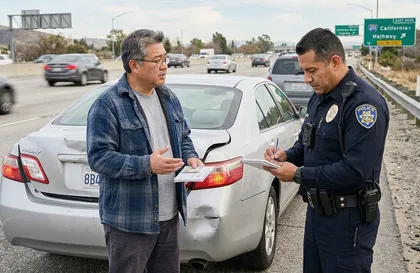
Yes, if the driver is later identified, you can pursue California traffic accident claims against them in civil court. Based on California Code of Civil Procedure § 335.1, you generally have 2 years from the incident date to submit a personal injury case. If the driver flees the scene, that conduct may be relevant to the case and may constitute a separate violation of California’s hit-and-run laws. However, leaving the scene does not by itself establish who caused the collision.
For many private personal injury claims, the filing deadline may be delayed while the injured person is a minor. If the driver has criminal charges for the hit-and-run, the criminal case will go on separately from your civil claim.
Can I Still File a Claim if the Hit-and-Run Driver Is Never Found?
Yes. If an unidentified vehicle makes qualifying physical contact with you or a vehicle you are occupying, California Insurance Code § 11580.2 may allow the driver to be treated as uninsured for UMBI purposes if the other statutory requirements are met. Your UMBI coverage can help pay for lost income, medical bills, and pain and suffering. Just make sure you file within the deadline.
What Is a Miss-and-Run Accident in California?
A miss-and-run, or phantom vehicle accident, happens when a careless driver causes your crash without hitting your car. For example, a driver cuts across your lane, causing you to swerve and hit a guardrail. If a reliable witness can identify the other vehicle or driver, you may file a claim against them. However, the claim may not fall under UMBI coverage because California generally requires qualifying physical contact between the unknown vehicle and the insured or a vehicle the insured was occupying.
Does a Hit-and-Run Show Up on Your Insurance Record?
A reported hit-and-run claim will generally become part of your insurer’s claim records. For California rating purposes, however, whether you were principally at fault is more important than the mere fact that a claim was reported.
California’s rating rules generally prevent an insurer from treating a driver as principally at fault unless the driver’s actions or omissions were at least 51% of the legal cause of the accident, and the other regulatory requirements are met. A hit-and-run involving contact with another vehicle is subject to a rebuttable presumption that the insured was not principally at fault when the accident was reported to legal authorities within a reasonable time.
How Do I Pay for a Lawyer After a Hit-and-Run?
Arash Law handles hit-and-run cases on a contingency-fee basis. You do not pay attorney’s fees up front. Attorney’s fees are paid only if we recover compensation for you. California Business and Professions Code § 6147 requires contingency-fee agreements to be in writing and signed by both the attorney and the client.
Can You Report a Hit-and-Run the Next Day in California?
Yes. If the crash happened less than 24 hours ago, reporting it the next day may still be timely. For an unidentified-driver Uninsured Motorist Bodily Injury claim, California Insurance Code § 11580.2 generally requires the accident to be reported to the appropriate law-enforcement agency within 24 hours.
Vehicle Code § 20008 also requires the driver of a non-common-carrier vehicle involved in an injury or fatal crash to make or cause to be made a written report to the appropriate law-enforcement agency within 24 hours.
If you were too injured to report the crash yourself, a passenger, family member, or someone acting on your behalf may be able to make the report. If more than 24 hours have passed, report the collision as soon as possible and document why there was a delay.
A late report may affect an uninsured motorist claim, but it does not necessarily mean coverage is automatically lost. A hit-and-run accident attorney can review the circumstances and explain how the delay may affect your claim.
Speak to an Attorney After a Hit-and-Run Accident in California
If a driver hit you and fled, your window to preserve evidence and file a valid claim may already be narrowing. Our hit-and-run accident lawyers can collect your UM claim file, prepare and submit required sworn statements, and communicate with your insurer. This can help you understand what information to provide and avoid unnecessary disputes with the insurer.
Arash Law has recovered over $1 billion for injured clients, including recoveries in traffic accident and hit-and-run cases. These cases can involve disputes over coverage, reporting requirements, liability, and the amount of damages. Our attorneys understand how insurers handle these claims and how to document the claim and address coverage or liability disputes when they arise.
Call (888) 488-1391, available 24 hours a day, for a free case evaluation.
Arash Law: Make Them Pay, Call AK.
Sources
- California Insurance Code § 11580.2 — Uninsured Motorist Coverage; unidentified vehicles; physical-contact, law-enforcement reporting, sworn-statement, and arbitration requirements:
https://leginfo.legislature.ca.gov/faces/codes_displaySection.xhtml?lawCode=INS§ionNum=11580.2- California Vehicle Code § 20008 — Written reporting requirement for injury and fatal collisions:
https://leginfo.legislature.ca.gov/faces/codes_displaySection.xhtml?lawCode=VEH§ionNum=20008- California Insurance Code § 11580.1 — Motor vehicle liability policy requirements:
https://leginfo.legislature.ca.gov/faces/codes_displaySection.xhtml?lawCode=INS§ionNum=11580.1- California Insurance Code § 11580.26 — Uninsured Motorist Property Damage and Collision Deductible Waiver coverage:
https://leginfo.legislature.ca.gov/faces/codes_displaySection.xhtml?lawCode=INS§ionNum=11580.26- California Insurance Code § 1861.02 — Private passenger automobile insurance rating factors:
https://leginfo.legislature.ca.gov/faces/codes_displaySection.xhtml?lawCode=INS§ionNum=1861.02- California Office of Administrative Law — Official California Code of Regulations information and access:
https://oal.ca.gov/publications/ccr/- California Code of Civil Procedure § 335.1 — Two-year personal injury limitations period:
https://leginfo.legislature.ca.gov/faces/codes_displaySection.xhtml?lawCode=CCP§ionNum=335.1- California Business and Professions Code § 6147 — Contingency-fee agreements:
https://leginfo.legislature.ca.gov/faces/codes_displaySection.xhtml?lawCode=BPC§ionNum=6147- California DMV — Report of Traffic Accident Occurring in California (SR-1); 10-day reporting requirement:
https://www.dmv.ca.gov/portal/dmv-virtual-office/accident-reporting/- California DMV — Financial Responsibility, Insurance Requirements, and Collisions; current $30,000/$60,000/$15,000 standard limits:
https://www.dmv.ca.gov/portal/handbook/california-driver-handbook/financial-responsibility-insurance-requirements-and-collisions/- California Department of Insurance — So You’ve Had an Accident, What’s Next?; accident reporting and insurer-notice guidance:
https://www.insurance.ca.gov/01-consumers/105-type/95-guides/01-auto/hadaccident.cfm- California Department of Insurance — Automobile Insurance Guide:
https://www.insurance.ca.gov/01-consumers/105-type/95-guides/01-auto/auto101.cfm- Arash Law — Case Results:
https://arashlaw.com/case-results/Disclaimer
Past results do not guarantee future outcomes. Every case is different. The information on this page is for general educational purposes only and does not qualify as legal advice. Reading or relying on this content does not create an attorney-client relationship. If you were injured, consult a licensed California personal injury attorney about your specific situation.