TL;DR: Who is responsible for injured athletes depends on whether someone acted negligently or failed to keep the property safe. Athletes assume the risk of normal play, but schools or stadiums may be liable for unsafe conditions that cause injuries, and claims face strict deadlines.
Highlights:
- Get medical care immediately and follow all treatment recommendations.
- Photograph the field, court, equipment, and any hazardous conditions.
- Report the injury to coaches or venue staff and request an incident report.
- Collect witness names and contact details from teammates, staff, and bystanders.
- Save any waivers, tickets, or event paperwork you signed or received.
- Track medical bills, missed work, and other out-of-pocket costs.
- Talk to a lawyer early about negligence, premises liability, and assumption-of-risk defenses.
Tip: When speaking with a school, venue, or insurer, stick to facts and avoid guessing while you preserve documents and photos.
Table of Contents
The Olympics are exciting. The games are a show of the best there is in sports. We watch the Olympic Games to see the absolute majesty of the athletes who compete at that level. There are risks that Olympic athletes take to win the gold.
Even if athletes are not competing at the Olympic level, sports injuries are still common. When athletes get hurt, who is responsible for paying their medical bills? Injuries mainly result from accidents. When accidents occur, identifying the responsible party can be difficult when a player gets injured during after-school practice, at an away game, or when a professional player is hurt in a professional stadium or arena.
Knowing where to begin after an injury can be overwhelming. When an injury happens, understanding your legal options is an important step toward seeking compensation for your injuries. Our team of attorneys has decades of experience representing clients in injury cases. Contact us or schedule a free initial consultation to discuss your injury claims.
How Common Are Injuries In The Winter Olympics?
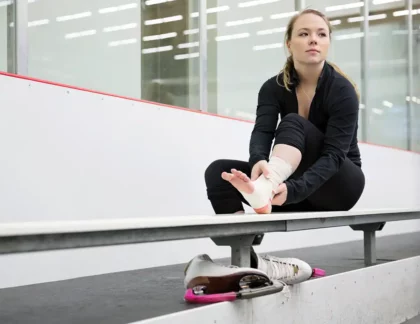
During the Winter Olympics, athletes report various types of injuries. Some of the injuries the competitors suffered were potentially career-ending and life-threatening. These injuries are just examples of how a competitor can hurt themselves during training and at the actual event.
Injuries that athletes have suffered during past Winter Olympics include:
- Torn ACL
- Broken collarbone
- Broken back
- Broken wrist
- Knee injuries
- Broken heels and feet
The statistics show that events requiring high jumps and excessive speed are riskier for athletes and may lead to an increased injury rate.
Are The Summer Games Safer Than The Winter Olympics For Athletes?
Statistics have shown that summer games tend to be safer for athletes than winter games. The competitions explain the tendency for safer summer games played in the Winter Olympics versus the Summer Olympics.
Winter Olympic Sports
- Slopestyle and cross snowboarding
- Freestyle skiing
- Ice hockey
- Figure skating
- Alpine skiing
- Bobsledding
- Cross-country skiing
- Short track skiing
- Skeleton
- Curling
- Luge
- Biathlon
- All Nordic sports combined
These games have seen more injuries than the summer games due to the Winter Olympics’ unique facts surrounding the winter games. First, the weather brings about its challenges. Strong winds and heavy snow make slip and fall accidents more likely, and the consequences of those falls more severe. Research indicates that Winter Olympic sports with elements of high speed and aerial maneuvers carry a significant risk of injury.
Injuries At The Summer Olympics
Unlike the phenomenon observed at the Winter Olympics, the weather does not appear to contribute to the rate of injury at the Summer Olympics. At the Summer Games, athletes are more likely to be injured solely based on the type of event in which they compete.
The most common types of injuries that athletes at the Summer Olympics experience are:
- Strains
- Tendonitis in the arm
- Lower back
- Thigh
These types of harm are typically caused by overuse and repetitive use. For example, curling was found to have a low rate of injury. Curling did not suffer any injuries from a single and sudden impact. However, athletes reported that curling injuries occurred gradually and over time because of repetitive use of the same muscle areas.
But the biggest question might be, “Who is responsible for paying damages to injured athletes?”
Who Is Responsible For Injured Athletes?
When an accident occurs because of the actions of another person or entity, the injured party must prove that the responsible party acted negligently.
Negligence is a type of civil claim that arises when a person or entity is alleged to have failed to act with reasonable care for the safety of others. There are four elements of negligence. If each component is not met, the plaintiff’s negligence claim fails. A plaintiff must prove the following elements to establish grounds for a negligence claim.
Duty
Duty refers to the obligation to act as a reasonable person would in the same or similar circumstances. A duty may arise out of a relationship between two parties. For example, a business owner owes a duty to their patrons to eliminate unreasonable risks of harm.
Breach
A defendant breaches a duty when they fail to act as a reasonable person or business in the same or similar circumstances. It may be challenging to understand if a breach has occurred. It can be challenging for the student-athlete and their family to determine if the school breached its duty, thus causing their injury. Generally, a school is not liable for typical damages because of playing a sport.
Schools, stadiums, and arenas are not responsible for a broken bone, separated shoulder, or even a concussion if the injury occurred simply from playing the sport. However, just like any other business, schools, stadiums, and arenas are responsible for their actions. If a school fails to maintain a basketball court and a player is hurt, the player may have a claim against the school for negligence.
Causation
A plaintiff must prove that the defendant’s breach of its duty caused the plaintiff’s injury. To establish proximate cause, a plaintiff must show that the defendant’s action is sufficiently related to the harm suffered by the plaintiff.
Damages
Even if a plaintiff can prove duty, breach, and causation, the negligence lawsuit will fail if the plaintiff does not suffer damages. Damages may include medical bills, lost wages, property damage, pain and suffering, or other non-economic damages.
The California personal injury lawyers at our law firm can help clients build well-supported cases based on various legal theories, including negligence. Contact us via phone or online to schedule a free initial consultation if you have been injured because of another’s negligence.
What Is Premises Liability, And How Does It Affect My Case As An Athlete?
Premises liability is an area within the law of negligence that explains the legal obligation property and business owners have to other people on their property. Sports arenas and other businesses must keep the business property safe from unreasonable risks of harm. For sports arenas, the owners must maintain all areas. The owner of sports stadiums and arenas must maintain the property for the safety of the athletes and bystanders.
Concerning the safety of athletes, a stadium or sports arena must maintain the areas where the game is played. Defense lawyers argue that athletes, including Olympic athletes, risk injury by participating in the game. However, that does not alleviate the burden from the property owner of having to maintain the field, court, or anywhere else that the game is played. The property owner may be liable for injuries caused by an improperly maintained soccer field, for example.
As for bystanders, the business owner is liable for not fixing foreseeable and unreasonable risks of harm. Suppose a bystander is hurt because of negligent maintenance. They may have a claim for negligence against the property and business owner.
Get in touch with a law firm near you if you have been injured on a business owner’s property. Our attorneys have experience handling complex injury cases and pursuing compensation for clients. Call or visit us online to schedule a free initial consultation to discuss your legal options.
What Is Assumption Of Risk?
The biggest argument against liability that defense lawyers and insurance companies present is that athletes assume the risk of injury when they agree to play in the game. What is meant by “assumption of the risk?” Assumption of risk is a legal defense to negligence. Assumption of risk means that the plaintiff put themselves in harm’s way by engaging in a particular activity. Defendants use this defense to blame plaintiffs for injuries. There are two types of assumptions of risk. An assumption can either be expressed or implied.
Express Assumption Of Risk
Express assumption of risk happens when the plaintiff agrees to take a risky activity. The plaintiff knows that an action is dangerous and decides to participate in that activity regardless of the danger. The plaintiff may be asked to confirm verbally or in writing that they understand the consequences of engaging in dangerous sports and assume the risk of participating in a hazardous activity.
Implied Assumption Of Risk
The implied assumption of risk happens when an activity is so dangerous that any reasonable person must assume the risk associated with engaging in the activity. Defendants can pursue a negligence case if they prove the plaintiff took the risk of injury. Consulting with an experienced legal team can help you understand how the assumption of risk defense may apply to your case.
Reach Out To Our Firm About Your Case
If you have a sports injury, the attorneys at Arash Law can help you understand your legal options. Aside from that, our car accident lawyers can help you with a claim if you were injured in an accident while driving in winter. We are dedicated to advocating for the rights of our clients and working diligently throughout their cases. Call us at (888) 488-1391 or complete our “Do I Have A Case?” form to learn more about your options after an accident.