TL;DR: In a car vs. bike accident, drivers are typically at fault because they control the larger vehicle and must yield and pass safely. Cyclists or third parties can share fault if they break traffic laws or create hazards. Liability depends on right-of-way and available evidence.
Highlights:
- Drivers are typically at fault, but cyclists or third parties may share liability.
- In California, both drivers and cyclists must follow road safety laws.
- Collect and preserve evidence immediately to strengthen your claim.
- Know California’s statute of limitations: two years for personal injury claims.
- Cyclists must ride in bike lanes and obey traffic signals.
- Shared fault may reduce compensation, but it doesn’t eliminate it entirely.
Tip: Stick to the facts when reporting the accident to avoid insurance complications.
Table of Contents
Drivers are typically at fault for a car vs. bike accident. Nevertheless, cyclists or third parties can be liable in some cases. To assess legal responsibility, lawyers, insurers, and courts examine whose actions ultimately caused the harm. In some cases, multiple parties share fault for the crash.
Compared to cyclists, drivers operate larger vehicles and usually travel faster. Because of this, they are often the ones at fault in car-bike collisions. However, cyclists, pedestrians, and other road users may share some fault, depending on the circumstances. Determining liability in these cases is more than just a matter of who hit whom.
In California, the law also considers:
- Who had the right-of-way when the crash occurred
- Whether the cyclist’s actions contributed to the accident
- Whether external factors, such as poor road conditions or malfunctioning brakes, led to the collision
These factors can complicate fault assessment when victims pursue personal injury claims.
How California Law Applies To Car-Bike Accidents
In California, everyone must act reasonably and avoid harming others. On the road, that means driving or riding safely to prevent accidents. To this end, drivers and cyclists alike must follow specific state laws. If they act carelessly or break these traffic rules, they could be held legally responsible for any resulting accidents and injuries.
A Car Driver’s Duty Of Care
Generally, drivers must operate their cars safely and avoid foreseeable harm to others. California law also recognizes that these vehicles are larger and faster than bicycles. As a result, the law requires drivers to take extra care when sharing the road with more vulnerable road users, such as bicyclists.
When it comes to preventing car vs. bike crashes, drivers must follow:
- Traffic Signs & Signals: Drivers should stop at red lights and stop signs. By doing so, they can make their movements more predictable. That could make it easier for cyclists to adjust their riding, especially on shared roads without bike lanes.
- Right-of-Way Laws: Drivers must yield to cyclists in bike lanes by checking for them and signaling before making right turns. On shared roads, drivers must also give the right of way to bikers who are avoiding hazards or turning.
- The Move-Over Law: This is part of the OmniBike Bill, which came into effect in 2023. This law requires drivers to move a full lane over before passing or overtaking a cyclist if they have enough room to do so. Doing so allows for a far greater distance than the previous “Three-Foot Law” for overtaking bikers.
A Cyclist’s Legal Responsibilities
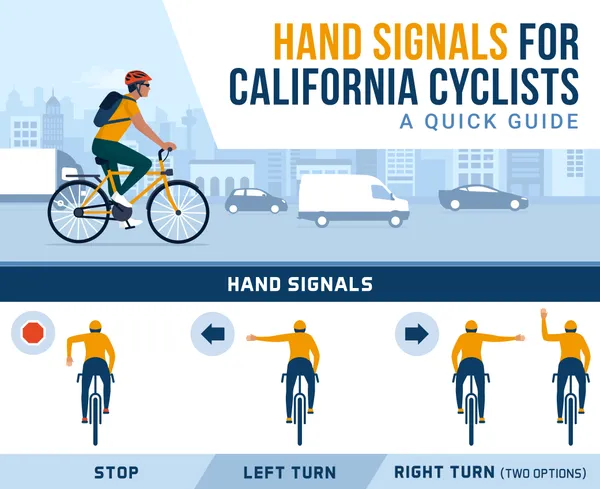
The law treats cyclists as vehicle operators. They must thus follow the same traffic rules as other motorists. For example, they have to stop at red lights and yield to pedestrians at crosswalks. They also have to comply with specific biking-related laws.
These rules require them to:
- Ride in Bike Lanes: Cyclists traveling slower than traffic must use bike lanes wherever they’re available. They can only leave these lanes when:
- Passing another vehicle.
- Preparing for a left turn.
- Avoiding hazards, such as the door zones of parked cars.
- Yielding to pedestrians at crosswalks.
- Follow the Flow of Traffic: Cyclists should ride in the same direction as cars on shared roads. This helps them be more visible and safe.
- Wear Helmets: Cyclists under 18 must wear helmets certified by the Consumer Product Safety Commission. Adults are strongly encouraged to do the same for safety, as helmets can help prevent or minimize head trauma in the event of a collision.
- Use Signals: Cyclists must use clear hand signals when stopping, merging, or turning. These help make their movements and intentions clear to car drivers and other road users, who may not see them immediately due to a bike’s small size.
When Is Someone At Fault For A Car Vs. Bike Accident?
In California, someone can be liable for a car-bike crash if their negligence or failure to follow traffic rules caused the accident. The driver is typically at fault for these collisions. However, cyclists or even third parties can be responsible, depending on the circumstances of the accident.
Below is a brief breakdown of how different individuals or entities could cause a crash:
Drivers
Drivers are typically at fault in car-versus-bike accidents because they control the larger, faster vehicle. That means their actions are more likely to result in serious outcomes.
Some of the most common ways they can cause these crashes include:
- Speeding: When drivers travel at unsafe speeds, they give themselves less time to spot and avoid hitting cyclists.
- Improper Turning: California law allows drivers to enter bike lanes when making right turns. However, they could cause a broadside collision if they fail to check for cyclists before doing so. According to UC Berkeley’s SafeTREC Traffic Safety Facts, this type of crash is the most common, accounting for 34.9% of bicycle crashes resulting in serious injuries or fatalities in 2023.
- Failing to Yield: Drivers who don’t yield to cyclists with the right-of-way, such as at intersections, will generally be found at fault for the resulting accidents and injuries.
- Distracted Driving: Eating, drinking, phone use, and passenger conversations are all distractions that can keep drivers from noticing cyclists.
- Driving Under the Influence: Alcohol or drug use can significantly impair a driver’s reaction time and decision-making skills.
- Dooring: Drivers who don’t check their surroundings could hit a cyclist when opening a car door into a bike lane.
Cyclists
Car drivers aren’t always liable for collisions with bicycles. In some cases, a cyclist can directly cause or contribute to a crash.
Cyclists can be partially or totally responsible for a car-bike collision for the following actions:
- Breaking Traffic Laws: Under California law, cyclists must follow the same rules as other vehicle operators. They could be found at fault if they cause an accident by speeding or running a red light.
- Reckless Riding: Cyclists can collide with a car if they carelessly swerve into another lane or weave between vehicles.
- Riding in Blind Spots: This practice makes it even harder for drivers to spot cyclists when turning or changing lanes.
- Going Against Traffic: Cyclists who don’t ride in the same direction as traffic can confuse other drivers and increase the risk of a crash.
- Not Wearing Safety Equipment: Bicyclists are less visible at night if they lack reflective gear or bike lights. Not wearing a helmet can also lead to severe injuries or fatalities. According to the Insurance Institute for Highway Safety’s Fatality Facts, 62% of bicyclists killed in 2023 were not wearing helmets.
Third Parties
External factors can also contribute to car-bike accidents. For instance, poor road conditions or faulty brakes can cause a driver or cyclist to lose control, resulting in a collision. In cases like these, third parties can be at fault for the victim’s injuries and losses.
These entities can include:
- Government Agencies: Caltrans and the city’s or county’s Public Works departments are typically responsible for road maintenance in California. They can be liable if hazards such as the following contribute to a car vs. bike collision:
- Potholes
- Cracked pavement
- Faulty traffic signals
- Insufficient road signs
- Poor street lighting
- Parts Manufacturers: Under the state’s product liability law, they can be responsible if they sell defective or inherently dangerous products that injure consumers. For example, suppose a bike uses tires with an unsafe design. They suddenly blow out during a ride, causing a cyclist to hit a car and sustain multiple fractures. In this scenario, the tire manufacturer can be at fault.
Common Injuries In Car Vs. Bike Accidents
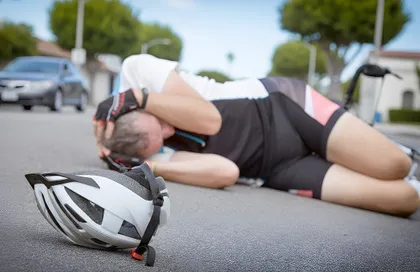
In car-bike collisions, cyclists are more vulnerable to severe injuries. Drivers can get hurt, too, but the risk is higher for cyclists. Since they have less protection from the physical impact of larger cars, they’re more likely to sustain injuries that result in extensive losses. Regardless, both drivers and cyclists can suffer from severe injuries.
Here are some of the most common injuries victims sustain in car vs. bike accidents:
- Soft Tissue Injuries: Drivers whose necks snap forward and back quickly may develop whiplash. Meanwhile, cyclists who fall the wrong way could sprain, strain, or tear muscles or ligaments.
- Road Rash: Bicyclists may scrape their skin on concrete. In severe cases, road rash can result in permanent scarring or disfigurement.
- Fractures: The impact of a crash can break bones. The limbs are especially vulnerable.
- Back and Spine Injuries: Blunt force trauma to the back can damage the spine. Injured drivers or cyclists may develop partial or permanent paralysis.
- Head Trauma: TBIs are arguably the most severe injuries in these collisions. Cyclists are particularly at risk if they don’t wear helmets.
These injuries matter in car vs. bike accident claims because they dictate the extent of your losses and how much compensation you can pursue. For example, some victims can heal with medication and chiropractic care. Others may require surgery or home accommodations if they become disabled.
Can You File A Claim For A Car Vs. Bike Crash?
Yes, you can file a claim for a car-bike crash if someone else’s negligence caused your injuries. However, you have to prove the connection between the two. The claims process can also be challenging because California’s comparative fault rule may apply. That means a court can reduce your compensation if you share fault for the accident.
Proving Liability In Car-Bike Collisions
Legal responsibility for these accidents doesn’t always fall on the driver who hits a cyclist, or vice versa. Lawyers, insurers, and courts also review the available evidence and assess each party’s behavior leading up to the crash. That’s why California law requires victims to prove why and how someone else’s actions caused the accident and their injuries.
To establish the at-fault party’s negligence, you need to demonstrate these four elements:
- Duty: Under California’s negligence law, both drivers and cyclists must act with reasonable care to avoid accidents on the road.
- Breach: Someone fails to meet that standard of care. For example, a driver might exceed the speed limit or run a red light.
- Causation: The breach caused the accident. In line with the above example, a driver wouldn’t have hit a cyclist if they had only followed posted speed limits or traffic signals.
- Damages: The victim suffered real losses. These can include physical injuries, medical bills, and lost wages.
With these key elements of negligence and the circumstances of the crash in mind, a driver, cyclist, government entity, or vehicle parts manufacturer could be liable in a car-bike collision. Crucially, victims must prove all four elements were present to have a valid claim. That’s why gathering and preserving evidence of the accident is vital.
Supporting Evidence For Car Vs. Bike Injury Claims
Evidence can disappear quickly after a car-versus-bike crash. Videos get erased, witnesses forget details, and vehicles get repaired. Gathering proof early on, such as camera footage and witness contact information, is important. Acting quickly protects your version of events before insurance disputes reshape the story.
When you’re gathering supporting evidence for your claim, focus on what can vanish quickly, such as:
- Road Conditions: Capture vehicle positions, skid marks, debris, traffic signs, lane markings, and lighting. Take wide shots and close-ups.
- Surveillance and Traffic Cameras: Look for nearby businesses or homes with cameras. Ask them to preserve footage right away, since many systems automatically overwrite video after a short retention period.
- Witness Names and Contact Details: Get full names and phone numbers. Memories fade quickly, and early statements carry more weight.
- Police Report Information: Confirm the officer’s name, badge number, and report number before leaving, if possible.
After you leave the scene, be sure to preserve:
- The Official Police Report: Request a copy. It lists the parties, vehicles, location, time, the officer’s diagram or narrative, and any citation issued.
- Medical Records and Bills: Seek medical care and keep all records. These documents link your injuries directly to the crash.
- What You Were Wearing: If you were riding a bike at the time, do not repair or discard your helmet or other gear. Damage patterns can help show how the impact happened.
- Your Memories of the Accident: Save notes, texts, or messages you sent about the crash. Date them and keep them organized.
When preparing your claim, bike or car accident lawyers can also help you obtain expert analyses from accident reconstructionists or mechanics. These professionals can examine the damage to both vehicles to determine how the accident occurred and the angle of impact at which the cars met. Their opinions can support your case in situations where both parties cannot agree on the facts of the crash.
Can Drivers And Cyclists Share Fault For An Accident?
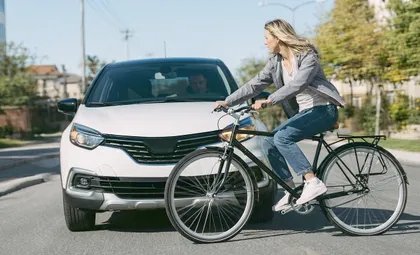
Yes. In California, a court can apply the pure comparative negligence rule to split fault in a car-versus-bike accident. Notably, it can still award compensation to an injured driver or cyclist, even if they’re up to 99% liable for the crash. However, it will reduce their damages by their percentage of responsibility.
For example, suppose you weren’t wearing a helmet during the crash. The court found you 30% at fault for your injuries. As a result, you can only receive up to $70,000, even if your total damages were $100,000.
Here are some example scenarios in which drivers and cyclists can share fault for an accident:
- A driver hit a cyclist while making a right turn, but the cyclist wasn’t wearing a helmet.
- A cyclist was riding against traffic, but the driver who hit them should have been able to spot and avoid them anyway.
- A cyclist ran a red light. They were hit by a speeding car.
Comparative fault can also apply to accidents in which either the driver or the cyclist was negligent, but poor road conditions or defective vehicle parts also contributed to the crash.
How Shared Fault Can Complicate Injury Claims
Shared fault can significantly impact the outcome of a claim because insurers and courts use liability to determine payouts. If an injured victim contributed to a car vs. bike crash, the law can bar them from recovering the full value of their losses.
You may face the following issues regarding shared fault:
- The other party may deny responsibility, and their insurance company could reject your claim.
- The at-fault party or their insurer could shift more of the blame to you, even if you did not or only minimally contributed to the crash.
- An insurer or court can reduce your final settlement or award by your percentage of fault.
Due to these potential setbacks, many victims seek free advice from car and bicycle accident lawyers. These attorneys can explain how comparative negligence may affect your case. They can also gather and present evidence to address liability disputes and advocate for a fair assessment of fault.
Frequently Asked Questions (FAQs)
Disputes about fault after a car vs. bike accident can leave you stressed and unsure what to do next. The questions below address common concerns so you can take informed, careful steps to protect your rights and potential claim.
Who Is At Fault In A Bike Vs. Car Accident?
Drivers are usually at fault, but it still depends on who failed to use reasonable care under the circumstances. Cyclists and third parties can also be partially or fully responsible for a crash. It depends on what happened and what the available evidence shows.
Is The Driver Always At Fault When Hitting A Cyclist?
No. Drivers are not automatically at fault in these crashes. They must watch for cyclists and follow traffic laws. However, cyclists must also obey traffic rules while riding. Determining who’s at fault depends on the specifics and the available proof of the crash.
How Do Insurers Determine Who Was At Fault In Car-Bike Collisions?
Insurance companies determine fault by reviewing evidence such as police reports, witness statements, and photos and videos of the accident scene. They use these details to reconstruct the crash, identify its cause, and determine fault. However, they can also use your statements to assess liability, so be cautious when speaking with claims adjusters after a crash.
Do I Need A Personal Injury Lawyer For My Right-Of-Way Car Vs. Bike Accident Lawsuit?
You are not required to hire a lawyer. However, it can be helpful if your injuries are serious or if the other party denies responsibility. Right-of-way refers to who has the legal priority to move through an intersection or lane. When accounts conflict, a lawyer can gather evidence, deal carefully with insurers, and help protect your claim while you focus on healing.
How Long Do I Have To File A Car Vs. Bike Accident Case In California?
California’s statute of limitations sets these filing deadlines:
- Personal Injury Cases: Two years after the date of the accident
- Property Damage Lawsuits: Three years after the date of the accident
These time limits are strict. Courts will generally dismiss cases filed beyond them. However, certain exceptions may apply. For example, shorter deadlines apply to cases filed against government agencies. Victims must submit an administrative claim within six months of the crash. They can only sue if:
- The Agency Denies the Claim: Victims have six months from the date of the denial to file a lawsuit.
- The Agency Does Not Respond in 45 Days: The general statute of limitations for personal injury cases applies.
How Much Compensation Will I Get For A Car-Bike Accident?
Your recovery depends on your medical bills, lost income, bike damage, pain, and the available insurance coverage. If you share fault, California follows a pure comparative negligence system. That means your compensation is reduced by the percentage of liability a court assigns to you. However, you can still recover part of your losses.
Ask Arash Law About Fault In Your Car Vs. Bike Accident
If you get hurt in a car vs. bike accident, you are likely overwhelmed and dealing with pressure from insurance companies. Pursuing compensation for your losses can be even more challenging if your case involves shared fault. Arash Law offers a free initial consultation so our lawyers can review your situation.
Our attorneys investigate fault based on the specific facts of your crash. As part of that process, we can obtain police reports, speak with witnesses, review photos or videos, and consult qualified experts when appropriate. During settlement negotiations, we can use that evidence to support your case and advocate for a fair assessment of fault.
If you are concerned about the costs of these services, you may be wondering, “Do lawyers only get paid if they win?” The answer is yes at AK Law. We can handle your case on a contingency fee basis, meaning we won’t charge legal fees unless we win or settle your case.
Learn how we can help by calling (888) 488-1391.