TL;DR: Important evidence after a scaffold accident is photos of the scaffold and equipment, Cal/OSHA reports, witness statements, and medical records that show how the fall happened and who failed to follow safety rules. Without this proof, injured construction workers may lose the chance to recover full medical bills, lost wages, and pain and suffering from responsible third parties.
Highlights:
- Photograph scaffold planks, guardrails, base plates, couplers, and braces before repairs.
- Save and photograph your harness, lanyard, hard hat, and other PPE.
- Collect witness names, phone numbers, and quick written or recorded statements.
- Ask for copies of inspection logs, training records, and scaffold erection notes.
- Request any video footage from the site or nearby cameras immediately.
- Get a medical evaluation promptly and keep all visit notes and imaging results.
- Report the injury to your employer in writing within 30 days and file DWC-1.
Tip: Write a brief timeline while details are fresh, stick to facts, and avoid guessing.
Table of Contents
A scaffold accident claim depends heavily on evidence that shows what caused the fall and who may be responsible. Among the most important evidence in these cases includes photos of the scaffold and site conditions, records of broken or missing equipment, safety documents, witness statements, and medical records. These materials help establish what happened before, during, and after the accident. They also help connect the injury to specific hazards on the job site and reduce disputes based on conflicting accounts.
What Physical Evidence Should You Preserve At The Scene?
The California Code of Regulations sets rules for the construction, loading, and oversight of scaffolds. Physical evidence at the scene can show whether those rules were followed. Evidence can lose value if it is changed or repaired before it is documented with photos. Preserved photos and equipment help an attorney show what failed and whether a violation occurred.
The following scaffold components are most likely to reveal regulatory violations. Documenting each one before the scene changes creates solid proof of what was there:
- Planks and Decking: Look for broken, warped, or loose boards. Note any gaps or boards that shifted before the fall.
- Guardrails and Toeboards: Photograph any guardrail that is missing, damaged, or installed incorrectly. Note every spot where fall protection was not in place.
- Base Plates and Footings: Unstable or missing base plates are a common cause of scaffold collapse. Get photos from more than one angle.
- Couplers, Pins, and Braces: Failed couplers and loose or missing pins can be hard to see but are worth photographing closely. Document every joint that looks worn, broken, or wrong.
- Your Personal Protective Equipment (PPE): Photograph your harness, lanyard, and hard hat as they were at the time of the accident.
In addition to physical equipment and PPE, other evidence can be important in scaffold accident cases:
- Witness names and contact information.
- Job site safety inspection logs.
- Training and certification records for workers onsite.
- Incident reports filed with the employer.
- Any available video footage from job sites or nearby cameras.
- Weather conditions at the time (wind, rain, ice), if relevant.
If equipment is moved or repaired before pictures are taken, it may become harder to determine the cause of the accident. If it is altered or repaired before being secured, it may no longer support a claim.
Photos can help show whether the scaffold was built and maintained safely. Their value increases when combined with independent records, such as inspection reports.
Documents And Records You May Need For Your Case
Unlike photos and physical evidence, many project records are not immediately available after a scaffold accident. Even so, they often become critical later in determining who was responsible for the scaffold and overall job-site safety.
Important records may include:
- Construction contracts and subcontracts
- Purchase orders
- Scaffold rental agreements
- Work orders
- Project schedules
- Scaffold inspection reports
- Equipment delivery records
These documents can help identify who supplied the scaffold, who was responsible for assembling, inspecting, and maintaining it, and which companies controlled different aspects of the project. They may also reveal whether a third party, such as a general contractor, subcontractor, equipment supplier, or rental company, shares responsibility for the accident.
Why Does Evidence Disappear Quickly After A Scaffold Accident?
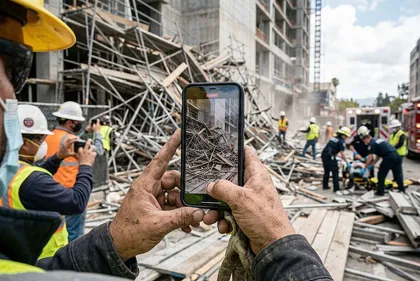
Construction job sites do not pause after an accident. In many cases, cleanup crews arrive within hours to clear or remove damaged equipment. Many contractors are pressured to keep work moving, so repairs tend to begin quickly. Once the scaffold is changed or taken down, the evidence of what failed may be lost forever.
Scaffolding accident lawyers can send a spoliation letter on your behalf. This letter may be sent to your employer, the general contractor, the rental company, or the scaffold manufacturer. It requests that the scaffold be held in the same condition after the accident. This should be done as soon as possible. If you are unsure how to proceed, free advice from a scaffold accident lawyer can clarify what to ask for and who to contact.
Why Are Cal/OSHA Investigations And Witness Statements Crucial?
Because they identify the underlying causes of structural failures and hold accountable those responsible, Cal/OSHA investigations and witness statements are essential in scaffold accidents.
In 2024, there were 370 fatal falls, slips, and trips among U.S. construction and extraction workers, according to the Bureau of Labor Statistics’ most recent published data. This information was included in a 2026 publication and is based on 2024 reporting. We continue to monitor the latest BLS releases as new data becomes available.
When a serious fall injures a worker in California, Cal/OSHA typically opens an investigation. Its findings and coworker witness statements create a strong factual record. These pieces of evidence help your case with employers and insurers.
- Documentation of the Reporting Process: California employers must report a serious workplace injury or death to Cal/OSHA as soon as practically possible, but no later than 8 hours after learning of it. Serious injuries include:
- Inpatient hospitalization (for reasons other than medical observation or diagnostic testing)
- Amputation
- Loss of an eye
- Serious permanent disfigurement.
After receiving a report, Cal/OSHA typically:
- Conducts a job site inspection.
- Interviews witnesses and co-workers.
- Reviews safety policies, training records, and equipment logs.
The resulting report may identify the specific hazard that caused the fall. This documentation can support both workers’ compensation claims and potential third-party claims, including those against another contractor or an equipment manufacturer.
- Determination of Regulatory Violations: If you can prove your employer engaged in serious and willful misconduct (often backed by Cal/OSHA safety citations), you can file a special petition to increase your workers’ compensation benefits by 50% under California Labor Code Section 4553. This enhancement can significantly increase compensation for medical expenses and lost wages in serious injury cases.
- Witness Statements Filling in Gaps in the Record: A colleague who saw the fall, or who noticed a broken guardrail before the accident, can back up what your medical records show. Having witness names and contact details early can be critical, as construction crews move between sites quickly. Someone who saw the fall today may not be reachable next week.
Proving fault is only part of your claim. Your medical records and injury paperwork show the physical toll and give your case its full weight.
What To Do To Get Proper Medical Documentation And Additional Evidence
Two separate categories of documentation are important: medical records that describe your injuries and treatment, and the DWC-1 form that formally initiates your workers’ compensation claim. These two records can link your injuries to the job site event. Without them, proving your injuries came from the fall is much harder.
Here’s what you can do:
- See a Doctor Right Away: Even if you feel no pain at first, get a proper medical evaluation. Some injuries, like concussions or internal bleeding, do not show up shortly after the accident. Getting care quickly creates records that tie your condition to the fall. If your physician recommends a chiropractor, consider doing so. They can check and document soft-tissue injuries, such as neck or back strain, that develop in the days after a fall.
- Tell Your Employer About the Scaffold Accident: California law requires you to report the injury to your employer within 30 days to keep your right to workers’ compensation benefits. Your employer must give you the DWC-1 claim form, the official form from the Division of Workers’ Compensation (DWC). Fill in the date, place, and a short note about your injuries, then return it to your employer. Filing the DWC-1 starts the workers’ compensation process and puts your report on record.
- Keep Copies of Your Medical Records: Save every document related to your treatment, including:
- Required imaging studies, such as X-rays, CT scans, or MRIs.
- Operative reports and emergency room records.
- Records of physical therapy or chiropractic care (if you received these treatments).
- Doctor’s notes and prescription medication.
- Work restrictions and disability notes.
- Medical bills and receipts for out-of-pocket expenses.
These records document the extent of your injuries, the treatment you received, and how the scaffold accident affected your ability to work and perform daily activities.
How Does Evidence Affect Scaffolding Accident Claims?
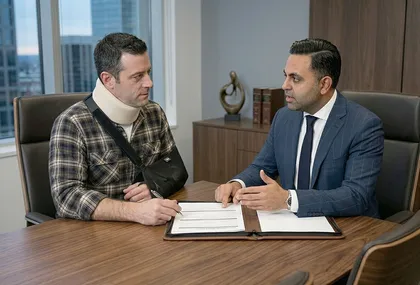
Evidence plays a central role in determining whether a worker’s recovery is limited to workers’ compensation or may extend to a third-party personal injury claim. These two types of claims operate differently:
- Workers’ compensation provides benefits regardless of fault.
- Third-party claims require proof that another party caused the injury, but they may allow broader damages, including pain and suffering and wage losses not fully covered by workers’ compensation.
Evidence matters in these cases because, through evidence, you can show a possibility of a third-party claim. Cal/OSHA records, witness statements, and other evidence can help determine if another party, other than the employer, can be liable for your injuries. These can include:
- A general contractor
- A property owner
- A product or equipment manufacturer
These parties may be pursued in a separate civil claim alongside a workers’ compensation case.
However, California has a rule that limits the reach of this liability. Under the Privette Doctrine, a general contractor does not incur liability by default when a worker hired through a subcontractor is injured on the job. The law assumes the subcontractor runs its own safety program. Still, exceptions exist. If a general contractor retained direct control over part of the work and that control led to the injury, or if the contractor knew of a hidden hazard and failed to warn the subcontractor’s crew, the contractor may be held liable.
If you find yourself thinking, “I need a personal injury lawyer,” contacting one early gives you a better chance of preserving the evidence needed to make a third-party claim viable. A scaffold accident lawyer can review your job site records and documented safety violations to identify every potential party that can be held accountable.
Frequently Asked Questions
Scaffold accidents in California involve strict deadlines, multiple types of claims, and genuine questions about fault. These answers cover the key rules and timelines you need to know.
How Long Do I Have To File A Claim After A California Construction Fall?
The California Labor Code requires injured workers to give their employer written notice within 30 days of the injury. For a workers’ compensation claim, you generally have one year to file it. If you also pursue a civil claim against a third party, the deadline is two years from the date of injury.
What If I Was Not Wearing My Safety Harness When The Scaffold Collapsed?
You may still be eligible for benefits even if you were not wearing a harness, depending on the facts of your case. If your employer failed to provide a harness or enforce safety rules, that failure may strengthen your claim.
Can I Sue My Direct Employer For A Scaffold Fall In California?
In California, workers’ compensation is usually the primary option for work-related injuries, such as falls from scaffolds. However, exceptions may apply in certain circumstances:
- Cases involving serious and willful misconduct by the employer or other conduct that may fall outside the workers’ compensation system.
- Situations in which the employer failed to maintain the required workers’ compensation insurance.
Whether a claim exists will depend on the specific facts and circumstances of the case. Construction accident attorneys often rely on evidence to determine if it is possible to pursue legal action against an employer.
Do I Have To Prove My Employer Was Negligent To Get Workers’ Compensation?
No. California workers’ compensation is a no-fault system, meaning you only need to show you were hurt on the job. You also need to meet the 30-day reporting deadline to be eligible for benefits.
Who Is Responsible For Inspecting Scaffolding On A Job Site?
According to the Occupational Safety and Health Administration (OSHA), a competent person must inspect the scaffolding before each work shift. That person must also check after any event that could affect their safety. They must have the training and authority to find and fix hazards before anyone goes up.
Do Lawyers Only Get Paid If They Win A Scaffold Accident Case?
Yes, if they are working on a contingency fee basis. Most scaffold accident attorneys have this billing arrangement. Under this fee structure, you pay no attorney’s fees unless compensation is recovered for you.
Consult Arash Law For Your Scaffold Accident Claim
Our scaffolding accident lawyers at Arash Law (also known as AK Law) can provide legal support to injured workers across California. These cases can involve many responsible parties, including contractors, property owners, and equipment manufacturers. Our attorneys can look at the facts of your accident and help you find out whether a third-party claim may be an option for you.
Call (888) 488-1391 for a free initial consultation. You pay no attorney’s fees unless we recover money for you. You have rights under California law, and our attorneys are ready to help you understand them.