TL;DR: If a police officer ran a red light without using emergency signals or having a valid reason to do so, you can hold the officer’s agency liable for your injuries. However, you must file a government tort claim within 6 months of the crash, far shorter than the standard 2-year deadline for private drivers, or lose your right to recover medical bills, lost wages, and other damages entirely.
Highlights:
- Ask 911 to send an officer from another agency to respond, not one from the at-fault officer’s department.
- Document the scene by taking photos of skid marks, vehicles, traffic signals, and the officer’s badge number.
- Seek medical care immediately to create a record linking your injuries to the crash.
- Have a lawyer file California Public Records Act requests and evidence preservation letters within days to preserve dashcam, bodycam, and black box data.
- File your formal government tort claim within six months of the crash or lose the right to pursue compensation for your losses.
- Understand that your claim will generally be against a government agency and not the cop who caused the crash, unless an exception applies.
Tip: Keep detailed records of all medical expenses and vehicle repair costs, as the government only pays after settlement or judgment, not up front.
Table of Contents
If a cop runs a red light and hits you, you could file a personal injury claim against them and their agency. That officer may be liable for your injuries and losses if they didn’t use the proper signals. They may also be responsible if they lacked a valid reason to run the red light in the first place.
It can be disorienting when a police vehicle hits you, especially knowing that officers are supposed to protect you. You may be in pain, unable to work, and unsure what to do next. California law provides a path to recovery, but it has strict requirements.
Claims against a government agency differ from claims against a private driver. Special laws apply, and the deadline to act is much shorter than most people realize. Police officers must answer for their negligence, which means failing to use reasonable care. California law holds them to that same standard when they operate a vehicle.
When Can A Police Officer Legally Run A Red Light In California?
A California police officer may legally run a red light only in certain situations. Even then, the law does not give officers unlimited freedom. They must meet specific legal requirements and continue driving with reasonable care to protect everyone on the road.
Under the California Vehicle Code, an officer may proceed through a red light only when all of the following conditions are met:
- Responding to a True Emergency: The officer is responding to an emergency call, actively pursuing a suspect, or handling another qualifying emergency.
- Using Emergency Lights and a Siren: The patrol vehicle has a red warning light visible from the front and uses a siren as may be reasonably necessary.
- Driving With Due Regard for Safety: The officer continues to watch for other vehicles and takes reasonable steps to avoid causing a crash.
Meeting these requirements gives the officer a limited exemption from normal traffic laws. However, it does not excuse careless or dangerous driving.
When Can A Police Officer Be Liable For Running A Red Light?
An officer may lose that legal protection by failing to meet the requirements above or by driving without reasonable care. When that happens, the officer and the government agency may be liable for the crash.
You may have a claim if the evidence shows that:
- The officer entered the intersection without the required emergency lights or siren.
- The officer was not responding to a qualifying emergency or active pursuit.
- The officer drove through the intersection without regard for others’ safety, even during a Code 3 response (an emergency that requires them to drive with sirens and lights).
- The officer failed to check whether the intersection was clear before proceeding through the red light.
If the evidence supports facts such as these, the officer may lose the exemption under the law. The officer’s actions may constitute negligence. Red light accident lawyers can review the evidence and determine whether the officer violated the law.
What To Do After A Cop Runs A Red Light And Hits You
There are several steps you can take when someone runs a red light and hits you. However, a crash involving a police officer requires extra care. You need to protect key evidence, document your injuries, and follow California’s special claim rules from the very beginning.
Take these steps as soon as you can:
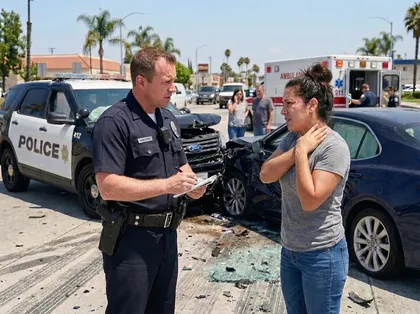
- Ask 911 Dispatch to Send an Outside Agency. When you call 911, ask whether a California Highway Patrol (CHP) or county Sheriff’s officer can respond, not someone from the at-fault officer’s own department. A report written by an outside agency may be harder to dismiss. This step is rarely covered in general accident advice, but it is one of the best ways to protect yourself at the scene.
- Document the Scene. If you can move safely, take photos of skid marks, both vehicles, and traffic signals. Get wide shots of the entire road, not just close-up photos of damage to your car. Write down the officer’s name, badge number, and agency name.
- Seek Medical Care Right Away. Go to an emergency room, or see a chiropractor or your primary care doctor as soon as you can. This visit creates a record linking your injuries to the crash, which you will need to support your claim.
- Consult a Legal Professional. Go beyond looking for free advice from red light accident lawyers online. Instead, have your case reviewed by an attorney who can clearly explain your rights and available legal options. Once you start working with a lawyer, they can also quickly send California Public Records Act (CPRA) requests and preservation notices. Those requests could help you access and preserve dashcam footage, bodycam video, and Event Data Recorder (EDR) data before it disappears.
From here, you can prepare to file your claim:
- Address it to the specific police department involved.
- Include key details such as the date, time, and location of the incident, a description of what happened, the injuries and losses you sustained, and the amount of compensation you’re seeking as a result.
- Submit the claim by mail, online, or in person within six months of the accident date.
Once submitted, the agency reviews the claim and either accepts or denies it, which determines whether or not you receive compensation or have to take further action by filing a lawsuit.
How Compensation And Auto Insurance Work In Police Crashes
Once you gather evidence, a police crash claim works differently from a standard car accident. You do not file a claim with a private insurance company. Government agencies usually self-insure, which means they pay valid claims from their own funds. That process can affect how long your claim takes and what insurance coverage you may use while you wait.
If your claim succeeds, you may recover compensation for:
- Medical bills.
- Future medical care.
- Lost wages.
- Loss of future earning capacity.
- Property damage.
- Out-of-pocket expenses.
- Pain and suffering.
- Emotional distress.
- Loss of enjoyment of life.
- Permanent disability or disfigurement.
California law does not allow punitive damages (which aim to punish the at-fault party for extreme negligence) against public entities. Your recovery is generally limited to your actual, proven losses.
The time required to resolve government claims varies widely. During this time, your own health insurance could help with necessary treatment costs, though it may seek reimbursement afterward if you receive a settlement or court award. You may also be able to seek benefits from your own auto policy if it includes these optional coverages:
- Collision coverage may pay for vehicle repairs while you wait. You usually pay your deductible first, but you may recover that amount later through your claim.
- Medical Payments or MedPay coverage may cover immediate medical expenses without requiring you to prove fault.
A lawyer can review your policy and explain which benefits may be available.

Frequently Asked Questions About Police Car Accidents
A crash involving a police vehicle raises questions that do not come up in most car accident cases. You may wonder who pays your medical bills, whether you can sue the officer personally, or how long the claims process takes. The answers below address some of the most common questions about police car accident claims in California.
Can You Sue A Police Officer Personally If They Hit Your Car?
It depends on the situation. You can generally name the officer, since public employees are personally liable for their own negligence (Gov. Code § 820). However, if they hit you while driving an emergency vehicle on an emergency call or pursuit, they’re personally immune under Vehicle Code § 17004. That immunity applies only to genuine emergency driving, so if there was no real emergency, the officer can be sued individually.
What Happens If Your Car Gets Hit During A Police Chase?
It depends entirely on who hits you. If a fleeing suspect crashes into your car, California Vehicle Code § 17004.7 generally grants the police department immunity from liability, provided the agency has adopted a legally compliant written pursuit policy and provides regular annual training to its officers.
However, if a police vehicle hits you during a chase, that agency’s immunity does not apply. In that scenario, the department can still be held liable if the officer drove recklessly or failed to act with “due regard” for the safety of others on the road. Liability will ultimately depend on the specific facts of the crash and the evidence captured at the scene.
Is The Government Responsible For Paying My Medical Bills Up Front?
No. The government does not pay your medical costs while your claim is still open. Injured victims usually rely on their health insurance or MedPay from their auto policy to pay for costs. The government pays only after a settlement is reached or a court enters judgment.
Can I Still File A Claim If I Was Partially At Fault?
Yes. You can still file a claim against a police department or government agency even if you share some fault for the crash. California follows a pure comparative negligence rule. The court reduces your compensation by your percentage of fault instead of denying your claim altogether.
For example, if you were 25% responsible for the crash, the court may award you 75% of your proven damages. California applies the same rule to claims against public agencies.
How Long Does It Take To Settle A Case Against A Police Department?
The time to settle a case against a police department varies. It depends on the facts of the case, the agency’s response, and whether the parties settle or go to trial.
In California, the public agency has 45 days to respond after you file a government claim. If the agency denies your claim or does not respond within that window, you may file a lawsuit. A straightforward claim may settle within months, while a disputed case that goes to trial can take a year or longer.
Hit By A Police Officer Running A Red Light? Contact Arash Law Today!
Government agencies assign skilled legal teams to defend every claim filed against them. Claims against government entities also follow strict rules and tight deadlines. Miss one requirement, and you may lose your right to pursue compensation.
We have handled complex government tort claims and know how to navigate this process. If you are thinking, “I need a personal injury lawyer who understands government claims,” our team at Arash Law, or AK Law, is ready to help. If you are worried about legal costs and wondering, “Do lawyers only get paid if they win?” the answer is yes. We work on a contingency fee basis, so you pay no attorney’s fees unless we recover compensation for you.
The six-month deadline to file a government tort claim can pass quickly. Schedule your free initial consultation by calling (888) 488-1391 before the deadline passes.