TL;DR: If you crash because you fell asleep at the wheel, you may still be able to recover compensation even if you share some fault for the accident. California follows pure comparative negligence, so each party can be assigned a percentage of responsibility, and any compensation you receive may be reduced by your share of fault.
Key Facts
- California Civil Code § 1714 requires every person to use ordinary care to avoid harming others, and the article explains that falling asleep while driving can be strong evidence of a breach of that duty.
- Li v. Yellow Cab Co. (1975) 13 Cal. 3d 804 is cited for California’s pure comparative negligence rule, meaning fault can be divided and the claimant’s percentage of responsibility generally reduces any recovery.
- California currently requires minimum liability limits of $30,000 per person, $60,000 per accident, and $15,000 for property damage for policies issued or renewed on or after January 1, 2025.
- The California DMV SR-1 accident report is generally required within 10 days if anyone was injured or killed, or if property damage exceeded $1,000, and failure to file can result in suspension of driving privileges.
- California Code of Civil Procedure § 335.1 provides that most personal injury claims must be filed within two years of the crash.
- California Government Code § 835 is referenced for public-entity liability arising from a dangerous condition of public property, and the article notes that government claims generally must be presented within 6 months of the crash before suing.
Table of Contents
If you fall asleep at the wheel and crash, you may be considered partly or fully responsible, depending on what happened. However, falling asleep does not automatically mean you are solely at fault. Another driver’s speeding, unsafe lane change, failure to yield, or other negligent conduct may also have contributed to the collision.
California’s comparative negligence system allows fault to be divided among all parties whose actions contributed to the crash. For example, if you were found 60% responsible because you fell asleep and another driver was 40% responsible for speeding, your recovery would generally be reduced by your 60% share of fault.
The same principle applies if another driver fell asleep and caused the collision. If your own actions also contributed, you may still pursue compensation, but the amount you recover can be reduced according to your percentage of responsibility.
Is Falling Asleep At The Wheel Automatically Considered Negligence In California?
Not automatically. Falling asleep while driving can provide strong evidence of negligence, but liability depends on the circumstances leading up to the crash. Under California Civil Code § 1714, every person must use ordinary care to avoid harming others.
For drivers, that means staying alert and in full control of their vehicle. In most cases, a driver who falls asleep has breached the duty of care, which is the legal obligation to drive responsibly. This breach is what the law calls negligence.
A negligent driver’s auto insurance is generally the first source of compensation for your losses, up to the policy’s coverage limits. The insurer may be required to pay your medical bills, lost income, and other costs resulting from the crash. You do not need to prove the driver meant to hurt you. You need to show that they failed to drive safely, that this failure caused the crash, and that you suffered real losses as a result.
Even when drowsiness is clearly the cause, a full investigation is still needed. A poorly maintained road, a defective vehicle part, or another driver’s actions may have played a role. These factors can affect who is responsible and to what degree.
Identifying who fell asleep is only the starting point. California law allows the investigation to surface other parties whose actions or failures contributed to the crash.
If You Were The Driver Who Fell Asleep, What Would Happen Next?
If you fell asleep while driving and caused a crash, you may be held financially responsible for the injuries or property damage you caused. Falling asleep can be strong evidence of negligence, although liability still depends on the circumstances surrounding the crash.
Your auto liability insurance may cover claims made by injured passengers, other drivers, pedestrians, or property owners, subject to the terms and limits of your policy.
California currently requires the following minimum coverage limits:
- $30,000 in bodily injury liability coverage per person.
- $60,000 coverage per accident.
- $15,000 for property damage.
These limits apply to policies issued or renewed on or after January 1, 2025.
If the injuries or property damage exceed the available liability coverage, insurance may not be enough to satisfy the entire claim. Whether you face personal financial exposure beyond the policy limits depends on the claim, the damages, available coverage, and other potentially responsible parties.
What Insurance Covers If You Fall Asleep And Cause An Accident
If you fall asleep at the wheel and cause a crash, the insurance coverage that applies depends on what was damaged, who was injured, and which coverages you carry.
- Liability Coverage: This generally pays for covered claims made by others for injuries or property damage you caused. It does not usually cover your own injuries or vehicle damage.
- Collision Coverage: If you carry it, collision coverage may help pay to repair or replace your vehicle, regardless of fault.
- Medical Payments Coverage: MedPay may help cover certain medical expenses for you or your passengers, depending on the policy.
- Uninsured/Underinsured Motorist Coverage: If another driver contributed to the crash and lacks sufficient insurance, UM/UIM coverage may apply, depending on the circumstances and policy terms.
If you fall asleep and hit a tree, median, guardrail, parked vehicle, or building, the coverage analysis is different because another injured driver may not be involved.
In that situation:
- Collision coverage may apply to damage to your own vehicle.
- Property-damage liability coverage may apply to damage you caused to a guardrail, light pole, building, parked vehicle, or other property.
- The public agency or private owner of damaged property may seek reimbursement from you or your insurer.
All coverage remains subject to the policy’s terms, exclusions, deductibles, and limits.
How Comparative Fault Applies
Falling asleep does not necessarily mean you are the only person responsible for the crash. Another driver, a defective vehicle component, or another legally responsible party may also have contributed.
California uses comparative fault, so responsibility can be divided among the people or entities whose conduct contributed to the accident. That means an investigation should look beyond the fact that you fell asleep and determine whether something else also played a causal role.
What If You Were Hurt In The Crash?
Causing an accident does not necessarily mean you have no potential source of compensation for your own injuries.
For example, if another driver was also partly responsible, you may have a claim against that driver. If you were injured while acting within the course of employment, workers’ compensation may potentially apply. And if a defective vehicle or component contributed to your injuries, a separate product-liability issue may exist.
Being negligent and being entitled to recover something from another responsible party are not mutually exclusive.
What Happens If You Fell Asleep Because Of A Medical Problem?
A crash caused by an unexpected medical event may require a different analysis from one caused by knowingly continuing to drive despite obvious fatigue. The relevant questions may include whether the driver knew or should reasonably have known that they were at risk of losing consciousness or of becoming unable to drive safely.
That does not mean a medical condition automatically eliminates liability. It means the circumstances leading up to the loss of control matter.
Paths To Recovery: Comparative Fault, Third Parties, And Passengers
Fault in a drowsy driving crash is not all-or-nothing. California law offers several paths to seek compensation, depending on who you are in the crash and what caused it.
Depending on the circumstances, the following recovery options may be available:
- Comparative Negligence: California follows a pure comparative negligence rule from Li v. Yellow Cab Co. (1975) 13 Cal. 3d 804. Your recovery generally decreases according to your percentage of responsibility, rather than being completely barred merely because you were partly at fault.
- Third-Party Liability: Third-party liability means someone other than the driver can also share responsibility for your injuries. A defective vehicle or component may support a product-liability claim if the defect contributed to the crash or made the resulting injuries worse. A dangerous condition of public property may support a claim against a public entity if the requirements for public-entity liability under California law are satisfied.
- Workers’ Compensation: If you were driving for work when you fell asleep, workers’ compensation may cover your work-related injuries regardless of who caused the collision. Ordinary commuting is generally excluded, although exceptions can apply.
- Passenger Claims: Passengers hurt in the crash have the right to file a claim against the at-fault driver’s insurance.
All of these paths depend on physical proof of what happened. Traffic accident lawyers can help you determine which recovery path best fits your situation. Any workers’ compensation claim is handled separately through your employer’s insurance system.
How Evidence Tells The True Story Of The Crash
Proving a drowsy-driving crash requires three kinds of evidence: physical, digital, and medical. A lack of braking or evasive action before impact may be consistent with drowsy driving, but investigators generally consider it together with other physical, electronic, and witness evidence.
These evidence types support a liability case, meaning a claim that the other driver is legally responsible for your injuries:
- Police Report: The official crash report covers the scene, road conditions, damage, and driver statements, and may note the absence of skid marks.
- Dashcam Footage: Video from the at-fault car or from nearby traffic cameras can show the vehicle drifting or failing to brake before the crash.
- Witness Statements: Other drivers or bystanders who saw the vehicle weaving or failing to slow down can corroborate your account of what happened.
- Phone and Vehicle Data: Vehicle event-data recorders may show speed, braking, throttle input, and other technical information from the seconds surrounding the crash. Phone location data, navigation records, commercial driver logs, work records, or telematics data may help establish a longer driving timeline.
- Medical Records: Your doctors, specialists, or a chiropractor can record your injuries and connect them to the crash.
Physical evidence fades, and digital records get overwritten. Medical evidence is also harder to establish the longer you wait.
Arash Law Case Results: Drowsy Driving & Falling Asleep At The Wheel Accidents
Drowsy driving cases raise the same core question discussed above: who breached their duty of care, and what compensation is available as a result. Below are examples of relevant cases Arash Law has handled involving fatigued drivers, falling asleep behind the wheel, and the resulting injury and liability disputes.
$1,280,000 — Head-On Collision Caused by a Driver Who Fell Asleep.
The at-fault driver fell asleep at the wheel and crossed into oncoming traffic, causing a catastrophic head-on collision that left Arash Law’s client with serious injuries. The firm resolved the case in less than six months, recovering the full policy limits for the client.
$1,000,000 — Parked Vehicle Struck by a Driver Who Fell Asleep.
Arash Law’s client was sitting in his truck on the side of the road when a passing driver fell asleep at the wheel, drifted out of traffic, and struck the parked vehicle. The client suffered neck and lower-back injuries requiring spinal surgery, from which he had a strong recovery. A few weeks before the trial, the defense settled by paying the full $1 million policy.
$3,120,000 — Truck Driver Injured While Asleep in the Cab.
Arash Law’s client was working as a truck driver and was asleep in the cab when his co-driver caused an accident, throwing the client from the cab and causing a traumatic brain injury along with multiple orthopedic and internal injuries. After the firm became involved in the case following years of limited treatment, it secured his admission to a neurorehabilitation facility and a $3.12 million recovery.
What To Do After A Drowsy Driving Accident
Your priority now is protecting your legal rights. That means acting on a few key steps while the evidence is still available.
- Seek Medical Attention Right Away: See a doctor even if you feel fine. Injuries like whiplash or a concussion can take hours or days to appear. Prompt medical evaluation can identify injuries and document symptoms and treatment.
- File the Required DMV Accident Report: In California, you or your representative generally must submit an SR-1 report to the DMV within 10 days if anyone was injured or killed, or if property damage exceeded $1,000. The requirement applies regardless of fault and is separate from any report made to police, CHP, or an insurance company. Failure to file a required report can result in suspension of driving privileges.
- Preserve Any Remaining Evidence: Collect what you still have access to. That includes crash-scene photos, vehicle-damage photos, dashcam footage, and witness contact details. If your phone has location data from around the time of the crash, save it.
- Be Cautious With Recorded Statements: Adjusters may call you soon and ask you to describe the crash on the record. You generally do not have to give a recorded statement to the other driver’s insurance company, though your own policy may require you to cooperate with your insurer. Speak with an attorney before agreeing to either.
- Contact a Personal Injury Lawyer: A lawyer can speak with the insurers on your behalf, collect evidence before it is lost, and help you understand what your claim is worth. Traffic accident lawyers can explain your legal options.
Early contact with a lawyer preserves evidence and keeps all legal avenues open. The sooner you reach out after a crash, the stronger your position going into the claims process.
Deadlines To File A Claim In California
Under California Code of Civil Procedure § 335.1, most personal injury claims must be filed within two years of the crash. In certain circumstances, such as the injured person being a minor, the defendant leaving the state, or a delayed discovery of the injury, this deadline can be extended.
Claims against a government entity are different and much shorter: a formal claim generally must be presented within six months of the crash, before any lawsuit can be filed. Because these deadlines vary by circumstance and missing one can permanently bar your claim, it’s best to consult an attorney as soon as possible to confirm which deadline applies to your situation.
Common Questions About Drowsy Driving Accidents
After a drowsy driving accident, you may have questions that go beyond the basics. You might be asking about insurance, your rights as a passenger, or what happens when work is involved. Some of these situations involve overlapping rules that are hard to untangle on your own.
Can A Passenger Sue The Driver If They Fell Asleep?
Yes. As a passenger, you can file a personal injury claim against the drowsy driver’s liability insurance, since you have no control over the vehicle or the driver’s alertness and are generally not considered at fault. If the driver was in someone else’s car, like a family member’s vehicle, a rental, or a company car, that owner’s insurance may also apply, and if more than one driver contributed to the crash, you may have a claim against multiple parties; either way, your claim generally isn’t reduced by the driver’s own fault.
Does Insurance Cover Accidents Where The Driver Fell Asleep?
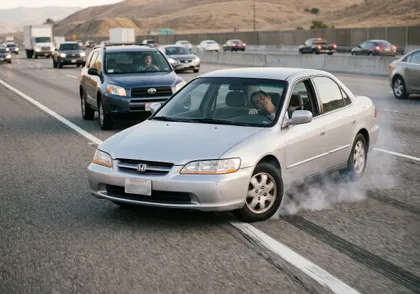
Yes. Falling asleep at the wheel is generally considered negligence, and liability insurance typically covers negligent acts, so the at-fault driver’s policy is the usual starting point for your claim. However, coverage isn’t automatic or unlimited, since it depends on the policy’s terms, whether liability is disputed, and the applicable limits (California requires at least $30,000 per person and $60,000 per accident in bodily injury coverage for policies issued or renewed on or after January 1, 2025).
If your damages exceed those limits, you may need to turn to your own uninsured/underinsured motorist coverage or another liable party, such as a vehicle manufacturer or government road agency, to recover the rest.
Can I Get Workers’ Compensation If I Crashed A Company Car?
If you were driving for work at the time, you may qualify for workers’ compensation. A no-fault system doesn’t require proving the crash was your employer’s fault. However, coverage generally depends on whether you were acting within the scope of your employment.
Deliveries, client visits, or work errands are usually covered. At the same time, an ordinary commute is often excluded from California’s “going and coming” rule. However, exceptions may apply when the job requires the employee’s travel or use of a vehicle, benefits the employer, or otherwise falls within the course of employment.
Workers’ comp benefits are also narrower than a personal injury claim, typically covering medical costs and partial lost wages but not pain and suffering, so if a third party also contributed to the crash, you may be able to pursue a separate claim against them in addition to your workers’ comp benefits.
How Do You Prove A Driver Was Asleep Before The Crash?
Physical and digital evidence, such as the absence of skid marks and vehicle event recorder data, can show that the driver did not react before impact. Other useful evidence includes the police report, witness accounts of drifting or weaving, dashcam or traffic camera footage, and phone records showing how long the driver had been awake.
Commercial crashes may also involve hours-of-service logs showing that the driver exceeded legal driving time limits. Because much of this evidence can be overwritten or deleted within days, an attorney needs to request preservation as early as possible.
What If A Dangerous Road Partly Caused The Accident?
A public agency may be liable if a dangerous condition of public property contributed to the crash, but poor road conditions alone do not automatically make the agency responsible. Under California Government Code § 835, liability depends on factors such as whether the property was in a dangerous condition, whether that condition caused the injury, and whether the public entity created the condition or had sufficient notice and time to address it.
Claims against a California public entity also follow special procedural rules. For personal injury claims, a government claim generally must be presented within 6 months of the claim’s accrual, although exceptions and late-claim procedures may apply.
How Are Legal Fees Handled For Accident Claims?
Many personal injury attorneys work on a contingency fee basis, meaning they are paid only from a settlement or verdict, with nothing due upfront. You owe no attorney fees unless your case ends in a recovery.
Could Someone Sue You Personally If You Crashed After Falling Asleep?
Yes. An injured person can pursue a claim against the driver allegedly responsible for the crash. Usually, the driver’s liability insurer handles the defense of a covered claim and pays covered damages up to applicable policy limits.
But serious injury claims can exceed available insurance. California’s statutory minimum limits are only $30,000 per injured person and $60,000 per accident for bodily injury, so a major injury can potentially involve damages far above the minimum coverage.
Contact Our California Auto Accident Attorneys
A drowsy driving crash can leave you with serious injuries and growing medical bills. Dealing with insurance claims on top of that is hard. The lawyers at Arash Law fight for injured Californians and pursue full compensation for their medical bills, lost wages, and long-term losses.
Our team has handled complex auto accident cases across California. We have worked on crashes caused by fatigued drivers, involving commercial vehicles, and linked to dangerous roads. We know what evidence matters, who may share liability, and how to build a case that holds up.
Arash Law handles every personal injury case on a contingency fee basis. That means you pay no attorney fees unless we win your case. Call us for a free consultation at (888) 488-1391. The sooner you reach out, the sooner we can start protecting your rights and preserving the evidence you need.