TL;DR: The most common type of accident at McDonald’s is a slip and fall caused by wet floors, spills, or grease in dining areas and kitchens. Customers or employees can suffer injuries, and the company may be liable if it knew of hazards and didn’t address them.
Highlights:
- Slips and falls are the most common accidents at McDonald’s.
- Employees in kitchens face a higher risk of injury, including burns and cuts.
- Negligent security can lead to injuries due to poorly lit or unsecured areas.
- California law allows workers to file workers’ compensation claims for job injuries.
- Customers injured at McDonald’s can file personal injury claims if negligence occurred.
- Document the accident with photos, medical records, and an incident report.
Tip: Preserve evidence early, including photos and medical records, to support your claim.
Table of Contents
Slips and falls are among the most common types of accidents at McDonald’s. Kitchen accidents and negligent security incidents follow. The fast food chain currently does not publicize the nature and number of incidents it receives reports about. However, hazards specific to fast-food restaurants increase the likelihood of slips and falls.
California has nearly 1,300 McDonald’s locations and more than 70,000 crew members. With thousands of customers and workers moving through kitchens, counters, and dining areas each day, hazards such as spilled food and drinks can lead to severe injuries.
Though wet or greasy floors can cause anyone to slip and fall, employees face greater injury risks due to the nature of their jobs. Those assigned to the kitchen could also suffer from burns. According to a 2023 study from Worksafe and the Service Employees International Union, which surveyed fast food workers throughout California, 51% of all respondents sustained injuries after experiencing burns, falls, and other accidents while working.
In these scenarios, an injured worker or customer may be eligible to pursue compensation for their losses. In California, financial and legal responsibility will fall on the entity that controlled the accident site and knew of the hazard that injured you. However, your rights and options will also differ depending on whether you were working or simply visiting McDonald’s.
Slips And Falls Are Among The Most Common McDonald’s Accidents
Slip-and-fall accidents are among the most common types of accidents at McDonald’s and similar fast-food restaurants. High customer traffic and frequent spills increase the risk of accidents. When floors are not cleaned, repaired, or clearly marked with warning signs promptly, serious injuries can occur.
Slips and falls are more likely to occur in these parts of McDonald’s:
- Entrances: Rainwater can accumulate here during downpours. Without absorbent mats or warning signs, the floor near the door can become slick. Loose or curled mats can also cause customers or employees to slip.
- Dining Areas: Customers can drop food or spill drinks when carrying their orders from the counter. Staff may fail to notice or clean up these hazards in time. Recently mopped floors without clear warning signs can also lead to a slip-and-fall.
- Self-Serve Beverage Stations: Ice, soda, and water can drip onto the floor and spread quickly. Accidents can occur if the surrounding floor isn’t regularly checked and cleaned.
- Restrooms: Water from sinks or toilets can make the floor slippery. Broken tiles or uneven flooring can also affect your balance.
- Kitchens: Spilled food or drinks, freshly mopped floors, and grease buildup can all lead to slip-and-fall injuries for busy employees who may not notice hazards during peak hours.
- Parking Lots & Other Outdoor Areas: Oil spots, potholes, cracked pavement, or poorly maintained sidewalks can create trip risks outdoors.
In a restaurant setting, a slip-and-fall happens when you lose your footing because the walking surface is unsafe. That can mean slipping on liquid or grease or tripping over something in your path. These accidents affect customers in the dining area and employees working behind the counter.
Slip-and-fall accidents can lead to serious injuries. You could hit your head and suffer a concussion. You might hurt your neck or back, resulting in spinal cord injuries that can lead to paralysis. It’s also possible for you to sustain multiple fractures in the wrist, arm, or hip. Moreover, a fall can worsen a prior condition that was stable before the incident.
Other Common Accidents At McDonald’s For Workers And Customers
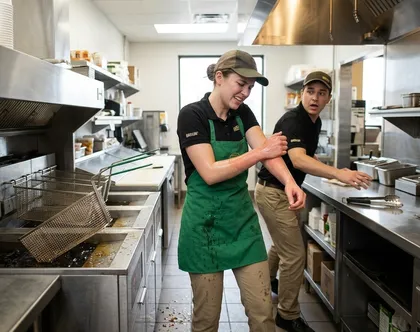
Beyond slips and falls, many accidents at McDonald’s happen behind the counter and in the kitchen. High heat, food preparation hazards, and fast-paced work create added danger. Workers and customers may also get injured in accidents caused by poor security on the premises.
Accidents in the kitchens can cause the following injuries:
- Burns: From hot oil, steam, or heated equipment.
- Cuts: From using knives and other food preparation tools.
- Electric Shocks: From contact with damaged wiring in faulty appliances.
Though many of these injuries may seem minor, they can also lead to severe outcomes. Burns can cause permanent scarring, cuts can get infected, and more serious cases of electrocution can result in fatalities.
Negligent security can also contribute to accidents and injuries. Regardless of whether you work at a McDonald’s or not, you could get assaulted if the necessary protective measures aren’t in place. These can result from:
- Poorly-lit parking lots.
- Inadequate security camera coverage or surveillance equipment malfunctions.
- Unauthorized access due to unsecured entrances.
Do I Have A Case Against McDonald’s After An Accident?
Yes, if you were injured due to unsafe conditions that McDonald’s failed to address. You could face costly medical bills, lost wages due to time off work, and pain and suffering. Under California law, you may have the right to seek compensation for these losses. Employees injured at work have different options compared to customers.
The two types of claims you could file after a McDonald’s accident include:
- Workers’ Compensation Claims: Applies when employees get injured on the job. You do not need to prove that someone caused your accident to seek benefits.
- Personal Injury Claims: Can be filed by injured customers. Employees can also submit these alongside workers’ comp claims if their accident was caused by someone other than McDonald’s. Victims must demonstrate fault to pursue compensation for their losses.
How California’s Premises Liability Law Applies To McDonald’s Accidents
Under California’s premises liability law, all property owners must maintain safe environments for visitors. They owe a duty of care to people who enter their premises for business purposes, including employees and customers. If McDonald’s fails to eliminate a hazard that ends up injuring someone, it could be liable for the resulting losses.
McDonald’s duty of care to lawful visitors includes these tasks:
- Conduct regular property inspections and maintenance.
- Frequently clean heavily-used spaces, such as bathrooms, kitchens, and dining areas.
- Train employees on industry health and safety protocols, including what to do in the event of an accident.
If the fast-food chain fails to fulfill these responsibilities, an accident could occur. They could then be liable for resulting injuries. Claims look at the business’s “notice” of the hazard.
- Actual Notice: They directly knew or were told about the dangerous condition.
- Constructive Notice: They should have known about the hazard if only they had performed regular maintenance on their premises.
Sometimes, the issue involves crime rather than a physical hazard. Such cases may involve negligent security, a form of premises liability. It occurs when a property owner fails to take reasonable steps to prevent foreseeable crime. Liability in these accidents depends on whether the risk was predictable based on past incidents or surrounding conditions.
Who May Be Liable For A McDonald’s Accident In California?
In McDonald’s accident cases, liability usually depends on who controlled the area and whether they failed to address a foreseeable risk. The fast-food chain will typically be responsible because it owns many of its locations. However, fault could also fall on a landlord, a franchisee, another employee or customer, or even the injured victim themselves.
To demonstrate a party’s liability for your accident, injuries, and losses, you need to establish these four elements of negligence:
- Duty: The party with control over the property where you were injured owed you a duty of care to keep you safe.
- Breach: They breached that duty by failing to address hazards, despite having actual or constructive notice of the unsafe conditions.
- Causation: The breach directly caused the accident and your injuries.
- Damages: You sustained actual losses, such as medical expenses and lost wages.
With this in mind, several parties may be liable for a McDonald’s accident, including:
- McDonald’s Corporation, in certain situations
- The franchise owner or operator
- Employees whose actions caused harm
- A landlord or property owner
- Maintenance or cleaning contractors
- A security company
- Another customer who directly caused the injury
- A government entity (in rare cases)
A business can also be vicariously liable for its employees’ actions. Vicarious liability means an employer may be responsible when an employee causes harm while performing job duties. However, conduct far outside normal job duties may be analyzed differently.
Another legal concept that affects liability is pure comparative negligence. This rule allows multiple parties to share fault for an accident. If you, the injured victim, are among them, you can still file a personal injury claim. However, a court can reduce your compensation by your share of responsibility.
For example, if your total damages are $10,000 and a court finds you 25% at fault, you may only receive up to $7,500. McDonald’s or its insurer could use comparative fault to shift blame to you. In these cases, you could ask a McDonald’s slip-and-fall lawyer to help you advocate for a fair assessment of fault.
Evidence That Matters In A McDonald’s Accident Claim
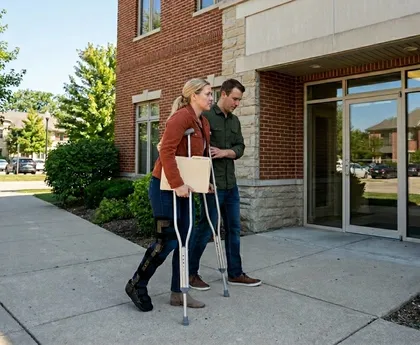
When proving liability in a McDonald’s accident claim, you must support each element of negligence with facts. The outcome of your case depends on factors such as prior complaints, inspection practices, and the speed of staff response. That’s why it’s crucial to collect evidence such as photos of the hazard, medical records of your injuries, and surveillance footage.
Here’s a list of evidence that matters in a McDonald’s accident claim:
- Clear photos of the spill, broken tile, loose mat, poor lighting, or anything else that caused the incident.
- Surveillance footage that shows how the accident occurred and how long the dangerous condition was present before you were injured.
- An incident report created by McDonald’s staff.
- The clothes and shoes you were wearing at the time, especially if you slipped and fell.
- Medical records created by the doctors who treated you.
- Proof of lost wages, such as pay stubs.
The strength of your records and the steps you take early on can affect how much you can recover. Waiting too long or making avoidable mistakes can affect the compensation you can pursue.
Recoverable Damages For McDonald’s Accident Victims
In California, injured victims can pursue compensation for financial and personal losses. However, the availability of these “recoverable” damages depends on the type of claim they file. For example, you cannot pursue compensation for pain and suffering if you’re seeking workers’ compensation benefits.
Instead, injured employees may be able to recover costs related to:
- Relevant medical care
- A portion of lost wages
- Temporary or permanent disability benefits
- Supplemental job displacement benefits
Customers and employees pursuing personal injury claims can seek compensation for:
- Economic Damages: Financial losses, such as:
- Medical Expenses: Doctor’s appointments, hospital stays, medication, and long-term treatment such as chiropractic care.
- Lost Income: Wages you missed while recovering.
- Reduced Earning Capacity: When injuries limit the type of work you can do, requiring you to put in fewer hours or switch to another profession.
- Non-Economic Damages: Personal losses, including pain and suffering, loss of enjoyment of life, and loss of consortium.
- Punitive Damages: Rarely awarded by courts to punish the at-fault party for extreme negligence or recklessness, as defined by Section 3294 of the California Civil Code.
How The Claims Process Works For McDonald’s Accidents
Both injured customers and employees can pursue compensation after a McDonald’s accident. The process varies for workers’ comp and personal injury claims. Regardless of which one you file, reporting the accident, getting medical attention, and consulting a lawyer are important.
Here’s a quick breakdown for both types of claims:
| Action to Take | Workers’ Compensation | Personal Injury |
|---|---|---|
| Report the Accident | Notify your supervisor within 30 days of your injury. | Tell McDonald’s staff so they can create an incident report. |
| Seek Medical Attention | Check with your manager, as you may have to visit a doctor within McDonald’s insurance network. | Go to a medical center, emergency room, or your family doctor. |
| File the Required Documents | Your employer should provide you with a DWC-1 form one business day after they learn about your accident. Fill it out and return it promptly. | You can work with a premises liability attorney to draft and submit a demand letter to the at-fault party’s insurer. This document should provide evidence of the accident, your documented losses, and the amount of compensation you are requesting. |
| Wait for Insurer Response | You should hear about the status of your claim within 14 days. If your employer doesn’t deny your claim within 90 days, it’s presumed that your injuries are covered. | After receiving sufficient proof of your claim, the insurer should acknowledge it within 15 days. They should accept or deny your claim within 40 days. |
| Address Disputes | You can resolve workers’ comp disputes through an unbiased third party, such as a Qualified Medical Examiner (QME). If you still can’t reach an agreement, you may have to bring your case to the Workers’ Compensation Appeals Board (WCAB). | You can address insurance pushback during settlement negotiations. Filing a lawsuit may be necessary if these talks fail. |
Deadlines For Injury Cases In California
California law only gives you a limited amount of time to take all the steps listed above. If you miss the deadlines it establishes, a court can dismiss your case.
The statute of limitations establishes these time limits for different claim types:
- One year for workers’ comp claims
- Two years for personal injury cases
These deadlines typically start on the day you were injured. However, certain exceptions may apply:
- If your case involves a government agency (rare for McDonald’s accidents), you must file an administrative claim within six months.
- If you were a minor when you got injured, you have until your 20th birthday to file a lawsuit.
Frequently Asked Questions (FAQs) About Common McDonald’s Accidents
If you get hurt at McDonald’s, you may feel overwhelmed and unsure what to do next. You might also wonder how long a case takes or whether your situation even qualifies for a claim. The answers below give general guidance. What applies to you depends on the specific facts of your accident and your injuries.
What Should I Do If I Slip And Fall At McDonald’s?
If you’re hurt right now: Get medical care as soon as possible. Tell the provider you were injured in a fall so your records reflect what happened. From here, begin collecting evidence of the accident.
Report the incident to a manager and ask for a copy of the report. If you can, take photos of the area and your injuries before conditions change. Finally, keep the clothes and shoes you were wearing in case they become relevant later.
How Long Does It Take To Obtain A McDonald’s Slip And Fall Settlement?
A McDonald’s slip and fall settlement timeline can take months or longer. The duration of your case depends on your medical treatment and the insurance company’s response.
A lawyer may advise you to wait until your condition stabilizes before pursuing a claim. Settlement or workers’ comp disputes may also require several rounds of discussion. In some cases, further legal action is necessary. Court procedures can further delay the resolution of your claim.
Can I File A Claim For Emotional Distress After A Negligent Security Incident At McDonald’s?
You can file a claim for emotional distress after a negligent security incident at McDonald’s, provided your accident meets certain conditions. If you received workers’ comp benefits, it may complicate things. It’s typically an “exclusive remedy,” which means it shields your employer from being sued for negligence in exchange for providing no-fault benefits.
If a separate security agency were in charge, then you could file a third-party claim. You can pursue them if you can demonstrate that the security agency’s negligence led to significant emotional harm.
What Should I Do If I Were Hurt While Working At McDonald’s?
If you were working at the time, your situation would generally fall under workers’ compensation. This no-fault system provides medical care and partial wage replacement for job-related injuries.
In most cases, you must notify your employer about the injury to start the process. You can seek free advice from a work injury lawyer about your specific rights and options, as they can depend on how the injury happened and who was involved. You can also ask these attorneys for help with filing claims and addressing insurer disputes over your injuries and medical treatments, as that’s part of what workers’ compensation lawyers do.
Talk To Us About Your McDonald’s Accident
Slips and falls are among the most common accidents that occur at McDonald’s in California. However, workers and customers can also get injured in kitchen mishaps and negligent security incidents. If you’ve sustained serious injuries and extensive losses at one of the fast-food chain’s locations, you may feel unsure about your rights and what to do next.
If you’re seeking clarity and thinking, “I need a personal injury lawyer to talk to about my case,” consider acting on that impulse. You can schedule a free initial consultation with Arash Law to understand your options. Whether you’re eligible to file a workers’ comp claim, a personal injury case, or both, we can discuss your next steps so you can make informed decisions.
We also handle communication with insurance adjusters and help reduce the risk of being rushed into recorded statements or early settlement offers. We pursue compensation for medical bills, lost income, and other losses under California law.
If you’re wondering about how much these services cost, you may be asking, “Do lawyers only get paid if they win?” The answer is yes at Arash Law. We take cases on a contingency fee basis, which means we won’t charge legal fees unless we win or settle your case.
Call AK Law at (888) 488-1391 to schedule a free case review today!