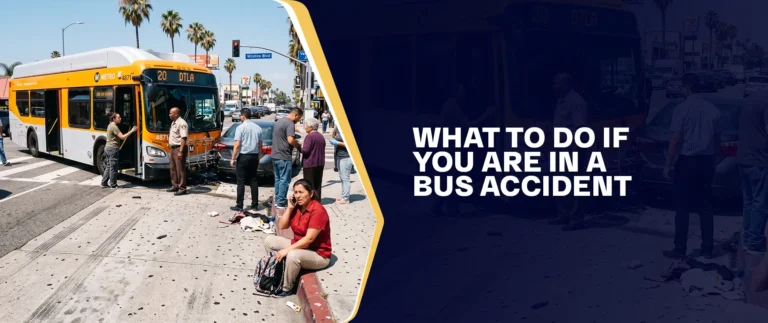
TL;DR: No single California freeway is “most dangerous” since it depends on the metric used. I-5 has the most total deaths, while SR-99 is deadlier per mile traveled. Both see high crash risk, with SR-99 also impacted by Tule fog. Government claims tied to road hazards usually must be filed within six months.
Highlights:
- Stay at the scene, exchange contact and insurance information, and document the crash.
- Photograph vehicle damage, road defects, signage, weather, and visibility conditions if safe.
- Get medical care right away to identify and document all injuries.
- File DMV SR-1 within 10 days if injury or $1,000+ property damage.
- Keep track of the six-month government claim deadline if you may have a claim against a public agency.
- Collect witness details and request crash reports, dashcam footage, and nearby surveillance videos.
- Check UM/UIM coverage and identify every liable party, including public agencies.
Tip: If you are involved in a crash on I-5 or SR-99, stick to the facts when speaking with insurers.
Table of Contents
There is no single “most dangerous freeway”. Interstate 5 (I-5) records more total freeway fatalities than any other California highway, based on state crash data. SR-99 has a relatively high fatality rate per vehicle-mile traveled compared with several other major California highways.
If you were hurt on one of these roads, you already understand how quickly life can change. A crash at freeway speed can cause serious injuries, steep medical bills, and lost income. The weeks after a high-speed collision can be difficult, especially while managing medical care and insurance claims.
What makes these two routes so consistently dangerous goes beyond the raw numbers. I-5 and SR-99 rank among California’s deadliest routes. Several traffic, roadway, and environmental factors may help explain the risks on these routes.
Why I-5 And SR-99 Are California’s Deadliest Freeways
I-5 and SR-99 stand out in California crash data under different measures. ConsumerAffairs found that I-5 was California’s deadliest road overall in 2022, with 128 deaths. When highways were broken into county-level segments, however, I-15 in San Bernardino County ranked first, with 48 deaths in 2022, up from 33 in 2018.
A recent analysis of federal crash data found that SR-99 recorded 348 deaths from 2021 through 2023, averaging about 116 per year. Its estimated fatality rate was 1.10 deaths per 100 million vehicle-miles traveled, compared with 0.73 for I-5.
I-5 carries a steady mix of commuters and commercial trucks through choke points in San Diego, Orange County, and Los Angeles. Heavy traffic and high speeds can contribute to sudden braking and serious rear-end crashes.
SR-99 carries heavy truck and passenger traffic along sections of aging infrastructure. Tule fog makes SR-99 even more dangerous in certain seasons. This fog can cut visibility to near zero in minutes, giving drivers almost no time to stop for traffic ahead.
Other routes carry their own crash risks, shaped by hazards that differ from those on I-5 or SR-99.
Data Transparency Note: This article relies on the ConsumerAffairs “Deadliest Roads in California 2026” study and Fatality Analysis Reporting System data compiled by Trip Risk. Data may be subject to future revision. We update this content when newer data becomes available.
Other High-risk Freeways Across The State
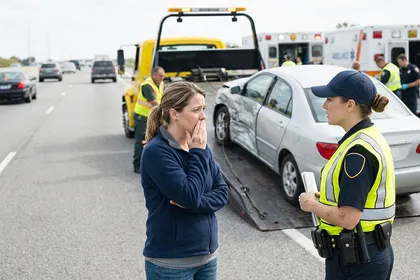
California’s geography shapes the danger on each of its major freeways. A steep mountain grade creates very different risks than bumper-to-bumper city traffic. Routes like I-10, I-405, and SR-138 have unique dangers. For example, mountain grades can lead to brake failure. Heavy congestion can also contribute to tailgating, abrupt lane changes, and other risky driving behaviors.
Each route below has a different combination of geographic and traffic-related hazards:
- I-10 (Los Angeles to Riverside): This route has heavy commuter and truck traffic. Heavy traffic can contribute to abrupt lane changes, close following, and aggressive driving.
- I-405 (San Diego Freeway): The 405 has some of the worst traffic in the U.S. It frequently experiences stop-and-go congestion in Los Angeles and Orange County. Congestion can contribute to close following and abrupt lane changes. This behavior can cause rear-end crashes and multi-car pileups.
- SR-138 (“Blood Alley”): This rural highway runs from Palmdale to the Cajon Pass. It features narrow lanes, sharp curves, and few barriers separating opposing traffic. Drivers unfamiliar with its blind spots and sudden dips face a high risk of head-on collisions.
Distraction, aggression, and speeding make every road hazard worse. These roads offer little room for error.
Common Causes Of Freeway Crashes And Who Is Liable
Speeding, distracted driving, and impaired driving are leading causes of serious crashes on California freeways.
If a driver violates a traffic law and the violation causes a crash, that violation may support a finding of negligence per se under Evidence Code § 669.
- This means the law may presume the driver was negligent based on the violation.
- It can eliminate the need to separately prove the standard of care in some cases.
California follows a pure comparative negligence rule under Civil Code § 1714, where each party is responsible for their percentage of fault. Even if you are partly at fault, you may still recover compensation. For example, if you are 20% at fault, your damages are generally reduced by 20%.
Not all freeway crashes are caused solely by drivers. In some cases, a missing barrier, a dangerous pothole, or another known roadway defect may indicate potential government liability.
- A missing barrier
- A dangerous pothole
- Other known roadway defects may indicate potential government liability.
If a dangerous road condition contributed to the crash, the responsible public agency may be liable under Government Code § 835.
Acting quickly is important after a crash because evidence can be lost, altered, or become harder to obtain over time, and legal deadlines may also apply, which can affect your ability to bring a claim.
What To Do If You Are Injured On A Dangerous California Highway
Acting promptly after a highway crash can help protect your health and legal rights. Missing an applicable deadline, especially the shorter deadline for certain claims against public entities, can affect your ability to seek compensation.
You usually have six months to present a government claim if a dangerous road condition may support a claim against Caltrans or another public entity. This deadline is different from the usual two-year statute of limitations for personal injury lawsuits.
The following steps can help protect your health and legal rights:
- Stay at the scene. Exchange contact and insurance details with other drivers. If it is safe, take photos of the scene and vehicle damage.
- See a doctor or other appropriate medical provider promptly to identify and document your injuries.
- File an SR-1 form with the California Department of Motor Vehicles (DMV) within 10 days if the crash caused an injury or more than $1,000 in property damage.
- Be aware of your deadlines. Presenting a government claim is only the first of the deadlines. If the agency rejects the claim, another deadline applies to filing a lawsuit.
- Consider speaking with a personal injury lawyer if you need help understanding liability, insurance coverage, or filing deadlines.
Under California Code of Civil Procedure (CCP) § 335.1, you generally have two years from the date of injury to file a personal injury lawsuit. If a dangerous road condition supports a claim against a government agency, you generally must first present a government claim within six months. Missing an applicable deadline can affect your ability to pursue compensation.
A freeway accident attorney reviews the circumstances of the crash and helps identify potentially liable parties.
Frequently Asked Questions About California Freeway Accidents
Freeway accidents in California can raise urgent questions about fault, government liability, and insurance coverage. Some crashes involve multiple vehicles, disputed liability, uninsured or underinsured drivers, or dangerous public road conditions. The answers below address several common issues that may arise after a freeway collision.
How Is Fault Determined In A Multi-Vehicle Freeway Pileup?
California divides fault among all drivers who contributed to a crash. In a multi-car pileup, fault is determined based on crash reports, dashcam footage, and witness statements. You can still recover compensation even if you were partly at fault, but your share of the blame reduces your payout.
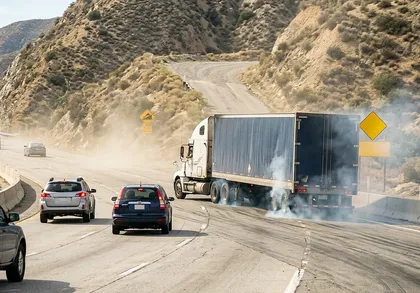
Can I Sue Caltrans For A Poorly Designed Highway?
Potentially. You may have a claim against Caltrans if a dangerous roadway condition contributed to your injuries and the legal requirements for public-entity liability are met. Claims against Caltrans and other public entities are subject to strict filing deadlines.
Caltrans and other public entities may also raise California’s design-immunity defense. This defense may apply when the roadway design was properly approved, and the requirements of Government Code § 830.6 are satisfied.
Is Lane Splitting Legal On California Freeways?
Yes. California Vehicle Code § 21658.1 makes lane splitting legal for motorcyclists. They may ride between rows of traffic, but they must do it safely. No driver may block or cut off a motorcyclist who is lane splitting. That action is illegal in California.
What Happens If The At-Fault Driver Does Not Have Enough Insurance?
If the at-fault driver is uninsured or does not have enough insurance to cover your losses, your own uninsured or underinsured motorist (UM/UIM) coverage may apply if you carry applicable coverage and meet the policy requirements. Other parties may also share responsibility, such as a vehicle manufacturer or government agency. An attorney can help identify other potential sources of compensation.
Do I Still Have A Claim If I Was Speeding When The Accident Happened?
Yes. California does not bar your claim just because you were speeding. Speeding might lower your total recovery amount, but you can still seek compensation for the harm that wasn’t your fault.
How Long Does A Freeway Accident Settlement Take?
Settlement time depends on the number of vehicles involved, the severity of the injuries, and whether liability is disputed. Simple cases with clear liability may resolve within a few months. Cases involving severe injuries, multiple defendants, or a government agency may take a year or longer.
Contact California Freeway Accident Lawyers Today
If you were hurt in a freeway accident, reaching out to a California freeway accident lawyer can help protect your rights. Arash Law offers a free consultation to victims of freeway and highway accidents. You can get free advice from a freeway accident attorney at no cost and with no obligation.
Many clients ask do lawyers only get paid if they win, and the answer is yes. AK Law works on a contingency fee basis. You pay no attorney fees unless we recover compensation for you. That means you can focus on your recovery while we evaluate your potential claim, with no upfront costs.
While we can’t guarantee a specific outcome for your case, our past results can give you an idea of how we fight to secure compensation for our clients.
- $1,150,000: Our client was rear-ended on the highway by a truck operated by a large delivery company. She suffered back and neck injuries. Although the defense attempted to attribute her injuries to pre-existing conditions and her weight, we settled the case before trial.
- $1,000,000: Our client was stopped along the side of I-10 when a tow truck collided with the parked vehicle. The tow truck overturned after the impact, and our client suffered serious injuries to his head and other parts of his body. We recovered compensation for his injuries.
- $6,000,000: A drunk driver crossed the double yellow lines and hit our client’s vehicle head-on, killing his wife. Despite disputes over coverage and liability, we secured the maximum policy limits for our client.
Evidence from freeway crashes can be difficult to recover over time. Speaking with an attorney early gives your case the best start. Call Arash Law at (888) 488-1391 to schedule a free consultation and discuss how we can help.