TL;DR: One of the 110 Freeway’s most dangerous parts is the stretch from I-105 to US-101 on the Harbor Freeway, with 162.8 crashes per mile over a one-year period. Injured drivers and passengers can recover compensation under California’s comparative negligence law even if partly at fault. Still, they have only 2 years to file a personal injury lawsuit and 6 months to file a government claim against Caltrans if road design played a role.
Highlights:
- See a doctor or chiropractor immediately to establish a medical record linking injuries to the crash.
- Request the crash report from the agency that investigated the collision; for many I-110 freeway crashes, that will be the California Highway Patrol.
- Save dashcam footage within 24 to 72 hours, as it may be automatically overwritten.
- File a government tort claim within six months if a public agency like Caltrans shares liability.
- You have two years to file a personal injury lawsuit under California law, but act sooner to preserve evidence.
- Understand that rear-end drivers are typically liable even in heavy traffic when a safe following distance is required.
Tip: Gather and preserve evidence like dashcam footage, witness contact information, and photos of the scene immediately, since investigators and insurers rely on that documentation to determine fault fairly.
Table of Contents
The most dangerous part of the 110 Freeway is the Harbor Freeway/I-110 corridor between I-105 and US-101, especially the northbound stretch from I-105 toward Downtown Los Angeles. Crosstown LA’s crash-per-mile analysis in 2018 ranked that segment as the highest-crash freeway segment in its Los Angeles review, with 162.8 reported accidents per mile.
More recent Caltrans and TIMS/SWITRS data can help review current crash patterns, but they do not currently publish a simple crash-per-mile ranking that replaces this segment-specific finding.
Data Transparency Note: Crash rankings can change as new reports are released. This article cites Crosstown LA’s segment-level crash ranking because it is the most specific public source we could verify for this question about the 110 Freeway. We also review newer Caltrans and TIMS/SWITRS sources for context and update this content when directly comparable data becomes available.
Dangerous Hotspots On The 110 Freeway
The likelihood of traffic accidents varies across different segments of the 110 Freeway. However, certain stretches pose greater risks due to heavy congestion, complex interchanges, short entrance ramps, sharp curves, and older roadway designs.
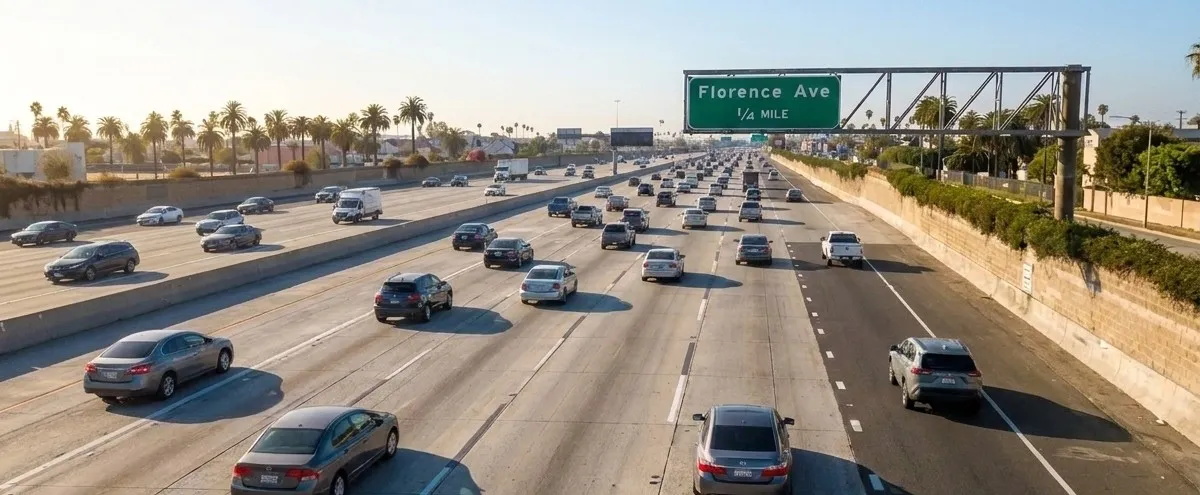
- Northbound I-110 From I-105 to US-101: This is the most dangerous publicly identified segment of the 110 Freeway. In Crosstown LA’s 2018 comparison of 24 Los Angeles freeway segments, northbound I-110 from I-105 to US-101 had the highest reported crash frequency per mile — 162.8 crashes per mile over the one-year studied. Heavy congestion, frequent lane changes, closely spaced exits, and sudden slowdowns increase the risk of rear-end and sideswipe collisions along this urban corridor.
 Southbound I-110 From US-101 to I-105: The reverse direction also recorded a high crash frequency in the same Crosstown analysis. Southbound I-110 from US-101 to I-105 ranked eighth among the 24 freeway segments reviewed, at 122.2 reported crashes per mile. Drivers heading south encounter closely spaced ramps, merging traffic, congestion, and sudden speed changes.
 Southbound I-110 From US-101 to I-105: The reverse direction also recorded a high crash frequency in the same Crosstown analysis. Southbound I-110 from US-101 to I-105 ranked eighth among the 24 freeway segments reviewed, at 122.2 reported crashes per mile. Drivers heading south encounter closely spaced ramps, merging traffic, congestion, and sudden speed changes.
Other High-Risk Areas and Design Concerns
The following locations weren’t separately ranked in the segment-based Crosstown analysis above. A related but separate Crosstown dataset tracking specific interchange/intersection crash counts (Jan–Nov 2017) identified northbound I-110 at Manchester Avenue as the 6th-highest crash location among LA freeway intersections (158 crashes) and southbound I-110 at the westbound I-10 interchange as the 10th-highest (150 crashes). These are included below, along with other stretches that carry documented traffic and design hazards, even without a standalone crash-rate ranking.
 The I-110 and I-105 Interchange: Drivers entering, exiting, or changing freeways must navigate several merging traffic streams within a limited area. Vehicles may cross multiple lanes to reach an exit, while traffic can rapidly shift between freeway speeds and congestion. These conditions increase the risk of unsafe lane-change, merging, and rear-end crashes.
 Downtown Los Angeles Near the US-101 Interchange: The northern end of I-110 carries drivers into a dense network of freeway connectors, entrance ramps, and downtown exits, including the historic Four Level Interchange. Closely spaced interchanges require drivers to make quick decisions and change lanes within short distances. Heavy commuter traffic and abrupt backups can leave little room to react.
-
The Arroyo Seco Parkway, or SR-110: The northern SR-110 follows an older roadway design that does not provide the same space as a modern freeway. Built in the 1930s and opened in 1940 as the first freeway in the western United States, it was designed for lower speeds and includes tight curves, narrow shoulders, short ramps, and limited acceleration or deceleration lanes. Some entrance ramps begin at stop signs, forcing drivers to accelerate from a complete stop directly into 55-mph traffic.
Caltrans has proposed safety upgrades focused on three specific spots along this stretch, where the northbound 110 meets the northbound 5 Freeway, the Avenue 43 offramp, and the Arroyo Seco Channel Bridge. The project calls for replacing the connector sidehill viaduct and upgrading bridge railings at the other two locations.
- Southern I-110 Between San Pedro and I-105: This portion connects the Harbor and San Pedro areas with central Los Angeles. Long-distance commuters, local drivers, and commercial vehicles share the same corridor. Congestion, freeway entrances, interchange traffic, and sudden speed changes can increase the likelihood of merging, sideswipe, and rear-end collisions.
 The I-110 and I-105 Interchange: Drivers entering, exiting, or changing freeways must navigate several merging traffic streams within a limited area. Vehicles may cross multiple lanes to reach an exit, while traffic can rapidly shift between freeway speeds and congestion. These conditions increase the risk of unsafe lane-change, merging, and rear-end crashes.
 Downtown Los Angeles Near the US-101 Interchange: The northern end of I-110 carries drivers into a dense network of freeway connectors, entrance ramps, and downtown exits, including the historic Four Level Interchange. Closely spaced interchanges require drivers to make quick decisions and change lanes within short distances. Heavy commuter traffic and abrupt backups can leave little room to react.
 The Arroyo Seco Parkway, or SR-110: The northern SR-110 follows an older roadway design that does not provide the same space as a modern freeway. Built in the 1930s and opened in 1940 as the first freeway in the western United States, it was designed for lower speeds and includes tight curves, narrow shoulders, short ramps, and limited acceleration or deceleration lanes. Some entrance ramps begin at stop signs, forcing drivers to accelerate from a complete stop directly into 55-mph traffic.
 Southern I-110 Between San Pedro and I-105: This portion connects the Harbor and San Pedro areas with central Los Angeles. Long-distance commuters, local drivers, and commercial vehicles share the same corridor. Congestion, freeway entrances, interchange traffic, and sudden speed changes can increase the likelihood of merging, sideswipe, and rear-end collisions.
These locations are dangerous for different reasons. The I-105-to-US-101 corridor (in both directions) has the strongest published crash-per-mile data from Crosstown’s 2018 segment study, while the interchange and intersection points above draw on a separate 2017 dataset or on documented roadway and traffic characteristics. When a defective roadway condition contributes to a crash, the freeway’s design, maintenance, and warning signs may become important in determining liability.
Why Is The 110 Freeway So Dangerous?
The 110 Freeway’s crash rates aren’t the result of any single factor. Instead, several conditions overlap along different parts of the route, creating more opportunities for collisions than drivers encounter on many other Los Angeles freeways.
- High Traffic Volume and Congestion: The 110 carries a mix of long-distance commuters, local drivers, and commercial trucks moving to and from the Port of Los Angeles and, to a lesser degree, the Port of Long Beach. This volume, combined with stop-and-go congestion during peak hours, means vehicles are frequently forced into sudden braking, tight following distances, and last-second lane changes — all common contributors to rear-end and sideswipe crashes.
- Frequent and Closely Spaced Interchanges: Unlike freeways with widely spaced exits, the 110 connects to several major freeways, the 105, the 101, and eventually the 5, within a relatively short distance. Drivers often need to cross multiple lanes quickly to reach an exit or on-ramp, increasing the chances of unsafe merges and lane-change collisions, particularly where traffic is already moving at inconsistent speeds.
- An Aging, Non-Standard Roadway Design: The northern portion of the 110 Freeway, the Arroyo Seco Parkway, predates modern highway engineering standards and was designed for slower speeds and lighter traffic than it now carries. Narrow lanes, minimal shoulders, tight curves, and entrance ramps that begin at stop signs — rather than merging lanes — force drivers to accelerate from a standstill directly into freeway-speed traffic, a design flaw that has prompted Caltrans to propose safety upgrades.
- Short Merge Distances: Even outside the historic parkway section, several entrance and exit ramps along the 110 are shorter than what’s typically found on newer freeways. Short ramps give drivers less time and space to match freeway speed before merging, which raises the risk of collisions with vehicles already in the through lanes.
- Sudden Shifts Between Free-Flowing and Stopped Traffic: Because of the corridor’s heavy use and interchange density, traffic on the 110 can shift rapidly from highway speeds to a full stop. Drivers who aren’t anticipating this, especially on the older, sight-line-limited sections of the Arroyo Seco Parkway, have less room to react, which contributes to the higher crash rates seen in published traffic data.
Together, these factors help explain why certain stretches of the 110, particularly the I-105-to-US-101 corridor and the historic parkway section, consistently rank among the most dangerous freeway segments in Los Angeles in crash-rate analyses.
What To Watch For When Driving The 110
The causes above are baked into the road itself, so no amount of caution eliminates the risk entirely. However, knowing what’s coming gives you more time to react. Here’s what to keep an eye on, section by section:
- On-Ramps That Feel Too Short: You’ll have less runway than usual to get up to speed. Check your mirrors and blind spot the moment you enter the ramp, not just before merging — you may need to commit to a gap earlier than feels natural.
- Where Several Exits or Interchanges Cluster Together: Know your exit before you’re on top of it. If you miss it, don’t cut across multiple lanes at the last second — take the next exit instead. Watch for other drivers doing the exact opposite, especially in the far-right lanes near the 105 and 101 connectors.
- On Narrow or Older Stretches, Especially the Arroyo Seco Parkway: Give yourself extra following distance — there’s less lane width to steer around a mistake. Reduce speed slightly through the tightest curves, since sightlines are shorter and there’s little shoulder to recover onto if you drift.
- Approaching Blind Curves and Ramps: Slow down before you can see what’s ahead, not after. Slower or stopped traffic can appear with almost no warning on curved sections, particularly downhill or where retaining walls block your view.
- Anywhere the Shoulder Disappears: If you break down or need to pull over, you may not have anywhere safe to go. Turn on hazard lights immediately if you’re forced to slow unexpectedly, and get as far right as the road allows.
- If You’re Entering From a Stop Sign on the Arroyo Seco Parkway: Treat this like merging onto a highway with no acceleration lane. Wait for a real gap rather than a small one — traffic is moving at full freeway speed and won’t be expecting a car entering from a dead stop.
- During Heavy Congestion or Sudden Slowdowns: Keep extra distance from the car ahead, especially near interchanges where speeds can drop without warning. A single hard brake in heavy traffic is often what triggers multi-car pileups on this freeway.
Road design explains much of why the 110 has a higher crash rate than other LA freeways. However, driver behavior, following distance, speed, and attention still determine whether a risky stretch of road becomes an actual collision.
Who Is Liable For Common 110 Freeway Accidents?
Everyone who uses the 110 Freeway has a duty to drive with reasonable care. Drivers must follow traffic laws, pay attention, and avoid putting others at risk. When someone breaks that duty and causes a crash, that person may be legally responsible for the injuries and losses that follow.
Here are the potentially liable parties:
- Another Driver: A driver may be liable if careless actions caused the crash. Among these are:
- Speeding.
- Distracted driving.
- Tailgating.
- Unsafe lane changing.
- Running a red light.
- Driving under the influence.
- Vehicle or Parts Manufacturer: A manufacturer may be held responsible if a defective tire, brake, steering system, airbag, or other vehicle part caused the crash or worsened injuries.
- Government Entity: A public agency may be liable if a dangerous condition of public property contributed to the crash. Examples include a roadway defect, poor maintenance, missing guardrails, damaged pavement, or another hazardous condition that the agency knew about or should have repaired.
Caltrans may raise design immunity as a defense under § 830.6 of the California Government Code (GOV). To use that defense, a public entity generally must show that the roadway plan or design helped cause the harm, that the design was approved before construction by someone with proper authority, and that the design was reasonable when approved.
Design immunity does not end every public-entity claim. A case may still depend on issues such as negligent maintenance, changed physical conditions, lack of warnings, or whether the agency had actual or constructive notice of a dangerous condition.
How To Establish Liability After A 110 Freeway Accident
Finding the liable party takes more than showing that a crash happened. Experienced freeway accident attorneys investigate the evidence to determine who caused the crash and whether more than one party shares responsibility. To recover compensation through a negligence claim, the following elements must exist:
- Duty of Care: The other party had a legal duty to act with reasonable care.
- Breach of Duty: The other party failed to meet that standard of duty.
- Causation: The other party’s actions or failure to act caused the crash and your injuries.
- Damages: You suffered financial, physical, or emotional losses as a result of the crash.
If you prove all four elements, you may be able to recover compensation. Product-defect and public-entity claims involve different legal elements and defenses.
The amount you can seek depends on the facts of your case and the losses you suffered. Here are the types of damages victims may be able to pursue:
- Medical expenses.
- Future medical care.
- Lost wages.
- Loss of future earning capacity.
- Property damage.
- Pain and suffering.
- Emotional distress.
- Loss of enjoyment of life.
- Wrongful death damages for eligible family members.
Because comparative negligence assigns a percentage of fault to each party, the evidence showing what each driver and the road itself contributed is very important. Gathering that evidence before conditions change can be vital for protecting your claim.
Critical Steps To Take After An Accident On The 110
The hours and days after a crash on the 110 are when your health decisions and legal choices matter most. Evidence disappears fast, deadlines arrive sooner than most people expect, and waiting too long can limit what you can recover. Acting quickly on the right steps protects both your physical recovery and your right to seek compensation.
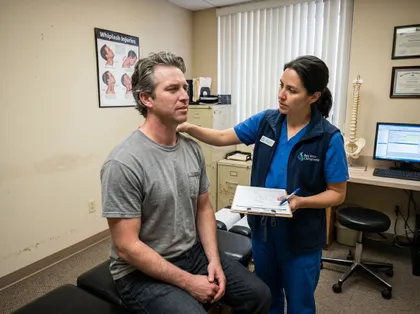
- See a Medical Professional Right Away: Even if you feel fine, visiting a doctor or chiropractor creates an official medical record that ties your injuries to the crash. Without it, an insurance company can argue your injuries happened elsewhere.
- Request Your CHP Traffic Collision Report: The I-110 is a state freeway, so the California Highway Patrol (CHP) usually investigates crashes and prepares the official traffic collision report. Local agencies, such as the Los Angeles Police Department (LAPD), may assist at the scene, but CHP typically handles the investigation. The CHP report is an important piece of evidence for your insurance claim and any legal action.
- Keep Time-Sensitive Evidence: Most dashcams use loop recording and may overwrite unsaved footage once the memory card fills, so save or export crash footage as soon as possible. You can also gather the following:
- Photos or videos of the accident scene.
- Witness names and contact information.
- The CHP traffic collision report.
- Medical records and bills.
- Repair estimates and vehicle inspection records.
- Insurance letters, emails, and claim documents.
- Consult a Legal Professional: A freeway accident lawyer can help protect your rights from the beginning. They can deal with insurance companies and identify everyone who may be responsible for the crash. They can also send preservation letters to prevent the deletion of important evidence.
Under § 335.1 of the California Code of Civil Procedure (CCP), you generally have two years from the date of the freeway crash to file a personal injury lawsuit. If a claim involves a government entity, such as Caltrans or LA Metro, the deadline is shorter. You have only six months to file a government tort claim. If you miss the deadline that applies in your situation, you typically lose your right to seek compensation through legal action.
| Claim Or Report | Deadline | Why It Matters |
|---|---|---|
| Personal injury lawsuit | Usually, within 2 years of the crash date. | Missing this deadline can end your right to sue for injuries. |
| Wrongful death lawsuit | Usually, 2 years from the date of death. | Eligible family members may lose the right to file late. |
| Claims against Caltrans or another public entity | Usually, 6 months from the crash date (GOV § 911.2). | You usually must file this claim before suing a government agency. |
| DMV SR-1 report | 10 days after a qualifying crash (CVC § 16000). | This report is required if someone was injured or killed, or if property damage was over $1,000. |
| Unknown-driver UM claim | Report to law enforcement within 24 hours and notify the insurer within 30 days (California Insurance Code § 11580.2). | Missing these steps can affect uninsured motorist coverage after a hit-and-run. |
These deadlines are among the reasons many people decide they need a personal injury lawyer.
Frequently Asked Questions About 110 Freeway Accidents
A crash on the 110 Freeway can leave lasting physical and emotional damage. Many victims deal with anxiety, sleep problems, and fear of driving long after their injuries heal. The legal questions that follow can add real stress to an already challenging situation.
Why Do Some 110 Freeway On-Ramps Have Stop Signs?
These stop signs are a relic of the Arroyo Seco Parkway’s 1940 design. The on-ramps were built for lighter, slower traffic and were never redesigned for modern speeds. Drivers must go from a full stop to highway speed in a short distance, which is dangerous.
Can I Hold Caltrans Responsible For A Dangerous Freeway Design?
In some cases, yes. Under California Government Code § 835, a public entity may be liable for a dangerous condition of public property if the plaintiff proves the statutory elements, including a dangerous condition, causation, foreseeable risk, and either employee creation or actual/constructive notice in time to protect against the hazard.
What Happens If The Driver Who Hit Me On The 110 Leaves The Scene?
If the driver who hit you on the 110 Freeway leaves the scene, you may still recover compensation. A hit-and-run may qualify as an uninsured motorist claim, but California law adds strict requirements when the driver is unknown. The injured person generally must show physical contact, report the crash to the proper law enforcement agency within 24 hours, and file a sworn statement with the insurer within 30 days.
Does Heavy Traffic Change Who Is At Fault For A Rear-End Collision?
Generally, no. Every driver must keep a safe following distance, even in stop-and-go traffic. The driver who hits you from behind is typically considered at fault for the crash. However, fault in a rear-end crash still depends on the evidence.
Do I Need A Lawyer For A 110 Freeway Accident Claim?
Whether you need a personal injury lawyer depends on the specifics of your case. For most 110 Freeway accident claims, hiring a personal injury lawyer is a smart choice. These cases often involve complex liability, strict deadlines, and insurance adjusters who work to protect the insurance company’s interests.
Many people hesitate to call an attorney because they worry about the cost. One of the first questions they ask is, “Do lawyers only get paid if they win?” In most personal injury cases, yes. You pay nothing up front, and your lawyer only gets paid if your case succeeds.
Arash Law Case Results: Freeway Accidents & Liability
Past results do not guarantee future outcomes. Every case is different, and results depend on the specific facts and evidence involved.
$1,150,000 — Truck Accident: Rear-End Collision on the Freeway. A delivery truck company rear-ended our client along a freeway, causing neck and back injuries. The defense attempted to attribute the injuries to the client’s weight and pre-existing conditions. The matter was resolved at mediation before proceeding to trial.
$1,000,000 — Car Accident: Freeway Shoulder Collision. The client was pulled over on the shoulder of the I-10 freeway with hazard lights on when a tow truck swerved and collided with the parked vehicle, causing the truck to flip. The client suffered serious injuries to the head and other parts of the body. The firm recovered $1,000,000 from the accident.
Discuss Your 110 Freeway Accident Claim With Arash Law
If you were hurt in a freeway crash, call a lawyer who knows how these claims work in Los Angeles. Critical evidence such as skid marks, camera footage, and vehicle data can disappear within days of a freeway crash. Waiting too long can cost you the evidence your case depends on and put your legal deadlines at risk.
Arash Law handles freeway accident cases across California. Our attorneys at AK Law know how to build a credible legal case for accidents on corridors like the 110. We know the agencies, the courts, and the tactics insurance companies use to reduce payouts.
To get started, call (888) 488-1391. We offer a free initial consultation. Once you hire our firm, you will receive free advice from our freeway accident lawyers throughout your case.